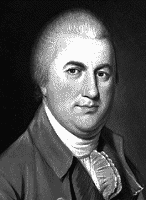
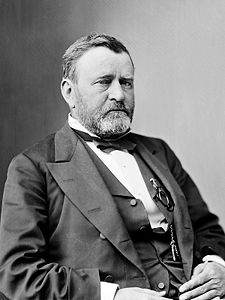
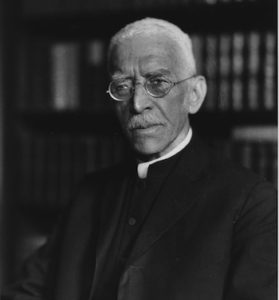
Classic Works of Apologetics - America's Christian HeritageClassic Works of Apologetics Online
America's Christian Heritage
America's Christian heritage is thoroughly documented throughout history, expressed in the writings of our Founding Fathers and our statesmen past and present. Our laws are based on Judeo-Christian principles. Even the Supreme Court has acknowledged that America is a Christian nation. The evidence is presented here.
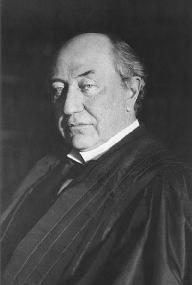
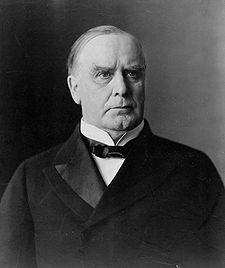
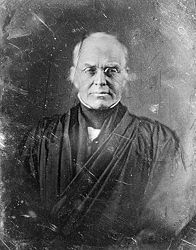
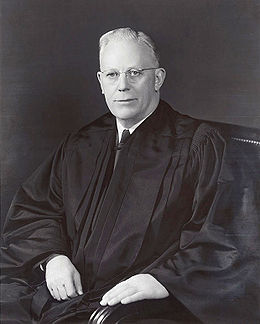
"Still again, this is a Christian nation. Not that the people have made it so by any legal enactment or that there exists an established church, but Christian in the sense that the dominant thought and purpose of the nation accord with the great principles taught by the founder of Christianity. Historically it has developed along the lines of that religion. Its first settlements were in its name, and while every one is welcome, whether a believer in christianity or in any other religion, or in no religion, yet the principles of Christianity are the foundations of our social and political life. It needs no judicial decision to determine this fact."
--U.S. Supreme Court Justice David Josiah Brewer. American Citizenship. New Haven [Conn.]: Yale University Press, 1914. 131 pp.; 20 cm. Yale lectures on the responsibilities of citizenship.
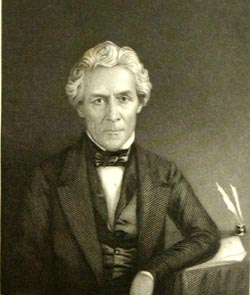
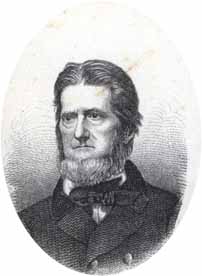
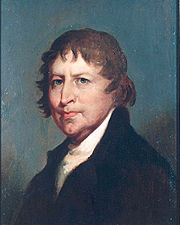
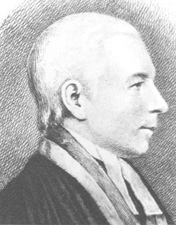
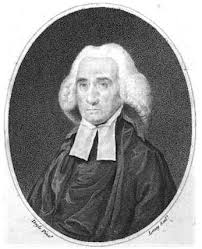
Math professor and college president. Read more about Adams here.
WORKS
The Relation of Christianity to Civil Government in the United States: A Sermon, preached in St. Michael's Church, Charleston, February 13th, 1833, before the convention of the Protestant Episcopal Church of the Diocese of South-Carolina / by J. Adams. 2nd edition. Charleston: A.E. Miller, 1833. 64 pp.; 24 cm. Adams's Notes (Source repository: William L. Clements Library, University of Michigan), p. 10: "Thomas S. Grimke, Esq. has written to the author 10 pages of foolscap, containing comments on the text-notes of this sermon. Some of these comments are somewhat severe but they were written with the most friendly intentions. They have aided me considerably in revising the Sermon for the second edition. Mr. Grimke has also aided me in other ways in [?] to it. He is the legal friend mentioned at p. 38. With Judge Richardson, he has offered me $20 towards an [?] edition, and has also requested me to have 100 additional copies printed for him." Note: Adams erroneously ascribes The Study and practice of the law considered in their various relations to society in a series of letters to Sir James Mackintosh, a common misconception according to the Dictionary of National Biography. The work was actually written by attorney John Raithby.
Adams's Notes, pp. 2-3(Source repository: William L. Clements Library, University of Michigan). Chief Justice John Marshall, May 9, 1833:
Reverend Sir,
I am much indebted to you for the copy of your valuable sermon on the relation of Christianity to civil government preached before the convention of the Protestant Episcopal Church in Charleston, on the 13th of Feby. last. I have read it with great attention & advantage.
The documents annexed to the sermon certainly go far in sustaining the proposition which it is your purpose to establish. One great object of the colonial charters was avowedly the propagation of the Christian faith. Means have been employed to accomplish this object, & those means have been used by government.
No person, I believe, questions the importance of religion to the happiness of man even during his existence in this world. It has at all times employed his most serious meditation, & had a decided influence on his conduct. The American population is entirely Christian, & with us, Christianity & Religion are identified. It would be strange, indeed, if with such a people, our institutions did not presuppose Christianity, & did not often refer to it, & exhibit relations with it. Legislation on the subject is admitted to require great delicacy, because fredom [sic] of conscience & respect for our religion both claim our most serious regard. You have allowed their full influence to both.
With very great respect,
I am Sir, your Obedt.,
J. Marshall.
Adams's references for this essay include the following:
Brougham and Vaux, Henry Brougham, Baron. An Inquiry into the colonial policy of the European powers. Edinburgh, Printed by D. Willison for E. Balfour, Manners & Miller [etc.], 1803. 2 v. 22 cm.
Volume 1 of 2.
"The first settlers of all the colonies, says he, were men of irreproachable characters. Many of them fled from persecution; others on account of an honourable poverty; and all of them with their expectations limited to the prospect of a bare subsistence in freedom and peace. All idea of wealth or pleasure was out of the question. The greater part of them viewed their emigration as a taking up of the cross, and bounded their hopes of riches to. the gifts of the spirit, and their ambition to the desire of a kingdom beyond the grave. A set of men more conscientious in their doings, or simple in their manners, never founded any Commonwealth, It is, indeed, continues he, the peculiar glory of North America that with very few exceptions, its empire was originally founded in charity and peace." -- p. 59. Volume 2 of 2. Also here.
The Charter of Dartmouth College. December 18, 1769. Also here.
[§10] KNOW YE THEREFORE, that We considering the Premises and being willing to encourage the laudable & charitable design of spreading Christian Knowledge among the Savages of our American Wilderness and also that the best means of Education be established in our province of New Hampshire for the benefit of said province, DO of our special grace certain knowledge and mere motion by and with the advice of our Council for said Province by the Presents Will, ordain, grant & constitute that there be a College erected in our said Province of New Hampshire by the name of DARTMOUTH COLLEGE [§11] for the education & instruction of Youth of the Indian Tribes in this Land in reading, writing & all parts of Learning which shall appear necessary and expedient for civilizing & christianizing Children of Pagans as well as in all liberal Arts and Sciences; and also of English Youth and any others, ...
Senator Theodore Frelinghuysen. Speech of Mr. Frelinghuysen, on the Subject of Sunday Mails. In the Senate of the United States -- May 8, 1830. From Register of debates in Congress: comprising the leading debates and incidents of the first session of the Twenty-first Congress: together with an appendix, containing important state papers and public documents, and the laws enacted during the session: with a copious index to the whole. Vol. VI. United States Congress (21st, 1st session: 1829-1830); Washington [D.C.]: Printed and published by Gales and Seaton, 1830. 2 v. ; 26 cm. Half-title: Debates in Congress./ Running title: Gales & Seaton's Register of debates in Congress./ Printed in two columns./ Part I: [4], 664, xiv p.; part II: [4], 665-1148, 18 p., 144 columns, ix-li, [i], 4, xiv pp. Extract, Appendix, pp. 1-4.
Thomas Babington Macaulay (1800-1859). Jewish Disabilities. April 17, 1833 speech before the House of Commons. The Miscellaneous Writings and Speeches of Lord Macaulay, Volume IV. 456 pages. Also here.
Sir Walter Scott. Life of Napoleon Buonaparte: With a Preliminary View of the French Revolution. Published by R. Cadell, 1843. Volume 1 of 2. 867 pages.
Jared Sparks. The Life of Gouverneur Morris, with selections from his correspondence and miscellaneous papers: detailing events in the American Revolution, the French Revolution, and in the political history of the United States. Boston: Gray & Bowen, 1832.
William Tudor. The Life of James Otis, of Massachusetts: containing also, notices of some contemporary characters and events, from the year 1760 to 1775. Boston, 1823. 532 pp.
Adams, President John
(1735-1826)
See President Adams' entry here at the American Presidents webpage.
Adams, President John Quincy
(1767-1848)
See President Adams' entry here at the American Presidents webpage.
Among the natural rights of the Colonists are these: First, a right to life; Secondly, to liberty; Thirdly, to property; together with the right to support and defend them in the best manner they can. These are evident branches of, rather than deductions from, the duty of self-preservation, commonly called the first law of nature.
All men have a right to remain in a state of nature as long as they please; and in case of intolerable oppression, civil or religious, to leave the society they belong to, and enter into another.
When men enter into society, it is by voluntary consent; and they have a right to demand and insist upon the performance of such conditions and previous limitations as form an equitable original compact.
Every natural right not expressly given up, or, from the nature of a social compact, necessarily ceded, remains.
All positive and civil laws should conform, as far as possible, to the law of natural reason and equity.
As neither reason requires nor religion permits the contrary, every man living in or out of a state of civil society has a right peaceably and quietly to worship God according to the dictates of his conscience.
"Just and true liberty, equal and impartial liberty," in matters spiritual and temporal, is a thing that all men are clearly entitled to by the eternal and immutable laws of God and nature, [Page 418] as well as by the law of nations and all well-grounded municipal laws, which must have their foundation in the former.
In regard to religion, mutual toleration in the different professions thereof is what all good and candid minds in all ages have ever practised, and, both by precept and example, inculcated on mankind. And it is now generally agreed among Christians that this spirit of toleration, in the fullest extent consistent with the being of civil society, is the chief characteristical mark of the Church. (* See Locke's Letters on Toleration.) Insomuch that Mr. Locke has asserted and proved, beyond the possibility of contradiction on any solid ground, that such toleration ought to be extended to all whose doctrines are not subversive of society. The only sects which he thinks ought to be, and which by all wise laws are excluded from such toleration, are those who teach doctrines subversive of the civil government under which they live. The Roman Catholics or Papists are excluded by reason of such doctrines as these, that princes excommunicated may be deposed, and those that they call heretics may be destroyed without mercy; besides their recognizing the Pope in so absolute a manner, in subversion of government, by introducing, as far as possible into the states under whose protection they enjoy life, liberty, and property, that solecism in politics, imperium in imperio, leading directly to the worst anarchy and confusion, civil discord, war, and bloodshed. (* Political disabilities were not removed from the Catholics in England until 1820--Editor)
The natural liberty of man, by entering into society, is abridged or restrained, so far only as is necessary for the great end of society, the best good of the whole.
In the state of nature every man is, under God, judge and sole judge of his own rights and of the injuries done him. By entering into society he agrees to an arbiter or indifferent judge between him and his neighbors; but he no more renounces his original right than by taking a cause out of the ordinary course of law, and leaving the decision to referees or indifferent arbitrators.
In the last case, he must pay the referees for time and trouble. He should also be willing to pay his just quota for the support of government, the law, and the constitution; the end of which is to furnish indifferent and impartial judges in all cases that may happen, whether civil, ecclesiastical, marine, or military.
[Page 419] The natural liberty of man is to be free from any superior power on earth, and not to be under the will or legislative authority of man, but only to have the law of nature for his rule. (* Locke on Government)
In the state of nature men may, as the patriarchs did, employ hired servants for the defence of their lives, liberties, and property; and they should pay them reasonable wages. Government was instituted for the purposes of common defence, and those who hold the reins of government have an equitable, natural right to an honorable support from the same principle that "the laborer is worthy of his hire." But then the same community which they serve ought to be the assessors of their pay. Governors have no right to seek and take what they please; by this, instead of being content with the station assigned them, that of honorable servants of the society, they would soon become absolute masters, despots, and tyrants. Hence, as a private man has a right to say what wages he will give in his private affairs, so has a community to determine what they will give and grant of their substance for the administration of public affairs. And, in both cases, more are ready to offer their service at the proposed and stipulated price than are able and willing to perform their duty.
In short, it is the greatest absurdity to suppose it in the power of one, or any number of men, at the entering into society, to renounce their essential natural rights, or the means of preserving those rights; when the grand end of civil government, from the very nature of its institution, is for the support, protection, and defence of those very rights; the principal of which, as is before observed, are Life, Liberty, and Property. If men, through fear, fraud, or mistake, should in terms renounce or give up any essential natural right, the eternal law of reason and the grand end of society would absolutely vacate such renunciation. The right to freedom being the gift of God Almighty, it is not in the power of man to alienate this gift and voluntarily become a slave.
II. The Rights of the Colonists as Christians.
These may be best understood by reading and carefully studying the institutes of the great Law Giver and Head of the Christian Church, which are to be found clearly written and promulgated in the New Testament.
[Page 420] By the act of the British Parliament, commonly called the Toleration Act, every subject in England, except Papists, &c., was restored to, and re-established in, his natural right to worship God according to the dictates of his own conscience. And, by the charter of this Province, it is granted, ordained, and established (that is, declared as an original right) that there shall be liberty of conscience allowed in the worship of God to all Christians, except Papists, inhabiting, or which shall inhabit or be resident within, such Province or Territory. (* See 1 Wm. and Mary, St. 2, C. 18, and Massachusetts Charter.) Magna Charta itself is in substance but a constrained declaration or proclamation and promulgation in the name of the King, Lords, and Commons, of the sense the latter had of their original, inherent, indefeasible natural rights, (*Lord Coke's Inst. Blackstone's Commentaries VI., p. 122. The Bill of Rights and the Act of Settlement) as also those of free citizens equally perdurable with the other. That great author, that great jurist, and even that court writer, Mr. Justice Blackstone, holds that this recognition was justly obtained of King John, sword in hand. And peradventure it must be one day, sword in hand, again rescued and preserved from total destruction and oblivion. ...
William Vincent Wells, 1826-1876. The Life and Public Services of Samuel Adams: being a narrative of his acts and opinions, and of his agency in producing and forwarding the American Revolution. With extracts from his correspondence, state papers, and political essays. Little, Brown, and Company, 1865. Volume 1 of 3. Volume 2 of 3. Volume 3 of 3. Applewood Books, 2009 edition. 548 pp. Text searchable.
Here is embodied the whole philosophy of human rights, condensed from the doctrines of all time, and applied to the immediate circumstances of America. Upon this paper was based all that was written or spoken on human liberty in the Congress which declared independence; and the immortal instrument itself is, in many features, but a repetition of the principles here enunciated, and of Joseph Warren's list of grievances, which followed the Rights of the Colonists in the report. If we look back to the first efforts of Samuel Adams, when, as a young essayist in the obscure little weekly paper of his native town, twenty-five years before, he boldly advocated the liberties of the people against oppressive rulers, we shall find that his ideas on these subjects were as firmly fixed as now, when he gave them not to a circle of provincial readers alone, but to the world. The sentiments are the same, and the man who adopted them must have been by nature an assertor of popular rights. There can be no better proof of the admirable consistency of his character than a patient examination of his works throughout his long life. At the age of fifty he found no reason to retract a word, or retrace a step; and the principles with which he had commenced life accompanied him to the close. When another century had dawned upon him, and he was fast sinking into the grave, his sincere admirer, Thomas Jefferson, then just elected President of the United States, wrote to his "ever respected and venerable friend": "Your principles have been tested in the crucible of time, and have come out pure. You have proved that it was monarchy, and not merely British monarchy, you opposed. A government by representatives, elected by the people at short periods, was our object, and our maxim at that day was,' Where annual election ends, tyranny begins.' " (* Thomas Jefferson to Samuel Adams, Feb. 26, 1801.)
"Determinatus." (Samuel Adams) Untitled. Boston Gazette, and Country Journal, n. 770. January 8, 1770, p. 1. Reprinted in The Writings of Samuel Adams: 1770-1773, Volume 2, G.P. Putnam's Sons, 1906, p. 4. Extract.
Plus, Untitled article by "Vindex." (Samuel Adams), p. 2. Addresses power of the governor over sessions of General Assembly. Reprinted in The Writings of Samuel Adams: 1770-1773, Volume 2, G.P. Putnam's Sons, 1906. p. 1. Extract. Reprinted 1B. P. Poore, The Federal and State Constitutions, 1878, vol. i., p. 949. vol. ii.--i.
Harry Alonzo Cushing, editor. The Writings of Samuel Adams. New York: G.P. Putnam's Sons, 1907), Volume III, p. 236-237, to James Warren on November 4, 1775. "Nothing is more essential to the establishment of manners in a State than that all persons employed in places of power and trust be men of unexceptionable characters. The public cannot be too curious concerning the character of public men."
Samuel Adams to Elizabeth Adams on December 26, 1776. From Letters of Delegates to Congress: August 16, 1776-December 31, 1776. "I pray God to continue your Health and protect you in these perilous times from every kind of Evil. The Name of the Lord, says the Scripture, is a strong Tower, thither the Righteous flee and are safe [Proverbs 18:10]. Let us secure his Favor, and he will lead us through the Journey of this Life and at length receive us to a better."
Samuel Adams to Elizabeth Adams, Jany 29th. 1777. Letters of Delegates to Congress: Volume 6 January 1, 1777 - April 30, 1777. "I thank you, my dear, most cordially for the Warmth of Affection which you express on this Occasion, for your Anxiety for my Safety and your Prayers to God for my Protection. The Man who is conscientiously doing his Duty will ever be protected by that Righteous and all powerful Being, and when he has finishd his Work he will receive an ample Reward. I am not more convincd of any thing than that it is my Duty to oppose to the utmost of my Ability the Designs of those who would enslave my Country; and with Gods Assistance I am resolvd to oppose them till their Designs are defeated or I am called to quit the Stage of Life."
"I heartily congratulate you on the entire Victory obtained by General Gates over Burgoin. This is a Striking Instance of the Truth of the Observation in Holy Writ "Pride goeth before a Fall." Our sincere Acknowledgments of Gratitude are due to the supreme Disposer of all Events. I suppose Congress will recommend that a Day be set apart through out the United States for solemn Thanksgiving.
"I rejoyce that my Friend General Gates, after what had happend, is honord by Providence as the Instrument in this great Affair."
Samuel Adams to James Warren:
"I hope our Countrymen will render the just Tribute of Praise to the Supreme Ruler for these signal Instances of his Interposition in favor of a People struggling for their Liberties. Congress will, I suppose recommend the setting apart one Day of publick Thanksgiving to be observd throughout the united States."
"I believe my Country will fix their Eyes and their Choice on a Man of Religion and Piety; who will understand human Nature and the Nature and End of political Society-who will not by Corruption or Flattery be seducd to the betraying, even without being sensible of it himself, the sacred Rights of his Country.
"The Success of the present Campain hitherto has been great beyond our most sanguine Expectation. Let us ascribe Glory to God who has graciously vouchsafd to favor the Cause of America and of Mankind."
"Vindex" (Samuel Adams). Untitled. Boston Gazette, and Country Journal, p. 2. Reprinted in The Writings of Samuel Adams: 1778-1802, Volume 4, G.P. Putnam's Sons, 1908, pp. 188-191.
Formerly this great contest was carried on upon paper. The conspirators against the rights and liberties of our country left no art untried, to induce the people to submit to their unrighteous claims. But they were circumvented by our watchful patriots. They were, if I may use the expression, out-reasoned by some, and laughed off the stage by others; and we will never forget those steadfast and persevering friends, who forever prov'd themselves incapable of being brib'd by the soft whispers of flattery, or awed by foul-mouthed calumny and the threats of power. Afterwards the contest became more serious and important. The people of this country were not driven to take up arms, they did it voluntarily in defence of their liberty. They properly considered themselves as called by God, and warranted by Him, to encounter every hazard in the common cause of Man, We have had for several years past a well-appointed Army.--An Army of which both Officers and Privates are daily increasing in discipline--An Army inferior perhaps to none at this time on the face of the earth and headed by a COMMANDER, who feels the Rights of the Citizens in his own breast, and experience has taught us, he knows full well how to defend them.--May Heaven inspire that Army yet more and more with Military Virtues, and teach their hands to war and their fingers to fight! May every citizen in the army and in the country, have a proper sense of the DEITY upon his mind, and an impression of that declaration recorded in the Bible, "Him that honoreth me I will honor, but he that despiseth me shall be lightly esteemed."
Harry Alonzo Cushing, editor. The Writings of Samuel Adams. New York: G.P. Putnam's Sons, 1907), Volume IV, p. 256, in the Boston Gazette on April 16, 1781. "Before this will reach you, your Countrymen will have finished the important business of electing their Legislators, Magistrates and Governors for the ensuing year. I hope they have made a wise choice. At least, from the opinion I entertain of their virtue, I am persuaded they have acted with all that deliberation and caution which the solemnity of the transaction required. They may then reflect, each one on his own integrity, and appeal to the Monitor within his breast, that he has not trifled with the sacred trust reposed in him by GOD and his country 'that he has not prostituted his honor and conscience to please a friend or a patron' that he has not been influenced with the view of private emolument to himself and his family, but has faithfully given his vote for the candidate whom he thought most worthy the choice of free and virtuous citizens."
Harry Alonzo Cushing, editor. The Writings of Samuel Adams. New York: G. P. Putnam's Sons, 1908), Vol. IV, p. 361,Proclamation for a Day of Fasting and Prayer, February 19, 1794.
... "we may with one heart and voice humbly implore His gracious and free pardon through Jesus Christ, supplicating His Divine aid ... [and] above all to cause the religion of Jesus Christ, in its true spirit, to spread far and wide till the whole earth shall be filled with His glory."
Proclamation for a Day of Fasting and Prayer, March 15, 1796.
... "And I do exhort the People of all Religious Denominations, to assemble in their respective Congregations on that Day, and with true contrition of Heart, to confess their Sins to God, and implore forgiveness through the merits and mediation of Jesus Christ our Saviour ..."
Harry Alonzo Cushing, editor. The Writings of Samuel Adams. New York: G. P. Putnam's Sons, 1908, Vol. IV, p. 407, from his proclamation of March 20, 1797. From a Fast Day Proclamation issued by Governor Samuel Adams, Massachusetts, March 20, 1797.
"I conceive we cannot better express ourselves than by humbly supplicating the Supreme Ruler of the world that the rod of tyrants may be broken into pieces, and the oppressed made free; that wars may cease in all the earth, and that the confusions that are and have been among the nations may be overruled by the promoting and speedily bringing in the holy and happy period when the kingdoms of our Lord and Savior Jesus Christ may be everywhere established, and the people willingly bow to the scepter of Him who is the Prince of Peace."
William V. Wells, editor. The Life and Public Services of Samuel Adams, being a narrative of his acts and opinions, and of his agency in producing and forwarding the American Revolution. With extracts from his correspondence, state papers, and political essays. Boston: Little, Brown & Co, 1865.
Volume 1 of 3.
Volume 2 of 3.
Volume 3 of 3. LAST WILL AND TESTAMENT OF SAMUEL ADAMS.
In the name of God, Amen. I, Samuel Adams of Boston, in the
County of Suffolk, and Commonwealth of Massachusetts, Esquire,
being, through Divine goodness, of sound and disposing mind and
memory, and considering the uncertainty of human life, do make and ordain this to be my last will and testament, in manner and form following, viz.: Principally and first of all, I recommend my soul to that Almighty Being who gave it, and my body I commit to the dust, relying on the merits of Jesus Christ for a pardon of all my sins; and as to such worldly estate as God hath been pleased to bestow upon me, I give, devise, and dispose of the same in the following manner ..." p. 379.
Adams, William
(1807-1880)
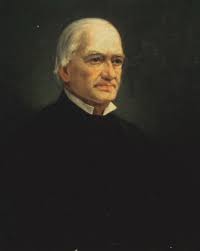
Minister and college president.
WORKS
Christianity and Civil Government: A Discourse delivered on Sabbath evening, November 10, 1850. By Rev. William Adams. New York, C. Scribner, 1851. 48 pp. 22 cm. Also here. Text-searchable.
With Andrew Dickson White, 1832-1918. Christian Patriotism: New York: A.D.F. Randolph, 1863. 21 pp.; 18 cm. Part of the Samuel J. May anti-slavery collection donated to Cornell University Library./ "This sermon, preached on the 22d of February, 1863, is published by request."
Adams, Zabdiel
(1739-1801)
Pastor. First cousin of John Adams, the second president of the United States.
Moral View of Rail Roads. A Discourse, delivered on Sabbath morning, Feb. 23, 1851, on the occasion of the opening of the Cleveland and Columbus rail road. Cleveland, Press of Harris, Fairbanks & Co., 1851. 30 pp. 20 cm. with commentary by David Barton.
Moral View of Rail Roads. A Discourse, delivered on Sabbath morning, Feb. 23, 1851, on the occasion of the opening of the Cleveland and Columbus rail road. Cleveland, Press of Harris, Fairbanks & Co., 1851. 30 pp. 20 cm.
Aitken Bible David Barton: "Prior to the American Revolution, the only English Bibles in the colonies were imported either from Europe or England. Robert Aitken's Bible was the first known English-language Bible to be printed in America, and also the only Bible to receive Congressional approval." Notice.
Congressional resolution, September 12, 1782, endorsing Robert Aitken's Bible Page 468 and Page 469. Philadelphia: David C. Claypoole, 1782 from the Journals of Congress. Text from Journals of the Continental Congress, 1774-1789, THURSDAY, SEPTEMBER 12, 1782.
The war with Britain cut off the supply of Bibles to the United States with the result that on Sept. 11, 1777, Congress instructed its Committee of Commerce to import 20,000 Bibles from "Scotland, Holland or elsewhere." On January 21, 1781, Philadelphia printer Robert Aitken (1734-1802) petitioned Congress to officially sanction a publication of the Old and New Testament which he was preparing at his own expense. Congress "highly approve the pious and laudable undertaking of Mr. Aitken, as subservient to the interest of religion . . . in this country, and . . . they recommend this edition of the bible to the inhabitants of the United States." This resolution was a result of Aitken's successful accomplishment of his project.
The Holy Bible, Containing the Old and New Testaments: Newly translated out of the Original Tongues. . . . . Philadelphia: printed and sold by R. Aitken, 1782. Aitken published Congress's recommendation of September 1782 and related documents (Item 115) as an imprimatur on the two pages following his title page. Aitken's Bible, published under Congressional patronage, was the first English language Bible published on the North American continent.
See also Letters of Delegates to Congress: Volume 19 August 1, 1782 - March 11, 1783, George Duffield and William White.
"For Aitken's efforts to secure public support for this undertaking, on which he eventually reported a loss of £4,000 for the 10,000 Bibles he printed, see Thomas C. Pears, "The Story of the Aitken Bible,Journal of the Presbyterian Historical Society 18 (June 1939), pp. 225-41; and Margaret T. Hills, "The First American Bible, as Published by Robert Aitken," Bible Society Record 113 January 1968, pp. 2-5."
Alderman, Thomas
Modern author.
WORKS
"A Christian Constitution?," Simon Greenleaf Law Review, v. 7. 1987, pp. 235-237. Review of Christianity and the Constitution by John E. Eidsmoe.
An Oration on the beauties of liberty, or The Essential rights of the Americans. Delivered at the Second Baptist-Church in Boston, upon the last annual thanksgiving, Dec. 3d, 1772. Dedicated to the Right Honourable the Earl of Dartmouth. Published by the earnest request of many. By a British Bostonian. The fourth edition, carefully corrected by the author, in which are many additions, particularly those four pages which were left out of the last editions. With some strictures on the eternal right of mankind, liberty of conscience. And remarks on the rights and liberties of the Africans, inserted by particular desire.
xxix, 30-80 p. 19 cm. (4to)
Allen, William
(1784-1868)
Allen was a Congregational minister, educator, biographer, and author. He was minister in Pittsfield, Mass. (1810-1817) and served as the third president of Bowdoin College (1819-1831, 1833-1838). Read more about Allen here.
Our Country's Mission in History: An address delivered at the anniversary of the Philomathæan society of Pennsylvania college, September 19, 1855. Philadelphia, 1855. 37 pp.
Allen, William Joshua
(1829-1901)
Illinois U. S. Representative. Read about Allen here and here.
The Judgement of the ancient Jewish church, against the Unitarians. in the controversy upon the holy Trinity, and the divinity of our Blessed Saviour: with A table of matters, and A table of texts of scriptures occasionally explain'd / by a divine of the Church of England. London: Printed for Ri. Chiswell, 1699. [2], xxii, 460, [16] pp.
A Preparation for the Lord's Supper: to which are added Maxims of true Christianity / written originally in French, by P. Allix; Englished by P. Lorrain Published/distributed: London: Printed for Brab. Aylmer, 1668. [12], 116 pp.
Read more about the American Anti-Slavery Society here.
WORKS
The Legion of Liberty! and Force of Truth: Containing the thoughts, words, and deeds of some prominent apostles, champions and martyrs. Second edition. New York, 1842. 418 pp.
American Bible Society
(Est. 1816)
"Established in 1816, American Bible Society history follows closely and even intersects the history of our nation. In fact, ABS' early leadership reads like a Who's Who of patriots. Our first president was Elias Boudinot, former president of the Continental Congress. John Jay, John Quincy Adams, DeWitt Clinton and James Fennimore Cooper also played significant roles, as did Rutherford B. Hayes, Benjamin Harrison and Francis Scott Key. Since those early days, American Bible Society has worked closely with organizations to reach people in the United States and around the world who might otherwise not have access to a Bible." Read more about The American Bible Society here.
Noss, Philip A. . Rome: Edizioni de storia e letteratura,
2007. (xix, 521 pages, 16 pages of plates): color illustrations, maps (some color). Contents: A history of Bible translation : introduction and overview /; Philip A. Noss --; Introduction : the Septuagint to the vernaculars /; Manuel Jinbachian --; The first versions : the Septuagint, the Targums, and the Latin /; David G. Burke --; Secondary versions : Arabic to Old Slavonic /; Erroll Rhodes --; From Martin Luther to the Revised English Version /; Paul Ellingworth --; Bible translation in Africa /; Aloo Osotsi Mojola --; Bible translation in Asia-Pacific and the Americas /; Daud Soesilo --; Introduction : epistemology and theory /; Stefano Arduini --; On the historical epistemologies of Bible translating /; Anthony Pym --; Framing Nida : the relevance of translation theory in the United Bible Societies /; Stephen Pattemore --; Introduction: methodology of Bible translation /; Lourens de Vries --; Translation techniques in the ancient Bible translations : Septuagint and Targum /; Harry Sysling --; Translation techniques in modern Bible translation /; Paul Ellingworth --; Introduction : the field today /; Lynell Zogbo --; Bible translation in Africa : a post-missionary approach /; Dieudonné Prosper Aroga Bessong and Michel Kenmogne --; Word of God, word of the people : translating the Bible in post-missionary times /; Edesio Sáncehz-Cetina.
American State Papers 028, Public Lands Volume 1; 5th Congress, 2nd Session, Publication No. 40. Progress of surveys northwest of the Ohio. Communicated to the Senate, May 3, 1798.
American State Papers 028 Public Lands Volume 1, p. 263-284: tables; 9th Congress, 1st Session
Publication No. 126, March 18, 1806. Land titles in Michigan Territory. Communicated to the House of Representatives, the 18th of March, 1806.
American State Papers 030 Public Lands Volume 3, p. 423-426; 16th Congress, 1st Session, Publication No. 311; February 24, 1820. Claim of the Stockbridge Indians to lands in Indiana. Communicated to the House of Representatives, February 24, 1820.
American State Papers 02, Foreign Relations Volume 2, p. 240-244, 6th Congress, 1st Session,
Publication No. 154; December 5, 1799. France. Communicated to Congress, December 5, 1799. Tallyrand on Thomas Paine.
American Review and Literary Journal
(1801-1802)
New York, N.Y.: Printed by T. & J. Swords. Quarterly. Edited by Charles Brockden Brown.
The American's Guide: The Constitutions of the United States of America, with the latest amendments: also the Declaration of Independence, Articles of Confederation, with the federal Constitution, and acts for the government of the territories. New-York: Evert Duyckinck, 1813; G. Long. 392 pp. 15 cm.
The American's Own Book
WORKS
The American's Own Book, containing the Declaration of Independence, with the Lives of the Signers: The Constitution of the United States, The inaugural addresses and first annual messages of all the presidents from Washington to Pierce, the farewell addresses of George Washington and Andrew Jackson, with a portrait and life of each president of the United States, to the present time. New York, 1855. 495 pp.
U. S. Representative. Read more about Ames here, here and here.
WORKS
The Speech of Mr. Ames, in the House of Representatives of the United States, when in committee of the whole, on Thursday, April 28, 1796, in support of the following motion: Resolved, that it is expedient to pass the laws necessary to carry into effect the treaty lately concluded between the United States and the King of Great Britain. Boston, Printed by Jno. & J.N. Russell, Quaker-Lane, sold by them; at Nancrede's book-store, Marlborough-Street, and of the other booksellers in town. (Price 25 cents.), [1796]. 52 pp. 22 cm. (8vo)
Seth Ames, editor. Works of Fisher Ames: with a selection from his speeches and correspondence. Second edition. Boston, 1854. 422 pp. Volume 1 of 2.
Seth Ames, editor. Works of Fisher Ames: with a selection from his speeches and correspondence. Second edition. Boston, 1854. 444 pp. Volume 2 of 2.
Works of Fisher Ames, compiled by a number of his friends; to which are prefixed notices of his life and character. Boston: T.B. Wait, 1809. xxxi, 519 pp.: port.; 24 cm. Notices of His Life and Character.
Works of Fisher Ames, Boston, 1809. School Books, first published in the Palladium, January 1801.
"It has been the custom, of late years, to put a number of little books into the hands of children, containing fables and moral lessons. This is very well, because it is right first to raise curiosity, and then to guide it. Many books for children are, however, injudiciously compiled: the language is too much raised above the ideas of that tender age; the moral is drawn from the fable, they know not why; and when they gain wisdom from experience, they will see the restrictions and exceptions which are necessary to the rules of conduct laid down in their books, but which such books do not give. Some of the most admired works of this kind abound with a frothy sort of sentiment, as the readers of novels are pleased to call it, the chief merit of which consists in shedding tears, and giving away money. Is it right, or agreeable to good sense, to try to make the tender age more tender? Pity and generosity, though amiable impulses, are blind ones, and, as we grow older, are to be managed by rules, and restrained by wisdom.
"... Why then, if these books for children must be retained, as they will be, should not the bible regain the place it once held as a school book? Its morals are pure, its examples captivating and noble. The reverence for the sacred book, that is thus early impressed, lasts long; and, probably, if not impressed in infancy, never takes firm hold of the mind. One consideration more is important. In no book is there so good English, so pure and so elegant; and by teaching all the same book, they will speak alike, and the bible will justly remain the standard of language as well as of faith. A barbarous provincial jargon will be banished, and taste, corrupted by pompous Johnsonian affectation, will be restored."
Works of Fisher Ames. Boston, 1809. Eulogy on Washington. Delivered, at the request of the legislature of Massachusetts, February 8, 1800. "Our liberty depends on our education, our laws, and habits, ... it is founded on morals and religion, whose authority reigns in the heart, and on the influence all these produce on publick opinion, before that opinion governs rulers."
An Oration on the sublime virtues of Gen. George Washington: Pronounced at the Old South Meeting-House in Boston, before his Honor the lieutenant-governor, the Council, and the two branches of the legislature of Massachusetts. At their request, on Saturday, the 8th of February, 1800. / By Fisher Ames. New-York: Printed for Charles Smith and S. Stephens, 1800. 31, [1] pp.; 20 cm. (8vo)
United States Major, commander of Fort Sumter at the start of the Civil War. Read about Anderson here and here.
WORKS
Lawton, Eliza McIntosh Clinch (Anderson), 1848-1919. Major Robert Anderson and Fort Sumter, 1861. New York: The Knickerbocker press, 1911. Also here. Text-searchable.
"To all children of the present day, I commit this brief sketch of the services rendered by Major Anderson to his country during the bombardment of Fort Sumter. Let his example of devotion as a Christian, as a soldier, and as a patriot be for you a guide and incentive. Never forget that this Christian soldier loved his country next to his God."
In God is our Trust. From Cleveland Daily Herald, May 25, 1861. Second column. "The pupils of the district free schools in Cincinnati, numbering one thousand children, called upon Major Anderson. As the Major entered the reception room the whole force struck up the Star Spangled Banner. Major Anderson, in response to the song, said: 'I call your attention, children, to one expression in the song you have just sung, 'In God is our trust.' To be successful in this life, we must put our trust in God. If you will obey his commands, you will be good men, good citizens, and good soldiers. At Fort Sumter I placed my trust in God, and through Him I obtained my safe deliverance. Trust in God, children, while you live'."
Religion the Glory of a Community, A Sermon preached on the day of general election at Montpelier, October 10, 1816, before the honorable legislature of Vermont. Montpelier, Vt.: Printed by Walton and Goss, 1816. 27 pp.; 21 cm.
A Church history of New-England, with particular reference to the denomination of Christians called Baptists. Containing the first principles and settlements of the country; the rise and increase of the Baptist churches therein; the intrusion of arbitrary power under the cloak of religion; the Christian testimonies of the Baptists and others against the same, with their sufferings under it, from the begining [sic] to the present time. Collected from most authentic records and writings, both ancient and modern. By Isaac Backus, Pastor of the First Baptist Church in Middleborough. [Four lines of quotations]. Vol. 2 of 3. Extending from 1690, to 1784. Boston, 1777[-1796]. 447 pp.
True faith will produce good works. A discourse, wherein are opened the nature of faith, and its powerful influence on the heart and life; Boston, 1767. 93 pp.
A Fish caught in his own net. An examination of nine sermons, from Matt. 16. 18. published last year, by Mr Joseph Fish of Stonington; wherein he labours to prove, that those called standing churches in New-England, are built upon the rock, and upon the same principles with the first fathers of this country: and that Separates and Baptists are joining with the gates of hell against them. In answer to which; many of his mistakes are corrected; the constitution of those churches opened; the testimonies of prophets and apostles, and also of many of those fathers are produced, which as plainly condemn his plan, as any Separate or Baptist can do. By Isaac Backus. Pastor of a church of Christ in Middleborough. [Six lines of quotations]. Boston, MDCCLXVIII. [1768].
An Appeal to the Public for Religious Liberty, Against the Oppressions of the Present Day. [Three lines from Galatians]. Boston, MDCCLXXIII. [1773]. 62 pp. Also here.
The true liberty of man is, to know, obey and enjoy his Creator, and to do all the good unto, and enjoy all the happiness with and in his fellow-creatures that he is capable of; in order to which the law of love was written in his heart, which carries in it's nature union and benevolence to being in general, and to each being in particular, according to it's nature and excellency, and to its relation and connexion to and with the supreme Being, and ourselves. Each rational soul, as he is a part of the whole system of rational beings, so it was and is, both his duty and his liberty to regard the good of the whole in all his actions. To love ourselves, and truly to seek our own welfare, is both our liberty and our indispensible duty; but the conceit that man could advance either his honor or happiness, by disobedience instead of obedience, was first injected by the father of lies, and all such conceits ever since are as false as he is.
The doctrine of universal salvation examined and refuted
. Containing, a concise and distinct answer to the writings of Mr. Relly, and Mr. Winchester, upon that subject. By Isaac Backus, Preacher of the Gospel. [Three lines from Jude] 1782.
40 pp. 19 cm. (4to)
American statesman, signer of the Constitution, a framer of the Bill of Rights in the First Congress and the founder of the University of Georgia (President, 1785-1801). Learn about Baldwin here.
WORKS
Charter of the University of Georgia Preamble.
"As it is the distinguishing happiness of free governments that civil Order should be the Result of choice and not necessity, and the common wishes of the People become the Laws of the Land, their public prosperity and even existence very much depends upon suitably forming the minds and morals of their Citizens. When the Minds of people in general are viciously disposed and unprincipled and their Conduct disorderly, a free government will be attended with greater Confusions and with Evils more horrid than the wild, uncultivated State of Nature. It can only be happy where the public principles and Opinions are properly directed and their Manners regulated. This is an influence beyond the Stretch of Laws and punishments and can be claimed only by Religion and Education. It should therefore be among the first objects of those who wish well to the national prosperity to encourage and support the principles of Religion and morality, and early to place the youth under the forming hand of Society that by instruction they may be moulded to the love of Virtue and good Order."
Barnes vs. Inhabitants of the First Parish in Falmouth.
N.p., c.1810. 16 pp. Contained in 6 Mass. Reports, p. 404, &c.
"The object of a free civil government is the promotion and security of the happiness of the citizens. These effects cannot be produced, but by the knowledge and practice of our moral duties, which comprehend all the social and civil obligations of man to man, and the citizen to the State. If the civil magistrate in any State, could procure by his regulations an uniform practice of these duties, the government of that State would be perfect.
"To obtain that perfection, it is not enough for the magistrate to define the rights of the several citizens, as they are related to life, liberty, property and reputation, and to punish those by whom they may be invaded. Wise laws, made to this end, and faithfully executed, may leave the people strangers to many of the enjoyments of civil and social life, without which their happiness will be extremely imperfect. Human laws cannot oblige to the performance of the duties of imperfect obligation; as the duties of charity and hospitality, benevolence and good neighbourhood; as the duties resulting from the relation of husband and wife, parent and child; of man to man as children of a common parent; and of real patriotism, by influencing every citizen to love his country, and to obey all its laws. These are moral duties, flowing from the disposition of the heart, and not subject to the control of human legislation.
"Neither can the laws prevent by temporal punishment, secret offences committed without witness, to gratify malice, revenge, or any other passion, by assailing the most important and most estimable rights of others. For human tribunals cannot proceed against any crimes unless ascertained by evidence; and they are destitute of all power to prevent the commission of offences, unless by the feeble examples exhibited in the punishment of those who may be detected.
"Civil government, therefore, availing itself only of its own powers, is extremely defective; and unless it could derive assistance from some superior power, whose laws extend to the temper and disposition of the human heart, and before whom no offence is secret; wretched indeed would be the state of man under a civil constitution of any form.
"This most manifest truth has been felt by legislators in all ages; and as man is born not only a social but a religious being, so in the pagan world, false and absurd systems of religion were adopted and patronized by the magistrate, to remedy the defects necessarily existing in a government merely civil.
"On these principles tested by the experience of mankind, and by the reflections of reason, the people of Massachusetts, in the frame of their government, adopted and patronized a religion, which by its benign and energetic influences, might co-operate with human institutions, to promote and secure the happiness of the citizens, so far as might be consistent with the imperfections of man.
"In selecting a religion, the people were not exposed to the hazard of choosing a false and defective religious system; Christianity had long been promulgated, its pretensions and excellencies well known, and its divine authority admitted. This religion was found to rest on the basis of immortal truth; to contain a system of morals adapted to man in all possible ranks and conditions, situations and circumstances, by conforming to which he would be ameliorated and improved in all the relations of human life; and to furnish the most efficacious sanctions, by bringing to light a future state of retribution. And this religion as understood by Protestants, tending by its effects to make every man, submitting to its influences, a better husband, parent, child, neighbour, citizen and magistrate, was, by the people, established as a fundamental and essential part of their Constitution.
"The manner in which this establishment was made, is liberal, and consistent with the rights of conscience on religious subjects. As religious opinions, and the time and manner of expressing the homage due to the Governor of the Universe, are points depending on the sincerity and belief of each individual, and do not concern the public interest, care is taken in the second article of the Declaration of Rights, to guard these points from the interference of the civil magistrate; and no man can be hurt, molested or restrained in his person, liberty or estate, for worshipping God in the manner and season most agreeable to the dictates of his own conscience, or for his religious profession or sentiment, provided he does not disturb the public peace, or obstruct others in their religious worship; in which case he is punished, not for his religious opinions or worship, but because he interrupts others in the enjoyment of the rights he claims for himself, or because he has broken the public peace.
"Having secured liberty of conscience, on the subject of religious opinion and worship for every man, whether Protestant or Catholic, Jew, Mahometan or Pagan, the Constitution then provides for the public teaching of the precepts and maxims of the religion of Protestant Christians to all the people. And for this purpose, it is made the right and duty of all corporate religious societies to elect and support a public Protestant teacher of piety, religion and morality; and the election and support of the teacher depend exclusively on the will of a majority of each society incorporated for those purposes. As public instruction requires persons who may be taught, every citizen may be enjoined to attend on some one of those teachers, at times and seasons stated by law, if there be any on whose instructions he can conscientiously attend.
"In the election and support of a teacher, every member of the corporation is bound by the will of the majority; but as the great object of this provision was to secure the election and support of public Protestant teachers by corporate societies, and some members of any corporation might be of a sect or denomination of Protestant Christians different from the majority of the members, and might choose to unite with other Protestant Christians of their own sect or denomination, in maintaining a public teacher, who by law was entitled to support, and on whose instruction they usually attended; indulgence was granted, that persons thus situated might have the money they contributed to the support of public worship, and of the public teachers aforesaid, appropriated to the support of the teacher, on whose instructions they should attend.
"Several objections have at times been made to this establishment, which may be reduced to three: that when a man disapproves of ally religion, or of any supposed doctrine of any religion, to compel him by law to contribute money for public instruction in such religion, or doctrine, is an infraction of his liberty of conscience;--that to compel a man to pay for public religious instructions, on which he does not attend, and from which he can, therefore, derive no benefit is unreasonable and intolerant; -- and that it is anti-Christian for any State to avail itself of the precepts and maxims of Christianity to support civil government; because the founder of it has declared, that his kingdom is not of this world.
"These objections go to the authority of the people to make this Constitution, which is not proper nor competent for us to bring into question. And although we are not able, and have no inclination to assume the character of theologians, yet it may not be improper to make a few short observations, to defend our Constitution from the charges of persecution, intolerance and impiety.
"When it is remembered, that no man is compellable to attend on any religious instruction, which he conscientiously disapproves; and that he is absolutely protected in the most perfect freedom of conscience in his religious opinions and worship; the first objection seems to mistake a man's conscience for his money, and to deny the State a right of levying and of appropriating the money of the citizens, at the will of the Legislature, in which they are all represented. But as every citizen derives the security of his property, and the fruits of his industry from the power of the State; so, as the price of this protection, he is bound to contribute in common withhis fellow-citizens for the public use, so much of his property and for such public uses, as the State shall direct. And if any individual can lawfully withhold his contribution, because he dislikes the appropriation, the authority of the State to levy taxes would be annihilated; and without money it would soon cease to have any authority. But all monies raised and appropriated for public uses by any corporation, pursuant to powers derived from the State, are raised and appropriated substantially by the authority of the State. And the people in their Constitution, instead of devolving the support of public teachers on the corporations by whom they should be elected, might have directed their support to be defrayed out of the public treasury, to be reimbursed by the levying and collection of state taxes. And against this mode of support, the objection of an individual disapproving of the object of the public taxes, would have the same weight it can have, against the mode of public support through the medium of corporate taxation. In either case, it can have no weight to maintain a charge of persecution for conscience sake. The great error lies in not distinguishing between liberty of conscience in religious opinions and worship, and the right of appropriating money by the State. The former is an unalienable right, the latter is surrendered to the State as the price of protection.
"The second objection is, that it is intolerant to compel a man to pay for religious instruction, from which, as he does not hear it, he can derive no benefit. This objection is founded wholly in mistake. The object of public religious instruction is, to teach and to enforce by suitable arguments, the practice of a system of correct morals among the people, and to form and cultivate reasonable and just habits and manners; by which every man's person and property are protected from outrage; and his personal and social enjoyments promoted and multiplied. From these effects every man derives the most important benefits, and whether he be or be not an auditor of any public teacher, he receives more solid and permanent advantages from this public instruction, than the administration of justice in courts of law can give him. The like objection may be made by any man to the support of public schools if he have no family who attend; and any man who has no law suit may object to the support of judges and jurors on the same ground; when if there were no courts of law, he would unfortunately find that causes for law suits would sufficiently abound.
"The last objection is founded upon the supposed anti-Christian conduct of the State, in availing itself of the precepts and maxims of Christianity, for the purposes of a more excellent civil government. It is admitted that the founder of this religion did not intend to erect a temporal dominion, agreeably to the prejudices of his countrymen; but to reign in the hearts of men by subduing their irregular appetites and propensities, and by moulding their passions to the noblest purposes. And it is one great excellence of his religion, that not pretending to worldly pomp and power, it is calculated and accommodated to ameliorate the conduct and condition of man under any form of civil government.
"The objection goes further, and complains that Christianity is not left for its Promulgation and support, to the means designed by its author, who requires not the assistance of man to effect his purposes and intentions. Our Constitution certainly provides for the punishment of many breaches of the laws of Christianity; not for the purpose of propping up the Christian religion, but because those breaches are offences against the laws of the State; and it is a civil, as well as religious duty of the magistrate, not to bear the sword in vain. But there are many precepts of Christianity, of which the violation cannot be punished by human laws; and as the obedience to them is beneficial to civil society, the State has wisely taken care that they should be taught and also enforced by explaining their moral and religious sanctions, as they cannot be enforced by temporal punishments. And from the genius and temper of this religion, and from the benevolent character of its author, we must conclude that it is his intention, that man should be benefited by it in his civil and political relations, as well as in his individual capacity And it remains for the objector to prove, that the patronage of Christianity by the civil magistrate induced by the tendency of its Precepts to form good citizens, is not one of the means, by which the knowledge of its doctrines was intended to be disseminated and preserved among the human race.
"The last branch of the objection rests on the very correct position, that the faith and precepts of the Christian religion are so interwoven that they must be taught together; whence it is inferred, that the State by enjoining instruction in its precepts, interferes with its doctrines, and assumes a Power not entrusted to any human authority.
"If the State claimed the absurd power of directing or controlling the faith of the citizens, there might be some ground for the objection. But no such power is claimed. The authority derived from the Constitution extends no further than to submit to the understandings of the people, the evidence of truths deemed of public utility, leaving the weight of the evidence and the tendency of those truths, to the conscience of every man.
"Indeed this objection must come from a willing objector; for it extends in its consequences, to prohibit the State from providing for public instruction in many branches of useful knowledge which naturally tend to defeat the arguments of infidelity, to illustrate the doctrines of the Christian religion, and to confirm the faith of its professors.
"As Christianity has the promise not only of this, but of a future life; it cannot be denied that public instruction in piety, religion and morality by Protestant teachers, may have a beneficial effect beyond the present state of existence. And the people are to be applauded, as well for their benevolence as for their wisdom, that in selecting a religion, whose precepts and sanctions might supply the defects in civil government, necessarily limited in its power, and supported only by temporal penalties, they adopted a religion founded in truth; which in its tendency will protect our property here, and may secure to us an inheritance in another and a better country."
American physician and statesman. Delegate to the Continental Congress for New Hampshire. Signer of the Declaration of Independence. Later, Chief Justice of the New Hampshire Superior Court of Judicature and Governor of New Hampshire. Read about Bartlett here, here and here.
WORKS
Proclamation for a Day of Fasting and Prayer, March 17, 1792.
"... I do ernestly recommend it to Ministers and People of all denominations, to assemble on that day in their usual places of public worship, and with true contrition of heart, to confess before God their aggravated transgressions and to implore his pardon and forgiveness through the merits and mediation of Jesus Christ ... And above all, that the knowledge of the Gospel of Jesus Christ may be made known to all nations, pure and undefiled religion universally prevail, and the earth be fill with the glory of the Lord."
Is America No Longer a Christian Nation? Posted April 2009. Topics covered: Defining a Christian Nation; American Presidents Affirm that America is a Christian Nation; The U. S. Congress Affirms that America is a Christian Nation; The Judicial Branch Affirms that America is a Christian Nation; American Jewish Leaders Agree with History.
George M. Docherty. "A New Birth of Freedom". A Lincoln Day sermon on February 7, 1954, preached to a congregation that included President Eisenhower. Published in Docherty, One Way of Living, Harper & Brothers, New York, 1958, "One Nation Under God," p. 158.
Five Judicial Myths. Posted February 2009. 1. The Judiciary is not a Co-Equal Branch of Government. 2. The Judiciary is not to Be an Independent Branch of Government. 3. The Judiciary is not the Sole Branch Capable of Determining Constitutionality. 4. Federal Judges do not Hold Lifetime Appointments. 5. The Purpose of the Supreme Court is not to Protect the Minority from the Majority, And Congress is a Better Protector of Minority Rights than is the Judiciary.
The American Revolution: Was it an Act of Biblical Rebellion? Posted May 2009. "The topic of civil disobedience and resistance to governing authorities had been a subject of serious theological inquiries for centuries before the Enlightenment. This was especially true during the Reformation, when the subject was directly addressed by theologians such as Frenchman John Calvin, German Martin Luther, Swiss Reformation leader Huldreich Zwingli, and numerous others."
... "The second Scriptural viewpoint overwhelmingly embraced by most Americans during the Revolutionary Era was that God would not honor an offensive war, but that He did permit civil self-defense (e.g., Nehemiah 4:13-14 & 20-21, Zechariah 9:8, 2 Samuel 10:12, etc.). The fact that the American Revolution was an act of self-defense and was not an offensive war undertaken by the Americans remained a point of frequent spiritual appeal for the Founding Fathers."
Read about Bedford here and here. Disclaimer: He served as Grand Master of the Delaware Masonic Lodge.
WORKS
Funeral Oration Upon the Death of General George Washington: Prepared at the request of the Masonic Lodge, no. 14, of Wilmington, state of Delaware, and delivered on St. John the Evangelist's day, being the 27th of December, anno lucis 5799; and now published at the particular desire of the Lodge. / By Gunning Bedford, A.M.; [Two lines in Latin from Horace]Wilmington: James Wilson, 1800.
"To the triune God - the Father, the Son, and the Holy Ghost - be ascribed all honor and dominion, forevermore - Amen." p. 18.
Belcher, Jonathan
(1682-1757)
Massachusetts governor. Read more about Governor Belcher here, here and here.
By His Excellency Jonathan Belcher, Esq; ... A proclamation: Whereas a treaty of peace, union, friendship & mutual defence between the crowns of Great Britain, France & Spain was concluded at Seville on the ninth day of November one thousand seven hundred & twenty-nine ... Given at the Council chamber in Boston the [illegible] day of August 1730.
By His Excellency Jonathan Belcher, Esq; ... A proclamation: Whereas His Majesty hath received repeated complaints, that the trade of his subjects in the West-Indies, and else-where, suffers much damage and molestation from piratical vessels ... Given at the Council chamber in Boston, the sixth day of April, 1731.
By His Excellency Jonathan Belcher, Esq ... A proclamation: Whereas the establishment of peace and friendship between His Majesty's subjects, and the Shawanese and Delaware Indians, have been earnestly sought by the government of Pennsylvania, and negociations were actually carrying on for bringing about those salutary purposes, ... Given under my hand and seal, at arms, at the borough of Elizabeth, this twenty-third day of July ... annoque Domini, one thousand seven hundred and fifty-six.
Governor Jonathan Belcher Promotes Christianity and Morality. "In this speech, Governor Jonathan Belcher called upon government to promote Christianity and to encourage the people to reform their lives and morals. This shows that in Colonial times, an American governor could encourage and promote Christianity! The following excerpt of Governor Belcher's speech of December 16, 1730 is from A Journal of the Honourable House of Representatives, At a Great and General Court of Assembly of His Majesty's Province of the Massachusetts Bay in New England,... (Boston: Thomas Fleet, 1730)."
Belcher Foundation. A research organization focusing on topics including history, education, law, and public policy.
The Belcher Foundation is named for Governor Jonathan Belcher (1682-1757), a dedicated Christian leader who was the colonial governor of Massachusetts, New Hampshire, and New Jersey, and the founder of Princeton University at Princeton, New Jersey. The name Belcher is composed of the English/French words "bel" and "cher", which means "good cheer."
The mission of the Belcher Foundation is to research and educate, to publish the results of this research in a variety of formats, and in general, to promote the Christian worldview espoused by leaders such as Governor Jonathan Belcher. Belcher Foundation also engages in other events and activities to support and promote the work of the Foundation.
The Beginning of America: A Discourse delivered before the New-York historical society on its fifth-ninth anniversary, Tuesday, November 17, 1863. New-York: Printed by J.F. Trow, 1864. 64 pp.; 25 cm.
Religion in public schools, A Paper read before the American Association for the Advancement of Education at their third session, held at Pittsburgh, Pennsylvania, August, 1853. Newark, N.J.: A. Stephen Holbrook, printer, 1854. 26 pp.; 23 cm.
Berman, Harold
(1918-2007)
Legal scholar. Learn more about Berman here. Our thanks to Dr. Berman for his permission to offer the items below.
The American Preceptor; being a new selection of lessons for reading and speaking: designed for the use of schools. By Caleb Bingham, A.M. Author of the Columbian orator, Child's companion, etc. The first New-York (from the fifth) edition, 1800.
iv, [1] 6-228 p. 18 cm. (12mo)
The Columbian Orator, containing a variety of original and selected pieces; together with rules; calculated to improve youth and others in the ornamental and useful art of eloquence. By Caleb Bingham, A.M. author of The American preceptor, Young lady's accidence, etc. [Three lines from Rollin] Published according to act of Congress. Third edition. 300 pp. 18 cm. (12mo)
Frederick Douglass: When I was about thirteen years old, and had succeeded in learning to read, every increase of knowledge, especially anything respecting the free states, was an additional weight to the almost intolerable burden of my thought--"I am a slave for life." To my bondage I could see no end. It was a terrible reality, and I shall never be able to tell how sadly that thought chafed my young spirit. Fortunately, or unfortunately, I had earned a little money in blacking boots for some gentlemen, with which I purchased of Mr. Knight, on Thames street, what was then a very popular school book, viz., "The Columbian Orator," for which I paid fifty cents. I was led to buy this book by hearing some little boys say they were going to learn some pieces out of it for the exhibition. This volume was indeed a rich treasure, and every opportunity afforded me, for a time, was spent in diligently perusing it. Among much other interesting matter, that which I read again and again with unflagging satisfaction was a short dialogue between a master and his slave. The slave is represented as having been recaptured in a second attempt to run away; and the master opens the dialogue with an upbraiding speech, charging the slave with ingratitude, and demanding to know what he has to say in his own defense. Thus upbraided and thus called upon to reply, the slave rejoins that he knows how little anything that he can say will avail, seeing that he is completely in the hands of his owner; and with noble resolution, calmly says, "I submit to my fate." Touched by the slave's answer, the master insists upon his further speaking, and recapitulates the many acts of kindness which he has performed toward the slave, and tells him he is permitted to speak for himself. Thus invited, the quondam slave made a spirited defense of himself, and thereafter the whole argument for and against slavery is brought out. The master was vanquished at every turn in the argument, and appreciating the fact he generously and meekly emancipates the slave, with his best wishes for his prosperity. It is unnecessary to say that a dialogue with such an origin and such an end, read by me when every nerve of my being was in revolt at my own condition as a slave, affected me most powerfully. I could not help feeling that the day might yet come, when the well-directed answers made by the slave to the master, in this instance, would find a counterpart in my own experience. This, however, was not all the fanaticism which I found in the Columbian Orator. I met there one of Sheridan's mighty speeches, on the subject of Catholic Emancipation, Lord Chatham's speech on the American War, and speeches by the great William Pitt, and by Fox. These were all choice documents to me, and I read them over and over again, with an interest ever increasing, because it was ever gaining in intelligence; for the more I read them the better I understood them. The reading of these speeches added much to my limited stock of language, and enabled me to give tongue to many interesting thoughts which had often flashed through my mind and died away for want of words in which to give them utterance. The mighty power and heart-searching directness of truth penetrating the heart of a slaveholder, compelling him to yield up his earthly interests to the claims of eternal justice, were finely illustrated in the dialogue, and from the speeches of Sheridan I got a bold and powerful denunciation of oppression and a most brilliant vindication of the rights of man. Here was indeed a noble acquisition. If I had ever wavered under the consideration that the Almighty, in some way, had ordained slavery and willed my enslavement for his own glory, I wavered no longer. I had now penetrated to the secret of all slavery and all oppression, and had ascertained their true foundation to be in the pride, the power, and the avarice of man. With a book in my hand so redolent of the principles of liberty, with a perception of my own human nature and the facts of my past and present experience, I was equal to a contest with the religious advocates of slavery, whether white or black, for blindness in this matter was not confined to the white people. I have met many good religious colored people at the south, who were under the delusion that God required them to submit to slavery and to wear their chains with meekness and humility. I could entertain no such nonsense as this, and I quite lost my patience when I found a colored man weak enough to believe such stuff.
The Columbian Orator. 1832 edition. Electronic edition: Pittsburgh: University of Pittsburgh Digital Research Library, 1999.
"Divine Providence, which, in compassion to the frailty, the imperfection, and the blindness of human reason, hath been pleased, in sundry times and diverse manners, to discover and enforce its laws by an immediate and direct revelation. The doctrines thus delivered we call the revealed or divine law, and they are to be found only in the Holy Scriptures"
Commentaries on the laws of England: in four books. From the last London edition, with the last corrections of the author. / by Edward Christian. Volume 1 of 4. New-York, 1822. Extract: The Rights of Persons: Of the Clergy.
Edward S. Corwin, "The Higher Law Background of American Constitution Law," Harvard Law Review, v. 42, 1928: The phrase "pursuit of happiness" was probably suggested by Blackstone's statement that the law of nature boils down to "one paternal precept, that man should pursue his own true and substantial happiness."
Rule of Law in Colonial Massachusetts. University of Pennsylvania Law Review, Vol. 108, Issue 7 (May 1960), pp. 1001-1036.
Commentaries on the laws of England: in four books. From the last London edition., with the last corrections of the author. / by Edward Christian. Volume 4 of 4. New-York, 1822. Extracts: Contents, "Of Offenses Against God and Religion".
Commentaries on the laws of England: in four books. From the last London edition, with the last corrections of the author. / by Edward Christian. Volume 4 of 4. New-York, 1822. Extracts: Contents, "Of the Benefit of Clergy".
Christian, Edward. Preface and "Life of the Author," from Blackstone, William, Commentaries on the laws of England: in four books: with an analysis of the work.. From the 19th London edition. / with a life of the author and notes by Edward Christian, plus Chitty, Lee, Hovenden, and Ryland, and also references to American cases by a member of the New-York Bar."/ Includes bibliographical references and index. New York: W.E. Dean, 1853. Vol. 1 of 2. Analysis of Blackstone's work here.
"The Commentaries of Blackstone continue to be the text book of the student and of the man of general reading, notwithstanding the alterations in the law since the time of their author. The great principles which they unfold remain the same, and are explained in so simple and clear a style, that, however much the details of the law may be changed, they will always be read with interest. It is no small commendation of Blackstone, that many of the modern improvements adopted in England and in the United States were suggested by him: and that the arrangement which he used in treating the different subjects, has been followed in a great degree by the Revisers of the Statutes of New-York.
William Carey Jones, editor. Commentaries on the Laws of England. San Francisco, Bancroft-Whitney, 1915-1916. Volume 1 of 2. 1598 pp. Volume 2 of 2. 1354 pp.
Samuel F. Mordecai. Law lectures; a treatise, from a North Carolina standpoint, on those portions of the first and second books of the Commentaries of Sir William Blackstone which have not become obsolete in the United States. Volume 1 of 2. 774 pp. Volume 2 of 2. 760 pp.
The Palladium of Conscience; or, The Foundation of religious liberty displayed, asserted, and established, agreeable to its true and genuine principles, above the reach of all petty tyrants, who atempt to lord it over the human mind. Containing Furneaux's Letters to Blackstone. Priestley's Remarks on Blackstone. Blackstone's Reply to Priestley. And Blackstone's Case of the Middlesex-elections; with some other tracts, worthy of high rank in every gentleman's literary repository, being a necessary companion for every lover of religious liberty. And an interesting appendix to Blackstone's Commentaries on the laws of England. 1773. pp. [6], iv, [1], 6-119, [1], xii, 155, [1] p. 23 cm. (8vo and 4to)
Wickham, Henry Taylor, 1849- . An Address by Henry T. Wickham, esq., of Virginia, at a special session of the United States Circuit Court of Appeals for the Third Circuit, held at Philadelphia, Pa., Tuesday, May sixth, 1913, on the occasion of the presentation on behalf of the Virginia Bar Association of a portrait of Hon. John Blair, Jr., from 1789 to 1796 a justice of the Supreme Court of the United States.
Richmond? Va., 1913. 30 pp. incl. front. (port.) 26 cm. "The state of Virginia was originally included in the Middle Circuit, the predecessor of the Third Circuit. This portrait was presented on behalf of the Virginia Bar Association, by William A. Glasgow, Jr., a member of both the Virginia and the Pennsylvania bars." p. [4].
A Biographical Dictionary Comprising a summary account of the lives of the most distinguished persons of all ages, nations, and professions; including more than two thousand articles
of American biography. By the Rev. John L. Blake. 13th edition, revised and enlarged. Philadelphia, H. Cowperthwait & co., 1856. 1366 pp., 28 cm.
Includes data on prominent Christians of Blake's era.
Boston : Edes and Gill, Weekly, No. 54 (Apr. 12, 1756)-no. 1284 (Apr. 5, 1779).
WORKS
"Determinatus." (Samuel Adams) Untitled. Boston Gazette, and Country Journal, n. 770. January 8, 1770, p. 1. Reprinted in The Writings of Samuel Adams: 1770-1773, Volume 2, G.P. Putnam's Sons, 1906, p. 4. Extract.
Plus, Untitled article by "Vindex." (Samuel Adams), p. 2. Addresses power of the governor over sessions of General Assembly. Reprinted in The Writings of Samuel Adams: 1770-1773, Volume 2, G.P. Putnam's Sons, 1906. p. 1. Extract. Reprinted 1B. P. Poore, The Federal and State Constitutions, 1878, vol. i., p. 949. vol. ii.--i.
Anonymous. Speech of a Farmer to an Assembly of his Neighbours of Philadelphia County. Boston Gazette, and Country Journal, n. 1088. March 25, 1776, p. 1. Published earlier in Pennsylvania Journal of February 28, 1776. Text-searchable.
The tyrant who would rob me of my property, because he thinks he has use for it and is able to take it from me, would as soon, for the same reason, rob me of my life, if it stood in his way. But it is God Almighty who gave me my life, and my property as a necessary means, among others, of preserving and enjoying it; and it is He only that hath an absolute and unlimited right and power to take either or both away. Being the Creator, the Supporter, the perfect Ruler and Judge of all the earth, He, only, can do no wrong. Should, therefore, any creature whatsoever, or number of them, dare to usurp this sole prerogative of Heaven over me, I could neither answer it to my Maker, nor my conscience, nor my honour, if I did not resist, though it were to the last drop of my blood. It is in the free enjoyment of those blessings, uncontrolled by any human powers, (except so far as the voice of the society in general, of which we are members, may have resigned a part for the preservation of the whole,) that civil liberty substantially consisteth. Let no one, therefore, wonder, if of all earthly benefits my Creator hath bestowed on me, I do most esteem my liberty. Anarchy, indeed, I deprecate, but tyranny infinitely more. The reason is obvious: the former, like a common surfeit, occasioned by an irregular and intemperate indulgence of the bodily appetites, if but a little helped by simple medicine, will almost always, as I may say, cure itself; whereas the latter, like a devouring cancer, the longer it is let alone without the application of violent caustics, the faster and deeper it will root itself into the frame, until it gnaws out the very life of the body. Government is neither of these; it is an ordinance of Heaven, to restrain the usurpations of wicked men, to secure us in the enjoyments of our natural rights, and to promote the highest political interests and happiness of society. The claims, therefore, of the British Parliament of a power to bind us in all cases whatsoever, to give away our property in what measure and for what purpose they please, and to dispose of our lives as they think proper, when we have no voice in the legislation, nor constitutional power allowed us to check their most violent proceedings, are not of the nature of Government, but in the true and strict sense of the word, Tyranny.
"Vindex" (Samuel Adams). Untitled. Boston Gazette, and Country Journal, p. 2. Reprinted in The Writings of Samuel Adams: 1778-1802, Volume 4, G.P. Putnam's Sons, 1908, pp. 188-191.
Formerly this great contest was carried on upon paper. The conspirators against the rights and liberties of our country left no art untried, to induce the people to submit to their unrighteous claims. But they were circumvented by our watchful patriots. They were, if I may use the expression, out-reasoned by some, and laughed off the stage by others; and we will never forget those steadfast and persevering friends, who forever prov'd themselves incapable of being brib'd by the soft whispers of flattery, or awed by foul-mouthed calumny and the threats of power. Afterwards the contest became more serious and important. The people of this country were not driven to take up arms, they did it voluntarily in defence of their liberty. They properly considered themselves as called by God, and warranted by Him, to encounter every hazard in the common cause of Man, We have had for several years past a well-appointed Army.?An Army of which both Officers and Privates are daily increasing in discipline?An Army inferior perhaps to none at this time on the face of the earth and headed by a COMMANDER, who feels the Rights of the Citizens in his own breast, and experience has taught us, he knows full well how to defend them.?May Heaven inspire that Army yet more and more with Military Virtues, and teach their hands to war and their fingers to fight! May every citizen in the army and in the country, have a proper sense of the DEITY upon his mind, and an impression of that declaration recorded in the Bible, "Him that honoreth me I will honor, but he that despiseth me shall be lightly esteemed."
A View of the Causes and Consequences of the American Revolution in thirteen discourses, preached in North America between the years 1763 and 1775: with an historical preface. By Jonathan Boucher, A.M. And F.A.S. Vicar of Epsom in the County of Surrey. London : Printed for G.G. and J. Robinson, Paternoster-Row, 1797. 704 pp. Also here and here.
TO George Washington Esquire, OF MOUNT VERNON, IN FAIRFAX COUNTY, VIRGINIA. 4
PREFACE. 8
ERRATA. 102
Main Body 103
DISCOURSE I. ON THE PEACE IN 1763*. ISAIAH, ch. ii. ver. 4. - They shall beat their swords into plow-shares, and their spears into pruning-books: nation shall not lift up sword against nation; neither... 103
DISCOURSE II. ON SCHISMS AND SECTS*. JUDGES, ch. xvii. ver. 5, 6. And the man Micah had an house of gods, and made an ephod and teraphim, and consecrated one of his sons, who became his priest. In ... 148
DISCOURSE III. ON THE AMERICAN EPISCOPATE. IN TWO PARTS*. ISAIAH, ch. v. ver. 5, 6, 7. And now, go to, I will tell you what I will do to my vineyard: I will take away the hedge thereof, and it shall ... 191
DISCOURSE IV. ON AMERICAN EDUCATION*. DEUTERONOMY, ch. vi. ver. 6, 7. And the words which I command thee this day shall be in thine heart. And thou shalt teach them diligently unto thy children, and ... 254
DISCOURSE V. ON REDUCING THE REVENUE OF THE CLERGY*. PROVERBS, ch. xxiv. ver. 21. My Son, fear thou the Lord, and the King; and meddle not with them that are given to change. 304
DISCOURSE VI. ON THE TOLERATION OF PAPISTS*. 343
JOHN, ch. iv. ver. 9. - for the Jews have no dealings with the Samaritans. 347
DISCOURSE VII. ON FUNDAMENTAL PRINCIPLES*. PSALM xi. ver. 3. If the foundations be destroyed, what can the righteous do? 398
DISCOURSE VIII. ON THE STRIFE BETWEEN ABRAM AND LOT*. GENESIS, ch. xiii. ver. 7, 8. And there was a strife between the herdsmen of Abram's cattle, and the berdsmen of Lot's cattle: and the Canaanite ... 429
DISCOURSE IX. ON THE CHARACTER OF ABSALOM.* 2 SAMUEL, ch. xviii. ver. 33. And the king was much moved, and went up to the chamber over the gate, and wept: and as he went, thus he said, O my son ... 484
DISCOURSE X. ON THE CHARACTER OF AHITOPHEL*. 2 SAMUEL, ch. xvii. ver. 23. And when Ahitophel saw that his counsel was not followed, he saddled his ass, and arose, and gat him home to his house, and ... 510
APPENDIX TO THE TWO SERMONS ON ABSALOM AND AHITOPHEL. 543
DISCOURSE XI. THE DISPUTE BETWEEN THE ISRAELITES AND THE TWO TRIBES AND AN HALF, RESPECTING THEIR SETTLEMENT BEYOND JORDAN*. JOSHUA, ch. xxii. ver. 22. The Lord God of gods - the Lord God of gods - he... 558
DISCOURSE XII. ON CIVIL LIBERTY; PASSIVE OBEDIENCE, AND NON-RESISTANCE*. GALATIANS, ch. v. ver. 1. Stand fast, therefore, in the liberty wherewith Christ hath made us free. 603
DISCOURSE XIII. A FAREWELL SERMON*. NEHEMIAH, ch. vi. ver. 10, 11. Afterward I came unto the house of Shemaiah, the son of Delaiah, the son of Mehetabeel, who was shut up: and he said, Let us meet ...
The Age of Revelation, or, The Age of reason shewn to be an age of infidelity / by Elias Boudinot. Dickins ed. Philadelphia: Asbury Dickins, 1801 (Philadelphia: Hugh Maxwell) 232 [i.e. 332] pp.; 22 cm.
"God, in his infinite wisdom, has given us sufficient evidence, that the revelation of the gospel is from him. This is the subject of rational inquiry, and of conviction, from the conclusive nature of the evidence: but when that fact is established, you are bound, as a rational creature, to show your full confidence in his unchangeable veracity, and infinite wisdom, by firmly believing the great truths so revealed; although he has wisely kept from your knowledge, some things which may be mysterious in their nature. In this, his design, amongst others, may be, that thereby the pride of the human heart might be subdued; the human will brought to submit to the will of God; the character of Jehovah magnified and honoured; and his unstained veracity perfectly confided in, and trusted to, while at the same time, the amiable humility of the Christian character, is promoted in the firm believer of his word."
... "Far near half a century, have I anxiously and critically studied that invaluable treasure; and I still scarcely ever take it up, that I do not find something new-that I do not receive some valuable addition to my stock of knowledge; or perceive some instructive fact, never observed before. In short, were you to ask me to recommend the most valuable book in the world, I should fix on the Bible as the most instructive, both to the wise and ignorant. Were you to ask me for one, affording the most rational and pleasing entertainment to the inquiring mind, I should repeat, it is the Bible: and should you renew the inquiry, for the best philosophy, or the most interesting history, I should still urge you to look into your Bible."
A Century of Lawmaking for a New Nation: U.S. Congressional Documents and Debates, 1774-1875. Letters of Delegates to Congress: Volume 19 August 1, 1782 - March 11, 1783. Elias Boudinot to Susan Boudinot "You have been instructed from your Childhood in the knowledge of your Lost State by Nature--the absolute necessity of a Change of Heart, and an entire renovation of Soul, to the Image of Jesus Christ--of Salvation, thro' his meritorious Righteousness only--and the indispensable necessity of personal Holiness without which no man shall see the Lord. You are well acquainted that the most perfect & consummate Doctrinal Knowledge, is of no avail, without it operates on & sincerely affects the Heart--Changes the Practice--and totally influences the Will--and that without the almighty Power of the Spirit of God, enlightening your Mind, subduing your Will, and continually drawing you to himself--you can do nothing."
... "And may the God of your parents (for many generations past) seal instruction to your soul and lead you to Himself through the blood of His too greatly despised Son, Who notwithstanding, is still reclaiming the world to God through that blood, not imputing to them their sins. To Him be glory forever!"
... "For nearly half a century have I anxiously and critically studied that invaluable treasure [the Bible]; and I still scarcely ever take it up that I do not find something new - that I do not receive some valuable addition to my stock of knowledge or perceive some instructive fact never observed before. In short, were you to ask me to recommend the most valuable book in the world, I should fix on the Bible as the most instructive both to the wise and ignorant. Were you to ask me for one affording the most rational and pleasing entertainment to the inquiring mind, I should repeat, it is the Bible; and should you renew the inquiry for the best philosophy or the most interesting history, I should still urge you to look into your Bible. I would make it, in short, the Alpha and Omega of knowledge."
An Oration, delivered at Elizabeth-Town, New-Jersey, agreeable to a resolution of the state Society of Cincinnati, on the Fourth of July, M.DCC.XCIII. Being the seventeenth anniversary of the independence of America. / By Elias Boudinot, L.L.D.; [Three lines in Latin from Lactantius] Elizabeth-Town [N.J.] Printed by Shepard Kollock, at his printing-office and book-store, 1793. iv, [1], 6-32 pp.; 20 cm. (4to)
"Do you, my worthy fellow-citizens of every description, wish for more lasting matter of pleasure and satisfaction in contemplating the great events
brought to your minds this day? Extend, then, your views to a distant period of future time. Look forward a few years, and behold our extended forests (now a pathless wilderness) converted into fruitful fields and busy towns. Take into view the pleasing shores of our immense lakes, united to the Atlantic States by a thousand winding canals, and beautified with rising cities, crowded with innumerable peaceful fleets, transporting the rich produce from one coast to another.
"Add to all this, what must most please every humane and benevolent mind, the ample provision thus made by the God of all flesh for the reception of the nations of the earth, flying from the tyranny and oppression of the despots of the Old World,* and say, if the prophecies of ancient times are not hastening to a fulfillment, when this wilderness shall blossom as a rose the heathen be given to the Great Redeemer, as his inheritance, and these uttermost parts of the earth for his possession.
"Who knows but the country for which we have fought and bled may hereafter become a theatre of greater events than yet have been known to mankind.
"May these invigorating prospects lead us to the exercise of every virtue, religious, moral, and political. May we be roused to a circumspect conduct
to an exact obedience to the laws of our own making to the preservation of the spirit and principles of our truly invaluable constitution to respect and attention to magistrates of our own choice; and, finally, by our example as well as precept, add to the real happiness of our fellow-men, and the particular glory of our common country.
"And may these great principles, in the end, become instrumental in bringing about that happy state of the world, when, from every human breast, joined by the grand chorus of the skies, shall arise with the profoundest reverence, that divinely celestial anthem of universal praise 'Glory to God in the highest--Peace on earth--Good will towards men.'"
* It is worthy the attention of every serious mind, who carefully traces the secret footsteps of Divine Providence, that if the late Revolution had not taken place, and America had still continued under the dominion of Great Britain, the unhappy sufferers in the cause of Freedom, both in Europe and the West Indies, would not now have had a spot on the globe to which they could, with propriety and safety, have retired, in case of a failure of their exertions in favor of Universal Liberty. Neither
can any European nation afford so complete an asylum as the United States for the opposition, in case they should finally be driven from a country which might conceive itself essentially injured by their hostile conduct in the day of her distress.
United States. Continental Congress. Proclamation. 1783, Apr. 11. By the United States of America in Congress assembled. A proclamation, declaring the cessation of arms, as well by sea as by land, agreed upon between the United States of America and His Britannic Majesty; and enjoining the observance thereof. Done in Congress, at Philadelphia, this eleventh day of April, in the year of our Lord one thousand seven hundred and eighty three. Richmond: Printed by James Hayes, printer to the Commonwealth, [1783]. Signed: Elias Boudinot, president. Attest, Charles Thomson, sec'ry. Followed by a proclamation of Benjamin Harrison, governor of Virginia, affirming the proclamation of the Continental Congress. Text in two columns.
J. J. Boudinot, editor. The Life, Public Services, Addresses, and Letters of Elias Boudinot, Boston: Houghton, Mifflin & Co., 1896, Vol. I, Speech in the First Provincial Congress of New Jersey.
"Let us enter on this important business under the idea that we are Christians on whom the eyes of the world are now turned" [L]et us earnestly call and beseech Him, for Christ's sake, to preside in our councils. ... We can only depend on the all powerful influence of the Spirit of God, Whose Divine aid and assistance it becomes us as a Christian people most devoutly to implore. Therefore I move that some minister of the Gospel be requested to attend this Congress every morning ... in order to open the meeting with prayer." pp. 19, 21.
J. J. Boudinot, editor. The Life, Public Services, Addresses, and Letters of Elias Boudinot: president of the Continental congress, Boston: Houghton, Mifflin & Co., 1896, Vol. II .
Boudinot, Elias Cornelius
(1835-1890)
Statesman.
WORKS
John D. Adams and John Hallum. Elias Cornelius Boudinot, born August 1, 1835, died September 27, 1890. Chicago: Rand, McNally, 1890. 78 pp.: port.; 20 cm. Signed by John D. Adams./ "Biographical" [sketch / by John Hallum]: pp. 15-32./ Reproduction of original from Harvard Law School Library.
Christian Patriotism: An address delivered at Concord, July the fourth, 1825. Concord [N.H.], 1825. 23 pp. Also here.
Bouvier, John
(1787-1851)
American jurist and legal lexicophrapher. Read about Bouvier here and biography at the Tarlton Law Library, University of Texas School of Law.
"He is best known for his able legal writings. His Law Dictionary Adapted to the Constitution and Laws of the United States of America and of the Several States of the American Union (1839, revised and brought up to date by Francis Rawle, under the title of Bouvier's Law Dictionary, 2 vols., 1897) has always been a standard."--1911 Encyclopedia Britannica.
Archbishop Whately, in his preface to the Elements of Rhetoric, says, "It has been declared, by the highest legal authorities, that 'Christianity is part of the law of the land;' and, consequently, any one who impugns it is liable to prosecution. What is the precise meaning of the above legal maxim I do not profess to determine, having never met with any one who could explain it to me; but evidently the mere circumstance that we have religion by law established dues not of itself imply the illegality of arguing against that religion." It seems difficult, says a late accomplished writer (Townsend, St. Tr. vol. ii. p. 389), to render more intelligible a maxim which has perplexed so learned a critic. Christianity was pronounced to be part of the common law, in contradistinction to the ecclesiastical law, for the purpose of proving that the temporal courts, as well as the courts spiritual, had jurisdiction over offences against it. Blasphemies against God and religion are properly cognizable by the law of the land, as they disturb the foundations on which the peace and good order of society rest, root up the principle of positive laws and penal restraints, and remove the chief sanctions for truth, without which no question of property could be decided and no criminal brought to justice. Christianity is part of the common law, as its root and branch, its mainstay and pillar,-as much a component part of that law as the government and maintenance of social order. The inference of the learned archbishop seems scarcely accurate, that all who impugn this part of the law must be prosecuted. It does not follow, because Christianity is part of the law of England, that every one who impugns it is liable to prosecution. The manner of and motives for the assault are the true tests and criteria. Scoffing, flippant, railing comments, not serious arguments, are considered offences at common law, and justly punished, because they shock the pious no less than deprave the ignorant and young. The meaning of Chief-Justice Hale cannot be expressed more plainly than in his own words. An information was exhibited against one Taylor, for uttering blasphemous expressions too horrible to repeat. Hale, C. J., observed that "such kind of wicked, blasphemous words were not only an offence to God and religion, but a crime against the laws, state, and government, and therefore punishable in the court of King's Bench. For, to say religion is a cheat, is to subvert all those obligations whereby civil society is preserved; that Christianity is part of the laws of England, and to reproach the Christian religion is to speak in subversion of the law." Ventr.293. To remove all possibility of further doubt, the English commissioners on criminal law, in their sixth report, p. 83 (1841), have thus clearly explained their sense of the celebrated passage:-" The meaning of the expression used by Lord Hale, that' Christianity was parcel of the laws of England,' though often cited in subsequent cases, has, we think, been much misunderstood. It appears to us that the expression can only mean either that, as a great part of the securities of our legal system consist of judicial and official oaths sworn upon the Gospels, Christianity is closely interwoven with our municipal law, or that the laws of England, like all municipal laws of a Christian country, must, upon principles of general jurisprudence, be subservient to the positive rules of Christianity. In this sense, Christianity may justly be said to be incorporated with the law of England, so as to form parcel of it; and it was probably in this sense that Lord Halo intended the expression should be understood. At all events, in whatever sense the expression is to be understood, it does not appear to us to supply any reason in favor of the rule that arguments may not be used against it; for it is not criminal to speak or write either against the common law of England generally, or against particular portions of it, provided it be not done in such a manner as to endanger the public peace by exciting forcible resistance; so that the statement that Christianity is parcel of the law of England, which has been so often urged in justification of laws against blasphemy, however true it may be as a general proposition, certainly furnishes no additional argument for the propriety of such laws." If blasphemy mean a railing accusation, then it is, and ought to be, forbidden. Heard, Lib. & Sland. § 338. See 2 How. 127. 197-201; 11 Serg. & R. Venn. 394; 8 Johns. N.Y. 290; 10 Ark. 259; 2 Harr. Del. 553, 569.
Bradford's History "Of Plimoth Plantation". From the original manuscript. With a report of the proceedings incident to the return of the manuscript to Massachusetts. Printed under the direction of the Secretary of the Commonwealth, by order of the General Court. Boston: Wright & Potter Printing Co., State Printers,
1898. lxxvii, 555 pp. front., ports., facsims. 25 cm. Also in Word, PDF
"I may not here omite how, notwithstand all their great paines & indnstrie, and ye great hops of a large cropp, the Lord seemed to blast, & take away the same, and to threaten further & more sore famine unto them, by a great drought which continued from ye 3. weeke in May, till about ye midle of July, without any raine, and with great heat (for ye most parte), insomuch as ye corne begane to wither away, though it was set with fishe, the moysture wherof helped it much. Yet at length it begane to languish sore, and some of ye drier grounds were partched like withered hay, part wherof was never recovered. Upon which they sett a parte a solemne day of humilliation, to seek ye Lord by humble & fervente prayer, in this great distrese. And he was pleased to give them a gracious & speedy answer, both to their owne, & the lndeans admiration, that lived amongest them. For all ye morning, and greatest part of the day, it was clear weather & very hotte, and not a cloud or any signe of raine to be seen, yet toward evening it begane to overcast, and shortly after to raine, with shuch sweete and gentle showers, as gave them cause of rejoyceing, & blesing God. It came, without either wind, or thunder, or any violence, and by degreese in yt abundance, as that ye earth was thorowly were and soked therwith. Which did so apparently revive & quicken ye decayed Corne & other fruits, as was wonderfull to see, and made ye Indeans astonished to behold; and afterwards the Lord sent them shuch seasonable showers, with enterchange of faire warme weather, as, through his blessing, caused a fruitfull & liberall harvest, to their no small comforte and rejoycing. For which mercie (in time conveniente) they also sett aparte a day of thanksgiveing. This being overslipt in its place, I thought meet here to inserte ye same."
With Edward Winslow; Robert Cushman; John Robinson; George Barrell Cheever. The Journal of the Pilgrims at Plymouth
in New England in 1620: reprint from the original volume. New York, J. Wiley,1848. (xi, pages, 1 leaf, [5]-369 pages). Includes a reprint of the original t.p.: A relation or iournall of the beginning and proceedings of the English plantation setled at Pilmoth in New England, by certaine English aduenturers both merchants and others ... London, Printed for I. Bellamie, and are to be sold at his shop at the Two greyhounds in Cornhill neere the Royall exchange. 1622./ "To the reader" (p. [13]-[14]) signed; G. Movrt./ The main part of the narrative was probably written by William Bradford and Edward Winslow. G. Mourt (George Morton?) by whose name the relation is commonly known, seems to have had no other connection with it than that of writing the preface and giving the book to the press. cf. Young, A. Chronicles of the Pilgrim fathers, Boston, 1841, p. [109]-249./ "Certaine vsefvl advertisements sent in a letter written by a discreete friend vnto the planters in New England, at thier first setting saile from Sounthampton" (p. [19]-[22]) signed: I.R. [John Robinson]./ "A letter sent from New-England to a friend in these parts, setting forth a briefe and true declaration of the worth of that plantation" (p. [95]-98) signed: E.W. [Edward Winslow]./ "Reasons & considerations touching the lawfulnesse of remouing out of England into the parts of America" (p. [101]-108) signed: R.C. [Robert Cushman]./
Bradley, Joseph P.
(1813-1892)
Supreme Court Justice. Read more about Bradley here.
WORKS
Miscellaneous Writings of the late Hon. Joseph P. Bradley, associate Justice of the Supreme Court of the United States, with a sketch of his life by his son, Charles Bradley, and a review of his "judicial record" by William Draper Lewis, and an account of his "dissenting opinions" by A.Q. Keasbey. Newark, N.J., 1901. 432pp.
"Whatever may be our own views, and however well settled and grounded, we cannot, without danger to society and its dearest interests, turn our backs upon the religious institutions which play so important a part in humanizing and refining mankind. No other religious belief, or disbelief, could have done so much for the elevation and refinement of the human race as Christianity has done during the last eighteen hundred years."
The United States a Christian nation. Philadelphia, Winston, 1905. 98 pp. 20 cm. Haverford library lectures. Contents: The United States a Christian nation.--Our duty as citizens.--The promise and the possibility of the future. Also here.
..."I could go on indefinitely, pointing out further illustrations both official and non-official, public and private; such as the annual Thanksgiving proclamations, with their following days of worship and feasting; announcements of days of fasting and prayer; the universal celebration of Christmas; the gathering of millions of our children in Sunday Schools, and the countless volumes of Christian literature, both prose and poetry. But I have said enough to show that Christianity came to this country with the first colonists; has been powerfully identified with its rapid development, colonial and national, and to-day exists as a mighty factor in the life of the republic. This is a Christian nation ..."
... "By these and other evidences I claim to have shown that the calling of this republic a Christian nation is not a mere pretence but a recognition of an historical, legal and social truth."
The Pew for the Pulpit. New York [etc., etc.] Fleming H. Revell co., 1897. 76 pp. 1897. "The substance of the monograph was originally given as an address to the students in the Divinity Department of Yale University ... on April 2d, 1897."
American Citizenship. New Haven [Conn.]: Yale University Press, 1914. 131 pp.; 20 cm. Yale lectures on the responsibilities of citizenship.
Still again, this is a Christian nation. Not that the people have made it so by any legal enactment or that there exists an established church, but Christian in the sense that the dominant thought and purpose of the nation
accord with the great principles taught by the founder of Christianity. Historically it has developed along the lines of that religion. Its
first settlements were in its name, and while every one is welcome, whether a believer in christianity or in any other religion, or in no religion, yet the principles of Christianity are the foundations of our social and political life. It needs no judicial decision to determine this fact.
The first
charter of Virginia, in 1606, recited that it was
granted in hopes of the "propagating of christian
religion to such people as yet live in darkness
and miserable ignorance of the true knowledge
edge and worship of God." The Mayflower
compact declared that its colonial settlement
was "for the glory of God and for the advancement
of the christian faith." The fundamental
orders of Connecticut recited that they were
established "to maintain and preserve the liberty
and the purity of the gospel of our Lord
Jesus which we now profess." Running
through other colonial charters, in the Declaration
of Independence, in the Constitutions of
the various States, in the proceedings in courts,
and in those official declarations which are the
manifestations of the organized will of the nation,
there is the constant recognition of the
fact that christianity is the underlying thought
of our national life.
We enforce no religion; but the voice of the nation
from its beginning to the present hour is in accord with the religion of Christ. Now,
whatever else may be said of Christianity one
thing is undisputed and indisputable, that
christian nations manifest the highest forms of
civilized life, and that among professedly
christian nations those in which the principles
of Christianity have the utmost freedom and
power occupy the first place. And surely nowhere
has Christianity such freedom and power
as in this Republic.
An Oration, on the propriety of introducing the Science of Jurisprudence into a course of classical education: Pronounced in the Baptist Meeting-House in Providence, at the anniversary commencement of Rhode-Island College, September 6th, A.D. 1797. By Samuel W. Bridgham, a candidate for the degree of Master in the Arts. Published at the request of the students. Providence, Printed by Carter and Wilkinson, 1797. 7 pp. 23 cm. (8vo) Also here.
Although ecclesiastical and civil authority should never be blended together, yet your Reverend Teachers of Holy Things ought not to be unskilled in the science of jurisprudence. Their duty consists in holding up the mirror to the face of man, to reflect his weaknesses, his follies, his imperfections and vices; to teach him obedience to divine institutions and civil authority. If the whole duty of man is to be laid before him by his spiritual guides, the more extensive and universal their knowledge, the more useful will their instructions be to all classes of hearers.
An Oration, delivered in the Benevolent Congregational Meeting-House in Providence, on the fourth of July, A.D. 1798, in commemoration of American independence. By Samuel W. Bridgham, A.M.; [Two lines in Latin from Horace]; Published by request. Providence: Printed by Carter and Wilkinson, and sold at their book-store, 1798. 12 pp.; 22 cm. (8vo)
Since the termination of the late American war, the United States have attracted the attention of all nations. Our profitable commerce has whitened our coasts with the canvas of the
world. The tree of liberty, planted by the hand of GOD himself, cherished by our ancestors, and watered with their blood--that tree whose branches shade the Union, has invited the opprefissed from all quarters of the globe, and with them some turbulent and factious spirits, who never can rest under any government, have been admitted.
Brockway, Thomas
(1745-1807)
Minister.
WORKS
America saved, or Divine glory displayed, in the late war with Great Britain: A thanksgiving sermon, preached in Lebanon, Second Society, and now offered to the public, at the desire of a number of the hearers. / By Thomas Brockway, A.M. Pastor of the church in said society. [Five lines of quotations] Hartford: Printed by Hudson and Goodwin., 1784. 24 pp.; 19 cm. (12mo)
William W. Campbell. Life and Character of Jacob Broom. Wilmington, Del.: Historical Society of Delaware, 1909. [24] pp.; 28 cm. Note: "Read before the Historical Society of Delaware, December 21, 1908."
Broom, Jacob
(1808-1864)
Attorney. Representative from Pennsylvania. Read about Broom here.
Lord Chancellor of England. Read about Lord Brougham here.
WORKS
A Discourse of Natural Theology: Showing the nature of the evidence and the advantages of the study / by Henry Lord Brougham. London: Charles Knight, 1835. vii, 296 pp.
An Inquiry into the colonial policy of the European powers. Edinburgh, Printed by D. Willison for E. Balfour, Manners & Miller [etc.], 1803. 2 v. 22 cm.
Volume 1 of 2.
"The first settlers of all the colonies, says he, were men of irreproachable characters. Many of them fled from persecution; others on account of an honourable poverty; and all of them with their expectations limited to the prospect of a bare subsistence in freedom and peace. All idea of wealth or pleasure was out of the question. The greater part of them viewed their emigration as a taking up of the cross, and bounded their hopes of riches to. the gifts of the spirit, and their ambition to the desire of a kingdom beyond the grave. A set of men more conscientious in their doings, or simple in their manners, never founded any Commonwealth, It is, indeed, continues he, the peculiar glory of North America that with very few exceptions, its empire was originally founded in charity and peace." -- p. 59. Volume 2 of 2. Also here.
American political leader. Read about Bryan here, here, and here.
WORKS
Men and Religion Foreward Movement; Young Men's Christian Association. Messages of the men and religion foreward movement ... including the revised reports of the commissions presented at the Congress of the men and religion foreward movement, April, 1912, together with principal addresses delivered at the Congress. 7 vol. New York: Association Press, 1912.
Volume 7 of 7. VII. The Church and the Press -- Index.
Bryan on Belief. Christian Observer, June 19, 1907, p. 8.
"I do not understand all the mysteries of the Bible, but if we live up to all the things in the Bible we can understand we will be kept so busy that we will not have time to worry over the mysterious. My observation is that the people who are all the time worrying about the mysterious things are mighty little concerned about the plainest things in the Bible, that they could apply with profit to themselves. Living in the midst of mystery, I shall not for that reason refuse to accept a religion that will mould our lives for good."
The menace of Darwinism. New York: Fleming H. Revell, 1922. 64 pp.; 19 cm. A reissue of chapter four from the author's volume "In His image," together with comments on the importance of its appeal, reasons for its separate publication and an abstract of the remaining chapters.
The Duty of Republican Citizens, in the choice of their rulers. The substance of two discourses delivered in the First Church of Christ in Portsmouth: February 28, 1796. By Joseph Buckminster, A.M. [Three lines of quotations]. 1796. [2], 22 p. 23 cm. (8vo).
Religion and Righteousness the basis of national honor and prosperity. A Sermon, preached to the North and South Parishes in Portsmouth, fraternally united in observance of the 22d February, 1800; the day appointed by Congress to pay tributary respect to the memory of Gen. Washington. Portsmouth, New-Hampshire: Printed at the United States' Oracle-Office, by Charles Peirce., 1800. 28 p. 22 cm. (8vo). Also here (consult this for smudge-free text) and here.
The character of a nation is justly decided by the character of their rulers, especially in a free and elective government. And they have a mighty in|fluence in confirming or changing the character of a people. If the rulers of a people are men of principle, who fear GOD and observe his statutes, the nation will be owned in this approving light by him who superintends the affairs of nations, and it will give a train to his providential dispensations. Every friend to his country, in the choice of civil rulers, ought to have his eye upon the faithful of the land, upon such as fear GOD and regard his statutes. It is to be expected, other things being equal, that we should give our suffrages for men, whose political views and apprehensions accord with our own. Yet scarcely could that man vindicate his claim to the meed of patriotism, who should give his suffrage for a Candidate, who had no other claim to the dignified station of a civil ruler, or who was destitute of the commanding influence of religious principle.
... Our Constitutions of Government have happily formed no religious establishments, nor excluded any man of honorable integrity, from office; yet by their invariably instituting oaths as introductory to offices and qualifications for them. The enlightened citizens of America loudly proclaim their sense of the importance of religious principle. For what security is there for the faithful discharge of any office, if a sense of religious obligation desert the oaths that bind the subject to his duty. It is but echoing the general voice of America therefore, to say, that as any nation would be safe and happy, it is of the first importance that they should raise to office, in their respective grades, men who reverence and adore a GOD, who acknowledge themselves accountable to him, who respect the institutions of worship, whose beneficial influence upon society, ages of experience can attest, who expect a day of judgment, and a state of retribution. For such characters we should devoutly pray, to such we should endeavor to form the rising hope of America, on such should our eyes be placed, and to them should we give our suffrages.
The Doctrine of the law and grace unfolded: or, a discourse concerning law and grace: shewing their distinct nature as two different covenants, by John Bunyan. Boston: Printed and sold by Manning & Loring, 1806. 176 pp.
Grace abounding to the chief of sinners: or, A brief and faithful relation of the exceeding mercy of God in Christ, to his poor servant John Bunyan. Wherein is particularly shewed, the manner of his conversion, his sight and trouble for sin, his dreadful temptations; also, how he despaired of God's mercy, and how the Lord at length, through Christ, did deliver him from all the guilt and terror that lay upon him. All which was written by his own hand, and now published for the support of the weak and tempted people of God. [Three lines from Psalms] Second New-York edition. New-York: Printed by J. Tiebout, 358 Pearl-Street, for Evert Duyckinck, & Co. booksellers and stationers, 1797. 108 pp. 14 cm. (12mo) Notes: Error in paging: p. 61 misnumbered 66.
Grace abounding to the chief of sinners, or, A brief and faithful relation of the exceeding mercy of God in Christ, to his poor servant John Bunyan. 1st Hudson edition, 1805. 120 pp. 15 cm.
Christian Behaviour, or, The Fruits of True Christianity: shewing the ground from whence they flow in their godlike order in the duty of relations, as husbands, wives, parents, children, masters, servants &c.: with a word of direction to all backsliders / by John Bunyan. London: Printed for F. Smith, [1663?] 140 pp.
British statesman, parliamentary orator and political thinker, important in the history of political theory, according to Encyclopedia Britannica. He is known for his statement, "The only thing necessary for the triumph of evil is for good men to do nothing." Read about Burke from the Stanford Encyclopedia of Philosophy here and the Online Liberty Fund here.
Also here. Extract from the University of Chicago here.
"Religion, always a principle of energy, in this new people is no way worn out or impaired; and their mode of professing it is also one main cause of this free spirit, The people are Protestants; and of that kind which is the most adverse to all implicit submission of mind and opinion. This is a persuasion not only favourable to liberty, but built upon it."
A Vindication of Natural Society. 1756. Internet Archive copy. Also available at the Online Library of Liberty here. A satire of Lord Bolingbroke's deism.
Thoughts on the Cause of the Present Discontents. London :: printed for J. Dodsley,1770. University of Michigan text. Project Gutenberg ebook here. Regarding the nepotism of King George III and the influence of the Court on the House of Commons of Great Britain.
On American Taxation. Second edition, Dodsley, 1775. Econlib edition. Wikipedia: a speech given by Edmund Burke in the British House of Commons on April 19, 1774, advocating the full repeal of the Townshend Revenue Act of 1767. Parliament had previously repealed five of the six duties of this revenue tax on the American colonies, but the tax on tea remained.
Thoughts and Details on Scarcity , originally presented to the Right Hon. William Pitt, in the month of November, 1795. London: Printed for F. and C. Rivington [etc.], 1800. Internet Archive copy.
Letters on a Regicide Peace. 1795. Online Library of Liberty. "The four letters in this volume were Burke?s last writings on the French Revolution. Even though the Terror had come to an end and a more moderate government known as the Directory had come to power Burke still thought that the destruction of the old regime by violence would lead to political chaos."
Swiss legal and political theorist. Columbia Encyclopedia: His chief works are Principes du droit naturel [principles of natural law] (1747) and Principes du droit politique [principles of political law] (1751). He attempted to demonstrate the reality of natural law by tracing its origin in God's rule and in human reason and moral instinct. He believed that both international and domestic law were based on natural law. Read about Burlamaqui here.
WORKS
Principles Of Natural And Political Law [1748],
Counsellor Of State, And Late Professor Of Natural and Civil Law at Geneva. Translated [In 1752] into English by Mr. Nugent. Fifth Edition, Corrected. Cambridge, Printed at the University Press, by W. Hilliard, and sold at his bookstore, and by the Booksellers in Boston.
1807. Also here, at the Online Library of Liberty.
The Principles of politic law:
being a sequel to The principles of natural law. By J. J. Burlamaqui, ... Translated into English by Mr. Nugent,
printed for J. Nourse, 1752. 372 pp.
"... Consider well the important trust and distinguishing privileges which God and nature have put into your hands. To God and posterity you are accountable for them. See that you preserve them inviolate and transmit them to posterity unimpaired. Let not your children have reason to curse you for giving up those rights and prostrating those institutions which your fathers delivered to you as a sacred palladiuim, and which by the blessing of God have been peculiarly beneficial to the order, peace and prosperity of this State, amid all the vicissitudes and convulsions of other states and kingdoms round. And that this happy state of things may continue, look well to the characters and qualifications of those you elect and raise to office and places of trust. In this momentous concern, let the wise counsel of Jethro, tho' a priest, be your guide. Choose ye out from among you able men, such as fear God, men of truth and hating covetousness and set them to rule over you. Think not that your interests will be safe in the hands of the weak and ignorant; or faithfully managed by the impious, the dissolute and the immoral. Think not that men who acknowledge not the providence of God nor regard His laws will be uncorrupt in office, firm in defense of the righteous cause against the oppressor, or resolutely oppose the torrent of iniquity. Their own emolument, ease or pleasure, will at any time induce them to connive at injustice and iniquity, or join with the oppressor. Watch over your liberties and privileges - civil and religious - with a careful eye."
Bush, President George (Herbert Walker)
(1924- )
See President Bush's entry here at the American Presidents webpage.
Carroll, Charles
(1737-1832)
American political leader. Read about Carroll here and here.
WORKS
A Letter from Charles Carroll, Senior, to the reader: With his petition to the General Assembly of Maryland; his speech in support of it; and, the resolution of the House of Delegates thereon. [Seven lines of quotations]. Annapolis: Printed by Frederick Green, MDCCLXXIX. [1779] 16 pp.
Charles Carroll Letter. Written to Dr. Charles Wharton, an Episcopal clergyman, 27th September 1825: "Too much of my time & attention have been misapplied on matters to which an impartial Judge, penetrating the secrets of hearts, before whom I shall soon appear, will ascribe merit deserving recompense. On the mercy of my redeemer I rely for salvation and on his merits; not on the works I have done in obedience to his precepts, for even these, I fear, a fallacy a mixture will render unavailing, and cause to be rejected."
Bernard C. Steiner. The Life and Correspondence of James McHenry, Secretary of War under Washington and Adams. Cleveland: The Burrows Brothers, 1907. 660 pp. Letter to James McHenry of November 4, 1800, p. 475.
"Without morals a republic cannot subsist any length of time; they therefore who are decrying the Christian religion, whose morality is so sublime & pure, [and] which denounces against the wicked eternal misery, and [which] insured to the good eternal happiness, are undermining the solid foundation of morals, the best security for the duration of free governments."
Carson, Hampton L. (Hampton Lawrence)
(1852-1929)
Attorney General of Pennsylvania. Read about Carson here.
WORKS
The Supreme Court of the United States: its history: and its centennial celebration, February 4th, 1890; prepared under the direction of the Judiciary Centennial Committee. Philadelphia, 1891.
The History of the Supreme Court of the United States: with biographies of all the chief and associate justices. Philadelphia, c. 1902-1904. Vol. 1 of 2. 378 pp. Vol. 2 of 2. 359 pp.
Agricultural science pioneer. Read more about Carver here, and here.
WORKS
Raleigh H. (Raleigh Howard) Merritt,
From Captivity to Fame, or, The Life of George Washington Carver. University of North Carolina at Chapel Hill; Documenting the American South (Project); University of North Carolina at Chapel Hill; Library. [Chapel Hill, N.C.]: Academic Affairs Library, University of North Carolina at Chapel Hill, Electronic edition, 2000. Birth and early childhood -- Early schooling and struggles -- Working his way through college -- First twelve years at Tuskegee -- Discovers possibilities of native products -- The Tuskegee Farmers' Conference -- His creative ability -- The Carver School Farm Club -- Still achieving and helping people -- Views and comments -- Supplement: 105 different ways to prepare the peanut for the table -- The sweet potato and various ways to prepare it -- How to make and save money on the farm -- How to raise pigs with little money -- Poultry raising -- The tomato -- The cow pea -- Three delicious meals every day -- 43 ways to save the wild plum crop -- Alfalfa -- The pickling and curing of meat in hot weather.
"I am not interested in science or any thing else that leaves God out of it." p. 131
"My beloved friend, I do not feel capable of writing a single word of counsel to those dear young people, more than to say that my heart goes out to every one of them, regardless of the fact that I have never seen them and may never do so.
"I want them to find Jesus, and make Him a daily, hourly, and momently part of themselves.
"O how I want them to get the fullest measure of happiness and success out of life. I want them to see the Great Creator in the smallest and apparently the most insignificant things about them.
"How I long for each one to walk and talk with the Great Creator through the things he has created." p. 135.
"I love to think of nature as unlimited broadcasting stations, through which God speaks to us every hour, if we will only tune in and remain so." p. 143.
George Washington Carver: His Life & Faith in His Own Words William J. Federer. Amerisearch (January 2003)
"The secret of my success? It is simple. It is found in the Bible. 'In all thy ways acknowledge Him and He shall direct thy paths.'" p. 66.
Cartwright, Peter
(1785-1872)
Methodist preacher. Read more about Cartwright here and here.
Christian and Civil liberty and freedom considered and recommended: A sermon, delivered before the General Assembly of the colony of Connecticut, at Hartford, on the day of their anniversary election, May 9th, 1776. By Judah Champion, A.M. Pastor of the First Church of Christ in Litchfield. [Two lines of quotations] Hartford: Printed by E. Watson, near the Great-Bridge, 1776.
31, [1] pp. 20 cm. (8vo)
We have glorious privileges asserted--liberty and freedom belonging to us, not merely as men, originally created in GOD'S image, holding a distinguished rank in his creation, but also as chriftians, redeemed by the blood of CHRIST. The divine author, purchaser and bestower of all these mercies and blessings, expressly mentioned CHRIST JESUS, who, by his perfect obedience
and the sacrifice of himself made compleat atonement for sin--purchased reconciliation with GOD--temporal favours and blessings for a ruined world, and eternal glory for all that truly believe in him.
HERE is also a very important duty, enjoined by the
highest authority, to exert ourselves in maintaining and
defending our liberties and privileges.
Baptist preacher, author and educator. Read more about Christian here (From Ben M. Bogard, Pillars of Orthodoxy, or Defenders of the Faith, 1900). Disclaimer: Christian was a noted Freemason.
I. The Colonial Period. CHAPTER I. The First Baptists in America. First Settlers -- Separatists and Puritans -- The Difference in the Parties -- The Puritan a Church of England Man -- Reformed -- Character of the Puritans -- Religious Intolerance -- Frothingham -- Neal -- Ruffini -- The Theocracy -- The First Baptists -- Their Character --Statistics.
I. The Colonial Period. CHAPTER X. The Great Awakening. Baptists in Massachusetts -- Position of the Puritans -- Reaction Against the Standing Order -- Thirteen Evils -- The Account of Jonathan Edwards of Conditions -- A Minister in New Hampshire -- The Historian Trumbull -- The Drink Habit -- The Half Way Covenant -- The Burning of Witches -- The Awakening in Northampton -- The Sermons of Edwards -- The Revival Begins -- The Effects of the Revival -- George Whitefield -- The Estimate of Benjamin Franklin -- Manner of Preaching of Whitefield -- Calvinism -- The Baptists Calvinistic -- Disorders -- Persecutions of the Standing Order -- Edwards Ejected from His Church -- The Boston Gazette -- Opposition of the Episcopalians -- Action of the Connecticut Legislature -- The New Lights -- The New Lights Become Baptists -- Bacon's Account -- Great Growth of the Baptists.
II. The Period of the American Revolution. CHAPTER I. The Baptists in the American Revolution. The Thirteen Colonies -- The Policy of England -- The Discovery of the Valley of the Ohio -- The Population of the Country -- The Social, Political and Religious Conditions -- Political and Religious Freedom -- The Forces Against America -- George Ill -- The Attitude of Pope Pius VI -- John Adams on the situation -- The Position of Canada -- The Quebec Act -- The Roman Catholics of Great Britain -- The Attitude of America Toward the Roman Catholics -- The Mercenaries from Germany -- The Roman Catholics of Ireland -- Of America -- The Clergy of the Established Church of England -- Rev. Charles Inglis -- Foreign Born Citizens -- A Conspiracy Against Washington -- William Pitt -- The Baptists of England -- Dr. Rippon -- The Baptists of America -- The Warren Association -- The Philadelphia Association -- An Appeal to the Continental Congress -- Rhode Island Favors Independence -- The Baptists of Virginia -- A Memorial to Congress -- Soldiers -- Chaplains in the Army -- Oliver Hart -- John Hart.
II. The Period of the American Revolution. CHAPTER II. The Baptists and the American Constitution. The Constitution -- The Ratification -- Two Objections to the Constitution -- Liberty not Sufficiently Guarded -- Massachusetts -- James Manning -- Virginia -- James Madison and John Leland -- J. S. Barbour -- Governor Briggs on Leland -- Patrick Henry Against the Constitution -- John Adam -- And Religious Liberty -- Thomas Jefferson -- First Amendment to the Constitution -- The Baptists of Virginia Propose the Amendment -- The Forces Working for Liberty -- Leonard Bacon -- Ruffini.
II. The Period of the American Revolution. CHAPTER III. The Period of Imprisonment and Strife in Virginia. The Persecutions in Virginia -- Imprisonments -- Spotsylvania -- Lewis Craig -- Letter of John Blair -- Waller forty -- three Days in Jail -- The Members of the Establishment Enraged -- Others Imprisoned -- William Fristoe on Persecutions -- The Baptists Greatly Increase in Number -- James Madison Writes Letters -- The Action of the House of Burgesses -- The Baptists Present Petitions -- The Baptists Attack the Establishment.
II. The Period of the American Revolution. CHAPTER IV. The Baptists and the Destruction of the Establishment. The Evils of the Establishment in Virginia -- The Baptists Render Service to the Country -- Dr. Hawks on the Situation -- The Convention at Williamsburg -- Petition of the Clergy -- Terrible Charges Against the Baptists -- The Statement of Fristoe -- The Tax Law Suspended -- Counter Memorials -- The Law Repealed -- The Statement of Rayner -- The Historians Speak -- The Glebe Lands -- The General Assessment Proposed -- The Presbyterians -- The Reasons the Baptists Opposed the Measure -- The Bill Examined and Rejected -- The Bill of Thomas Jefferson -- Bishop Perry on the Baptists -- Jefferson and the Baptists -- The Union of the Regular and Separate Baptists -- The Terms of The Union -- The Revival.
III. The Period of Growth and Organization. CHAPTER IV. The Great Revival of 1800. The Deplorable Conditions of the Country -- Low State of Morals -- Terrible Practices -- Deistical Opinions of the French and Indian Wars -- Alliance of America and France -- The Effects of French Infidelity -- Thomas Paine -- Infidel Clubs -- Illuminism -- Want of Religious Instruction -- Baptist and Presbyterian Ministers -- Dull Preaching -- Conditions in the Colleges -- Kentucky and Tennessee -- Logan County -- The Great Revival -- James McGready -- His Sermons -- The Camp Meeting at Casper River -- The Account of McGready -- The Meeting Described -- Barton W. Stone -- Other Meetings -- Extravagance -- Lorenzo Dow -- The Jerks and Other Violent Exercises -- Disorders -- Such Meetings Continued for Years -- The Revival Did Great Good -- Testimonies -- Results Among the Baptists -- Effects Felt Throughout the United States.
With John Churchill. A Collection of voyages and travels some now first printed from original manuscripts: others translated out of foreign languages and now first publish'd in English: to which are added some few that have formerly appear'd in English. London: Printed for Awnsham and John Churchill, 1704. 4 volumes, [110] leaves of plates (some folded): ill., maps, charts. Note: "With a general preface giving an account of the progress of navigation, from its first beginning to the perfection it is now in, &c."
Volume 1 of 4. 929 pp. An account of the empire of China, historical, political, moral, and religious / written in Spanish by the R.F.F. Dominic Fernandez Navarette.
With John Churchill. A Collection of voyages and travels some now first printed from original manuscripts. Volume 2 of 4. 893 pp. Mr. John Nieuhoff's remarkable voyages and travels into Brazil and the best parts of the East-Indies / translated out of Dutch.
With John Churchill. A Collection of voyages and travels some now first printed from original manuscripts. Volume 3 of 4. 953 pp. Sir William Monson's Naval tracts. A true and exact description of the most celebrated East-India coast of Malabar and Coromandel, and of the island of Ceylon, with all the adjacent countries / by Philip Baldaeus, translated from the High Dutch.
With John Churchill. A Collection of voyages and travels some now first printed from original manuscripts. Volume 4 of 4. 882 pp. A voyage round the world / by Dr. John Francis Gemelli Careri, translated from the Italian. Volume 4 has imprint: London: Printed by H.C. for Awnsham and John Churchill, 1704.
Clap, Thomas
(1703-1767)
American academic and educator,Congregational Minister, earliest to be called "president" of Yale College. Read about Clap here and here.
Life Sketches of Eminent Lawyers: American, English, and Canadian: to which is added thoughts, facts and facetiae. Kansas City, Mo.: Lawyers' International Pub. Co., 1895. 2 vol.: ports.; 20 cm.
American clergyman. Pastor of the Church of Christ in Lexington, Massachusetts on May 19, 1755. Read about Clark here and here.
WORKS
Day Otis Kellogg, William Robertson Smith, authors. Thomas Spencer Baynes, editor. CLARK, JONAS, an American patriot clergyman; born in Newton, Mass., Dec. 25, 1730; died in Lexington, Mass., Nov. 15, 1805. After graduating at Harvard, in 1752, he became pastor of a church in Lexington, where he spent his life. Edward Everett said of Mr. Clark that he "rendered services second to no other in enlightening and animating the popular mind on the great question at issue in Revolutionary times." John Hancock and Samuel Adams were at Clark's house on the night of April 8,1775, when Paul Revere took his famous ride and warned them, among others, of the danger at hand. These two men asked Mr. Clark if his people would fight. "I have trained them for this very hour; they would fight, and if need be die too, under the shadow of the house of God," he replied. The first blood of the Revolution was shed near his house, April 19, 1775, and when he saw the dead heroes he exclaimed, "From this day will be dated the liberty of the world!" The Encyclopædia Britannica: New American supplement. A-ZUY; Volume 26 of The Encyclopædia Britannica: A Dictionary of Arts, Sciences, and General Literature. Original 9th Ed. in 25 Vols, William Robertson Smith. Werner Company, 1903, p. 185.
Disclaimer: The "I have trained them" quote is unconfirmed; no original source has been found, according to the Lexington Historical Society.
Day Otis Kellogg. CLARK, JONAS. New American Supplement to the Latest Edition of the Encyclopædia Britannica, volume 2. Werner Company, 1898. p. 818.
Christ's mission of the seventy, illustrated and improved : in a sermon preached at the ordination of the Reverend Mr. Josiah Bridge, to the pastoral care of the First Church of Christ in Sudbury, Nov. 4, 1761. By Jonas Clarke, A.M. Pastor of the church in Lexington.
41, [3] p. 20 cm. (8vo). 1761.
Best art of dress: or, Early piety most amiable and ornamental: A sermon, preached at Lexington, to a religious society of young men, on Lord's-Day evening Sept. 13. 1761. By Jonas Clarke, A.M. Pastor of the church in Lexington. [Six lines from Isaiah]
35, [1] p. 20 cm. (8vo). 1762.
Use and excellency of vocal music, in public worship: A sermon preached at an occasional lecture, in Lexington. Appointed to promote and encourage the divine use of vocal music, more especially in public worship, on Wednesday April 25. 1770. By Jonas Clark A.M. Pastor of the church in Lexington. [Eight lines of Scripture texts] 38, [2] p. 18 cm. (8vo). 1770.
The Fate of blood-thirsty oppressors, and God's tender care of his distressed people: A sermon, preached at Lexington, April 19, 1776. To commemorate the murder, blood-shed and commencement of hostilities, between Great-Britain and America, in that town, by a brigade of troops of George III, under command of Lieutenant-Colonel Smith, on the nineteenth of April, 1775. To which is added, a brief narrative of the principal transactions of that day. By Jonas Clark, A.M. Pastor of the church in Lexington. [Seven lines of quotations]. 31, [1], 8 p. 22 cm. (8vo). 1776.
The Fate of blood-thirsty oppressors, and God's tender care of his distressed people: A sermon, preached at Lexington, April 19, 1776 to commemorate the murder, bloodshed, and commencement of hostilities between Great Britain and America, in that town, by a brigade of troops of George III, under the command of Lieutenant-Colonel Smith, on the nineteenth of April, 1775. To which is added a brief narrative of the principal transactions of that day./
Sermon preached before His Excellency John Hancock, Esq; governor; His Honor Thomas Cushing, Esq; lieutenant-governor; the Honorable the Council, and the honorable the Senate and House of Representatives, of the Commonwealth of Massachusetts, May 30, 1781. Being the first day of general election, after the commencement of the present constitution, and inauguration of the new government. By Jonas Clark, A.M. Pastor of the church in Lexington. N.B. Several passages omitted in the delivery of this discourse, are now inserted. [4], 74, [2] p. 21 cm. (8vo). 1781.
Library of Congress. Jonas Clark papers, 1780-1802. Reproduction: In part, negative photocopies reproduced from originals in the hands of Joseph Dane./ Washington, D.C. :/ Library of Congress Photoduplication Service,/ 1938./ Bio/History: Clergyman. Open to research./ Forms part of: Miscellaneous Manuscripts collection./ Occupation: Clergy. OCLC: 79453517.
22nd and 24th President of the United States. See Cleveland's entry here at the American Presidents webpage.
Clinton, De Witt
(1769-1828)
U. S. Senator, Governor of New York, advocate of the 12th Amendment, "Father of the Erie Canal." Many places have been named for Clinton. The state of Illinois named two counties after him, the only instance in the United States of two counties in the same state being named after the same person.
* Clinton County, Illinois
* DeWitt County, Illinois, the county seat of which is Clinton, Illinois
* Clinton, Indiana
* Clinton, Arkansas
* DeWitt, Iowa
* Clinton County, Iowa, the county seat of which is Clinton, Iowa
* DeWitt Clinton High School, Bronx, NY
* Clinton, Massachusetts
* Clinton County, Michigan
* DeWitt, Michigan which is located in Clinton County
Read more about Clinton here, here and here.
WORKS
William W. Campbell. The Life and Writings of DeWitt Clinton. New York: Baker and Scribner, 1849. 418 pp.: port.; 23 cm. Contents: Sketch of the family of Clinton -- Address to the alumni of Columbia College -- Internal improvements -- Private canal journal -- Address before the New York Historical Society on the Iroquois or Six Nations -- Speech in the Senate of the United States on the Mississippi question -- Address before the American Bible Society -- Address before the Free School Society in the city of New York -- Address before the Phi Beta Kappa Society of Union College -- Appendix, Indian speeches [from Smith's History of New York]. Also here.
From The Life and Writings of DeWitt Clinton, pp. 297-308. Address before the American Bible Society. "On Thursday, May 8th, 1823, was held at the City Hotel, New York, the Seventh Anniversary of the American Bible Society. The Hon. JOHN JAY, President of the Society, by reason of his advanced age and infirmity, not being able to be present, the chair was taken by Gen. Matthew Clarkson, senior Vice President, who was supported by the Hon. De Witt Clinton and Richard Varick, Esq., Vice Presidents." Published in The Evangelical Witness, v. 1, n. 12, July 1823.
"Christianity may be contemplated in two important aspects. First, in reference to our destiny in the world to come. And whatever may be intimated to the contrary by the sneers of infidelity, or the cavils of scepticism, it may be asserted boldly, and can be demonstrated conclusively, that to its celestial influence we are indebted for the blessings of civilization, the elevation of the female character, and enjoyment of domestic happiness, the successful cultivation of knowledge, the establishment of free government, and the dominion of good order and peace, wherever they prevail in the great communities of mankind."
... "We are governed by our hopes and our fears--by the desire of happiness and the dread of misery. The laws which regulate our conduct are the laws of man, and the laws of God. To which may be added, as exercising a strong influence and, in many instances, a controlling power over our actions, an anxious desire to acquire the good will, and to avoid the contempt of our fellow creatures, by a conformity to the general sense of right and wrong. This is denominated by Mr. Lock, the law of opinion. The sanctions of laws in order to be complete, ought to comprise rewards, as well as punishments. The inefficiency of human laws for their intended objects is palpable from the daily operations of society, and the accumulated experience of ages. Secret crimes are of course unpunished; and how many of the guilty escape from the want of testimony, from casualties, and from the imperfect or perverse dispensation of justice and mercy? And there are many aberrations from virtue, which do not come within the cognizance or the policy of human legislation. Violations of what are termed the duties of imperfect obligation answer to this description. Ingratitude, infidelity in friendship, the want of charity, an infraction of hospitality, are not punished by the tribunals of men. And deeds of the most dangerous character, which strike at the very foundation of private happiness and public prosperity, are sometimes not considered criminal. Lying and adultery, for instance, escape with impunity. ...
"The efficacy of the law of opinion is also limited, and has all the imperfections attached to humanity. It cannot reach those who are hardened in infamy and plunged in iniquity; and its sanctions do not extend beyond the limits of this world. Hypocrisy braves its denunciations; and exalted rank and great opulence feel, in some degree, superior to its terrors. ...
"The sanctions of the Divine law supply all these deficiencies; cover the whole area of human action, reach every case, punish every sin, and recompense every virtue. Its rewards and its punishments are graduated with perfect justice; and its appeals to the hopes and fears of man are of the most potent character and transcendent influence.
"The codes of men and the laws of opinion derive a great portion of their weight from the influence of a future world. Justice cannot be administered without the sanctity of truth; and the great security against perjury is the amenability of another state. The sanctions of religion compose the foundations of good government; and the ethics, doctrines, and examples furnished by Christianity exhibit the best models for the laws of opinion."
The Religious Intelligencer. Volume 10, n. 1, June 4, 1825. The 9th annual report of the American Bible Society. Includes address by Governor De Witt Clinton.
"That Christianity has elevated the character of man and blessed him in his domestic connexions and in his social relations, cannot be denied by the most obdurate scepticism. We must indeed shut our eyes against the light of truth, if we do not yield implicit faith to the exalting and ameliorating virtues of our divine religion. We can perhaps form a striking estimate of its blessings, by supposing that it had never shed its effulgence upon the nations. What then would have been the state of the world? In all probability, the Gothic darkness which benighted mankind on the breaking up of the Roman Empire, would have been perpetuated. Man would have lost his recuperative energies, and the revolutions of ages would have witnessed his torpid inactivity and hopeless debasement."
Ebenezer Bancroft Williston, compiler. Eloquence of the United States, Volume 5. E. & H. Clark, 1827. Discourse delivered at Schenectady, July 22, A.D. 1823, Before the New York Alpha of the Phi Beta Kappa.
"Christianity is in its essence, its doctrines, and its forms, republican. It teaches our descent from a common pair; it inculcates the natural equality of mankind: and it points to our origin and our end, to our nativity and our graves, and to our immortal destinies, as illustrations of this impressive truth."
Government the pillar of the earth: A Sermon preached at the lecture in Boston, before His Excellency Jonathan Belcher, Esq; captain general and commander in chief, &c. August 13th 1730.
Government the Pillar of the Earth: A Sermon preached at the lecture in Boston, before His Excellency Jonathan Belcher, Esq, captain general and Commander in Chief, &c. Boston, in New-England, 1730. 21 pp.
3. Are rulers the pillars of the earth; are they the Lord's? And has He set the world upon them? Let all that are in public offices consider their obligations to be PILLARS in the places wherein Providence has set them.
Let rulers consider what they owe to God, who has reared and set them up, and to the public which God has set upon them. Let them seek wisdom and strength, grace and conduct from God, that they may answer the title given them in my text. Let them stand and bear and act for God, whose they are and who has set them where they are. Let the public good be their just care, that it may be seen that God has set the world in their hearts as well as laid it on their shoulders. Let them act uprightly, that they may stand secure and strong. Let them fear God and rule by His Word, that they may be approved by God and accepted always by men with all thankfulness.
As government is the pillar of the earth, so religion is the pillar of government. Take away the fear of God's government and judgment, and human rule utterly falls or corrupts into tyranny. But if religion rules in the hearts and lives of rulers, God will have glory, and the people be made happy.
FATHERS of our country, let me freely say to you that the devotion and virtue [morality] of our humble, but illustrious ancestors (the first planters [settlers] of New England), laid the foundation of our greatness among the provinces: And it is this that must continue and establish it under the Divine favor and blessing. Emulate their piety and godliness and generous regards to the public, and be acknowledged the pillars, the strength and ornament of your country!
The fast which God hath chosen: A Sermon preached at the lecture in Boston, March 21, 1734, preparatory to an appointed day of publick fasting. Boston, 1734. 25 pp.
Tour of the American lakes and among the Indians of the North-West territory in 1830: disclosing the character and prospects of the Indian race. London: 1833. Volume 1 of 2. 347 pp. Volume 2 of 2. 393 pp.
Manual for Emigrants to America. London: 1832. 213 pp. "Those, who do not respect the Christian religion, in its own proper garb, and in the legitimate administration of its ordinances, will be little welcome, and find little sympathy in the United States. Christianity there has found its own proper basis in the respect and affections of the respectable portion of the community -- and the enemyof the country, and will in vain assert his claims to respect and confidence, so long as such is known to be his character. And the Christian religion is every day acquiring a stronger hold on the mind of the American public; -- and he who does not like such an atmosphere may be warned before-hand to keep away. He will not be esteemed an acquisition to American society.
"In a word--he, who loves liberty without licentiousness--who indulges reasonable and chastened expectations--who is as willing to be industrious, as he is to be rich--whose virtue is equal to his desire of respectability--and who is resolved to maintain a good conscience in the sight of God, as well as of man--such a person, from whatever part of the world, would be welcomed in the United States,--and would be likely to prosper and be happy there. And so far as the Author is concerned, he can neither desire, nor recommend any others to go."
Colwell, Stephen
(1800-1871)
American author. Political economist in New Jersey and Philadelphia.
Whatever of religious intolerance survived our Colonial history was nearly worn out during the period of our struggle for independence. That was the united effort of men of various Christian denominations, all of whom appealed to God for the justice of their common cause and for that assistance which only Divine wisdom could give, and all of whom were grateful for that Divine favor which was so manifestly accorded. Their gratitude to the Great Giver of every good gift for the success of the effort was shown in very many unequivocal acts of thankfulness and praise. They felt that their success had imposed upon them not only cause of gratitude for the past, but heavy responsibilities for the future. They could not but realize that God in giving them the victory had made no distinction of persons nor of denominations. The blessing was common to all; it was becoming inall that their thanksgiving should be in unison and that the performance of the accruing duties of their position should be harmonious. It was in this spirit that our Revolutionary Fathers addressed themselves to the great task which lay before them. That task was to frame such political institutions as might secure to them, their posterity and the strangers from all the world who should seek a home in this favored land, all the liberty, comfort and happiness which individuals can enjoy consistently with the peace, welfare and order of an entire nation. What they had won together they meant to enjoy in common; they supposed that the exercise of the same virtues of selfdenial, patience and trust in God which had given them victory in a struggle for existence, would secure to them all the blessings of peace, liberty and industry. They intended that the soil their efforts had redeemed should be a home to all the pilgrims of earth, driven by what cause soever from their native lands. None were excluded from the enjoyment of the benefits offered in a residence here, whatever their political or religious opinions, provided they submitted themselves to the few restraints of our laws and demeaned themselves in the spirit of our institutions. It was an asylum for the world which they established; it was a benevolent institution which they constructed and in which they offered to receive every human being who would enter and conform to its regulations. In proportion as these regulations were few in number and liberal in terms, was it necessary also that they should be firmly enforced. There could be no national liberty without law, and no peace without order. In offering a refuge to the suffering and to the discontented of all nations, they did not mean to surrender any of the advantages they had secured, nor to sacrifice any of the vital principles for which they had contended. They offered political liberty, but it was a liberty to be enjoyed under and in consistency with our legislation. They had no intention of surrendering their political institutions, in their form or spirit, to those who might prefer a despotic or monarchical form of government. There was a plain and necessary limit to their liberality; neither they nor their descendants nor successors were to be deprived of the benefits they had offered to others, under any pretence, or through any abuse of the privileges thus conferred. This reservation was no more than the right of self-preservation. They offered political freedom to all who might need the boon; but they did not offer the subversion of the very fabric they had reared for their own comfort and as an asylum to all others.
There was another limitation of their generosity equally vital. They were men of a Christian country; they reverenced the God of Christians; they acknowledged the revelation of his will contained in the Holy Scriptures; they derived the sanctions of their institutions, and the morality of their legislation and of their whole social system, from these Scriptures. They took themselves, and offered to all who came, religious liberty; they neither bound themselves nor others to any religious observance of the injunctions of God's word; but they neither permitted these Scriptures nor their Author to be blasphemed nor openly contemned, nor his wrorship to be disturbed. They neither established nor imposed any religious formality or doctrine as such, but they did not permit nor contemplate the substitution of any other code of morality than that which the Scriptures teach. They were fully aware of the debt which they owed to Christianity, and of the vital importance of its influence and teachings to modern civilization, and they could not abate one jot from the advantages thus to be gained. They constrained no man to be a Christian, nor to pretend to be one; but they held every citizen to acquiesce in the fact that Christianity was paramount to all other religions in the land, -- that its morality was their morality, that its God was their God, and that it pervaded, controlled, and shaped, more or less, all their institutions and legislation.
It was in the very spirit of true Christianity that the hospitality and blessings of the United States were offered to all the world; all were invited to enjoy, and not to subvert. The Christian men of that day did not intend, in yielding to others political and religious freedom, to lessen their own privileges, nor to diminish the proper authority of Christianity in the land; they intended that the nation should continue to be a Christian nation,--that Christian morality should still pervade its legislation and social system, and that Christianity should continue to have a home here, at least, during the life of the nation. They did not place Christianity beneath nor over their political institutions: it was rather to be the atmosphere which they breathed who administered them: it was to be the source of their inspiration who sought to make them available for human advantage. These institutions and laws were to be the instruments of Christian men, for the good of the whole human family. The toleration, which was extended to all who chose to come within our borders, was Christian toleration. The Christianity of that day did not disfranchise itself; it did not admit that it was inferior to any other form of religion, nor did it concede that any other was its equal; it accepted no control from any other, nor placed itself under any dominion. It was no creature of the law, nor of our constitutions; it acknowledged them, and they acknowledged it. No other religion could, by any possibility, occupy the same relations to the people and their government as Christianity. It did not, therefore, accept toleration at the hands of the men who framed our system; they would have blushed at such a sentiment. Christianity was not a supplicant for their favor, and for a residence among them; they were Christian men, exercising Christian toleration towards others, and preparing for its continuance in all time to come. They could not, therefore, intend, in any degree, to lessen the benefits to be derived from this association with Christianity; they regarded it, indeed, as the very bulwark of their labors, and they believed that the blessings which would flow from them would be due more to the infusion of Christian sentiments than to any wisdom of their own.
The days of Church Establishments, or the union of Church and State, were then nearly numbered in this country. It was clearly perceived that Christianity claimed no secular office nor power. Its morality, as the morality of a Christian people, being already an ingredient of their common law, was to be carried by them still deeper into their legal and social systems. The government and laws were to be administered by Christian people : not by Christianity, not by a Church, nor by any Ecclesiastical authority of any kind. The only Christian control contemplated, was, the control of Christian men exercising that toleration which Christianity teaches. It was felt from the beginning that such institutions as were prepared for the United States would scarcely be safe in other than Christian hands, or in hands mainly controlled by Christian influences.
It could not have been otherwise than the intention of the founders of our Republic to perpetuate the Christianity to which they felt so deeply indebted and to the influences of which they chiefly looked for the continuance of the political institutions they had established. They could not but anticipate that any other than Christian hands would abuse the ample powers they had conferred upon officers and legislators, and they must have ardently desired that Christian activity and purity should keep pace with the growth and development of our population and material prosperity. These desires could not find any shape in the legal enactments of that period. They had launched the Republic and committed her to the Christian virtue and skill of those who were to be the navigators in after time.
--pp. 10-12.
" From this [2 Sam. 23:3, 4] and many other passages in the sacred oracles, it is evident that the Supreme Ruler, though he has directed to no particular mode of civil government, yet allows and approves of the establishment of it among men.
"The ends of civil government, in divine revelation, are clearly pointed out, the character of rulers described, and the duty of subjects asserted and explained; and in this view civil government may be considered as an ordinance of God, and, when justly exercised, greatly subservient to the glorious purposes of divine providence and grace: but the particular form is left to the choice and determination of mankind."
The True Principles of Civil Government. Abstract: "It should be noted that Thomas Hutchinson, the Lieutenant Governor before whom this sermon was preached (who became a famous Loyalist, following what has been described as his "ordeal" at the hands of the American Revolutionaries), was a political adherent of the local superimperialistic British (William Shirley) faction whose Hobbesian policies (originally designed by the British Board of Trade in England) brought on the American Revolution--beginning in the 1740's-1750's."
The Violent Destroyed: and Oppressed Delivered: A Sermon, Preached at Lexington, April 19, 1777. For a memorial of the bloody tragedy, barbarously acted, by a party of British troops, in that town and the adjacent, April 19, 1775. / By Samuel Cooke, A.M. Pastor of the Second Church in Cambridge; [Five lines of Scripture quotations] Boston: Printed by Draper and Phillips, for Thomas Leverett and Nicholas Bowes, in Cornhill, M,DCC,LXXVII. [1777]. 31, [1] pp.; 22 cm. (8vo). Also here.
Coolidge, President Calvin
(1872-1933)
See President Coolidge's entry here at the American Presidents webpage.
Cooper, Samuel
(1725-1783)
WORKS
A sermon preached to the Ancient and Honourable Artillery Company: in Boston, New-England, June 3. 1751. Being the anniversary of their election of officers. / By Samuel Cooper, A.M. Pastor of a church in Boston. Boston: Printed by J. Draper, for J. Edwards in Cornhill, and D. Gookin in Marlborough-Street, M,DCC,LI. [1751] 40 pp.; 21 cm. (8vo)
William Allen. Biographies of William Cooper and His Son Samuel Cooper (includes William Cooper's Preface to Jonathan Edwards' Work The Distinguishing Marks of a Work of the Spirit of God which describes the Great Awakening). From American Biographical and
Historical Dictionary [...] and a Summary of the History of the Several Colonies and the United States (William Hilliard, 1809), pp. 223-226 (slightly edited and abridged).]
The Honours of Christ demanded of the Magistrate: A sermon preach'd in the audience of His Excellency the governour, the honourable the Council and Representatives, of the province of Massachusetts-Bay, in New-England, May 28. 1740. The day for the election of His Majesty's Council there. / By William Cooper, A.M. Pastor of a church in Boston.; [Two lines from John] Boston: N.E. : Printed by J. Draper, printer to His Excellency the governour and Council, for J. Edwards and H. Foster, in Cornhil, 1740. 55 pp.
Christ the true messiah. A Sermon, preached, at Sion-Chapel, Whitechapel, to God's ancient Israel, the Jews, on Sunday, August 28, 1796. The second edition. [London], 1796. 36 pp.
Third McCormick Professor of Jurisprudence and first chairman of the Department of Politics, was considered the lleading expositor of the intent and meaning of the Constitution. Read about Corwin here and here.
The Higher Law Background of American Constitutional Law, Part 2.
Harvard Law Review. Vol. 42, Issue 3 (January 1929), pp. 365-409.
"Every spiritual or ecclesiastical corporation receives its being from a spiritual combination ... there is no man constrained to enter into such a condition, unless he will; and he that will enter, must also willingly bind and engage himself to each member of that society to promote the good of the whole, or else a member actually he is not." Quoting Thomas Hooker from Walker, Life Of Thomas Hooker, 1891. pp. 124-25.
George Chalmers. Opinions of Eminent Lawyers, on various points of English jurisprudence: chiefly concerning the colonies, fisheries and commerce, of Great Britain: collected, and digested, from the originals, in the Board of trade, and other depositories, Volumes 1-2
Volumes 1 - 2, Reed and Hunter, 1814.
Rodney Loomer Mott, 1896- Due Process Of Law, a historical and analytical treatise of the principles and methods followed by the courts in the application of the concept of the "law of the land." Indianapolis, Bobbs-Merrill, 1926. lxxxi, 702 pp. 24 cm.
Ellis Sandoz: "Henry Cumings (1739-1823). One of the ablest men of his time, Cumings was graduated with the 1760 class at Harvard, awarded an S.T.D. by Harvard in 1800, and spent his career as pastor of the First Congregational Parish of Billerica, Massachusetts. From the early 1770s Cumings was a zealous patriot who decried the tyranny of Great Britain in its dealings with the colonies; to him, Americans were "the chosen people of God, raised up and sustained by his Providence" (Sibley's Harvard Graduates, 14:580). Favoring the revivalism of the Great Awakening and of Edwards and Whitefield, he placed reason and biblical revelation at the center of his religion so as to be regarded as an Arminian and, later, as a Unitarian, despite his insistence that he was an evangelical." --Political Sermons of the American Founding Era: 1730-1805, 2 vols, Foreword by Ellis Sandoz (2nd edition Indianapolis: Liberty Fund, 1998). Vol. 1.
A Sermon preached at Lexington, on the 19th of April, 1781. Being the anniversary of the commencement of hostilities between Great-Britain and America, which took place in that town, on the 19th of April, 1775. By Henry Cumings, A.M. Pastor of the church in Billerica. [Three lines of Scripture texts]. Boston, M,DCC,LXXXI. [1781]. 37 pp. Also here. From Political Sermons of the American Founding Era. Vol. 1 (1730-1788). Ellis Sandoz: "Cumings published seventeen works, many having considerable value and demonstrating his incisive and distinguished mind. The sermon reprinted here is from the middle of his life, preached at Lexington on April 19, 1781, on the sixth anniversary of the beginning of the Revolution."
The appeal has been made to heaven, and heaven has hitherto supported us, and restrained the wrath of our enemies. Trusting in God therefore, we should take courage still to stand fast in the liberties, wherewith he has made us free, without fondly desiring any dishonorable and dangerous compositions.
But though from the great things which God has done for us, we are encouraged to hope, that his providence will, in due time, work compleat salvation for us, if we continue to exert ourselves, as becometh free men; yet no one can certainly tell what will be the issue of the present contest, or how it will terminate. The volumes of futurity are locked against human inspection; nor is it possible to ascertain the event of any human enterprize or undertaking. Our concern should be, to make the great Governor of futurity our friend, as we desire the kind assistances of his propitious providence, to bring our enemies to make peace with us, upon terms of honor, justice and equality.
A Sermon preached before His Honor Thomas Cushing, Esq; lieutenant-governor, the Honorable the Council, and the two branches of the General Court of the Commonwealth of Massachusetts May 28, 1783. Being the anniversary of general election. By Henry Cumings, A.M. Pastor of the church in Billerica. Boston, 1783. 54 pp. Also here.
As then are formed for society, and cannot be happy in a state of separation from one another; so their well-being depends upon mutual assistance and support, and a reciprocal interchange of those offices of friendship and benevolence, which their mutual dependence requires, and both reason and religion prescribe.
That all men ought in some sense to be subject to one another, is the plain doctrine of the apostle Peter, in the words just read. This doctrine concerns all societies, under every form and constitution of government, whether monarchal, popular or mixed.
It is especially suited to the genius of a commonwealth, founded upon this leading principle, that 'all men are born free and equal;' that is, come into the world on even ground in regard to authority; no one having a right to govern, in virtue of primogeniture or descent from an higher and more noble parentage than others.
Edward Currier. The Political Textbook: containing the Declaration of Independence, with the lives of the signers;
the Constitution of the United States; the inaugural addresses and first annual messages of all the Presidents, from Washington to Tyler; the farewell addresses of George Washington and Andrew Jackson; and a variety of useful tables, etc. Worcester, Mass, W. Blake, 1842. 512 pp. tables. 19 cm.
Located in Hanover, New Hampshire, one of 9 colleges founded before the American revolution. Dartmouth was founded in 1769 by Rev. Eleazar Wheelock for "the education and instruction of Youth of the Indian Tribes in this Land ... and also of English Youth and any others."
WORKS
The Charter of Dartmouth College. December 18, 1769. Also here and here.
[§10] KNOW YE THEREFORE, that We considering the Premises and being willing to encourage the laudable & charitable design of spreading Christian Knowledge among the Savages of our American Wilderness and also that the best means of Education be established in our province of New Hampshire for the benefit of said province, DO of our special grace certain knowledge and mere motion by and with the advice of our Council for said Province by the Presents Will, ordain, grant & constitute that there be a College erected in our said Province of New Hampshire by the name of DARTMOUTH COLLEGE [§11] for the education & instruction of Youth of the Indian Tribes in this Land in reading, writing & all parts of Learning which shall appear necessary and expedient for civilizing & christianizing Children of Pagans as well as in all liberal Arts and Sciences; and also of English Youth and any others, ...
English puritan clergyman and co-founder of the American colony of New Haven. Read about Davenport here.
WORKS
Gods call to his people to turn unto him: together with his promise to turn unto them, opened and applied in II sermons at two publick fasting-dayes appointed by authority / by John Davenport. Cambridge [Mass.] : Printed by S.G. and M.J. for John Usher, 1669. 27 pp.
1. It is from the Light and Law of Nature, and the Law of Nature is God's Law.
2. The orderly ruling of men over men, in general, is from God, in its root, though voluntary in the manner of coalescing: It being supposed that men be combined in Family-Society, it is necessary that they be joyned in a Civil-Society; that union being made, the power of Civil-Government, and of making Laws, followeth naturally, though the manner of union, in a Political Body, is voluntary. That we defend our selves from violence and wrong, is a consequent of pure Nature: but that we do it by devolving our Power into the hands of Civil Rulers, this seems to be rather positively moral, than natural.
3. Because this special Form of Civil Government of Commonweales,
by men orderly chosen, the Scripture ascribes unto God; and also Civil Government, administred by Judges and Magistrates, as Christ spake concerning Pilate, Joh. 19. 11. Jesus answered, Thou couldst have no power at all against me, except it were given thee from above: and they are said to judge not for man, but for the Lord, 2 Chron. 19. 6. hence they are called Gods, Psal. 82. 6,7. as appointed by him, according to Christ's exposition of those words, Joh. 10. 35. If he calleth them Gods, unto whom the Word of God was given. See what the Wisdom of God, which is Jesus Christ, saith in Prov. 8. 15,16. By me Kings reign, and Princes decree justice. Object. In 1 Pet. 2. 13,14. Civil Government by Civil Rulers is called a humane Ordinance, Üíèñùðßíç êôßóåß.
Franklin B. Dexter. Sketch of the Life and Writings of John Davenport. Read before the Society February 1, 1875. Published in PAPERS OF THE NEW HAVEN COLONY HISTORICAL SOCIETY, vol. II (1877), pp. 205-238. Depositor's note: This is still the most complete published biography of John Davenport (1597-1670); it runs 29 pages, plus a bibliography of his works.
Davidson, Robert
(1750-1812)
American revolutionary. Professor of Greek and Latin Languages 1780-1782
Professor of History 1782-1784. Presbyterian clergyman. President of Dickinson College. Read about Davidson here.
WORKS
A Sermon, On the freedom and happiness of the United States of America preached in Carlisle, on the 5th Oct. 1794. And published at the request of the officers of the Philadelphia and Lancaster troops of light horse. Philadelphia: printed by Samuel H. Smith for Robert Campbell., 1794. 28 pp.; 18 cm. (8vo)
Davies, Samuel
(1723-1761)
Fourth president of Princeton University. Presbyterian minister. Read about Davies here.
Little children invited to Jesus Christ; A Sermon preached in Hanover County, Virginia; with an account of the late remarkable religious impressions among the students in the College of New-Jersey. The 5th edition. Boston: Printed by Z. Fowle, for A. Barclay next door but one to the Sign of the Three Kings, in Cornhill, 1765. 24 pp.; 15 cm. (8vo)
With James Terry White. A Conspectus of American Biography: Being an Analytical Summary of American History and Biography, Containing Also the Complete Indexes of the National Cyclopaedia of American Biography. Compiled by George Derby. New York: J. T. White, 1906. 752 pp. Original from the New York Public Library.
American lawyer, state legislator and jurist from South Carolina. Director of the U.S. Mint. Read more about De Saussure here and in the Encyclopedia of Virginia Biography.
French political thinker. Read more about de Tocqueville here, here and here.
WORKS
[De la démocratie en Amérique -- English] Democracy in America. Cambridge: Sever and Francis, 1862. 2 vols.; 23 cm. Translated by Henry Reeve. Edited, with notes, the translation revised and in great part rewritten, and the additions made to the recent Paris editions now first translated, by Francis Bowen, Alford Professor of Moral Philosophy in Harvard University. Volume 1 of 2. 582 pp. Volume 2 of 2. 512 pp.
"It must never be forgotten that religion gave birth to
Anglo-American society. In the United States, religion is therefore mingled with all the habits of the nation and all the feelings of patriotism, whence it derives a peculiar force. To this reason another of no less power may be
added: in America, religion has, as it were, laid down its own limits. Religious institutions have remained wholly distinct from political institutions, so that former laws have been easily changed whilst former belief has remained unshaken.
Christianity has therefore retained a strong hold on the public mind in America; and I would more particularly remark, that its sway is not only that of a philosophical doctrine which has been adopted upon inquiry, but of
a religion which is believed without discussion. In the United States, Christian sects are infinitely diversified and perpetually modified; but Christianity itself is all established and irresistible fact, which no one undertakes either to attack or to defend. The Americans, having admitted
the principnl doctrines of the Christian religion without inquiry,
are obliged to accept in like manner a great number of moral truths originating in it and connected with it. Hence the activity of individual analysis is restrained within narrow limits, and many of the most important of human opinions are removed from its influence." pp. 5-6.
... I think then that the species of oppression by which democratic nations are menaced is unlike anything which ever before existed in the world: our contemporaries will find no prototype of it in their memories. I am trying myself to choose an expression which will accurately convey the whole of the idea I have formed of it, but in vain; the old words "despotism" and "tyranny" are inappropriate: the thing itself is new; and since I cannot name it, I must attempt to define it.
I seek to trace the novel features under which despotism may appear in the world. The first thing that strikes the observation is an innumerable multitude of men all equal and alike, incessantly endeavoring to procure the petty and paltry pleasures with which they glut their lives. Each of them, living apart, is as a stranger to the fate of all the rest; his children and his private friends constitute to him the whole of mankind; as for the rest of his fellow-citizens, he is close to them, but he sees them not; he touches them, but he feels them not; he exists but in himself and for himself alone; and if his kindred still remain to him, he may be said at any rate to have lost his country. Above this race of men stands an immense and tutelary power, which takes upon itself alone to secure their gratifications, and to watch over their fate. That power is absolute, minute, regular, provident, and mild. It would be like the authority of a parent, if, like that authority, its object was to prepare men for manhood; but it seeks on the contrary to keep them in perpetual childhood: it is well content that the people should rejoice, provided they think of nothing but rejoicing. For their happiness such a government willingly labors, but it chooses to be the sole agent and the only arbiter of that happiness: it provides for their security, foresees and supplies their necessities, facilitates their pleasures, manages their principal concerns, directs their industry, regulates the descent of property, and subdivides their inheritances; what remains, but to spare them all the care of thinking and all the trouble of living? Thus it every day renders the exercise of the free agency of man less useful and less frequent; it circumscribes the will within a narrower range, and gradually robs a man of all the uses of himself. The principle of equality has prepared men for these things: it has predisposed men to endure them, and oftentimes to look on them as benefits.
After having thus successively taken each member of the community in its powerful grasp, and fashioned them at will, the supreme power then extends its arm over the whole community. It covers the surface of society with a net-work of small complicated rules, minute and uniform, through which the most original minds and the most energetic characters cannot penetrate, to rise above the crowd. The will of man is not shattered, but softened, bent, and guided: men are seldom forced by it to act, but they are constantly restrained from acting: such a power does not destroy, but it prevents existence; it does not tyrannize, but it compresses, enervates, extinguishes, and stupefies a people, till each nation is reduced to be nothing better than a flock of timid and industrious animals, of which the government is the shepherd. I have always thought that servitude of the regular, quiet, and gentle kind which I have just described, might be combined more easily than is commonly believed with some of the outward forms of freedom; and that it might even establish itself under the wing of the sovereignty of the people. Our contemporaries are constantly excited by two conflicting passions; they want to be led, and they wish to remain free: as they cannot destroy either one or the other of these contrary propensities, they strive to satisfy them both at once. They devise a sole, tutelary, and all-powerful form of government, but elected by the people. They combine the principle of centralization and that of popular sovereignty; this gives them a respite; they console themselves for being in tutelage by the reflection that they have chosen their own guardians. Every man allows himself to be put in leading-strings, because he sees that it is not a person or a class of persons, but the people at large that holds the end of his chain. By this system the people shake off their state of dependence just long enough to select their master, and then relapse into it again. A great many persons at the present day are quite contented with this sort of compromise between administrative despotism and the sovereignty of the people; and they think they have done enough for the protection of individual freedom when they have surrendered it to the power of the nation at large. This does not satisfy me: the nature of him I am to obey signifies less to me than the fact of extorted obedience.
I do not however deny that a constitution of this kind appears to me to be infinitely preferable to one, which, after having concentrated all the powers of government, should vest them in the hands of an irresponsible person or body of persons. Of all the forms which democratic despotism could assume, the latter would assuredly be the worst. When the sovereign is elective, or narrowly watched by a legislature which is really elective and independent, the oppression which he exercises over individuals is sometimes greater, but it is always less degrading; because every man, when he is oppressed and disarmed, may still imagine, that whilst he yields obedience it is to himself he yields it, and that it is to one of his own inclinations that all the rest give way. In like manner I can understand that when the sovereign represents the nation, and is dependent upon the people, the rights and the power of which every citizen is deprived, not only serve the head of the State, but the State itself; and that private persons derive some return from the sacrifice of their independence which they have made to the public. To create a representation of the people in every centralized country, is therefore, to diminish the evil which extreme centralization may produce, but not to get rid of it. I admit that by this means room is left for the intervention of individuals in the more important affairs; but it is not the less suppressed in the smaller and more private ones. It must not be forgotten that it is especially dangerous to enslave men in the minor details of life. For my own part, I should be inclined to think freedom less necessary in great things than in little ones, if it were possible to be secure of the one without possessing the other. Subjection in minor affairs breaks out every day, and is felt by the whole community indiscriminately. It does not drive men to resistance, but it crosses them at every turn, till they are led to surrender the exercise of their will. Thus their spirit is gradually broken and their character enervated; whereas that obedience, which is exacted on a few important but rare occasions, only exhibits servitude at certain intervals, and throws the burden of it upon a small number of men. It is in vain to summon a people, which has been rendered so dependent on the central power, to choose from time to time the representatives of that power; this rare and brief exercise of their free choice, however important it may be, will not prevent them from gradually losing the faculties of thinking, feeling, and acting for themselves, and thus gradually falling below the level of humanity. *
I add that they will soon become incapable of exercising the great and only privilege which remains to them. The democratic nations which have introduced freedom into their political constitution, at the very time when they were augmenting the despotism of their administrative constitution, have been led into strange paradoxes. To manage those minor affairs in which good sense is all that is wanted; the people are held to be unequal to the task, but when the government of the country is at stake, the people are invested with immense powers; they are alternately made the playthings of their ruler, and his masters; more than kings, and less than men. After having exhausted all the different modes of election, without finding one to suit their purpose, they are still amazed, and still bent on seeking further; as if the evil they remark did not originate in the constitution of the country far more than in that of the electoral body. It is, indeed, difficult to conceive how men who have entirely given up the habit of self-government should succeed in making a proper choice of those by whom they are to be governed; and no one will ever believe that a liberal, wise, and energetic government can spring from the suffrages of a subservient people. A constitution, which should be republican in its head and ultra-monarchical in all its other parts, has ever appeared to me to be a short-lived monster. The vices of rulers and the ineptitude of the people would speedily bring about its ruin; and the nation, weary of its representatives and of itself, would create freer institutions, or soon return to stretch itself at the feet of a single master.
* Appendix Z
It cannot be absolutely or generally affirmed that the greatest danger of the present age is license or tyranny, anarchy or despotism. Both are equally to be feared; and the one may as easily proceed as the other from the selfsame cause, namely, that "general apathy," which is the consequence of what I have termed "individualism": it is because this apathy exists, that the executive government, having mustered a few troops, is able to commit acts of oppression one day, and the next day a party, which has mustered some thirty men in its ranks, can also commit acts of oppression. Neither one nor the other can found anything to last; and the causes which enable them to succeed easily, prevent them from succeeding long: they rise because nothing opposes them, and they sink because nothing supports them. The proper object therefore of our most strenuous resistance, is far less either anarchy or despotism than the apathy which may almost indifferently beget either the one or the other.
[De la démocratie en Amérique -- English] Democracy in America. Introduction. Cambridge: Sever and Francis, 1862. 2 vols.; 23 cm.
Chapter XVII. Principal Causes Which Tend to Maintain the Democratic Republic in the United States. Democracy in America. Translated by Henry Reeve; edited, with notes, the translation revised and in great part rewritten, and the additions made to the recent Paris editions now first translated by Francis Bowen. Volume 1. Cambridge, 1862. 2 vols.
'The sects which exist in the United States are innumerable. They all differ in respect to the worship which is due to the Creator; but they all agree in respect to the duties which are due from man to man. Each sect adores the Deity in its own peculiar manner; but all sects preach the same moral law in the name of God. If it be of the highest importance to man, as an individual, that his religion should be true, it is not so to society. Society has no future life to hope for or to fear: and provided the citizens profess a religion, the peculiar tenents of that religion are of little importance to its interests. Moreover, all the sects of the United States are comprised within the great unity of Christianity, and Christian morality is everywhere the same.'
Chapter IX. That The Americans Apply the Principle of Interest Rightly Understood to Religious Matters. Democracy in America. Translated by Henry Reeve; edited, with notes, the translation revised and in great part rewritten, and the additions made to the recent Paris editions now first translated by Francis Bowen. Volume 2. Cambridge, 1862. 2 vols.
Biographical Notice of de Tocqueville, Democracy in America. Translated by Henry Reeve; edited, with notes, the translation revised and in great part rewritten, and the additions made to the recent Paris editions now first translated by Francis Bowen. Volume 2. Cambridge, 1862. 2 vols.
Dexter, Henry Martyn
(1821-1890)
American clergyman and author. Read about Dexter here and here.
WORKS
Memoranda, historical, chronological, &c.:
prepared with the hope to aid those whose interest in Pilgrim memorials, and history, is freshened by this jubilee year, and who may not have a large historical library at hand. Boston: Printed (but not published) for the use of Congregational ministers, 1870. 39 pp.; 24 cm. Contents: Chronological glance at prominent facts of interest, in connection with the Pilgrim fathers, and their history.--Various extracts, etc. illustrating the rise, conduct, history, opinions, trials and influence, of the Plymouth movement, and men. Published by the Jubilee executive committee of the convention held in New York March 2, 1870, to take action concerning the commemoration of the 250th anniversary of the landing of the Pilgrims./ An edition of 25 copies was issued the same year with title: Pilgrim memoranda./ A digital reproduction made from a copy held by the University of Michigan is available from the University of Michigan's Making of America Web site here.
The England and Holland of the Pilgrims. Boston, New York, Houghton, Mifflin and company, 1905. xii, [5], 4-673, [1] p. front., illus., 5 pl., map. 23 cm. bk. I. The England of our fathers.--bk. II. The Protestantism of our fathers.--bk. III. The birthplace of the Pilgrim church.--bk. IV. The Pilgrims themselves and how the conflict developed them.--bk. V. The Pilgrims in Amsterdam.--bk. VI. The Pilgrims in Leydon.--Appendix.
Dickinson, John
(1737-1805)
American lawyer and politician from Philadelphia, Pennsylvania and Wilmington, Delaware. Read about Dickinson here.
Paul Leicester Ford. The Writings of John Dickinson, vol. 1, The Historical Society of Pennsylvania, Philadelphia, 1895, p. 262.
"Kings or parliaments could not give the rights essential to happiness, as you confess those invaded by the Stamp Act to be. We claim them from a higher source from the King of kings, and Lord of all the earth. They are not annexed to us by parchments and seals. They are created in us by the decrees of Providence, which establish the laws of our nature. They are born with us; exist with us; and cannot be taken from us by any human power, without taking our lives. In short, they are founded on the immutable maxims of reason and justice. It would be an insult on the divine Majesty to say, that he has given or allowed any man or body of men a right to make me miserable." -- p. 262.
"Thus you prove, gentlemen, that the fatal act you allude to in these expressions, is destructive of our property, our freedom, our happiness: that it is inconsistent with reason and justice; and subversive of those sacred rights which God himself from the infinity of his benevolence has bestowed upon mankind." -- pp. 262-263.
"My attention turns with unspeakable pleasure to those brighter prospects now opening on my country, and the approaching times, when thro the mercy of ALMIGHTY GOD, to whom be ascribed everlasting glory, the inhabitants of these colonies, animated with sentiments of the most perfect gratitude, confidence, affection, and veneration, justly heightened by the engaging clemency of our amiable sovereign, and the endearing tenderness of our mother country, shall be diligently and delightfully employed in demonstrating, that they are not unworthy of the blessings bestowed upon them." -- p. 271.
"I am no further concerned in any thing affecting America, than any one of you; and when liberty leaves it, I can quit it much more conveniently than most of you: but while divine providence, that gave me existence in a land of freedom, permits my head to think, my lips to speak, and my hands to move, I shall so highly and gratefully value the blessing received, as to take care, that my silence and inactivity shall not give my implied assent to any act, degrading my brethren and myself from the birthright, wherewith heaven itself 'hath made us free'." -- p. 322.
"I hope, my dear countrymen, that you will, in every colony, be upon your guard against those, who may at any time endeavour to stir you up, under pretences of patriotism, to any measures disrespectful to our Sovereign and our mother country. Hot, rash, disorderly proceedings, injure the reputation of a people, as to wisdom, valor and virtue, without procuring them the least benefit. I pray GOD, that he may be pleased to inspire you and your posterity, to the latest ages, with a spirit of which I have an idea that I find a difficulty to express. To express it in the best manner I can, I mean a spirit, that shall so guide you, that it will be impossible determine whether an American?s character is most distinguishable, for his loyalty to his Sovereign, his duty to his mother country, his love of freedom, or his affection for his native soil." --pp. 324-325.
"Let us consider ourselves as MEN -- FREEMEN -- CHRISTIAN FREEMEN -- separate from the rest of the world, and firmly bound together by the same rights, interests and dangers." --p. 400.
"But whatever kind of minister he is, that attempts to innovate a single iota in the privileges of these colonies, him I hope you will undauntedly oppose; and that you will never suffer yourselves to be either cheated or frightened into any unworthy obsequiousness. On such emergencies you may surely, without presumption, believe, that ALMIGHTY GOD himself will look down upon your righteous contest with gracious approbation." -- p. 405.
Dickinson, Jonathan
(1688-1747)
Presbyterian minister and President of College of New Jersey (Princeton). Read more about Dickinson here.
Law, Lawyers and Honesty. Bridgeport, Conn., 1922. 153 pp. "With the unfortunate exceptions of notable departures, it may be assumed that the structure of the civil laws is founded entirely on the laws of God."
Dreisbach is professor of justice, law, and society at American University. Read about Dreisbach here.
WORKS
"In Search of a Christian Commonwealth: An Examination of Selected Nineteenth-Century Commentaries on References to God and the Christian Religion in the United States Constitution." Baylor Law Review, vol. 48, 1996.
With Mark David Hall, associate professor of political science at George Fox University. The Sacred Rights of Conscience: selected readings on religious liberty and church-state relations in the American founding.
Liberty Fund, 2009. 560 pp.
Abstract: The church-state debate currently alive in our courts and legislatures is strikingly similar to that of the 1830s. A secular drift in American culture and the role of religion in a pluralistic society were concerns that dominated the controversy then, as now. In Religion and Politics in the Early Republic, Daniel L. Dreisbach compellingly argues that the issues in our current debate were framed in earlier centuries by documents crucial to an understanding of church-state relations, the First Amendment, and our present concern with the constitutional role of religion in American public life. R.
Contents: Cover; Half-title; Title; Copyright; Dedication; Contents; LIST OF ILLUSTRATIONS; PREFACE; NOTES ON THE TEXTS; INTRODUCTION A Debate on Religion and Politics in the Early Republic; CHURCH AND STATE IN THE AGE OF ANDREW JACKSON; JASPER ADAMS ON THE RELATION OF CHRISTIANITY TO CIVIL GOVERNMENT; A DEBATE ON CHURCH AND STATE; THE MODERN CHURCH-STATE DEBATE; NOTES; PART ONE: SERMON; The Relation of Christianity to Civil Government in the United States; Adams's Sermon Notes; A.-PAGE 9 [43].; B.-PAGE 12 [46].; C-PAGE 11,13 [45,46].; D.-PAGEU 14 [47].; E.-PAGE 15 [48].; R-PAGE 17 [49].; G.-PAGE 20 [52].H.-PAGE 22 [53; I.-PAGE 22 [53].; K.-PAGE22 [53].; L.-PAGE 23 [54].; Works Cited by Adams; BOOKS, PAMPHLETS, AND ARTICLES; PART TWO: RESPONSE; Letters to the Reverend Jasper Adams; FROM JOHN MARSHALL; FROM JOSEPH STORY; FROM JAMES MADISON; FROM JOHN SMYTHE RICHARDSON, A SOUTH CAROLINA JURIST; Review Essay: ""Immunity of Religion""; INTRODUCTION; NOTES; IMMUNITY OF RELIGION; EPILOGUE: Reflections on the Church-State Debate; APPENDIX ONE. The Life and Works of Jasper Adams; APPENDIX TWO. Obituary of the Reverend Jasper Adams, D.D., from the Pendleton Messenger, 12 November 1841.; APPENDIX THREE. The Sermon, Delivered at Pendleton, by the Rector of Christ Church, Greenville, on the Occasion of the Death of the Rev. Jasper Adams, D.D. APPENDIX FOUR. The Publication and Distribution of Adams's Sermon; SELECTED BIBLIOGRAPHY; INDEX.
With Mark David Hall. The Forgotten Founders on Religion and Public Life. University of Notre Dame Press, 2009. xxi, 316 pp. Contents: Famous Founders and Forgotten Founders : What's the Difference, And Does the Difference Matter? / Daniel L. Dreisbach -- The way of duty : Abigail Adams and religion / Edith B. Gelles -- Samuel Adams : America's Puritan revolutionary / Gary Scott Smith -- Oliver Ellsworth's Calvinist vision of church and state in the early republic / William R. Casto -- Alexander Hamilton, theistic rationalist / Gregg L. Frazer -- Patrick Henry, religious liberty, and the search for civic virtue / Thomas E. Buckley -- John Jay and the "great plan of Providence" / Jonathan Den Hartog -- Thomas Paine's civil religion of reason / David J. Voelker -- Anglican moderation : religion and the political thought of Edmund Randolph / Kevin R. Hardwick -- Benjamin Rush and revolutionary Christian reform / Robert H. Abzug -- Roger Sherman : an old Puritan in a new nation / Mark David Hall -- Mercy Otis Warren on church and state / Rosemarie Zagarri.
"The Sacred Sounds of Lincoln's Gettysburg Address." Law and Liberty, November 19, 2013. Dreisbach: "Here are my thoughts on Lincoln's invocation of biblical themes in this brief speech resounding with the phrases and cadences of the King James Bible."
With Mark David Hall. Faith and the Founders of the American republic. New York: Oxford University Press, 2014. x, 366 pp.
Contents: Deism and the founders / Darren Staloff -- Vindiciae, contra tyrannos : the influence of the Reformed tradition in the American founding / Mark David Hall -- Jews, Judaism and the American founding / David G. Dalin -- The founders and Islam / Thomas S. Kidd -- Religion and the Loyalists / Robert M. Calhoon, Ruma Chopra -- The antifederalists and religion / Donald L. Drakeman -- The Bible and the political culture of the American founding / Daniel L. Dreisbach -- Religion, race, and the founders / Jonathan D. Sassi -- Gouverneur Morris and theistic rationalism in the founding era / Gregg Frazer -- John Hancock: Congregationalist revolutionary / Gary Scott Smith -- Elias Boudinot, Presbyterians, and the quest for a "righteous republic" / Jonathan Den Hartog -- The Quaker contributions of John Dickinson to the creation of the American republic / Jane E. Calvert -- Isaac Backus and John Leland : Baptist contributions to religious liberty in the founding era / Joe L. Coker.
Abstract: "The role of religion in the founding of America has long been a hotly debated question. Some historians have regarded the views of a few famous founders, such as Benjamin Franklin, Thomas Jefferson, James Madison, and Thomas Paine, as evidence that the founders were deists who advocated the strict separation of church and state. Popular Christian polemicists, on the other hand, have attempted to show that virtually all of the founders were pious Christians in favor of public support for religion. As the essays in this volume demonstrate, a diverse array of religious traditions informed the political culture of the American founding. Faith and the Founders of the American Republic includes studies both of minority faiths, such as Islam and Judaism, and of major traditions like Calvinism. It also includes nuanced analysis of specific founders -- Quaker fellow-traveler John Dickinson, prominent Baptists Isaac Backus and John Leland, and theistic rationalist Gouverneur Morris, among others -- with attention to their personal histories, faiths, constitutional philosophies, and views on the relationship between religion and the state. This volume will be a crucial resource for anyone interested in the place of faith in the founding of the American constitutional republic, from political, religious, historical, and legal perspectives."--Publisher's information.
"The Bible & the American Founders". Presented by the C.S. Lewis Institute. Posted June 6, 2017. Daniel Dreisbach delves into the men who founded our great nation and how the Bible and biblical thought influenced how they built American?s laws and philosophy. He answers questions such as: how and for what purposes did the Founding generation use the Bible and how did the Bible influence their political culture?
Reading the Bible with the Founding Fathers. Oxford, UK; New York, NY: Oxford University Press, 2017. viii, 331 pp.
Abstract: No book was more accessible or familiar to the American founders than the Bible, and no book was more frequently alluded to or quoted from in the political discourse of the age. How and for what purposes did the founding generation use the Bible? How did the Bible influence their political culture? Shedding new light on some of the most familiar rhetoric of the founding era, Daniel Dreisbach analyzes the founders' diverse use of scripture, ranging from the literary to the theological. He shows that they looked to the Bible for insights on human nature, civic virtue, political authority, and the rights and duties of citizens, as well as for political and legal models to emulate. They quoted scripture to authorize civil resistance, to invoke divine blessings for righteous nations, and to provide the language of liberty that would be appropriated by patriotic Americans. Reading the Bible with the Founding Fathers broaches the perennial question of whether the American founding was, to some extent, informed by religious-specifically Christian-ideas. In the sense that the founding generation were members of a biblically literate society that placed the Bible at the center of culture and discourse, the answer to that question is clearly "yes." Ignoring the Bible's influence on the founders, Dreisbach warns, produces a distorted image of the American political experiment, and of the concept of self-government on which America is built. -- Provided by publisher. Dreisbach shows that the Bible was the most frequently referenced book in the political discourse of the American founders. Drawing on some of the most familiar rhetoric of the founding era, Reading the Bible with the Founding Fathers examines the founders' diverse uses of the Bible and how scripture informed their political culture. -- Provided by publisher.
Contents: Cover; Title Page; Copyright; Dedication; Contents; 1. Reading the Bible with the Founding Fathers: An Introduction; PART I: The Bible and Culture; 2. The English Bible and American Public Culture; 3. The Bible in the Lives of the Founding Fathers; 4. The Bible in the Political Discourse of the American Founding; PART II: The Bible and Discourse; 5. What Does God Require of Us? Micah 6:8 in the Literature of the American Founding; The Bible in American History: Creating a Great Seal for the New Nation.; 6. A Defense of Liberty against Tyrants: The Bible, the Right of Resistance, and the American Revolution The Bible in American History: Benjamin Franklin's Call for Prayer in the Constitutional Convention; 7. The Exalted Nation: Proverbs 14:34 and the Characteristics of a Righteous People; The Bible in American History: The First Prayer in Congress; 8. When the Righteous Rule: Proverbs 29:2 and the Character of a Godly Magistrate; The Bible in American History:Proclaim Liberty throughout All the Land.; 9. Stand Fast in Liberty: The Use (and Misuse) of Biblical Symbols and Rhetoric of "Liberty" in the American Founding The Bible in American History: George Washington Takes the Presidential Oath of Office; 10. Under Our Own Vine and Fig Tree: Creating an American Metaphor for Liberty in the New Nation; Afterword; Acknowledgments; Notes; Index.
Daniel L. Dreisbach and Mark David Hall, editors. Series: Law and Christianity. Great Christian Jurists in American History. Cambridge, United Kingdom; New York, NY, USA: Cambridge University Press, 2019.
Introduction: Christianity and American Law / Daniel L. Dreisbach -- Roger Williams and John Cotton / Glenn A. Moots -- John Winthrop and the covenantal ideal / Darren Staloff -- Friendly laws : William Penn's Christian jurisprudence / Andrew R. Murphy -- "The friendly jurisprudence and early feminism of john dickinson / Jane E. Calvert -- "Roger Sherman, Oliver Ellsworth, and the formation of America's Constitutional order / Mark David Hall -- John Jay : the first Chief Justice / Wendell Bird -- James Wilson / Donald L. Drakeman -- Was Justice Joseph Story a Christian Constitutionalist? / James Stoner -- Harvard's evangelist of evidence : Simon Greenleaf's Christian common sense / Daniel David Blinka -- John Marshall Harlan the elder, Christian jurist / Linda Przybyszewski -- Judicial conservatism and Protestant faith: the case of Justice David J. Brewer / Linda Przybyszewski -- John T. Noonan, Jr.: Catholic jurist and judge / Charles J. Reid, Jr -- The Integrative Christian jurisprudence of Harold J. Berman / John Witte -- Antonin Scalia: devout Christian, worldly judge / Thomas C. Berg -- The insights and transitions of Mary Ann Glendon / Paolo G. Carozza -- A reformed liberalism : Michael McConnell's contributions to Christian jurisprudence / Nathan S. Chapman -- The Jurisprudence of Robert P. George / Gerard V. Bradley.
Abstract: "Can you guess the most-cited book in America's founding-era politics? Hint: it wasn't Montesquieu. It was Deuteronomy. Historian Daniel Dreisbach joins Unscrolled to reveal just how deeply the Bible shaped the Constitution, from checks and balances to due process and the treason clause. Listen in for a conversation that will challenge what you thought you knew about America's founding... and maybe even reframe how we think about the roots of self-government."
Duché, Jacob
(1738-1798)
Anglican clergyman of Christ Church, Philadelphia. Read more about Duché here.
WORKS
"O Lord our Heavenly Father, high and mighty King of kings, and Lord of lords, who dost from thy throne behold all the dwellers on earth and reignest with power supreme and uncontolled over all the Kingdoms, Empires and Governments; look down in mercy, we beseech thee, on these our American States, who have fled to thee from the rod of the oppressor and thrown themselves on Thy gracious protection, desiring to be henceforth dependent only on Thee, to Thee have they appealed for the righteousness of their cause; to Thee do they now look up for that countenance and support, which Thou alone canst give; take them, therefore, Heavenly Father, under Thy nurturing care; give them wisdom in Council and valor in the field; defeat the malicious designs of our cruel adversaries; convince them of the unrighteousness of their Cause and if they persist in their sanguinary purposes, of own unerring justice, sounding in their hearts, constrain them to drop the weapons of war from their unnerved bands in the day of battle! ReadReading the Bible with the Founding FathersReading the Bible with the Founding FathersReadihe Bible with the Founding FathersReading the Bible with the Founding FathersReading the Bible with the Founding Fathers"Be Thou present, O God of wisdom, and direct the councils of this honorable assembly; enable them to settle things on the best and surest foundation. That the scene of blood may be speedily closed; that order, harmony and peace may be effectually restored, and truth and justice, religion and piety, prevail and flourish amongst The people. Preserve the health of their bodies and vigor of their minds; shower down on them and the millions they here represent, such temporal blessings as Thou seest expedient for them in this world and crown them with everlasting glory in the world to come. All this we ask In the name and through the merits of Jesus Christ, Thy Son and our Savior. Amen."--The First Prayer offered in Congress, September 7th, 1774 by Jacob Duché in Carpenters Hall, Philadelphia.
When the Congress first met, Mr. Cushing made a Motion, that it should be opened with Prayer. It was opposed by Mr. Jay of N. York and Mr. Rutledge of South Carolina, because we were so divided in religious Sentiments, some Episcopalians, some Quakers, some Aanabaptists, some Presbyterians and some Congregationalists, so that We could not join in the same Act of Worship.-Mr. S. Adams arose and said he was no Bigot, and could hear a Prayer from a Gentleman of Piety and Virtue, who was at the same Time a Friend to his Country. He was a Stranger in Phyladelphia, but had heard that Mr. Duché(Dushay they pronounce it) deserved that Character, and therefore he moved that Mr. Duché, an episcopal Clergyman, might be desired, to read Prayers to the Congress, tomorrow Morning. The Motion was seconded and passed in the Affirmative. Mr. Randolph our President, waited on Mr. Duché, and received for Answer that if his Health would permit, he certainly would. Accordingly next Morning he appeared with his Clerk and in his Pontificallibus, and read several Prayers, in the established Form; and then read the Collect for the seventh day of September, which was the Thirty fifth Psalm. -You must remember this was the next Morning after we heard the horrible Rumour, of the Cannonade of Boston.-I never saw a greater Effect upon an Audience. It seemed as if Heaven had ordained that Psalm to be read on that Morning.
After this Mr. Duché, unexpected to every Body struck out into an extemporary Prayer, which filled the Bosom of every Man present. I must confess I never heard a better Prayer or one, so well pronounced. Episcopalian as he is, Dr. Cooper himself never prayed with such fervour, such Ardor, such Earnestness and Pathos, and in Language so elegant and sublime-for America, for the Congress, for The Province of Massachusetts Bay, and especially the Town of Boston. It has had an excellent Effect upon every Body here.
I must beg you to read that Psalm. If there was any Faith in the sortes Virgilianae, or sortes Homericae, or especially the Sortes biblicae, it would be thought providential.
It will amuse your Friends to read this Letter and the 35th. Psalm. to them. Read it to your Father and Mr. Wibirt.-I wonder what our Braintree Churchmen would think of this?-Mr. Duché is one of the most ingenious Men, and best Characters, and greatest orators in the Episcopal order, upon this Continent-Yet a Zealous Friend of Liberty and his Country.
I long to see my dear Family. God bless, preserve and prosper it.
Also published in The Works of John Adams, Second President of the United States: with a life of the author, notes and illustrations. Boston, 1850-1856. 553 pp. Vol. 2 of 10. Preface and Diary.
Washington at Valley Forge, together with the Duché correspondence. Philadelphia: J.M. Butler, 1858. 91 pp., [5] leaves of plates: ill., ports.; 21 cm.
JACOB DUCHE TO GEORGE WASHINGTON.
Asylum, Lambeth, 2 April, 1783.
SIR,
Will your Excellency condescend to accept of a few lines from one, who ever was and wishes still to be your sincere friend, who never intentionally sought to give you a moment's pain, who entertains for you the highest personal respect, and would be happy to be assured under your own hand, that he does not labor under your displeasure, but that you freely forgive
what a weak judgment, but a very affectionate heart, once presumed to advise? Many circumstances, at present unknown to you, conspired to make me deem it
my duty to write to you. Ignorance and simplicity saw not the necessity of your divulging the letter. I am convinced, however, that you could not, in your public station, do otherwise. I cannot say a word in vindication of my conduct but this, that I had been for months before distressed with continual apprehensions for you and all my friends without the British lines.
I looked upon all as prone; or that nothing could save you, but rescinding the Declaration of Independency. Upon this ground alone I presumed to speak; not to advise an act of base treachery, my soul would have recoiled from the thought; not to surrender your army, or betray the righteous cause of your country, but, at the head of that army, supporting and supported by them, to negotiate with Britain for our constitutional rights.
Can you then join with my country in pardoning this error of judgment? Will you yet honor me with your great interest and influence, by recommending, at
least expressing your approbation of the repeal of an act, that keeps me in a state of banishment from my native country, from the arms of a dear aged father, and the embraces of a numerous circle of valuable and long-loved friends? Your liberal, generous mind, I am persuaded, will never exclude me wholly from your regard for a mere political error; especially, as you
must have heard, that, since the date of that letter, I have led a life of perfect retirement, and since my arrival in England have devoted myself wholly to the duties of my profession, and confined my acquaintance
to a happy circle of literary and religious friends.
I have written to my father and many of my friends largely on this subject, requesting them to make such application to the State of Pennsylvania in
my behalf, as may be judged necessary and expedient. Should this application be honored with success, I know of nothing that would more effectually satisfy my desires in a matter of such importance to myself and my family, as a line or two from your Excellency, expressive of your approbation of my return. Temporal emoluments are not wanting to induce me to remain for life on this side of the Atlantic. I have been most hospitably received and kindly treated by all ranks of people, and I should be ungrateful not to acknowledge in the strongest terms my obligation to those, who have placed me in the easy and comfortable situation I now enjoy. It is not necessity, therefore, but unalterable affection to my native country, that urges me to seek return. With every good wish and prayer for your best felicity, and my most hearty congratulations on the happy event of peace, I have the honor to be your Excellency's most obedient and humble servant,
JACOB DUCHÉ.
GEORGE WASHINGTON TO JACOB DUCHÉ.
Head Quarters, 10 August, 1783.
SIR,
I have received your letter of the 2d of April, and, reflecting on its contents, I cannot but say that I am heartily sorry for the occasion which has produced it. Personal enmity I bear none to any man. So far,
therefore, as your return to this country depends on my private voice, it would be given in favor of it with cheerfulness. But, removed as I am from the people and policy of the State, in which you formerly resided, and to whose determination your case must be submitted, it is my duty, whatever may be my inclination, to leave its decision to its constitutional judges. Should this be agreeable to your wishes, it cannot fail to meet my entire approbation. I am, &c.
GEORGE WASHINGTON.
Duffield, Jr., George
(1818-1888)
Author, Presbyterian pastor, hymn-writer. Read more about Duffield here.
Where religion prevails, Illumination cannot make disciples, a French directory cannot govern, a nation cannot be made slaves, nor villains, nor atheists, nor beasts. To destroy us therefore, in this dreadful sense, our enemies must first destroy our Sabbath and seduce us from the house of God.
... Religion and liberty are the meat and the drink of the body politic. Withdraw one of them and in languishes, consumes, and dies. If indifference to either at any time becomes the prevailing character of a people, one half of their motives to vigorous defense is lost, and the hopes of their enemies are proportionally increased. Here, eminently, they are inseparable. Without religion we may possibly retain the freedom of savages, bears, and wolves, but not the freedom of New England. If our religion were gone, our state of society would perish with it and nothing would be left which would be worth defending. Our children, of course, if not ourselves, would be prepared, as the ox for the slaughter, to become the victimes of conquest, tyranny, and atheism.
A Discourse on Some Events in the Last Century, delivered in the Brick Church in New Haven, on Wednesday, January 7, 1801. By Timothy Dwight, D.D. president of Yale College. New Haven: Printed by Ezra Read, 1801. 55 pp. Text-searchable here.
Eliphalet Dyer to Jonathan Trumbull, Sr., April 12, 1783. From Letters of Delegates to Congress: Volume 20 March 12, 1783 - September 30, 1783.
"May God who has Caused the Warrs to Cease from abroad, restore & Confirm internal Peace, order, & harmony, & dispose us all to a Gratefull Acknowledgement of His Abundant goodness to a sinfull & undeserving People, & to that repentance, obedience, and Righteousness which will Exalt & Establish a Nation."
Eddy, T. M. (Thomas Mears)
(1823-1874)
American clergyman and author.
WORKS
The Patriotism of Illinois: A Record of the civil and military history of the state in the war for the Union, with a history of the campaigns in which Illinois soldiers have been conspicuous, sketches of distinguished officers, the roll of the illustrious dead, movements of the sanitary and Christian commissions. Volume 1 of 2. 619 pp. Volume 2 of 2. 714 pp. Chicago, 1865-1866.
Abraham Lincoln: A Memorial discourse, delivered at a union meeting, held in the Presbyterian Church, Waukegan, Illinois, Wednesday, April 19, 1865, the day upon which the funeral services of the President were conducted in Washington, and observed throughout the loyal states as one of mourning. Chicago, Printed at the Methodist Book Depository, 1865. 22 pp. Also here.
Edwards, Jonathan
(1703-1758)
Influential preacher. Read more about Edwards here
WORKS
The Justice of God in the Damnation of Sinners. A Discourse delivered at Northampton, at the time of the revival of religion there, in the year 1734. / By Jonathan Edwards, A.M. Pastor of the Church of Christ in Northampton, and afterwards president of Princeton College. Hartford: Printed by John Babcock, 1799. 132 pp.; 17 cm.
An Account of the Life of the Reverend Mr. David Brainerd: Minister of the Gospel; missionary to the Indians from the Honourable Society, in Scotland, for the Propagation of Christian Knowledge; and Pastor of a church of Christian Indians in New-Jersey. Who died at Northampton in New-England, Ooctober [sic] 9th, 1747, in the 30th year of his age.
Jonathan Edwards on the Great Awakening View of Enlightenment. This edited and slightly abridged version is from: The Works of President Edwards. In Four Volumes. A Reprint of the Worcester Edition., Volume 4 (New York: Leavitt and Company, 1851), pp. 1, 3-15. The original Sermon "A Thorough Knowledge of Divine Truth" was dated 1739, during the time period of Jonathan Belcher's governorship of Massachusetts and New Hampshire (1730-1741). This Sermon was also written on the eve (1739) of the Great Awakening's greatest height--the year before George Whitefield visited New England in 1740.
Jonathan Edwards' Great Awakening View of Religious Secularism, as Contrasted with Christianity. Jonathan Edwards refutes religious secularism (deism and paganism) and contrasts it with Christianity. Excerpts from: The Works of President Edwards (London 1817 edition, Volume 8), "Miscellaneous Observations on Important Theological Subjects, Original and Collected" (excerpted and slightly edited).
18. The being of God is evident by the scriptures, and the scriptures themselves are an evidence of their own divine authority, after the same manner as the existence of a human thinking being is evident by the motions, behavior, and speech of a body animated by a rational mind. For we know this no otherwise, than by the consistency, harmony, and concurrence of the train of actions and sounds, and their agreement to all that we can suppose to be in a rational mind. These are a clear evidence of understanding and design, which are the original of these actions. There is that universal harmony, consent, and concurrence in the drift, such an universal appearance of a wonderful and glorious design, such stamps every where of exalted wisdom, majesty, and holiness, in matter, manner, contexture, and aim; that the evidence is the same, that the scriptures are the word and work of a divine mind--to one that is thoroughly acquainted with them--as that the words and actions of an understanding man are from a rational mind. An infant, when it first comes into the world, sees persons act, and hears their voice, before it has so much comprehension as to see something of their consistency, harmony, and concurrence. It makes no distinction between their bodies, and other things; their motions and sounds, and the motions and sounds of inanimate things. But as its comprehension increases, the understanding and design begin to appear. So it is with men that are as little acquainted with the scriptures, as infants with the actions of human bodies. They cannot see any evidence of a divine mind, as the original of it; because they have not comprehension enough to apprehend the harmony, wisdom, etc.
A Strong Rod broken and withered: A Sermon preach'd at Northampton, on the Lord's Day, June 26. 1748. On the death of the Honourable John Stoddard, Esq; often a member of His Majesty's Council, for many years chief justice of the Court of Common Pleas for the county of Hampshire, judge of the probate of wills, and chief colonel of the regiment, &c.: Who died at Boston June 19. 1748. in the 67th year of his age.
A Treatise concerning religious affections. In three parts. Part I. Concerning the nature of the affections, and their importance in religion. Part II. Shewing what are no certain signs that religious affections are gracious, or that they are not. Part III. Shewing what are distinguishing signs of truly gracious and holy affections. London, 1796. 458 pp. Also here. 1821 edition. CCEL edition. Introduction by Tim Perrine.
The Works of President Edwards. Volume 1 of 8. Memoirs of the late Rev. Jonathan Edwards. Farewell Sermon. Result of a council at Northampton. Humble inquiry concerning the qualifications for membership in the visible Christian church. Reply to Williams. 1st American ed. Worcester [Mass.]: Isaiah Thomas, Jun., 1808-1809: Isaac Sturtevant. 8 Volume; 21 cm. 52,007 KB.
The Works of President Edwards. Volume 2. Work of redemption. Dissertation on the nature of virtue. Observations concerning the mysteries of Scripture.
51,289 KB.
The Works of President Edwards. Volume 3. A narrative of many surprising conversions. Thoughts on the revival of religion in New England. An humble attempt to promote explicit agreement in prayer. Life of Rev. D. Brainerd and reflections upon it. 60,252 KB.
The Works of President Edwards. Volume 4. A treatise concerning religious affections. Observations concerning faith. Reasons against Dr. Watts's notion of the preexistence of Christ's human soul. 70,824 KB.
The Works of President Edwards. Volume 5. Inquiry into the modern prevailing notions of freedom of will. Miscellaneous observations concerning the divine decrees in general and election in particular. Concerning efficacious grace. 67,974 KB.
The Works of President Edwards. Volume 6. Dissertation concerning the end for which God created the world. Doctrine of original sin defended. Observations upon particular passages of Scripture. Theological questions. 69,106 KB.
The Works of President Edwards. Volume 7. Fifteen
Sermons on various important subjects, doctrinal and practical. 71,525 KB.
The Works of President Edwards. Volume 8. A continuation of Sermons on various and important subjects. 68,283 KB.
Edwards, Jr., Jonathan (The Younger)
(1745-1801)
American theologian. Son of Jonathan Edwards (1703-58). President of Union College at Schenectady, N.Y. Read more about Edwards here.
WORKS
Fast Sermon of April 1771. Edwards-Chapin Collection, Box 1, Uncatalogued MS Vault 803, Beinecke Rare Book and Manuscript Library, Yale University, New Haven, Connecticut.
Fast Sermon of April 1772. Edwards-Chapin Collection, Box 1, Uncatalogued MS Vault 803, Beinecke Rare Book and Manuscript Library, Yale University, New Haven, Connecticut.
Submission to Rulers. Preached at a Freeman's meeting, 1775. Extracted from The Works of Jonathan Edwards, D.D., late president of Union College, Volume 2. Andover [Mass.], 1842, pp. 238-247. Also here.
The Necessity of Atonement, and the consistency between that and free grace, in forgiveness, illustrated in three Sermons, preached before His Excellency the governor, and a large number of both houses of the legislature of the state of Connecticut, during their sessions at New-Haven, in October, A.D. M.DCC.LXXXV. By Jonathan Edwards, D.D. Pastor of a church in New-Haven. 63, [1] pp. 18 cm. (8vo)
The Injustice and Impolicy of the slave trade, and of the slavery of the Africans: illustrated in a Sermon preached before the Connecticut Society for the Promotion of Freedom, and for the Relief of Persons Unlawfully Holden in Bondage, at their annual meeting in New-Haven, September 15, 1791. / By Jonathan Edwards, D.D. Pastor of a church in New-Haven. [New Haven], Printed by Thomas and Samuel Green, 1791. 39 pp.
The Works of Jonathan Edwards, D.D., late president of Union College. Andover [Mass.], 1842. Volume 1 of 2. CCEL edition.
The Works of Jonathan Edwards, D.D., late president of Union College. Andover [Mass.], 1842. 556 pp. Volume 1 of 2. CCEL edition.
Eidsmoe, John A.
(1945- )
Legal Counsel for the Foundation for Moral Law and teacher of Professional Responsibility for the Oak Brook College of Law. Ordained pastor with the Association of Free Lutheran Congregations; teacher of Apologetics and other subjects for the Free Lutheran Seminary. Colonel, Alabama State Defense Force. Read more about Eidsmoe here. Website here.
"I am committed to the belief that the Bible is God's inspired and inerrant word, that the Bible is relevant to the issues of today, and that one of today's greatest needs is for the articulation of a comprehensive biblical view of current issues and a comprehensive biblical view of law. I am further committed to the belief that America's constitutional heritage is based on solid biblical principles and that an understanding of this constitutional heritage is essential to the preservation of American freedom. Christianity and the Constitution . . . [is] a detailed study of the religious beliefs of the founders of this nation and the role the United States of America plays in the plan of God. I urge writers in every field of academic discipline to think through their positions carefully, in the light of God's word, the Bible." --Contemporary Authors Online, Thomson Gale, 2007.
Christianity and the Constitution: The Faith of Our Founding Fathers. Baker Publishing Group, August 1995. 473 pp. Foreword by D. James Kennedy. Buy this book here.
34th President of the United States. See Eisenhower's entry here at the American Presidents webpage.
Eliot, Andrew
(1718-1778)
Boston Clergyman. Read more about Eliot here. "In Election Sermon on May 29, 1765 (the same day Patrick Henry introduced his famous Resolutions in the Virginia legislature against the Stamp Act) delivered before the Royal Governor and the legislature of Massachusetts, he upheld the right of resistance against usurpers and tyranny."
American statesman and jurist. Read more about Ellsworth here.
WORKS
William Garrott Brown. The Life of Oliver Ellsworth. New York: Macmillan, 1905. ix, 369 pp., [4] leaves of plates: ill.; 23 cm.
To the General Assembly of the State of Connecticut. Published in The Courant, August 11, 1818, p. 2. Present on the committee: Oliver Ellsworth, David Daggett, Pliny Hillyer, Eliphalet Terry, Abraham Vanhorne DeWitt, Noah Webster, George Colfax, David F. Sill, David Burr, Lewis B. Sturges, Shubael Abbe, John Parish, James Morris, Elijah Sherman, Jonathan Law, Nathan Wilcox, John T. Peters, and Jonathan Burns. Report presented June 3, 1818.
... "In the opinion of the committee, no legislative aid is necessary on any of the grounds of complaint specified in the Petition. This opinion however is formed on the principle recognized that every member of society should, in some way, contribute to the support of religious institutions. In illustration of this principle, it may be observed, that the primary objects of government, are the peace, order, and prosperity of society. By their preservation, individuals are secured in all their valuable interests. To the promotion of these objects, particularly in a republican government, good morals are essential. Institutions for the promotion of good morals, are therefore objects of legislative provision and support; and among these, in the opinion of the committee, religious institutions are eminently useful and important. It is not here intended that speculative opinions in theology and mere rites and modes of worship, are the subjects of legal coercion, or indeed the objects of legislation; but that the legislature, charged with the great interests of the community, may and ought to countenance, and protect religious institutions -- institutions wisely calculated to direct men to the performance of all the duties arising from their connection with each other, and to prevent or repress those evils which flow from unrestrained passion."
Also on this page, Extract from "A series of Letters on the Establishment of the Worship of the Deity is Essential to National Happiness, Published in 1789," published from The Salem Gazette. "It is the influence of religion, and of Christianity above all other systems, which has raised the civilized nations of the earth from darkness to light, from brutes to men."
"We are a Christian nation; we have a right to demand that all our rulers in their conduct shall conform to Christian morality; and if they do not, it is the duty and privilege of Christian freemen to make a new and a better election."
Extracted in The Reformer: A Religious Work, Volumes 7-8, Printed by J. Rakestraw, 1826, pp. 135-137. This extract includes critical commentary of Ely's position. The criticism does not take into account Ely's response in the 1828 edition with appendix. The criticism also ignores Ely's statement:
"I would guard, however, against misunderstanding and
misrepresentation, when I state, that all our rulers ought in
their official stations to serve the Lord Jesus Christ. I do
not wish any religious test to be prescribed by constitution,
and proposed to a man on his acceptance of any public trust. Neither can any intelligent friend or his country and of true religion desire the establishment of anyone religious sect by civil law. Let the religion of the Bible rest on that everlasting rock, and on those spiritual laws, on which Jehovah has founded his kingdom: let Christianity by the spirit of Christ in her members support herself: let Church and State be for ever distinct: but, still, let the doctrines and precepts of Christ govern all men, in all their relations and employments. If a ruler is not a Christian he ought to be one, in this land of evangelical light, without delay; and he ought, being a follower of Jesus, to honour him even as he honours the FATHER. In this land of religious freedom, what should hinder a civil magistrate from believing the gospel, and professing faith in Christ, any more than any other man?"
The Migration of the Pilgrims, and of their posterity: considered in an address, read before the New England Society of Philadelphia, on the 22d of December, 1817 / by Ezra Stiles Ely. Philadelphia: Printed at the office of the United States Gazette, 1818. 26 pp.
The Evangelical primer, containing a minor doctrinal catechism, and a minor historical catechism to which is added the Westminster Assembly's Shorter catechism with short explanatory notes and copious Scripture proofs and illustrations by Joseph Emerson.
Boston: 1831. 72 pp. ill.
RECOMMENDATIONS.
Having been informed by the Rev. Mr. Emerson of Beverly of
his plan for publishing a book, called the Evangelical Primer, and
seen a considerable part of the work, we cheerfully approve both of
the design, and, so far as we are acquainted with it, of the manner,
in which it has been executed; and do accordingly recommend the
book for the use of Families and Schools.
1809.
Timothy Dwight, President of Yale College.
Moses Stuart, Pastor of the First Congregational Church in New Haven.
Noah Webster, jun. N. Haven.
Samuel Merwin, Pastor of the United Congregational Church in New Haven.
Benjamin Trumbull, Pastor of the Congregational Church in North Haven.
Krastus Ripley, Pastor of the Congregational Church in Meriden.
Nehemiah Prudden, Pastor of the Congregational Church in Enfield.
Edward D. Griffin, Andover.
Leonard Woods, Andover.
Daniel Dana, Newburyport.
William F. Rowland, Exeter.
W. Hollinshead, one ot the Pastors of the Independent or Congregational churoh in Charleston, S. Carolina.
Erskine, John
(1721-1803)
Scottish theologian.
WORKS
The Influence of religion on national happiness. A Sermon preached before the Society for propagating Christian Knowledge, on January 5. 1756. By John Erskine, To which is annex'd, The present state of the said Society. Edinburgh: printed in the year, 1756. [2], 46 pp.; 80.
Erskine, Thomas / 1st Baron Erskine
(1750-1823)
Lord Chancellor of England. Read about Erskine here.
WORKS
Christianity Vindicated: in the admirable speech of the Hon. Tho. Erskine, in the trial of J. [i.e., T.] Williams, for publishing Paine's "Age of Reason.": 24th June, 1797. From the twelfth London edition. Philadelphia: Printed by J. Carey, no. 83, N. Second-Street, for G. Douglas, no. 2, South Third-Street, 1797. 15, [1] pp.; (8vo)
Extract from Snyder's Great Arguments and Speeches by Eminent Lawyers.
The Speeches of the Hon. Thomas Erskine, in the Court of King's Bench, June 28, 1797: before the Right Hon. Lloyd Lord Kenyon, and a special jury, on the trial the King versus Thomas Williams, for publishing The age of reason, written by Thomas Paine; together with Mr. Stewart Kyd's reply, and Lord Kenyon's charge to the jury. Philadelphia: Printed for, and sold by William Cobbett, opposite Christ Church, Nov. 1797.
23, [1] pp.; 20 cm. (8vo)
Everett, Alexander Hill
(1790-1847)
American author and diplomatist. Read about Everett here.
Critical and Miscellaneous Essays. Boston: J. Munroe & Co., 1845. 563 pp.; 21 cm.
Religion expands the intellect, by familiarizing us with
the most interesting questions in the philosophy of matter
and mind. It enlarges the heart, by repressing the selfish,
and encouraging the social and benevolent feelings. It
checks our pride in prosperity, and our depression in
adversity, by impressing upon us the trifling importance
of our present interests, when compared with those that
belong to us as candidates for a higher state of existence.
It consoles us under the agony of parting from those we
love, by the reflection, that we shall meet them again in
scenes of permanent happiness. In a word, it changes
the universe from a chaos of confusion and misery, to a
grand and beautiful creation, the fit residence and temple,
of the High and Holy One that inhabiteth eternity.
It is not in nature for those who believe these sublime
truths, to hear about them, and think about them, without
the strongest excitement. What is there in the most absorbing
affairs, the most exquisite entertainments, that
can ever claim in any respect to come into competition
with them? What is there, for example, in the fable of
the most highly wrought and beautifully written romance,
which can be compared for deep and absorbing interest
with the splendid history of creation and redemption, of
which the record is the Bible, the scene the universe, the
time eternity, God, superior beings, and ourselves the
subjects?
Eyre, Francis
(c.1732-1804)
Roman Catholic apologist.
WORKS
A Short Essay on the Christian religion: descriptive of the advantages which have accrued to society by the establishment of it, as contrasted with the manners and customs of mankind before that happy period; to which are added a few occasional remarks on philosophers in general, as also on some of the objections started against the Chkistian [sic] religion by the fashionable writers of the present age; the whole proposed as a preservative against the pernicious doctrines which have overwhelmed France with misery and desolation. London: printed by J. P. Coghlan; and sold by Messrs. Booker; Keating; Lewis; Debrett; and Robinsons, 1795. vii, [1], 140 pp.
Fairbanks, Charles Warren
(1852-1918)
American statesman. Vice President under Theodore Roosevelt. Read about Fairbanks here and here.
WORKS
Fairbanks in Seattle: Addresses the Christian Endeavor Convention--Says Our country Stands for Peace. Galveston Daily News, July 13, 1907, p. 2. Column C.
"The strength and honor and perpetuity of American institutions depend more upon the influence and teachings of the great Christian churches than upon all other influences combined and many times multiplied. This is and is to be a Christian Nation. Its destiny is to be governed by Christian people. Our fathers walked by Christian faith, and we are guided by that same faith. We are carrying it into business and politics, and the more we put into both the nobler will be our ideals and the more thoroughly we will be inspired by that spirit of righteousness and justice which tends to the welfare of the home, the exaltation of the community and the glory of the State.
"We love and honor the flag, not because it is a symbol of mighty power, not because it is the emblem of victories in the right upon land and sea, but beyond all else because it stands for the justice and righteousness of a great Christian people.
"Take out of the Republic the Christian faith, blot out of the hearts of our people love of the Christian religion, tear down the sacred altars from sea to sea where the millions worship, uproot the Christian Endeavor Societies and their allied organizations engaged in promoting Christian work--and night would come. The splendid temple erected by our fathers would totter to its fall and the battle fields made immortal by the blood of our heroes would quicken no generous impulse, would awaken no patriotic sentiment.
"Our Nation's great leaders (we have no rulers) have been men of simple Christian faith, and whenever storm and stress have come, they have held to that faith as their sheet anchor."
Federer, William Joseph
(Born 1957)
American historian. Read about Federer at his website.
See President Fillmore's entry here at the American Presidents webpage.
Finney, Charles Grandison
(1792-1875)
Evangelist and preacher. Read The Autobiography of Charles G. Finneyhere and here. Disclaimer: Finney is said to hold Peleganist views.
WORKS
Lectures on Systematic Theology ; Embracing Moral government, the atonement, moral and physical depravity, natural, moral, and gracious ability, repentance, faith, justification, sanctification, &c. By the Rev. Charles G. Finney, Professor of Theology in the Oberlin Collegiate Institute, Ohio, America. The whole work revised, enlarged, and partly re-written by the author, during his late visit to England. Edited and revised, with an introduction, by the Rev. George Redford, D.D., L.L.D, of Worcester. London: William Tegg and Co., 85, Queen Street, Cheapside. 1851 edition. 1878 edition.
Lectures on Revivals of Religion. New York: Fleming H. Revell Company, 1868, Lecture XV, pp. 281-282. "But the time has come that Christians must vote for honest men and take consistent ground in politics, or the Lord will curse them. They must be honest men themselves, and instead of voting for a man because he belongs to their party, Bank or Anti-Bank, Jackson, or Anti-Jackson, they must find out whether he is honest and upright, and fit to be trusted. They must let the world see that the church will uphold no man in office, who is known to be a knave, or an adulterer, or a Sabbath-breaker, or a gambler, or a drunkard. Such is the spread of intelligence and the facility of communication in our country, that every man can know for whom he gives his vote. And if he will give his vote only for honest men, the country will be obliged to have upright rulers. All parties will be compelled to put up honest men as candidates. Christians have been exceedingly guilty in this matter. But the time has come when they must act differently, or God will curse the nation, and withdraw his spirit. As on the subject of slavery and temperance, so on this subject, the church must act right or the country will be ruined. God cannot sustain this free and blessed country, which we love and pray for, unless the church will take right ground. Politics are a part of religion in such a country as this, and Christians must do their duty to the country as a part of their duty to God. It seems sometimes as if the foundations of the nation were becoming rotten, and Christians seem to act as if they thought God did not see what they do in politics. But I tell you, he does see it - and He will bless or curse this nation according to the course they take."
American historical, philosophical and scientific writer. Read about Fiske here. Disclaimer: Fiske was a proponent of Darwinism.
WORKS
The Discovery of America, with some account of ancient America and the Spanish conquest. Boston: Houghton, Mifflin; Cambridge [Mass.]: Riverside Press, 1892. 2 vols: ill., facsims., maps, plans, port.; 21 cm. Recommended by President Woodrow Wilson. Volume 1 of 2.
Volume 2 of 2.
The Historical Writings of John Fiske. Boston, New York, Houghton, Mifflin and Co., 1902.
Volume 1. The Discovery of America, with Some Account of Ancient America and the Spanish Conquest, Vol. 1 of 3.
Volume 2. The Discovery of America, with Some Account of Ancient America and the Spanish Conquest, Vol. 2 of 3.
Volume 3. The Discovery of America, with Some Account of Ancient America and the Spanish Conquest, Vol. 3 of 3.
Volume 4. Old Virginia and Her Neighbours. Vol. 1.
Volume 5. Old Virginia and Her Neighbours. Vol. 2.
Volume 6. The Beginnings of New England, or the Puritan Theocracy in Its Relations to Civil and Religious Liberty.
Volume 7. The Dutch and Quaker Colonies in America. Vol. 1.
Volume 8. The Dutch and Quaker Colonies in America. Vol. 2.
Volume 9. New France and New England.
Volume 10. The American Revolution, Vol. 1.
Volume 11. The American Revolution, Vol. 2.
Volume 12. The Critical Period of American History, 1783-1789.
Ford, President Gerald R.
(1913-2006)
See President Ford's entry here at the American Presidents webpage.
The Elements of Moral Philosophy, in Three Books with a Brief Account of the Nature, Progress, and Origin of Philosophy, Book II. London: Printed for R. and J. Dodsley in Pallmall, 1754. All three books in one volume here. 312 pp.
"Of all the Relations which the human Mind sustains, that which subsists between the Creator and his Creatures, the supreme Lawgiver and his Subjects, is the highest and the best. This Relation arises from the Nature of a Creature in general, and the Constitution of the human Mind in particular; the noblest Powers and Affections of which point to an universal Mind, and would be imperfect and abortive without such a Direction. How lame then must that System of Morals be, which leaves a Deity out of the Question! How disconsolate, and how destitute of its firmest Support!
"Therefore verbal Adoration, Prayer, Praise, Thanksgiving, and Confession, are admirable Aids to inward Devotion, fix our Attention, compose and enliven our Thoughts, impress us more deeply with a Sense of the awful Presence in which we are, and, by a natural and mechanical sort of Influence, tend to heighten those devout Feelings and Affections which we ought to entertain, and after this manner reduce into formal and explicit Act.
"This holds true in an higher Degree in the case of public Worship, where the Presence of our Fellow-creatures, and the powerful Contagion of the social Affections conspire to kindle and spread the devout Flame with greater Warmth and Energy. To conclude: As God is the Parent and Head of the social System, as he has formed us for a social State, as by one we find the best Security against the Ills of Life, and in the other enjoy its greatest Comforts, and as by means of both, our Nature attains its highest Improvement and Perfection; and moreover, as there are public Blessings and Crimes in which we all share in some degree, and public Wants and Dangers to which all are exposed, it is therefore evident, that the various and solemn Offices of public Religion, are Duties of indispensible moral Obligation, among the best Cements of Society, the firmest Prop of Government, and the fairest Ornament of both.
Fortenberry, Bill
(fl. 21st Century)
Author from Birmingham, Alabama.
WORKS
Increasing Learning. A research ministry which specializes in the public defense of the Bible and its application to American society.
We the People. The Biblical precedent for popular sovereignity. Also here.
Gregg Frazer is Still Lying about the Founders. Posted April 11, 2014. On March 6th of this year, Gregg spoke at the Shepherds' Conference at Grace Community Church on the topic of "One Nation Under God: Today's Church and the Shocking Truth About the Founding of America." About half an hour into his presentation, Gregg said:
Now, first of all, I want to point out "Jesus of Nazareth." That was a way of emphasizing the humanity of Jesus. They didn't talk about Jesus Christ. They didn?t talk about Christ. It was just Jesus or Jesus of Nazareth to emphasize His humanity.
The men that Mr. Frazer is referring to here are the founding fathers whom he identifies as the key founders of our nation. This list includes Benjamin Franklin, Thomas Jefferson, John Adams, James Madison, Alexander Hamilton, Gouverneur Morris, James Wilson and George Washington. These are the men who supposedly never referred to Jesus as Christ, and yet, when we put Frazer's claim to the test, we find that history records each of them using the name of Christ at least once and often more than once.
Benjamin Franklin on the Government of Ancient Israel. "In 1788, Franklin wrote a letter to the Federal Gazette in which he used the example of the government of ancient Israel to defend the newly written Constitution of the United States. Franklin makes several observations in this piece which serve as unquestionable evidence of the fact that he was a sincere Christian. Here is the text of Franklin's letter."
Christian76. Examining America's Christian Heritage.
The Founders and the Myth of Theistic Rationalism. Denials of the Christian faith of various founders of America were circulated even during the lifetimes of these great men, and most of these denials have been proven false time and time again. Recently, however, a new accusation has been brought against those who played significant roles in the formation of our nation. It is said now that these men were neither Christians nor atheists or even Deists, but rather Theistic Rationalists. In this short booklet, Bill Fortenberry confronts the leader of this movement, Gregg Frazer, and aptly exposes the flaws inherent in Mr. Frazer's book, The Religious Beliefs of America's Founders.
What is a Deist? 10:00
Was Jefferson a Deist? 10:45
Was Jefferson a Christian? 11:40
What about the Jefferson Bible? 12:30
Did the founders believe in miracles? 14:00
Was the God of the founders the Christian God? 17:00
Was Franklin a Deist? 18:20
What about Thomas Paine? 29:30
Were the Founders orthodox? 35:00
Religious tests and the importance of believing in God 37:00
The basis of the Revolution 41:00
Separation of Church and State 42:15
What is an establishment of religion? 43:00
The wall of separation 46:45
Baptist origins 55:00
Enlightenment vs. Christian influences on the founders 56:45
The Treaty of Tripoli 1:02:45
The Laws of Nature and Nature's God 1:10:30
The republican government of ancient Israel 1:15:00
Did the founders follow the ideas of ancient Greece? 1:25:30
Benjamin Franklin's view of Jesus Christ 1:32:00
Difference between Fortenberry and Barton 1:35:00
The Bible and education 1:37:30
When did America start leaving her Christian foundations? 1:39:00
Is America still the greatest nation on earth? 1:42:00
How can we change America? 1:45:00
What can one person do? 1:46:45
Why should Christians run for public office? 1:50:00
Should we be careful not to offend others with our beliefs? 1:53:00
Why would God judge America? 1:54:15
Is there hope that America could be great again? 1:55:15
What advice would you give to American Christians? 1:57:00
A Founding Father of the United States of America. Author, printer, satirist, political theorist, politician, scientist, inventor, civic activist, statesman, and diplomat. While he is considered to be a universalist, we include him here because he did promote Christian values. Read more about Franklin here, here, here, and in The Autobiography of Benjamin Franklin.
"You will see in this my notion of good works, that I am far from expecting to merit heaven by them. By heaven we understand a state of happiness, infinite in degree, and eternal in duration: I can do nothing to deserve such rewards. He that for giving a draught of water to a thirsty person, should expect to be paid with a good plantation, would be modest in his demands, compared with those who think they deserve heaven for the little good they do on earth. Even the mixt imperfect pleasures we enjoy in this world, are rather from God's goodness than our merit: how much more such happiness of heaven!" -- p. 236.
"I shall only add respecting myself, that having experienced the goodness of that Being in conducting me prosperously through a long life, I have no doubt of its continuance in the next, though without the smallest conceit of meriting such goodness." -- p. 623.
"You express yourself as if you thought I was against Worshipping of God, and believed Good Works would merit Heaven; which are both Fancies of your own, I think, without Foundation. I am so far from thinking that God is not to be worshipped, that I have compos'd and wrote a whole Book of Devotions for my own Use: And I imagine there are few, if any, in the World, so weake as to imagine, that the little Good we can do here, can merit so vast a Reward hereafter. There are some Things in your New England Doctrines and Worship, which I do not agree with, but I do not therefore condemn them, or desire to shake your Belief or Practice of them. We may dislike things that are nevertheless right in themselves. I would only have you make me the same Allowances, and have a better Opinion both of Morality and your Brother. Read the Pages of Mr. Edward's late Book entitled Some Thoughts concerning the present Revival of Religion in NE. from 367 to 375; and when you judge of others, if you can perceive the Fruit to be good, don't terrify your self that the Tree may be evil, but be assur'd it is not so; for you know who has said, Men do not gather Grapes of Thorns or Figs of Thistles." -- p. 109.
"We do not pretend to merit any thing of God, for he is above our Services; and the Benefits he confers on us, are the Effects of his Goodness and Bounty." -- p. 471.
"Christ gave himself for us that he might redeem us from all Iniquity, and purify to himself a peculiar People zealous of Good-Works. And there is scarcely a Chapter in the whole Gospels or Epistles from which this Doctrine can't be prov'd ? I would ask these reverend Gentlemen, Does God regard Man at all? The Answer I suppose will be, That he does, but that it is upon the Account of Christ's Merits; which I shall grant them, and allow it to be the Merits and Satisfaction of Christ that purchased such easy and plain Conditions of Happiness; but still it is our Compliance with these Conditions that I call inward Merit and Desert which God regards in us." -- p. 37.
"Christ by his Death and Sufferings has purchas'd for us those easy Terms and Conditions of our Acceptance with God, propos'd in the Gospel, to wit, Faith and Repentance." -- p. 90.
Henry D. Gilpin. The Papers of James Madison. Volume 3. Washington: Langtree & O'Sullivan, 1840). "We should remember the character which the Scripture requires in rulers, that they should be men hating covetousness." --p. 1284.
With William Temple Franklin. The Posthumous and other writings of Benjamin Franklin. Volume 1 of 2. Second editon. London, H. Colburn, 1819. Published from the originals, by his grandson, William Temple Franklin. Extract.
Two tracts:
information to those who would remove to America, and remarks concerning the savages of North America. 2nd ed. London: Printed for J. Stockdale, 1784. 39 pp.; 23 cm.
"To this may be truly added, that serious Religion, under its various denominations, is not only tolerated, but respected and practised. Atheism is unknown there; Infidelity rare and secret; so that persons my live to a great age in that country without having their piety shocked by meeting with either an Atheist or an Infidel. And the Divine Being seems to have manifested his approbation of the mutual forbearance and kindness with which the different sects treat each other, by the remarkable prosperity with which he has been pleased to favour the whole country."--p. 18.
The Life of Dr. Benjamin Franklin, written by himself; with essays, humorous, moral and literary. Boston: I. Thomas, Jun.: J.T. Buckingham, (Boston: J.T. Buckingham), 1815. 169 pp.: port. Extracts: Preface. Franklin's epitaph. Franklin's will.
The Body
Of
Benjamin Franklin, printer,
(Like the cover of an old book
Its contents torn out
And stript of its lettering and gilding)
Lies here food for worms;
Yet the work itself shall not be lost,
For it will (as he believed) appear once more
In a new
And more beautiful edition,
Corrected and amended
By
The Author
Jared Sparks, editor. The Works of Benjamin Franklin: containing several political and historical tracts not included in any former edition, and many letters official. Vol. 1 of 10. Boston, 1840. Extracts: Preface. Contents. Chapter XV, which discusses Franklin's religious beliefs.
Jared Sparks, editor. The Works of Benjamin Franklin: containing several political and historical tracts not included in any former edition, and many letters official. Vol. 2 of 10. Boston: Hilliard, Gray and Co., 1836. Extracts from "Essays on Religious and Moral Subjects and the Economy of Life," "A Comparison of the Conduct of the Ancient Jews and of the Anti-federalists in the United States of America," "Queries and Remarks Respecting Alterations in the Constitution of Pennsylvania."
Jared Sparks, editor. The Works of Benjamin Franklin: containing several political and historical tracts not included in any former edition, and many letters official. Vol. 5 of 10. Boston, 1837. Extracts: "Motion for Prayers in the Convention," "Speech in the Convention."
Jared Sparks, editor. The Works of Benjamin Franklin: containing several political and historical tracts not included in any former edition, and many letters official. Vol. 7 of 10. Boston, Hillard Gray, 1838. Extracts.
Letter to Mrs. Jane Mecom:
"I am so far from thinking that God is not to be worshipped, that I have composed and wrote a whole book of devotions for my own use; and I imagine there are few if any in the world so weak as to imagine, that the little good we can do here can merit so vast a reward hereafter."
Letter to George Whitefield, June 6, 1753:
"Even the mixed, imperfect pleasures we enjoy in this world, are rather from God's goodness than our merit; how much more such happiness of heaven! For my part I have not the vanity to think I deserve it, the folly to expect it, nor the ambition to desire it; but content myself in submitting to the will and disposal of that God who made me, who has hitherto preserved and blessed me, and in whose fatherly goodness I may well confide, that he will never make me miserable; and that even the afflictions I may at any time suffer shall tend to my benefit."
... "The worship of God is a duty; the hearing and reading of Sermons may be useful; but, if men rest in hearing and praying, as too many do, it is as if a tree should value itself on being watered and putting forth leaves, though it never produced any fruit."
Letter to George Whitefield, June 19, 1764:
"That Being, who gave me existence, and through almost threescore years has been continually showing his favors upon me, whose very chastisements have been blessings to me; can I doubt that he loves me? And, if he loves me, can I doubt that he will go on to take care of me, not only here but hereafter?
Letter to Sarah Franklin, November 8, 1764:
"Go constantly to church, whoever preaches. The act of devotion in the Common Prayer Book is your principal business there, and if properly attended to, will do more towards amending the heart than Sermons generally can do. For they were composed by men of much greater piety and wisdom, than our common composers of Sermons can pretend to be; and therefore I wish you would never miss the prayer days; yet I do not mean you should despise Sermons, even of the preachers you dislike, for the discourse is often much better than the man, as sweet and clear waters come through very dirty earth."
"Arator"On the Price of Corn, and Management of the Poor. The London Chronicle, November 29, 1766.
(http://founders.archives.gov/documents/Franklin/01-13-02-0194, ver. 2014-05-09). Source: The Papers of Benjamin Franklin, vol. 13, January 1 through December 31, 1766, ed. Leonard W. Labaree. New Haven and London: Yale University Press, 1969, pp. 510?516.
I am for doing good to the poor, but I differ in opinion of the means. I think the best way of doing good to the poor, is not making them easy in poverty, but leading or driving them out of it. In my youth I travelled much, and I observed in different countries, that the more public provisions were made for the poor, the less they provided for themselves, and of course became poorer. And, on the contrary, the less was done for them, the more they did for themselves, and became richer. There is no country in the world where so many provisions are established for them; so many hospitals to receive them when they are sick or lame, founded and maintained by voluntary charities; so many alms-houses for the aged of both sexes, together with a solemn general law made by the rich to subject their estates to a heavy tax for the support of the poor. Under all these obligations, are our poor modest, humble, and thankful; and do they use their best endeavours to maintain themselves, and lighten our shoulders of this burthen? On the contrary, I affirm that there is no country in the world in which the poor are more idle, dissolute, drunken, and insolent. The day you passed that act, you took away from before their eyes the greatest of all inducements to industry, frugality, and sobriety, by giving them a dependance on somewhat else than a careful accumulation during youth and health, for support in age or sickness. In short, you offered a premium for the encouragement of idleness, and you should not now wonder that it has had its effect in the increase of poverty. Repeal that law, and you will soon see a change in their manners. St. Monday, and St. Tuesday, will cease to be holidays.8Six days shalt thou labour, though one of the old commandments long treated as out of date, will again be looked upon as a respectable precept; industry will increase, and with it plenty among the lower people; their circumstances will mend, and more will be done for their happiness by inuring them to provide for themselves, than could be done by dividing all your estates among them.
8. In describing his life as a young man among the London printers in 1724?26 in his Autobiography, BF used the expression ?making a St. Monday? for a printer?s absence from work on that day because of week-end dissipation. Autobiog. (APS-Yale), p. 101. Here he extends it to include Tuesday as well.
"Arator": On the Price of Corn, and Management of the Poor. Franklin identified: [Benjamin Vaughan, ed.,] Political, Miscellaneous, and Philosophical Pieces; . . . Written by Benj. Franklin. LL.D. and F.R.S. (London, 1779), pp. 57-63.
Appeal for the Hospital. From The Pennsylvania Gazette, August 8, 1751, n. 1182, p. 1.
The great Author of our Faith, whose Life should be the constant Object of our Imitation, as far as it is not inimitable, always shew'd the greatest Compassion and Regard for the Sick; he disdain?d not to visit and minister Comfort and Health to the meanest of the People; and he frequently inculcated the same Disposition in his Doctrine and Precepts to his Disciples. For this one Thing, (in that beautiful Parable of the Traveller wounded by Thieves) the Samaritan (who was esteemed no better than a Heretick, or an Infidel by the Orthodox of those Times) is preferred to the Priest and the Levite; because he did not, like them, pass by, regardless of the Distress of his Brother Mortal; but when he came to the Place where the half-dead Traveller lay, he had Compassion on him, and went to him, and bound up his Wounds, pouring in Oil and Wine, and set him on his own Beast, and brought him to an Inn, and took Care of him. Dives, also, the rich Man, is represented as being excluded from the Happiness of Heaven, because he fared sumptuously every Day, and had Plenty of all Things, and yet neglected to comfort and assist his poor Neighbour, who was helpless and full of Sores, and might perhaps have been revived and restored with small care, by the Crumbs that fell from his Table, or, as we say, with his loose Corns. --I was Sick, and ye Visited me, is one of the Terms of Admission into Bliss, and the Contrary, a Cause of Exclusion: That is, as our Saviour himself explains it, Ye have visited, or ye have not visited, assisted and comforted those who stood in need of it, even tho' they were the least, or meanest of Mankind. This Branch of Charity seems essential to the true Spirit of Christianity; and should be extended to all in general, whether Deserving or Undeserving, as far as our Power reaches. Of the ten Lepers who were cleansed, nine seem to have been much more unworthy than the tenth, yet in respect to the Cure of their Disease, they equally shared the Goodness of God. And the great Physician in sending forth his Disciples, always gave them a particular Charge, that into whatsoever City they entered, they should heal All the Sick, without Distinction.
Appeal for the Hospital. From The Pennsylvania Gazette, August 15, 1751, n. 1183. Homines ad Deos, nulla re propius accedunt, quam Salutem Hominibus
dando. Cicer. Orat.
This Motto, taken from a Pagan Author, expresses the general Sense of Mankind, even in the earliest Ages, concerning that great Duty and extensive Charity, the administring Comfort and Relief to the Sick. If Men without any other Assistance than the Dictates of natural Reason, had so high an Opinion of it, what may be expected from Christians, to whom it has been so warmly recommended by the best Example of human Conduct. To visit the Sick, to feed the Hungry, to clothe the Naked, and comfort the Afflicted, are the inseparable Duties of a christian Life.
Accordingly 'tis observable, that the Christian Doctrine hath had a real Effect on the Conduct of Mankind, which the mere Knowledge of Duty without the Sanctions Revelation affords, never produc'd among the Heathens: For History shows, that from the earliest Times of Christianity, in all well-regulated States where Christians obtain'd sufficient Influence, publick Funds and private Charities have been appropriated to the building of Hospitals, for receiving, supporting and curing those unhappy Creatures, whose Poverty is aggravated by the additional Load of bodily Pain. But of these Kind of Institutions among the Pagans, there is no Trace in the History of their Times.
That good Prince Edward VI. was so affected at the Miseries of his poor diseas'd Subjects, represented in a charity Sermon preach?d to him on the Occasion, that he soon after laid the Foundation of four of the largest Hospitals now in London, which the Citizens finished, and have ever since maintain'd.
In Hidepark, at Bath, in Edinburgh, Liverpool, Winchester, and in the County of Devon, and sundry other Places in Great-Britain, large and commodious Infirmaries have been lately erected, from trifling Beginnings of private Charities: And so wonderfully does Providence favour these pious Institutions, that there is not an Instance of any One's failing for want of necessary charitable Contributions.
Jared Sparks, editor. The Works of Benjamin Franklin: containing several political and historical tracts not included in any former edition, and many letters official. Vol. 10 of 10. . Boston, 1836-1840. 558 pp. Extract, pp. 281-282.
Letter to Thomas Paine:
DEAR SIR,
I have read your manuscript with some attention. By the argument it contains against a particular Providence, though you allow a general Providence, you strike at the foundations of all religion. For without the belief of a Providence, that takes cognizance of, guards, and guides, and may favor particular persons, there is no motive to worship a Deity, to fear his displeasure, or to pray for his protection. I will not enter into any discussion of your principles, though you seem to desire it. At present I shall only give you my opinion, that, though your reasonings are subtile and may prevail with some readers, you will not succeed so as to change the general sentiments of mankind on that subject, and the consequence of printing this piece will be, a great deal of odium drawn upon yourself, mischief to you, and no benefit to others. He that spits against the wind, spits in his own face.
But, were you to succeed, do you imagine any good would be done by it? You yourself may find it easy to live a virtuous life, without the assistance afforded by religion; you having a clear perception of the advantages of virtue, and the disadvantages of vice, and possessing a strength of resolution sufficient to enable you to resist common temptations. But think how great a portion of mankind consists of weak and ignorant men and women, and of inexperienced, inconsiderate youth of both sexes, who have need of the motives of religion to restrain them from vice, to support their virtue, and retain them in the practice of it till it becomes habitual, which is the great point for its security. And perhaps you are indebted to her originally, that is, to your religious education, for the habits of virtue upon which you now justly value yourself. You might easily display your excellent talents of reasoning upon a less hazardous subject, and thereby obtain a rank with our most distinguished authors. For among us it is not necessary, as among the Hottentots, that a youth, to be raised into the company of men, should prove his manhood by beating his mother.
I would advise you, therefore, not to attempt unchaining the tiger, but to burn this piece before it is seen by any other person; whereby you will save yourself a great deal of mortification by the enemies it may raise against you, and perhaps a good deal of regret and repentance. If men are so wicked with religion, what would they be if without it. I intend this letter itself as a proof of my friendship, and therefore add no professions to it; but subscribe simply yours,
With William Temple Franklin. The Works of Dr. Benjamin Franklin, in philosophy, politics, and morals: containing, beside all the writings published in former collections, his diplomatic correspondence, as minister of the United States, at the court of Versailles, a variety of articles, and epistolary correspondence, never before published: with memoirs and anecdotes of his life. Vol. 6 of 6. Philadelphia: William Duane, 1809. ill., map; 22 cm. Extracts.
Obadiah Jenkins. Remarks upon the Defence of the Reverend Mr. Hemphill's observations: in a letter to a friend. Wherein the orthodoxy of his principles, the excellency and meekness of his temper, and the justice of his complaints against the rev. Commission, are briefly considered; and humbly proposed to the view of his admirers. By Obadiah Jenkins. [Three lines from II. Timothy] 1735. [2], 22 pp.
Benjamin Franklin, 1706-1790. A Letter to a friend in the country, containing the substance of a sermon preach'd at Philadelphia, in the congregation of the Rev. Mr. Hemphill, concerning the terms of Christian and ministerial communion. [Three lines of Scripture texts] 1735. v, 6-40 pp. 18 cm. (8vo)
A collection of select biography: or, The bulwark of truth
being a sketch of the lives and testimonies of many eminent laymen, in different countries, who have professed their belief in, and attachment to the Christian religion --whether distinguished as statesmen, patriots, philosophers, &c. : --to which are prefixed two letters to Thomas Paine, containing some important queries and remarks relative to the probable tendency of his Age of reason
Frelinghuysen, Theodore
(1787-1862)
Attorney-general of New Jersey from 1817 to 1829, was a United States senator from New Jersey in 1829-1835, was the Whig candidate for vice-president on the Clay ticket in 1844, and was Chancellor of the university of New York in 1839-1850 and President of Rutgers College in 1850-1862. President of the American Bible Society, 1845-1862. Read more about Frelinghuysen here, here and here.
WORKS
Speech of Mr. Frelinghuysen, on the Subject of Sunday Mails. In the Senate of the United States -- May 8, 1830. From Register of debates in Congress: comprising the leading debates and incidents of the first session of the Twenty-first Congress: together with an appendix, containing important state papers and public documents, and the laws enacted during the session: with a copious index to the whole. Vol. VI. United States Congress (21st, 1st session: 1829-1830); Washington [D.C.]: Printed and published by Gales and Seaton, 1830. 2 vol.; 26 cm. Half-title: Debates in Congress./ Running title: Gales & Seaton's register of debates in Congress./ Printed in two columns./ Part I: [4], 664, xiv p.; part II: [4], 665-1148, 18 p., 144 columns, ix-li, [i], 4, xiv pp. Extract, Appendix, pp. 1-4.
A Sermon, delivered on the anniversary thanksgiving November 29, 1798: With some additions in the historical part. / By Jonathan French, A.M. Pastor of the South Church in Andover; Published by request. Andover [Mass.] : Printed by Ames and Parker, 1799. 31, [1] pp. ; 21 cm. (8vo)
Frothingham, N. L. (Nathaniel Langdon)
(1793-1870)
Disclaimer: American Unitarian clergyman.
WORKS
Christian Patriotism: a Sermon, on occasion of the death of John Adams, preached in Chauncy-place, Boston, July 9th, 1826. Boston, 1826. 18 pp.
Gage, Thomas
(1721-1787)
British governor and general. Read more about Gage here.
Christianity and the American Commonwealth
; or, The Influence of Christianity in making this nation. Nashville, Tenn., Pub. House Methodist Episcopal church, South, Barbee & Smith, agents,
1898. 213 pp. 19 cm. Delivered in the chapel at Emory college, Oxford, Ga., March, 1898.
Gannett, Ezra S. (Ezra Stiles)
(1801-1871)
Minister. Disclaimer: Reputed to be Unitarian. Read more about Gannett here.
WORKS
Thanksgiving for the Union. A Discourse delivered in the Federal-Street Meetinghouse in Boston, on Thanksgiving-day, November 28, 1850. Boston, 1850. 22 pp.
The State of the Country. A Discourse preached in the Federal Street Meetinghouse in Boston, Sunday, June 8, 1856. Boston, 1856. 20 pp.
Volume 4 of 4. 1655-1656.
It was the author's intention to write the history of England from 1649 to 1660, but his death occurred before the work was completed. cf. v. 1, pref., p. vi.
Garfield, President James
(1831-1881)
See President Garfield's entry here at the American Presidents webpage.
The Law established by the gospel. A Sermon preached March the 22d, 1738-9. at a monthly exercise of prayer, at the Reverend Mr. Wilson's ... The second edition. London, 1756. 37 pp.
The Law in the hand of Christ. A Sermon preached at Broad-Mead, in Bristol, May 24, 1761. By John Gill, ... London, 1761. 39 pp.
The Doctrine of the resurrection. Stated and defended; in two Sermons, preached at a lecture in Lime-Street, and published at request. The second edition. London, 1750. 80 pp.
Professor of law at the University of Michigan. Read about Goddard here.
WORKS
The Law in the United States in its Relation to Religion.
From Michigan Law Review, v. 10, n. 3. January 1912, pp. 161-177. Cited in Appellee's Brief, People of the State of Illinoi Ex Rel. Vashti McCollum v. Board of Education of Schooll District no. 71, Champaign County, Illinois (Appellees).
"It has often been suggested that this provision of the Constitution [Article VI, Section 3] grew out of the influence of French atheism, especially upon Franklin and Jefferson, and through them upon the whole Constitutional Convention. But Jefferson was not a member of that convention, being in Europe as Ambassador to France at that time. Every one of its members was a believer in God, and in future reward and punishment, and most of them, including the presiding officer, Washington, were church members."
Gooch, G. P. (George Peabody)
(1873-1968)
British journalist, historian and Liberal Party politician. He became a Companion of Honour in 1939, and a member of the Order of Merit in 1963. Read about Gooch here.
Pastor of the Church of Christ in Durham, Connecticut.
WORKS
The Principles of civil union and happiness considered and recommended. A Sermon, preached before His Excellency Samuel Huntington, Esq. L.L.D. governor and commander in chief, and the Honorable the General Assembly of the state of Connecticut. Convened at Hartford, on the day of the anniversary election, May 10th, 1787. Hartford: Printed by Hudson and Goodwin, 1787. 58, [2] pp.; 21 cm. (12mo)
The Pilgrim Fathers: A Glance at their history, character and principles, in two memorial discourses, delivered in the First Congregational Church, Rockford, Ill., 1870. 37 pp. "I propose to speak of our obligations to the Pilgrim Fathers, and to show these by considering
I. Who the Pilgrims were, and what they did and suffered inthis world, for the cause of God and humanity.
II. Their character, faith and polity, and the influence of these upon the character of the Nation.
III. The duty we owe to their memory and principles.
... In this historical sketch I shall avail myself of such published documents and memorials as are at hand, and will best illustrate the subject before us."
... "New England was settled by two classes of Englishmen, who founded distinct and separate colonies. The Pilgrim Fathers who founded the Plymouth Colony, and who planted and gave type to our institutions, were not Puritans, but Separatists, men of larger and freer and more catholic spirit, than the Puritans who came after, and settled in Salem and Boston. They were not persecutors either of the Baptists or Quakers. The Old Colony men, the men of Plymouth Rock were not Episcopalians or Presbyterians, but Congregationalists, as the Puritans afterwards became. They were not proselytes from the Church of England, but Congregationalists from the start, bringing their principles and their Church with them, and so were the true Fathers of our ecclesiastical and civil polity, as we shall see hereafter."
The History of the rise, progress, and establishment, of the independence of the United States of America; including an account of the late war, and of the thirteen colonies, from their origin to that period. New York: Printed by Hodge, Allen, and Campbell, 1789. 3 volumes: 2 folded maps. Volume One. Volume Two. Volume Three.
A Sermon preached before the Honorable House of Representatives: on the day intended for the choice of counsellors, agreeable to the advice of the Continental Congress. / By William Gordon, Pastor of the Third Church in Roxbury. Watertown [Mass.]: Printed and sold by Benjamin Edes, MDCCLXXV. [1775]. 29, [1] pp.; 21 cm. (8vo)
The Doctrine of final universal salvation examined and shewn to be unscriptural: in answer to a pamphlet entitled Salvation for all men illustrated and vindicated as a Scripture doctrine. / By William Gordon, Pastor of the Third Church in Roxbury. Boston: Printed and sold by T. and J. Fleet, at the Bible and Heart in Cornhill, 1783. [2], ii, 96 pp.; 21 cm. (4to)
Mr. Gordon's Thanksgiving Discourse. A Discourse Preached December 15th, 1774, Being the Day Recommended by the Provincial Congress; and Afterwards at the Boston Lecture. Boston: Printed for, and sold by Thomas Leverett, in Corn-Hill, 1784. 31 pp. Text: Lamentations 3:22.
Gorham, Nathaniel
(1738-1796)
8th President of the U.S. in Congress Assembled. Read about Gorham here, here and here.
WORKS
Peter Thacher, 1752-1802. A Sermon, preached at Charlestown, June 19, 1796: and occasioned by the sudden death of the Honourable Nathaniel Gorham, Esquire, aet. 59. / By Peter Thacher, D.D. Minister of a church in Boston. [Boston]: Printed by Samuel Hall, in Cornhill, Boston, MDCCXCVI. [1796]. 25, [1], 15, [1] pp.; 21 cm. (4to)
The Gospel Messenger, and Southern Episcopal Register
(1827-1835)
[Charleston, S.C.: A.E. Miller], Vol. 4, no. 37 (Jan. 1827)-v. 12, no. 133 (Jan. 1835).; 8 v. ; 23 cm. Other Titles: Gospel messenger, and Protestant Episcopal register; v. 12. Preceding Title: Gospel messenger, and Southern Christian register; (DLC)sf 88091485; (OCoLC)6168705. Succeeding Title: Gospel messenger, and Protestant Episcopal register; (DLC)sf 88091489; (OCoLC)6177663.
College president, Baltimore, MD. Read about Goucher here and here.
WORKS
Christianity and the United States. New York: Eaton & Mains; Cincinnati: Jennings & Graham, 1908. Electronic edition: Carlisle, Pa.: Dickinson College, 2003. Also here and here. John Franklin Goucher attends the Tokyo Conference of the World's Student Christian Federation in March 1907 and gives the keynote speech on the role of Christianity in the rise of the United States.
"Their Own Words is a digital collection of original monographs, essays, documents and letters from the late eighteenth to the early twentieth century that reflect[s] the history of the United States of America in general and, specifically, the commonwealth of Pennsylvania."/ "This project was supported in part by the Institute of Museum and Library Services under the provisions of the Library Services and Technology Act as administered by the Commonwealth of Pennsylvania in association with Dickinson College and the Dickinson Electronic Initiative in the Liberal Arts (deila)." Includes page images and OCR transcriptions of the original text, and an original biographical sketch of the author."
The vital, uplifting, organizing, and expanding power of Christianity is the adequeate cause of these extraordinary results. A broad distinction is to be made between Christianity and the Church. Love is the spirit of Christianity, while the Church is its more or less immature, and at times distorted, body. Christianity is not a series of mandatory or prohibitive enactments, neither is it a form of worship, nor a system of doctrine. Christianity is a life, satisfying all essentially human relations by interpreting God, the Father of us all, in terms of human living. It is the embodiment of God in human personality--the extension of the incarnation of Jesus Christ. God is love, and he said, "If ye have love one to another all men shall know that ye are my disciples." So Christianity is the embodiment of the vital, transforming, uplighting power of love working toward righteousness, which inhibits cruelty, oppression, injustice, selfishness, ignorance, and all low-spirited activities. Liberty is a concomitant of its growth,and helpfulness is its normal manifestation.
Christianity accounts for the discovery and settlement of America, it determined our governmental organization, and has been the dominating influence in our national development.
...Evangelical Christianity, so patient and persistently constructive, so essentially educative and uplifting, has been the potential cause of our growth and transformation. By the gentle persuasion of loving ministry, by the inherent energy of the simple truths concerning God and man as revealed in Christ Jesus, by the living force of consecrated lives, the wilderness has been made to blossom as the rose; a world power has developed where there were no people; loyalty to Christian principles has evolved an unprecedented wealth of resources, and the fundamental conviction of the American people is that "righteousness exalteth a nation, but sin is a reproach to any people."
William V. Kelley, editor. Christianity and the United States. Methodist Review, v. 90, n. 6. November-December 1908, pp. 1004-1006. "THIS is a book of information, crammed with facts and figures bearing on its subject, in compact and orderly form. In less than fifty tightly packed pages it presents impressively a large and often-debated subject of intense interest and of immense practical importance. If anybody says that ours is not a Christian nation, there is enough here to correct his error and enlighten his ignorance. If anyone desires to show that the United States is a Christian nation and to set in battle array a compact column of facts for the discomfiture of the deniers, here is sufficient ammunition."
Grant, Ulysses S.
(1822-1855)
See President Grant's entry here at the American Presidents webpage.
At his command empires rise and fall. He setteth up and pulleth down at his pleasure. He prospers or blasts a nation according to his sovereign will. In all respects we depend upon him as absolutely in this relation as in that of individuals. Shall we never, then, as a community, acknowledge our dependance and give him thanks for the distinguishing favours which he may have conferred on us? Is it not fit, is it not important, that in every relation which he hath instituted, which he sustains, and which he crowns with his kindness, we should confess his sovereignty, acknowledge his power, and praise his goodness? Yes, my brethren. We have a national character in support in our carriage and demeanour toward Almighty God, a character which he observes, and according to which he will treat us. The history of the whole world is a confirmation of this truth. The history of the nation which was governed by the author of our text illustrates it in a most striking manner: And it requires no gift of prophecy to foresee and foretell, that if we are not thankful to God as a people, he will withdraw his unnoticed benefits and teach us by adversity to enquire after him whom in our prosperity we had forgotten."
Obedience to the laws of God, the sure and indispensable defence of nations. A Discourse, delivered in the Second Presbyterian Church, in the city of Philadelphia, May 9th, 1798, being the day appointed by the president of the United States, to be observed as a season for solemn humiliation, fasting and prayer. /
Philadelphia : Printed by John Ormrod, no. 41, Chesnut-Street, [1798] 51, [1] pp. ; 22 cm. (8vo)
To explain my meaning, here, with reference to a christian nation, I would say, that--When the rulers of a christian country recommend Christianity by their practice and example: When they discover a reverence for it by faithfully enacting and executing laws for the suppression of vice and immorality: When, without infringing on the rights of conscience, they encourage true piety, by countenancing those who profess, practice and teach it: When, on suitable occasions, and in public acts, the Being and Providence of God, and our accountableness to him, are recognised, and the honour which is due to his Son is rendered: When the moral laws of God, relative to man, as well as to himself, are truly regarded, by those whose station gives influence and fashion to their conduct, and renders it in a sort the representation and expression of national sentiment on the subject of morals: And when, in addition to this, the great principles of piety and morality already recited, are so generally and effectually taught and inculcated on the people at large, as really to influence the public mind, and in some good degree to form the popular opinions and habits:--this I would say was a performance of duty,--this would secure to a christian nation the benefits of the divine promise. But when, among those who preside over the people, the very being, attributes, and providence of God are denied, or when there is a studied omission of every idea that refers to his government, or to our dependence on him: When, thro' a hatred of Christianity, it is disavowed, despised, laughed at, and in the most contemptuous manner trampled under foot; or when thro' pusillanimity or impious policy, a country conceals its attachment to the religion of Jesus; or when the profession of attachment is only a thin veil of hypocracy: When the leading men of a nation flagrantly and shamelessly violate every moral law; And when the people at large love to have it so, and are rapidly assimilating to the same corrupt standard; then they subject themselves to the divine denunciation, and are treading on the brink of destruction.
An Address to the students and faculty of the College of New-Jersey. Delivered May 6th, 1802--the day on which the students commenced their studies, after the burning of the college edifice. / By one of the trustees, appointed by the Board for the purpose.Trenton: Printed by Sherman & Mershon., 1802. 16 pp.; 21 cm
A Discourse, delivered at the opening, for public worship, of the Presbyterian Church, in the Northern Liberties of Philadelphia: April 7th, A.D. 1805. / by Ashbel Green, D.D. senior minister of said church. Published by request. Philadelphia: Printed by Thomas and William Bradford, Booksellers and stationers, no. 8, South Front Street., 1805. 21, [1] pp.; 21 cm.
With Jones, J. H.; 1797-1868. The Life of Ashbel Green, V.D.M. begun to be written by himself in his eighty-second year and continued to his eighty-fourth. New York: R. Carter & Bros., 1849 628 pp. Also here and here.
Legal apologist. Learn more about Greenleaf here.
See the endorsement of Greenleaf's work by Abraham Lincoln here and by Henry Dawson here. Disclaimer: Greenleaf is known to have been associated with Freemasonry.
"Christianity founds its claim to our belief upon the weight of the evidence by which it is supported. This evidence is not peculiar to the department of theology; its rules are precisely those by which the law scans the conduct and language of men on all other subjects, even in their daily transactions. This branch of the law is one of our particular study. It is our constant employment to explore the mazes of falsehood, to detect its doublings, to pierce its thickest veils; to follow and expose its sophistries; to compare, with scrupulous exactness, the testimony of different witnesses to examine their motives and their interests; to discover truth and separate it from error. Our fellow-men know this to be our province; and perhaps this knowledge may have its influence to a greater extent than we or even they imagine. We are therefore required by the strongest motives, by personal interest, by the ties of kindred and friendship, by the claims of patriotism and philanthropy, to examine, and that not lightly, the evidences on which Christianity challenges our belief; and the degree of credit to which they are entitled.
"The Christian religion is part of our common law, with the very texture of which it is interwoven. Its authority is frequently admitted in our statute-books; and its holy things are there expressly guarded from blasphemy and desecration. If it be found, as indeed it is, a message of peace on earth and good will to men; exhibiting the most perfect code of morals for our government, the purest patterns of exalted virtue for our imitation, and the brightest hopes, which can cheer the heart of man; let it receive the just tribute of our admiring approval, our reverential obedience, and our cordial support. I would implore the American lawyer unhesitatingly to follow in this, as in the other elements of the law, the great masters and sages of his profession; and while with swelling bosom he surveys the countless benefits rendered to his country by this his favorite science, let him not withhold from the Fountain and Source of all Law the free service of undissembled homage."
The Testimony of the Evangelists. New York: 1874. HTML version of his primary essay, with hyperlinks to his references.
(TM): We are indebted to Simon Greenleaf (1783-1853), professor of Law at Harvard University, for one of the most interesting in the series of apologetic works by lawyers; a tradition that stretches back to Hugo Grotius's Truth of the Christian Religion. Greenleaf's work begins with a short, thought-provoking monograph on the application of the rules of evidence to the gospel accounts, stressing the canons of the ancient document rule and the principles of cross-examination in the evaluation of the testimony of the witnesses to the resurrection. Following this, and filling the bulk of the book in the online editions, there is a very extensive harmony of the gospels, drawn up according to the scheme of Edward Robinson's Harmony of the Four Gospels in Greek, with running commentary in the footnotes dealing with various skeptical objections and doubtful points in the narratives. The book is rounded out with Greenleaf's abridgment of Robinson's essay on the harmonization of the resurrection narratives and an examination of the trial of Jesus. A translation of M. Dupin's response to the critical arguments of Salvator is contained in all editions from the second onward. The copy of the second edition linked here contains Greenleaf's signature.
Joseph Salvador. The Jewish Account of the Trial of Jesus, plus "The Trial of Jesus Before Caiaphas and Pilate" by M. Dupin, translated by John Pickering, LL.D., Counselor-at-Law, and President of the American Academy of Arts and Sciences.
Description of Persia -- Part 1, Part 2 by J. Chardin.
David Jennings. Jewish Antiquities -- Part 1, Part 2.
Sully, Maximilien de Béthune, duc de. The Memoirs of the Duke of Sully, prime-minister to Henry the Great . A new edition, revised and corrected, with additional notes, some letters of Henry the Great, and a brief historical introduction. Volume 1. London, 1810. 547 pp. 5 vols.
Letter, written May 4, 1839. Published in North American, v. 1, n. 56. May 29, 1839, p. 1. "The Bible is the only faithful picture of real life; the only true history of man; the only unvarnished narrative of his sins, and of the just retribution of his holy Sovereign. It is the only historical book which gives a true account of the human family in all its relations, and its motives of conduct. Man falsifies his own history, -- God has written it with the pen of truth. Its fidelity is evinced in the fact that it has never become obsolete. The man delineated in the Bible, is the man of every age of the world, from the creation to our own days, and will be such to the end of time. And if it is important to man to learn the moral nature of his race, and to learn it early, let him be taught it in his youth, among the rudiments of his education, from the fountain of all truth, the Bible."
"Our country is a Christian country. The Christian religion is acknowledged, more or less directly, as that of the people, in the laws and usages of every State in the Union."
"Children who have been taught God's word from the Bibles of strangers, will not easily be induced, in maturer age, to make war upon their benefactors. When Sweden was compelled by Napoleon, to declare war against England, and a form of prayer for the success of their arms was sent to the several churches, the Delecarlians refused to read it, saying it was a mistake; for the English who had sent them bread in their famine, and Bibles too, could not be their enemies!"
"The Bible in Schools" Published from The Indiana Journal.June 23, 1839, p. 1. Also published in the Cincinnati Daily Gazette.
Letter by C. T. S.The Wisconsin State Register. December 15, 1883, p. 1. 'Paine's Age of Reason.' Quote from Greenleaf and list of prominent Christians: Greenleaf, Story, Marshall, Jay, Seward, Waite, Chase, Gladstone, Burke, Senator George F. Edmunds of Vermont, Thomas Hendricks of Indiana, Columbus Delano and Genreal J. H. Devereux of Ohio, J. W. Stevenson of Kentucky, Judge Andrews of Ohio, S. Corning Judd of Chicago, Judge Sheffey of Virginia, Professor Coffee of Pennsylvania, Robert C. Winthrop of Massachusetts.
"My object in this writing is to show any one who may thoughtlessly conclude that Paine's and Ingersoll's arguments are either sound or smart; that by that conclusion they put many names of eminence for sound reason and worth into the category of fools, and elevate men of very superficial attainments into the position of judges."
Equality of Right for All Citizens, Black and White, Alike; A Discourse delivered in the Fifteenth street Presbyterian church, Washington, D.C., March 7, 1909.
"If the time ever comes when we shall go to pieces, it will not be from any desire or disposition on the part of the States to pull apart, but from inward corruption, from the disregard of right principles, from the spirit of greed, from the narrowing lust of gold, from losing sight of the fact that "Righteousness exalteth a nation, but that sin is a reproach to any people" [Proverbs 14:34]. It is here where our real danger lies -- not in the secession of States from the Union, but in the secession of the Union itself from the great and immutable principles of right, of justice, of fair play for all regardless of race, color, or previous condition of servitude. The fact that the Union has been saved, that these rebellious States have been brought back into it, will amount to nothing unless it can be saved from this still greater peril that threatens it. The secession of the Southern States in 1860 was a small matter with the secession of the Union itself from the great principles enunciated in the Declaration of Independence, in the Golden Rule, in the Ten Commandments, in the Sermon on the Mount. Unless we hold, and hold firmly to these great fundamental principles of righteousness, of social, political, and economic wisdom, our Union, as Mr. Garrison expressed it, will be 'only a covenant with death and an agreement with hell.' If it continues to exist it will be a curse, and not a blessing."
Reprinted in Masterpieces of Negro Eloquence; the best speeches delivered by the Negro from the days of slavery to the present time, edited by Alice Moore Dunbar-Nelson. New York, The Bookery Publishing Company, c. 1914. New York: Johnson Reprint Corp., 1970. 512 pp. front. (port.) 23 cm.
[Christus patiens. English.] Christ's Passion: a tragedy, with annotations. London: Printed and are to be sold by Jos. Blare, MDCXCVIII [1698]
[14], 107, [5] pp., [1] leaf of plates: ill.
Justice Joseph Story. A Discourse pronounced upon the inauguration of the author as Dane Professor of Law in Harvard University: on the twenty-fifth day of August, 1829. Boston; (Cambridge), 1829:
"... Upon the general theory of the law of nations much has been written by authors of great ability and celebrity. At the head of the list stands that most extraordinary man, Grotius, whose treatise de Jure Belli et Pacis was the first great effort in modern times to reduce into any order the principles belonging to this branch of jurisprudence, by deducing them from the history and practice of nations, and the incidental opinions of philosophers, orators, and poets. His eulogy has been already pronounced in terms of high commendation, but so just and so true, that it were vain to follow, or add to his praise.*
*Sir James MacKintosh, in his Introductory Discourse."
Hugo Grotius, his Discourses: I. Of God and his providence, II. Of Christ, his miracles and doctrine : with annotations and the authors life: an appendix concerning his judgment in sundry points controverted. London: Printed by James Flesher for William Lee, 1652. [14], 116 pp., [1] leaf of plates: port.
[Baptizatorum puerorum institutio. English.] The Whole Duty of a Christian, both in faith and practice: succinctly explain'd in familiar verse: by way of question and answer: with exact references to the texts of scripture. Done into English from the Latin catechism of Hugo Grotius. London: printed and sold by John Morphew, 1711. 16 pp.
Grotius, His Arguments for the Truth of Christian religion. London: Printed for Jonathan Robinson, 1686. [16], 168 pp. Translation of: De veritate religionis Christianae. "Virgil's fourth eclogue faithfully translated": p. 137-141./ "Imprimatur, Dec. 16, 1685, Z. Isham"/ Errata on p. [16]./ Reproduction of original in Huntington Library./
Clement Barksdale, translator. The Magistrate's Authority in matters of religion asserted. Or The right of the state in the Church. A discourse written in latine by Hugo Grotius: Englished by C.B. M.A.London: printed for Joshua Kirton at the Kings Armes in St. Paul's Church-yard, 1655. [8], 316, [34] pp.
[De veritate religionis Christianæ. English.] Clement Barksdale, translator. Against paganism, Judaism, Mahumetism. Londoni: Printed for the author, and are to be sold by John Barksdale, 1676. [4], 95, [3] pp.
[De veritate religionis Christianæ. English.] Truth of the Christian Religion in Six Books: translated into English. By the Rev. Spencer Madan. Birmingham: re-printed by E. Piercy, 1797. 201,[1] pp. -- Preface by Spencer Madan -- Testimonies.
Hall is Herbert Hoover Distinguished Professor of Political Science at George Fox University. Read about Hall here.
WORKS
Frank N. Magil, ed. "Religion and Politics." In Survey of Social Science: Government and Politics, Pasadena: Salem Press, 1995, pp. 1685-1691.
"The Wilsonian Dilemma." Southeastern Political Review 25 (December 1997): pp. 641-658.
The Political and Legal Philosophy of James Wilson, 1742-1798. Columbia: The University of Missouri Press, 1997. 228 pp. Abstract: A comprehensive analysis of Wilson's political and legal philosophy. By placing him in the context of the history of ideas, and by showing how his political theory influenced his concrete contributions to the creation of the American republic, Hall reveals Wilson's views of morality, epistemology, and human nature. These views made him the founding period's most important advocate of a strong and democratic national government that also protects the rights of the individual. The Political and Legal Philosophy of James Wilson, 1742-1798 is a significant examination of the intellectual and political legacy of one of America's leading founders. The book will be of great interest to political scientists, historians, and students of the law.
Jeffrey Schultz, John West, Jr., and Iain Maclean, ed. "Susan B. Anthony," "Catharine Beecher," "Angelina Grimké," "Sarah Grimké," "Elizabeth Cady Stanton," "Harriet Beecher Stowe," and "Emma Willard ." In The Encyclopedia of Religion in American Politics, Phoenix: The Oryx Press, 1998.
Scott Douglas Gerber, ed. "James Wilson: Democratic Theorist and Supreme Court Justice." In Seriatim: The Early Supreme Court , pp. 126-154. New York: New York University Press, 1998.
"Catharine Beecher: America's First Female Philosopher and Theologian." Fides et Historia 32
(Winter/Spring 2000): pp. 65-80.
Scott Douglas Gerber, ed. "The Declaration of Independence in the Supreme Court." In The Declaration of Independence: Origins and Impact, pp. 142-160. Washington, D.C.: Congressional Quarterly Press, 2002.
"James Wilson's Law Lectures." The Pennsylvania Magazine of History and Biography CXXVIII (January 2004): pp. 63-76.
Daniel L. Dreisbach, Mark D. Hall, and Jeffry H. Morrison, ed. "James Wilson: Presbyterian, Anglican, Thomist, or Deist?: Does it Matter?" in The Founders on God and Government, pp. 181-205. Lanham: Rowman and Littlefield, 2004.
Edited with Daniel L. Dreisbach and Jeffry H. Morrison. The Founders on God and Government. Lanham: Rowman and Littlefield, 2004. Preview.
With George Klosko. "Political Obligation and the United States Supreme Court." In George Klosko, Political Obligations. New York: Oxford University Press, 2005. This is a revised version of our article of the same title published in The Journal of Politics 60 (May 1998): pp. 462-80.
"The Sacred Rights of Conscience: America's Founders on Church and State." Oregon
Humanities (Fall/Winter 2005): pp. 40-46.
Edited with Kermit L. Hall. Collected Works of James Wilson, 2 vols. Indianapolis: Liberty Fund Press, 2007.
Contents: VOLUME I: PART 1: POLITICAL PAPERS, SPEECHES, AND JUDICIAL OPIONIONS OF JAMES WILSON: Considerations on the nature and extent of the legislative authority of the British Parliament (1774) -- Speech delivered in the Convention for the Province of Pennsylvania, held at Pennsylvania, in January 1775 -- An address to the inhabitants of the Colonies (1776) -- Considerations on the Bank of North America (1785) -- Remarks of James Wilson in the Federal Convention of 1787 -- James Wilson's State House yard speech (October 6, 1787) -- Remarks of James Wilson in the Pennsylvania Convention to ratify the Constitution of the United States (1787) -- Oration delivered on the 4th of July, 1788, at the procession formed at Philadelphia to celebrate the adoption of the Constitution of the United States -- Speech on choosing the members of the Senate by electors; delivered, on the 31st December, 1789, in the Convention of Pennsylvania, assembled for the purpose of reviewing, altering, and amending the Constitution of the State -- Speech delivered, on 19th January, 1790, in the Convention of Pennsylvania, assembled for the purpose of reviewing, altering and amending the Constitution of the State -- A charge delivered to the Grand Jury in the Circuit Court of the United States for the District of Virginia, in May, 1791 -- Hayburn's Case (1792) -- Chisholm v. Georgia (1793) -- Henfield's Case (1793) -- Ware v. Hylton (1796) -- On the improvement and settlement of lands in the United States -- On the history of property --
PART 2: LECTURES ON LAW: Mark David Hall, Bibliographical essay: "History of James Wilson's Law lectures" -- Preface by Bird Wilson -- Lectures on Law, Part 1: Introductory lecture: Of the study of the law in the United States -- Of the general principles of law and obligation -- Of the law of nature -- Of the law of nations -- Of municipal law -- Of man, as an individual -- Of man, as a member of society -- Of man, as a member of a confederation -- Of man, as a member of the Great Commonwealth of Nations -- Of government -- Comparison of the Constitution of the United States, with that of Great Britain -- VOLUME 2: Lectures on law, Part 1 (continued): Of the common law -- Of the nature and philosophy of evidence -- Part 2: Of the Constitution of the United States and of Pennsylvania--Of the Legislative department -- Of the Executive department -- Of the Judicial department -- Of the nature of courts -- Of the constituent of parts of courts--Of the judges -- The subject continued--Of juries -- The subject continued--Of sheriffs and coroners -- The subject continued--Of counsellors and attornies -- The subject continued--Of constables -- Of corporations -- Of citizens and aliens -- Of the natural rights of individuals -- Part 3: Of the nature of crimes; and the necessity and proportion of punishment -- Of crimes against the right of individuals to liberty, and to reputation -- Of crimes against the right of individuals to personal safety -- Of crimes immediately against the community -- Of crimes affecting several of the natural rights of individuals -- Of crimes against the rights of individuals acquired under civil government -- Of the persons capable of committing crimes; and of the different degrees of guilt incurred in the commission of same crime -- Of the direct means used by the law to prevent offences -- Of the different steps prescribed by the law, for apprehending, detaining, trying, and punishing offenders.
Edited with Gary L. Gregg. "James Wilson" and "Roger Sherman." In America's Forgotten Founders, pp. 11-24, 67-78. Louisville: Butler Books, 2008.
Edited with Gary L. Gregg. America's Forgotten Founders. Louisville: The McConnell Center, 2008. 178 pp.: ill.; 21 cm. Abstract: Short biographies of the top ten members of the founding generation who are often overlooked but deserve to be remembered. The book contains essential biographical material, summations of major accomplishments, and primary source material from the pens of these forgotten founders. Contents: James Wilson -- George Mason -- Gouverneur Morris -- John Jay -- Roger Sherman -- John Marshall -- John Dickinson -- Thomas Paine -- Patrick Henry -- John Witherspoon.
Edited with Daniel L. Dreisbach and Jeffry H. Morrison. The Forgotten Founders on Religion and Public Life. Notre Dame: University of Notre Dame Press, 2009. xxi, 316 pp. ; 23 cm.
Daniel L. Dreisbach, Mark David Hall, and Jeffrey H. Morrison, editors. "Roger Sherman: An Old Puritan in a New Nation," in The Forgotten Founders on Religion and Public Life, Notre Dame: University of Notre Dame Press, 2009.
Edited with Daniel L. Dreisbach. The Sacred Rights of Conscience: Selected Readings on Religious Liberty and Church-State Relations in the American Founding. Indianapolis: Liberty Fund Press, 2009. xxxiv, 672 pp.: ill.; 29 cm. Abstract: This compilation of primary documents provides a thorough and balanced examination of the evolving relationship between public religion and American culture, from pre-colonial biblical and European sources to the early nineteenth century, to allow the reader to explore the social and political forces that defined the concept of religious liberty and shaped American church-state relations.
Contents: Pt. I: Antecedents of the principles governing religious liberty and church-state relations in America. Biblical and European heritages -- Pt. II: Creating the principles governing religious liberty and church-state relations in colonial America. Fundamental laws, declarations of rights and public acts on ecclesiastical establishments and religious liberty in colonial America; Letters, tracts, and Sermons on religious liberty and duty in colonial America -- Pt. III: Framing the constitutional principles governing religious liberty and church-state relations in the American founding. The continental and Confederation Congresses and church-state relations; State constitutions, laws, and papers on church and state in Revolutionary America; Petitions, essays, and Sermons on church and state in Revolutionary America; References to God and the Christian religion in the U.S. Constitution; The religious test ban of the U.S. Constitution; The First Amendment to the U.S. Constitution -- Pt. IV: Defining and testing the constitutional principles governing religious liberty and church-state relations in the new nation. Religion and the public policy and culture of the new nation; Religion and politics in the election of 1800; Thomas Jefferson and the "wall of separation"; Christianity, the common law, and the American order; Reflections on the American church-state experiment -- Appendixes. Historical chronology, 1607-1833; Summary of deliberations in the First Federal Congress on the First Amendment religion provisions, 1789.
"Did America have a Christian Founding?" June 7, 2011. Abstract: Did America have a Christian Founding? This disputed question, far from being only of historical interest, has important implications for how we conceive of the role of religion in the American republic. Mark David Hall begins by considering two popular answers to the query--Of course not!--and--Absolutely!--both of which distort the Founders' views. After showing that Christian ideas were one of the important intellectual influences on the Founders, he discusses three major areas of agreement with respect to religious liberty and church-state relations at the time of the Founding: Religious liberty is a right and must be protected; the national government should not create an established church, and states should have them only if they encourage and assist Christianity; and religion belongs in the public square. In short, while America did not have a Christian Founding in the sense of creating a theocracy, its Founding was deeply shaped by Christian moral truths. More important, it created a regime that was hospitable to Christians, but also to practitioners of other religions. Heritage Foundation presentation, Friday, Dec 17, 2010. Video presentation also here at CSPAN without the audio buzz.
Madison's Memorial and Remonstrance, Jefferson's Statute for Religious Liberty, and the Creation of the First Amendment. American Political Thought. 3: 32-63. Spring 2014.
Abstract: "Jurists, scholars, and popular writers routinely assert that the men who framed and ratified the First Amendment were influenced by James Madison's Memorial and Remonstrance (1785) and Thomas Jefferson's Statute for Religious Liberty (1786). In this essay I demonstrate that there is little evidence to support these claims. Because these documents represent only one approach to church-state relations in the era, jurists and others who believe that the religion clauses should be interpreted in light of the founders' views need to look well beyond these texts if they want to understand the First Amendment's 'generating history.'"
Vindiciae Contra Tyrannos: The Influence of the Reformed Tradition in the American Founding. In Faith and the Founders of the American Republic, edited by Daniel L. Dreisbach and Mark David Hall. New York: Oxford University Press, 2014
Faith of Our Founders: The Role of Religion in America's Founding. Intercollegiate Review. September 12, 2017.
"By my count, then, there are exactly two Founders--Allen and Paine--whom we may confidently label 'deists.'? And one of the two is arguably not an American Founder."
Why Tolerate Religion?. The Center for Political and Economic Thought at Saint Vincent College presents Mark David Hall's discussion September 19, 2018 at the Fred M. Rogers Conference and Event Center at Saint Vincent College in Latrobe, PA. Uploaded September 20, 2018.
Mark David Hall; J Daryl Charles, editors. America and the Just War Tradition: A History of U.S. Conflicts. Notre Dame, Indiana: University of Notre Dame Press, 2019. xvi, 321 pp.; 24 cm.
Contents: The just war tradition and America's wars / J. Daryl Charles and Mark David Hall -- "Fear, honor, and interest": the unjust motivations and outcomes of the American Revolutionary War / John D. Roche -- The War of 1812 / Jonathan Den Hartog -- James K. Polk and the War with Mexico / Daniel Walker Howe -- The fractured Union and the justification for war / Gregory R. Jones -- Just war and the Spanish-American war / Timothy J. Demy -- The Great War, the United States, and just war thought / Jonathan H. Ebel -- The United States and Japan in the Second World War: a just war perspective / Kerry E. Irish -- America's ambiguous "police action": the Korean Conflict / Laura Jane Gifford -- Vietnam and the just war tradition / Mackubin Thomas Owens -- The First and Second Gulf Wars / Darrell Cole -- The War on Terror and Afghanistan / Rouven Steeves.
Roger Sherman and Oliver Ellsworth. In Great Christian Jurists in American History, edited by Daniel L. Dreisbach and Mark David Hall, New York: Cambridge University Press, 2019.
Did America Have a Christian Founding? - Separating Modern Myth from Historical Truth. The Heritage Foundation, streamed live on November 6, 2019. Abstract: "Many Americans have been taught a distorted, inaccurate account of our nation's founding, one that claims that the founders were deists who desired the strict separation of church and state and that the country's founding political ideas developed without reference to Christianity. In this revelatory, rigorously argued new book, Mark David Hall thoroughly debunks that modern myth and shows instead that the founders' political ideas were profoundly influenced by their Christian convictions."
Abstract: Author and professor Mark David Hall speaks on his recent Chronicles article "The 1620 Project," and is joined in conversation by Chronicles Editor-in-Chief Paul Gottfried and Charlemagne CEO Devin Foley.
400 years ago today, on September 16, 1620, the Mayflower set sail from Plymouth, England, carrying a group of English Separatists now known as the Pilgrims on their voyage to the New World. In the September 2020 issue, Chronicles magazine takes a deeper look at the influence of this pivotal event in American history. In stark contrast to the hyperbole and revisionist history of The New York Times' recent The 1619 Project, Professor Hall examines the influence these early settlers had on the American founding.
Professor Hall writes in Chronicles:
"The Pilgrims...created political institutions and practices that profoundly influenced the course of American politics and facilitated later experiments in republican self-government and liberty under law. They valued natural rights, government by the consent of the governed, and limited government; and they were convinced that citizens have a right, and perhaps even a duty, to resist tyrannical governments. On the 400th anniversary of their pilgrimage, we should honor their contributions to the creation of the American republic."
Mark David Hall is the Herbert Hoover Distinguished Professor of Politics and Faculty Fellow in the William Penn Honors Program at George Fox University. He is also associated faculty at the Center for the Study of Law and Religion at Emory University and senior fellow at Baylor University's Institute for Studies of Religion. He has written, edited, or co-edited a dozen books on religion and politics in America and is a nationally recognized expert on religious freedom.
Author of the 2019 book "Did America Have a Christian Founding?: Separating Modern Myth from Historical Truth", Professor Hall has a truly illuminating perspective on the subject of the Pilgrims as we take this 400-year look back at their legacy.
Reading list:
Mark's recommendations:
"The Puritans" or "A Reforming People" by David D. Hall
"Hot Protestants" by Michael P. Winship
"The Sacred Rites of Conscience" edited by Daniel L. Dreisbach and Mark David Hall
"Did America Have a Christian Founding?" by Mark David Hall
Paul's recommendations:
"Errand Into the Wilderness" or other books by Perry Miller
Books by Edmund S. Morgan
"The Myth of American Individualism" by Barry Alan Shain
Pray Vote Stand Townhall 2022. Uploaded October 13, 2022. Mark David Hall addresses the Pray Vote Stand Townhall on the Rise of the Term Christian Nationalism: Where did it come from and why is it being used? Hosted by the Family Research Council and the Regent University School of Government.
Proclaim Liberty Throughout All the Land: How Christianity Has Advanced Freedom and Equality for All Americans. Fidelis Books, April 11, 2023. 272 pp.
Abstract: From the American Puritans, who created some of the most republican and free institutions the world had ever seen, to America's founders' opposition to slavery, to contemporary Christian legal advocacy groups that fight to protect religious liberty for everyone, this volume offers an important corrective to those who would downplay the role Christianity has played in advancing liberty and equality for all citizens.
American statesman and economist. Read about Hamilton here, here, and here.
WORKS
John Church Hamilton. History of the Republic of the United States of America, as Traced in the Writings of Alexander Hamilton and of his Contemporaries.
Volume 7 of 7. 2nd edition. Philadelphia: J. B. Lippincott & Co., 1864.
Hamilton's Christian faith discussed in History of the Republic of the United States of America, as Traced in the Writings of Alexander Hamilton and of his Contemporaries. 2nd edition, vol. 7 Philadelphia: J. B. Lippincott & Co., 1864, p. 790.
His religious feelings grew with his growing intimacy with the marvellous works of nature, all pointing in their processes and their results to a great pervading, ever active Cause. Thus his mind rose from the visible to the invisible; and he found intensest pleasure in studies higher and deeper than all speculation. His Bible exhibits on its margin the care with which he perused it. Among his autographs is an abstract of the Apocalypse--and notes in his hand were seen on the margin of "Paley's Evidences." With these readings he now united the habit of daily prayer, in which exercise of faith and love, the Lord's prayer was always a part. The renewing influences of early pious instruction and habit appear to have returned in all their force on his truest sensibilities, quickened by the infidelity shown in the action of the political world, and in the opinions and theories he had opposed, as subversive of social order. "War," he remarked, on one occasion, "by the influence of the humane principles of Christianity had been stripped of half its horrors. The French renounce Christianity, and they relapse into barbarism. War resumes the same hideous form which it wore in the ages of Gothic and Roman violence." It was the tendency to infidelity he saw so rife that led him often to declare in the social circle his estimate of Christian truth.
"I have examined carefully," he said to a friend from his boyhood, "the evidence of the Christian religion; and, if I was sitting as a juror upon its authenticity, I should unhesitatingly give my verdict in its favor."* To another person, he observed, "I have studied it, and I can prove its truth as clearly as any proposition ever submitted to the mind of man."
* Reminiscences of General Morton. (Presumably Jacob Morton, 1761-1836)
Authenticity of these quotes examined here.
The War in Europe - Alexander Hamilton. From The Works of Alexander Hamilton ed. Henry Cabot Lodge. (Federal Edition) New York: G.P. Putnam's Sons, 1904. Vol. 6 of 12 [1799]. "War, by the influence of the humane principles of that religion [Christianity], had been stripped of half its horrors. The French renounce Christianity, and they relapse into barbarism;--War resumes the same hideous form which it wore in the ages of Gothic and Roman violence."
John Torrey Morse. The Life of Alexander Hamilton. Boston, 1876. Volume 1 of 2. 433 pp. Volume 2 of 2. 387 pp. "I have studied it, and I can prove its truth as clearly as any proposition ever submitted to the mind of man." Volume 2, p. 370.
Alexander Hamilton, Patriot. "The most extensive documentation of Hamilton's religious beliefs and principles on the Internet."
The Farmer Refuted. Alexander Hamilton, The Works of Alexander Hamilton, ed. Henry Cabot Lodge (Federal Edition) (New York: G.P. Putnam's Sons, 1904). In 12 vols. Vol. 1.
Major name American founder. Read about Hancock here.
WORKS
An oration; delivered March 5, 1774, at the request of the inhabitants of the town of Boston: to commemorate the bloody tragedy of the fifth of March 1770. By the Honorable John Hancock, Esq; [Five lines in Latin from Virgil]. (The second edition). Boston, M,DCC,LXXIV. [1774].
"Surely you never will tamely suffer this country to be a den of thieves. Remember, my friends, from whom you sprang. Let not a meanness of spirit, unknown to those whom you boast of as your fathers, excite a thought to the dishonor of your mothers I conjure you, by all that is dear, by all that is honorable, by all that is sacred, not only that ye pray, but that ye act; that, if necessary, ye fight, and even die, for the prosperity of our Jerusalem. Break in sunder, with noble disdain, the bonds with which the Philistines have bound you. Suffer not yourselves to be betrayed, by the soft arts of luxury and effeminacy, into the pit digged for your destruction. Despise the glare of wealth. That people who pay greater respect to a wealthy villain than to an honest, upright man in poverty, almost deserve to be enslaved; they plainly show that wealth, however it may be acquired, is, in their esteem, to be preferred to virtue.
"But I thank God, that America abounds in men who are superior to all temptation, whom nothing can divert from a steady pursuit of the interest of their country, who are at once its ornament and safeguard. And sure I am, I should not incur your displeasure, if I paid a respect, so justly due to their much-honored characters, in this place. But when I name an Adams, such a numerous host of fellow-patriots rush upon my mind, that I fear it would take up too much of your time, should I attempt to call over the illustrious roll. But your grateful hearts will point you to the men; and their revered names, in all succeeding times, shall grace the annals of America. From them let us, my friends, take example; from them let us catch the divine enthusiasm; and feel, each for himself, the godlike pleasure of diffusing happiness on all around us; of delivering the oppressed from the iron grasp of tyranny; of changing the hoarse complaints and bitter moans of wretched slaves into those cheerful songs, which freedom and contentment must inspire. There is a heartfelt satisfaction in reflecting on our exertions for the public weal, which all the sufferings an enraged tyrant can inflict will never take away; which the ingratitude and reproaches of those whom we have saved from ruin cannot rob us of. The virtuous asserter of the rights of mankind merits a reward, which even a want of success in his endeavors to save his country, the heaviest misfortune which can befall a genuine patriot, cannot entirely prevent him from receiving."
Massachusetts Provincial Congress. In Provincial Congress, Concord, April 15, 1775. Whereas it has pleased the righteous Sovereign of the Universe, in just indignation against the sins of a people ... Resolved ... that Thursday the eleventh day of May next be set apart as a day of public humiliation, fasting and prayer. Also here. Boston: Printed by Edes and Gill, 1775. 1 sheet ([1] p.); 38 x 30 cm.
"In circumstances as dark as these, it becomes us, as Men and Christians, to reflect that whilst every prudent measure should be taken to ward off the impending judgments, 'at the same time all confidence must be withheld from the means we use; and reposed only on that God rules in the armies of Heaven, and without His whole blessing, the best human counsels are but foolishness' Resolved; "Thursday the 11th of May, to humble themselves before God under the heavy judgments felt and feared, to confess the sins that have deserved them, to implore the Forgiveness of all our transgressions, and a spirit of repentance and reformation and a Blessing on the Union of the American Colonies in Defense of their Rights [for which hitherto we desire to thank Almighty God] That the people of Great Britain and their rulers may have their eyes opened to discern the things that shall make for the peace of the nation for the redress of America's many grievances, the restoration of all her invaded liberties, and their security to the latest generations."
"I do therefore, in pursuance of the recommendation of the said General Assembly, and with the Advice of Council, hereby earnestly recommend to the good people of the Commonwealth, to contribute according to their abilities, in money, ---- --securities or other property, to this benevolent design, a design which early employed the attention of our venerable fore-fathers. I do request that all money or other property collected, may be paid into the hands of JONATHAN MASON, Esq. Treasurer of the said Society, as a fund to be employed by the Society for the purpose of propagating the knowledge of the Gospel among the Indians and others in America, and furnishing the means of religioius instruction to those places in this Commonwealth, which are now destitute of the same. And I do further request the Ministers of the several religious Societies within this Commonwealth to read this Brief to their respective Congregations, upon the first Lord's day after they shall receive the same, and to propose a collection on the Lord's day next following.
To the Honorable the Senate and the Honourable Hosue of Representatives of the Commonwealth of Massachusetts.
The Society for propagating the Gospel among the Indians and others, in North-America, beg leave to show, that one design of our venerable Fathers in emigrating to this land, was professedly to extend the knowledge of our Glorious Redeemer among the Savage Natives; that this design was expressed and enjoined under both the charters, granted by the parent state to this Colony, and is, in the opinion of the Society, necessary and ---table at all times to be pursued, by a people who profess Christianity." ...
Francis Dana
Edward Wigglesworth
Peter Thacher
Commonwealth of Massachusetts. A Proclamation for a Day of Public Thanksgiving, November 17, 1791. Proclamation dated October 5, 1791. Printed at Boston: By Thomas Adams, printer to the honorable General Court of the commonwealth of Massachusetts., 1791. 1 sheet, 1 p.: ill. (relief cut); 51 x 40 cm.
See President Harrison's entry here at the American Presidents webpage.
Harrison, President William Henry
(1773-1841)
See President Harrison's entry here at the American Presidents webpage.
Hart, Oliver
(1723-1795)
Baptist preacher during the American Revolution. Read about Hart here.
WORKS
Dancing exploded. A Sermon, shewing the unlawfulness, sinfulness, and bad consequences of balls, assemblies, and dances in general. Delivered in Charlestown, South-Carolina, March 22, 1778. By Oliver Hart, A.M. [Six lines from Ecclesiastes]
32 pp. 18 cm. (8vo) This essay is included in The Patriot Preachers of the American Revolution, with Biographical Sketches, 1766-1783, edited by Frank Moore. New York, 1860. 368 pp.
Disclaimer: We don't necessarily agree with Hart's position on dancing; However, this essay is included here for historical purposes only. Whether his argument is convincing is up to the individual to decide.
Honors Its Heroes; Barkhamsted Dedicates an Imposing Shaft. Sons and Daughters Welcomed Back to the Old Town. Names of the Patriots Honored--the Day Celebrated with a Parade. Address, oration and Poem--Governor Cooke Praises the National Guard. From The Hartford Daily Courant, September 11, 1897, pp. 8, 11. Oration by Walter S. Carter. "It was an eloquent and able paper, and was handled in a masterly manner. Beginning away back at the time of the discovery of this country he followed the events of time as far as this country was concerned up to the present. He declared the coming of the world's Redeemer and the landing of the Pilgrims, which was the birth of a Christian republic as the second grandest December event in the world's history, the landing of the Pilgrims being the bravest of all the world's deeds, and it is from such stock that the settlers of Connecticut came. The birthplace of American freedom was not in Independence Hall but in the Boston convention, when James Otis uttered his fierce denunciation of British writs of assistance, and in the house of burgesses, in Virginia, where Patrick Henry thundered forth his opposition to the nets of oppression of the crown."
Harvard University
(Est. 1636)
Oldest institution of higher learning in the United States.
WORKS
The Laws of Harvard College. Boston: Printed by Samuel Hall, at no. 53, Cornhill, M.DCC.XC. [1790]. 66, [2] pp.; 23 cm. (8vo)
"All persons, of what degree soever, residing at the College, and all Undergraduates, whether dwelling in the College, or in the town, shall constantly and seasonably attend the worship of God in the chapel, morning and evening; and, if any Undergraduate come to prayers after the exercises are begun, he shall be fined one penny; and, if he shall be absent from prayers, without sufficient reason, he shall be fined two pence for every such neglect."
Prince, Nathan, 1698-1748. The Laws of Harvard College. Boston: Printed by Rogers and Fowle?, 1743. 27, [1] pp.; 26 cm. Caption title: An account of the constitution and government of Harvard-College, from its first formation in the year 1636 to the year 1742.
Speech delivered July 4, 1776. Includes footnote on the history of the Liberty Bell, inscribed with the verse from Leviticus 15:10.
Samuel Greene Arnold. The Life of Patrick Henry of Virginia. Auburn [N.Y.]: Miller, Orton and Mulligan, 1854, [c1845]. 269 pp. Henry's letter to his daughter Betsy on August 20, 1796, p. 250. Also here.
"The view which the rising greatness of our country presents to my eyes, is greatly tarnished by the general prevalence of deism, which, with me, is but another name for vice and depravity. I am, however, much consoled by reflecting that the religion of Christ has, from its first appearance in the world been attacked in vain by all the wits, philosophers and wise ones, aided by every power of man, and its triumph has been complete. What is there in the wit or wisdom of the present deistical writers or professors that can compare them with Hume, Shaftsbury, Bolingbroke and others; and yet these have been confuted, and their fame is decaying, insomuch that at the puny efforts of Paine are thrown in to prop their tottering fabric, whose foundations cannot stand the test of time.
"Among other strange things said of me, I hear it is said by the deists that I am one of their number; and, indeed, that some good people think I am no Christian. This thought gives me much more pain than the appellation of tory, because I think religion of infinitely higher importance than politics, and I find much cause to reproach myself that I have lived so long and have given no decided and public proofs of my being a Christian. But, indeed, my dear child, this is a character which I prize far above all this world has, or can boast. And among all the handsome things I hear said of you, what gives me the greatest pleasure is, to be told of your piety and steady virtue. Be assured there is not one tittle, as to disposition or character, in which my parental affection for you would suffer a wish for your changing, and it flatters my pride to have you spoken of as you are.
"Perhaps Mr. Roane and Anne may have heard (he reports you mention. If it will be any object with them to see what I write you, show them this. But my wish is to pass the rest of my days, as much as may be, unobserved by the critics of the world, who would show but little sympathy for the deficiencies to which old age is liable. May God bless you, my dear Betsy, and your children.""
George Morgan. The True Patrick Henry: With Twenty-four Illustrations. Lippincott, 1907. 492 pages. Original from the New York Public Library.
* In William Meade's "Old Churches, Ministers, and Families of Virginia," vol. ii, p. 12, the Rev. Mr. Dresser says that Patrick Henry had " a very great abhorrence of infidelity, and actually wrote a reply to 'Paine's Age of Reason,' but destroyed it before his death." "This," comments Edward Fontaine, "is certainly true. My father, Colonel Patrick H. Fontaine, was the oldest grandson of Patrick Henry. He was living with his grandfather when he wrote the reply to Paine mentioned by Mr. Dresser." But Patrick Henry, having read Bishop Watson's "Apology for the Bible," and deeming it a sufficient answer to Paine, decided not to publish his own manuscript."--p. 366 n.
The Cause of God and his people in New-England: as it was stated and discussed in a Sermon preached before the Honourable General Court of the ... Cambridg [sic, i.e., Cambridge, Mass.], 1663. 27 pp.
Doctor and chaplain during the American Revolution. Member of the Pennsylvania Society for Promoting the Abolition of Slavery. Learn more about Hitchcock here.
WORKS
Diary of Enos Hitchcock, D.D., a chaplain in the Revolutionary Army ; with a memoir. 1899. The diary covers the period from April 8, 1777 to Nov. 5, 1780./ Reprints "A devout soldier: a Sermon preached at West Point, June 23, 1782 [and] at Providence, February 2, 1783."
May we all live and act in character, as men, formed in the image of God, and capable of being happy only in his favour;--as republicans, whose political existence depends on knowledge and virtue;--as the disciples of Jesus Christ, whose name we bear! let us study and practise all those virtues which nature inspires, religion enjoins, or society makes necessary."
By the constitution of the United States, no man is abridged of the liberty of enquiry--no religious test is required--no bait is thrown out by government to encourage hypocrisy, or exclude the honest and deserving. In this respect it possesses a liberality unknown to any people before. It must give pleasure to every generous mind, to hear--the children of the stock of Abraham? thus addressing our beloved president: "Deprived as we have heretofore been of the invaluable rights of citizens, we now (with a deep sense of gratitude to the Almighty Disposer of all events) behold a government erected on the majesty of the people?a government which to bigotry gives no sanction, to persecution no assistance, but generously affording to all liberty of conscience, and immunities of citizenship?deeming every one, of whatever nation, tongue or language, equal parts of the governmental machine. This so ample and extensive federal union, whose basis is philanthropy, mutual confidence, and public virtue, we cannot but acknowledge to be the work of the great God, who ruleth in the armies of heaven, and among the inhabitants of the earth."*
*Extract from an address presented President Washington by the Jews at Newport, when on his tour through the eastern states, August 1790.
May we ever show ourselves worthy of the blessings we enjoy, and never tarnish the bright lustre of this day, by any unbecoming excesses. Americans! think of the many privileges which distinguish your condition. Be grateful for your lot; and let your virtue secure what your valour, under God, hath obtained; and transmit to latest posterity the glorious inheritance. May the political edifice erected on the theatre of this new world, afford a practical lesson of liberty to mankind, and become in an eminent degree the model of that glorious temple of universal liberty which is about to be established over the civilized world.
A sermon preached in the 2d Precinct in Pembroke, N.E: before a company voluntarily formed, for the revival of military skill, &c. October 10, 1757. / By Gad Hitchcock, A.M. Pastor of the Second Church in Pembroke. Boston, N.E.: Printed and sold by Edes and Gill, in Queen-Street, M,DCC,LVII. [1757] 23, [1] p. ; 22 cm. (8vo)
A sermon preached before His Excellency Thomas Gage, Esq; governor, the Honorable His Majesty's Council, and the Honorable House of Representatives, of the province of the Massachusetts-Bay in New-England, May 25th, 1774. Being the anniversary of the election of His Majesty's Council for said province. / By Gad Hitchcock, A.M. Pastor of a church in Pembroke Boston: New-England: Printed by Edes & Gill, printers to the Honorable the House of Representatives, M,DCC,LXXIV. [1774] 56 pp. ; 21 cm. (8vo)
Natural religion aided by revelation and perfected in Christianity. A discourse delivered in the chapel of the university at Cambridge, in the state of Massachusetts-Bay. September 1, 1779. At the lecture founded by the Hon. Paul Dudley, Esq; / By Gad Hitchcock, A.M. Pastor of the Second Church in Pembroke. State of Massachusetts. Boston: Printed by T. and J. Fleet, in Cornhill, M,DCC,LXXIX. [1779], 32 pp.; 20 cm. (4to)
A sermon preached at Plymouth December 22d, 1774. Being the anniversary thanksgiving, in commemoration of the first landing of our New-England ancestors in that place, Anno Dom. 1620. / By Gad Hitchcock, A.M. Pastor of the Second Church in Pembroke Boston: Printed and sold by Edes and Gill, in Queen-Street, 1775, 44 pp.; 22 cm. (8vo)
A Course of legal study: addressed to students and the profession generally. 2nd edition, rewritten and much enlarged. Volume 1. Baltimore, 1836. 2 vols. Volume 1 and Volume 2. 1846 edition, Two Volumes in One. Philadelphia: Thomas, Cowperthwait & Co., 862 pp.
"The purity and sublimity of the morals of the Bible have at no time been questioned; it is the foundation of the common law of every christian nation. The christian religion is a part of the law of the land, and, as such, should certainly receive no inconsiderable portion of the lawyer's attention. In vain do we look among the writings of the ancient philosophers for a system of moral law comparable with that of the Old and New Testament. How meagre and lifeless are even the 'Ethics' of Aristotle, the 'Morals' of Seneca, the 'Memorabilia' of Xenophon, or the 'Offices' of Cicero, compared with it. 'From the Bible,' says Soame Jenyns, 'may be collected a system of Ethics, in which every moral precept founded on reason, is carried to a higher degree of purity and perfection than in any other of the wisest philosophers of preceding ages. Every moral precept founded on false principles, is totally omitted, and many new precepts added, particularly corresponding with the new object of this religion.'
"So also, Mr. Locke remarks, that in morality there have been books enough written, both by ancient and modern philosophers, but that the morality of the Gospel so exceeds them all, that to give a man a complete knowledge of genuine morals, he would send him no other book but the Testament. These opinions are zealously corroborated by Sir William Jones, who thus expresses himself. 'I have carefully and regularly perused these Holy Scriptures, and am of opinion that the volume, independently of its divine origin, contains more sublimity, purer morality, more important history, and finer strains of eloquence, than can be collected from any other book, in whatever language it may have been written."' On another occasion he repeats, but with a slight variation, the same opinion. 'I cannot refrain from adding,' says he, 'that the collection of tracts, which we call from their excellence the Scriptures, contain, independently of a divine origin, more true sublimity, more exquisite beauty, purer morality, more important history, and finer strains both of poetry and eloquence, than could be collected within the same compass, from all the other books that were ever composed in any age or in any idiom.' 'The two parts of which the Scriptures consists,' continues this distinguished writer, 'are connected by a chain of compositions, which bear no resemblance in form or style to any that can be produced from the stores of Grecian, Indian, Persian, or even Arabian learning. The antiquity of those compositions no man doubts, and the unrestrained application of them to events long subsequent to their publication, is a solid ground of belief that they are genuine compositions, and consequently inspired.'
"If treatises on morals should be the first which are placed in the hands of the student, and the structure of his legal education should be raised on the broad and solid foundation of ethics, what book so proper to be thoroughly studied with this view, if no other, as the Bible?"
A Course of Legal Study. Review published in The Portico, a Repository of Science & Literature, March 1, 1817.
A Circular to students at law in the United States. Baltimore, 1844. 12 pp. In this circular, Hoffman is recommended by Supreme Court Justice Joseph Story, The Philadelphia Inquirer, The Baltimore Patriot, The Philadelphia Daily Sun, and The Philadelphia United States Gazette.
The Eighty-second anniversary of American independence: being a full report of the events of the day in the city of Boston, together with the revised orations of Rufus Choate and John S. Holmes, and the speeches at the Faneuil hall and Revere House banquets. July 5, 1858. Boston: Boston Courier, 1858. 127 pp.; 24 cm.
PUNISHMENT GOD'S LAST RESORT; Sermon by the Rev. John S. Holmes at the East Baptist Church. Printed in Boston Daily Globe. Boston, Mass.: May 8, 1876. p. 2.
Holmes, Uriel
(1741-1809)
American colonel under General George Washington.
WORKS
Died. Connecticut Courant, November 22, 1809.
"Col. Holmes was a reputable officer under Gen. Washington, in the trying scenes 1776-7. He was faithful in the several offices he sustained; in the church and state, and was always found where duty called. By his example as well as his principles, he was a firm and generous supporter of the religion he professed, and of the civil government under which he lived. He was a tender and affectionate husband--a kind, indulgent and generous parent--to the poor a friend, a neighbor to the distressed. His life adorned the christian name, and charity bids us hope he is gone to receive the reward of a faithful follower of our Lord."
Integrity and Religion to be Principally Regarded By Such as Design Others to Stations of Publick Trust: A Sermon preach'd before His Excellency, Jonathan Belcher, Esq; His Majesty's Council, and the Assembly of the province of the Massachusetts-Bay in New-England, on the anniversary for the election of counsellors for said province, May 26. 1736. Boston: Printed by J. Draper, printer to His Excellency the Governour and Council, for J. Eliot, 1736. 55 pp. "The man of true integrity acts always under a sense of his duty to God."
The Works of that learned and judicious divine Mr. Richard Hooker, containing eight books of The laws of ecclesiastical polity, and several other treatises. To which is prefixed the life of the author, by Isaac Walton. To this edition is subjoined a new index to the whole. Oxford, MDCCXCIII. [1793]. Volume 1 of 3. 507 pp. Volume 2 of 3. Volume 3 of 3.
The Laws of Ecclesiastical polity. G. Routledge, 1888. 288 pp.
Laws for the Church are not made as they should be unless the makers follow such direction as they ought to be guided by. Wherein that Scripture standeth not the Church of God in any stead, or serveth nothing at all to direct, but may be let pass as needless to be consulted with, we judge it profane, impious, and irreligious to think. For although it were in vain to make laws which the Scripture hath already made, because what we are already there commanded to do on our parts there resteth nothing but only that it be executed; yet because both in that which we are commanded, it concerneth the duty of the Church by law to provide that the looseness and slackness of men may not cause the commandments of God to be unexecuted, and a number of things there are for which the Scripture hath not provided by any law, but left them unto the careful discretion of the Church; we are to search how the Church in these cases may be well directed to make that provision by laws which' is most convenient and fit. And what is so in these cases, partly Scripture and partly reason must teach to discern. Scripture comprehending examples and laws, laws some natural and some positive, examples neither are there for all cases which require laws to be made, and when they are they can but direct as precedents only. Natural laws direct in such sort that in all things we must for ever do according unto them; positive, so that against them in no case we may do anything, as long as the will of God is that they should remain in force. Howbeit, when Scripture doth yield us precedents, how far forth they are to be followed; when it giveth natural laws, what particular order is thereunto most agreeable; when positive, which way to make laws unrepugnant unto them; yea, though all these should want yet what kind of ordinances would be most for that good of the Church which is aimed at, all this must be by reason found out. And, therefore, "To refuse the conduct of the light of Nature," saith St. Augustine, "is not folly alone, but accompanied with impiety." The greatest amongst the school divines, studying how to set down by exact definition the nature of a human law (of which nature all the Church's constitutions are), found not which way better to do it than in these words, " Out of the precepts of the law of Nature, as out of certain common and undemonstrable principles, man's reason doth necessarily proceed unto certain more particular determinations, which particular determinations being found out according unto the reason of man, they have the names of human laws, so that such other conditions be therein kept as the making of laws doth require," that is, if they whose authority is thereunto required do establish and publish them as laws. And the truth is that all our controversy in this cause concerning the orders of the Church is, what particulars the Church may appoint. That which doth find them out is the force of man's reason. That which doth guide and direct his reason is, first, the general law of Nature, which law of Nature and the moral law of Scripture are in the substance of law all one. But because there are also in Scripture a number of laws particular and positive, which being in force may not by any law of man be violated, we are in making laws to have thereunto an especial eye. As for example, it might perhaps seem reasonable unto the Church of God, following the general laws concerning the nature of marriage, to ordain in particular that cousins-german shall not marry. Which law notwithstanding ought not to be received in the Church if there should be in the Scripture a law particular to the contrary, forbidding utterly the bonds of marriage to be so far forth abridged. The same Thomas, therefore, whose definition of human laws we mentioned before, doth add thereunto this caution concerning the rule and canon whereby to make them: "Human laws are measures in respect of men whose actions they must direct, howbeit such measures they are, as have also their higher rules to be measured by, which rules are two, the law of God and the law of Nature. So that laws human must be made according to the general laws of Nature, and without contradiction unto any positive law in Scripture, otherwise they are ill made. Unto laws thus made and received by a whole Church, they which live within the bosom of that Church must not think it a matter indifferent either to yield or not to yield obedience, Is it a small offence to despise the Church of God? "My son, keep thy father's commandment," saith Solomon, "and forget not thy mother's instruction, bind them both always about thine heart." It doth not stand with the duty which we owe to our heavenly Father, that to the ordinances of our Mother the Church we should show ourselves disobedient. Let us not say we keep the commandments of the one, when we break the law of the other, for unless we observe both we obey neither. And what doth let, but that we may observe both, when they are not the one to the other in any sort repugnant? For of such laws only we speak, as being made in form and manner already declared, can have in them no contradiction unto the laws of Almighty God. Yea, that which is more, the laws thus made God himself doth in such sort authorize, that to despise them is to despise in them Him. It is a loose and licentious opinion which the Anabaptists have embraced, holding that a Christian man's liberty is lost, and the soul which Christ hath redeemed unto Himself injuriously drawn into servitude under the yoke of human power, if any law be now imposed besides the Gospel of Jesus Christ, in obedience whereunto the Spirit of God, and not the constraint of men, is to lead us, according to that of the blessed Apostle, "Such as are led by the Spirit of God are the sons of God," and not such as live in thraldom unto men.
Their judgment is, therefore, that the Church of Christ should admit no law-makers but the Evangelists. The author of that which causeth another thing to be, is author of that thing also which thereby is caused. The light of natural understanding, wit, and reason, is from God; He it is which thereby doth illuminate every man entering into the world. If there proceed from us anything afterwards corrupt and naught, the mother thereof is our own darkness, neither doth it proceed from any such cause whereof God is the author. He is the author all that we think or do by virtue of that light which Himself hath given. And therefore the laws which the very heathens did gather to direct their actions by, so far forth as they proceeded from the light of Nature, God himself doth acknowledge to have proceeded even from Himself, and that He was the writer of them in the tables of their hearts. How much more, then, is He the author of those laws which have been made by His saints, endued further with the heavenly grace of His Spirit, and directed as much as might be with such instructions as His sacred word doth yield? Surely if we have unto those laws that dutiful regard which their dignity doth require, it will not greatly need that we should be exhorted to live in obedience unto them. If they have God himself for their author, contempt which is offered unto them cannot choose but redound unto Him.
The Works of that learned and judicious divine Mr. Richard Hooker, containing eight books of The laws of ecclesiastical polity, and several other ... Oxford, MDCCXCIII. [1793]. 507 pp. vol. Volume 1 of 3. Extract:
The Scripture is fraught even with Laws of Nature, insomuch that Gratian defining natural Right (whereby is meant the right, which exacteth those general Duties that concern Man naturally even as they are Men) termeth natural Right, that which the Books of the Law and the Gospel do contain. Neither is it vain that the Scripture aboundeth with so great store of Laws in this kind: for they are either such as we of ourselves could not easily have found out, and then the benefit is not small to have them readily set down to our hands; or if they be so clear and manifest that no Man endued with Reason can lightly be ignorant of them, yet the Spirit, as it were, borrowing them from the School of Nature, as serving to prove things less manifest, and to induce a persuasion of somewhat which were in itself more hard and dark, unless it should in such sort be cleared, the very applying of them unto cases particular is not without most singular use and profit many ways for Men's instruction.--pp. 264-265.
Of Law there can be no less acknowledged, than that her
Seat is the Bosom of God, her Voice the Harmony of the World: All things in Heaven and Earth do her homage, the very least as feeling her care, and the greatest as not exempted froom her Power--p. 289.
Hooker, Thomas
(1586-1647)
Puritan clergyman in the American colonies, chief founder of Hartford, Conn. Author of the world's first written constitution. Read about Hooker here.
WORKS
The People's Privilege of Election. Before the general court at Harteford, May 31, 1638. Correspondence of Connecticut with the British government. Connecticut Historical Society, 1860. 255 pp.
Doctrine. I. That the choice of public magistrates belongs unto the people by God's own allowance.
II. The privilege of election, which belongs to the people, therefore must not be exercised according to their humours, but according to the blessed will and law of God.
III. They who have the power to appoint officers and magistrates, it is in their power also to set the bounds and limitations of power and place unto which they call them.
Reasons. 1. Because the foundation of authority is laid, firstly, in the free consent of the people.
An Inquiry concering [sic] the future state of those who die in their sins: Wherein the dictates of Scripture and reason, upon this important subject, are carefully considered; and whether endless punishment be consistent with divine justice, wisdom and goodness: in which also objections are stated and answered. By Samuel Hopkins, A.M. Pastor of the First Congregational Church in Newport. [Two lines of Scripture text].
Newport, Rhode-Island: Printed by Solomon Southwick. 1783. [4], vi, 194 p. 19 cm. (4to)
A Discourse upon the Slave-trade, and the slavery of the Africans. Delivered in the Baptist meeting-house at Providence, before the Providence Society for Abolishing the Slave-Trade, &c. At their annual meeting, on May 17, 1793. Providence, Rhode Island; printed by J. Carter, 1793. 22, [6] pp.; 20 cm. (8vo)
Hopkinson, Francis
(1737-1791)
American musician, poet, and signer of the Declaration of Independence. Read about Hopkinson here.
The Duty of contending for the faith. A Sermon preached at the visitation of the most reverend John Lord Archbishop of Canterbury, ... on Saturday, July 1, 1786. By George Horne, To which is subjoined a discourse on the trinity in unity. A new edition London, 1788. 52 pp.
Hough, Franklin Benjamin
(1822-1885)
Scientist, physician, historian and first chief of the United States Division of Forestry. Read more about Hough here and here.
"As there is no public worship in this place & Congress has at present no Chaplain, I have been witness to no act of public devotion since I have been here. The second night after my arrival being Saturday night, in the Edge of the evening the Servant brought into the room & set on the Table two candles & two packs of Cards. Some of the company soon spread around the Table & went to playing for money. I left the room & was shewed to another. After which I sent for Mr Ellery & we spent the Evening by ourselves. In conversation I observed to the Company that in N. England the Table would have been furnished with a bible & Psalm book instead of two packs of Cards.
"I was told the next day that they had played for ten to twenty guineas a game--and that one man had lost 200 guineas. Gentlemen here boast of such adventures. So widely different are the customs & manners of the people here from those of N. England.
"The older I grow the more I am impressed with the persuasion that religion is for the good of Society. If in this World only it had a reward, that reward would be sufficient to induce a reasonable man to become seriously religious: and the advantages Government would receive from the prevalence of some religion among the people are sufficient, in my opinion to induce every patriot, or good politician to countenance & encourage it by precept & example.
"I therefore cordially join you in wishing that we may 'build our future empire on the basis of religion, virtue & justice.'"
Hudson, Raymond M.
(Fl. 20th Century)
Washington D.C. attorney.
WORKS
Charles E. George, editor. Rights of Religion and the Bible in Public and Private Schools. From The Lawyer and Banker and Central Law Journal, v. 20, n. 5, September/October 1927, pp. 285-297; v. 20, n. 6, November/December 1927, pp. 354-367. These essays cite many legal precedents supporting the Christian nation claim.
"...In conclusion, it seems clear that from every standpoint--educational, literary, historical, professional, legal, business, financial, social, mental, moral and spiritual--the Bible and the principles enunciated therein are helpful and beneficial as well to the young pupil as the adult and the teaching of same in the public and private schools is not only not prohibited by the Federal Constitution, but on the other hand, that document as construed by the Supreme Court, denounces as invalid any State constitution, statute, or regulation, attempting to prevent or restrict such teaching in the public and private schools of the Word of God."
Hulbert, Archer Butler
(1873-1933)
Historian.
WORKS
Pilots of the Republic: The Romance of the pioneer promoter in the Middle West. Chicago: A.C. McClurg & Co., (Cambridge [Mass.]: University Press), 1906. 368 pp.: ill., ports.
"Yet against what human motive may not the accusation of self-interest be cast? It has been hurled against almost every earnest man since Christ was crucified in ignominy nineteen centuries ago. Scan the list of men herein treated, and you will not find a single promoter of the Central West who was not accused of harboring' an ulterior motive, if not of downright perfidy. Some of the best of these leaders of the expansion movement were most bitterly maligned; the heroic missionaries who forgot every consideration of health, comfort, worldly prosperity, home, and friends were sometimes decried as plotting ambassadors of scheming knaves."
Huntington, F. D. (Frederic Dan)
(1819-1904)
American clergyman and the first Protestant Episcopal bishop of the Episcopal Diocese of Central New York. Read about Huntington here.
WORKS
Christian citizenship and honest legislation: A Sermon delivered before His Excellency Henry J. Gardner, His Honor Henry W. Benchley, the honorable Council, and the legislature of Massachusetts, at the annual election, Wednesday, Jan. 6, 1858. Boston: W. White, 1858.
Jackson, President Andrew
(1767-1845)
See President Jackson's entry here at the American Presidents webpage.
Jay, John
(1745-1829)
"Founding Father John Jay was appointed by President George
Washington as the first Chief Justice of the United States Supreme Court. Jay had a very distinguished history of public service. He was a member of the Continental Congress (1774-76, 1778-79) and served as President of Congress (1778-79); he helped write the New York State constitution (1777); he authored the first manual on military discipline (1777); he served as Chief-Justice of New York Supreme Court (1777-78); he was appointed minister to Spain (1779); he signed the final peace
treaty with Great Britain (1783); and he was elected as Governor of New York
(1795-1801). Jay is also famous as one of the three coauthors, along with James
Madison and Alexander Hamilton, of the Federalist
Papers, which were instrumental in securing the ratification of the federal Constitution.
John Jay was a strong Christian,
serving both as vice-president of the American
Bible Society (1816-21) and its president (1821-27), and he was a member
of American Board of Commissioners for Foreign Missions."--David Barton. Read about Jay here.
From the New-York Daily Advertiser, May 20. Connecticut Courant, May 26, 1829. John Jay's obituary.
"Deeply imbued from early life with the principles of the Christain religion, and viewing them as the source of all that is desirable in this life, and of all that we hope for in the life to come, that great subject has engrossed his thoughts, and occupied his attention for many years past, to a degree rarely found to exist among politicians and statesmen. After the death of his venerable friend, and fellow patriot, of the same age, the Hon. Elias Boudinot, another descendant from the Huguonots, Mr. Jay was appointed President of the American Bible Society--an Institution in which he took the deepest interst, and for whose prosperity he labored and prayed with the most fervent and unceasing devotion. About a year before his death, in consequence of his great age, and growing infirmities, he resigned that office, and was succeeded by the present worthy and dignified incumbent, the Hon. Richard Varick.
"During his retirement, the duties of piety towards God, has been mingled with those of the parent and friend; and the delightful retreat of bedford, for a quarter of a century, has beheld this aged patriot, bending in deep humility and prostration of spirit, before the cross of his divine master--the great REDEEMER of men."
Henry P. Johnston, editor. The Correspondence and public papers of John Jay. New York: G.P. Putnam's Sons, 1890, Volume 1 (1794-1826) of 4. 483 pp. Preface, Contents, Jay's Charge to the Grand Jury of Ulster Country, pp. 158-165. "The Americans are the first people whom Heaven has favored with an opportunity of deliberating upon and choosing the forms of government under which they should live." (Quote on page 161.)
From an Address while President of the American Bible Society in May 13, 1834.
"We have the satisfaction of again observing, that by the blessing of Providence on the zeal of our fellow citizens, and on the fidelity, diligence, and prudence with which our affairs are conducted, they continue in a state of progressive improvement. The pleasure we derive from it is not a little increased by the
consideration that we are transmitting essential benefits to multitudes in various regions; and that the value and important consequences of these benefits extend and will endure beyond the limits of time. By so doing we render obedience to the commandment by which He who 'made of one blood all nations of men,' and established a fraternal relation between the individuals of the human race, hath made it their duty to love and be kind to one another.
"We know that a great proportion of mankind are ignorant of the revealed will of God, and that they have strong claims to the sympathy and compassion which we, who are favoured with it, feel, and are manifesting for them. To the most sagacious among the heathen, it must appear wonderful and inexplicable that such a vicious, suffering being as man should have proceeded in such a condition from the hands of his Creator.
"Having obscure and confused ideas of a future state, and unable to ascertain how far justice may yield to mercy, or mercy to justice, they live and die (as our heathen ancestors did) involved in darkness and perplexities.
"By conveying the Bible to people thus circumstanced, we certainly do them a most interesting act of kindness. We thereby enable them to learn that man was originally created and placed in a state of happiness, but becoming disobedient, was subjected to the degradation and evils which he and his posterity have since experienced. The Bible will also inform them that our gracious Creator has provided for us a Redeemer, in whom all the nations of the earth should be blessed; that this Redeemer has made atonement ' for the sins of the whole world,' and thereby reconciling the divine justice with the Divine mercy, has opened a way for our redemption and salvation; and that these inestimable benefits are of the free gift and grace of God, not of our deserving, nor in our power to deserve.
"The Bible will also animate them with many explicit and consoling assurances of the Divine mercy to our fallen race, and with repeated invitations to accept the offers of pardon and reconciliation. The truth of these facts and the sincerity of these assurances being unquestionable, they cannot fail to promote the happiness of those by whom they are gratefully received, and of those by whom they are benevolently communicated." --pp. 493-498.
On War and the Gospel. Extracts, Contents, pp. 391-393, 403-419, letters to John Murray, October 12, 1816 and April 15, 1818. "Providence has given to our people the choice of their rulers, and it is the duty, as well as the privilege and interest of our Christian nation, to select and prefer Christians for their rulers."
"Concerning Dangers from Foreign Force and Influence For the Independent Journal." Independent Journal,
Wednesday, October 31, 1787. From The Federalist Papers by Alexander Hamilton, pp. 28-33. Produced with support from the Andrew W. Mellon Foundation. Also here
"With equal pleasure I have as often taken notice that Providence has been pleased to give this one connected country to one united people--a people descended from the same ancestors, speaking the same language, professing the same religion, attached to the same principles of government, very similar in their manners and customs, and who, by their joint counsels, arms, and efforts, fighting side by side throughout a long and bloody war, have nobly established general liberty and independence.
"This country and this people seem to have been made for each other, and it appears as if it was the design of Providence, that an inheritance so proper and convenient for a band of brethren, united to each other by the strongest ties, should never be split into a number of unsocial, jealous, and alien sovereignties.
"Similar sentiments have hitherto prevailed among all orders and denominations of men among us. To all general purposes we have uniformly been one people each individual citizen everywhere enjoying the same national rights, privileges, and protection. As a nation we have made peace and war; as a nation we have vanquished our common enemies; as a nation we have formed alliances, and made treaties, and entered into various compacts and conventions with foreign states."
Jay, William, 1789-1858. The Life of John Jay; with selections from his correspondence and miscellaneous papers. Volume 1 of 2. 528 pp. Volume 2 of 2. 504 pp. New York: J. & J. Harper, 1833.
Jay, William
(1789-1858)
American reformer, jurist, and the son of Founding Father and first U.S. Supreme Court Chief Justice John Jay. Read about Jay in here.
Jay, William, 1789-1858. The Life of John Jay; with selections from his correspondence and miscellaneous papers. Volume 1 of 2. 528 pp. Volume 2 of 2. 504 pp. New York: J. & J. Harper, 1833.
See President Jefferson's entry here at the American Presidents webpage.
Jellinek, Georg
(1851-1911)
"German legal historian and theorist who wrote on human and civil rights, electoral law, and the rights of minorities in the late 19th century. His history of the French Declaration of the Rights of Man and the Citizen shows the influence of the declarations of the individual colonies, such as Virginia, had on its formulation."-Online Library of Liberty. Read about Jellinek in The New International Encyclopædia, Volume 12.
Chaplains of the general government, with objections to their employment considered: also, a list of all the chaplains to Congress, in the army. Also, a list of all the chaplains to Congress, in the army and in the navy, from the formation of the government to this time. New-York, Sheldon, Blakeman & Co., 1856. 82 pp. Also here.
As to the field of labor thrown open to all the chaplains employed by Government, whether at Washington, in the Army or the Navy, we doubt if it be sufficiently understood, or their labors duly appreciated. There is much which a Chaplain can do in each of the before named departments of the Government, which will never be performed if not done by them. They can go where other ministers, not appointed to the office, could not go; they can occupy places which other clergymen could not
reach. Their very existence in the Government employ, commits our nation to the recognition of Christianity in distinction from Mohammedanism and Paganism. The
Government recognizes no sect; it only employs the religious teacher which we as a nation prefer. The alarmists about the union of Church and State should be impressed, that our Government only defends religious liberty. It does not define religion. A colony of Mohammedans would be protected in erecting a mosque, or the Chinese a pagoda, as soon as a Catholic in erecting a cathedral, or an
Episcopalian in consecrating a church, or a Friend Quaker in sitting quietly in a "meeting-house."
We have stated that Chaplains have a field of labor peculiarly
their own. Prayers offered up to the Father of
all men, in each branch of the National Legislature every
morning before proceeding to the important work of legislating
for the weal or woe of the country, has its use. But
preaching the Gospel every Sabbath in the Capitol to the
many strangers especially, who visit Washington while
Congress is in session, if to no others, has an important use,
and the visits which the Chaplain, who does his duty,
makes to the bedside of the sick and sometimes dying
member of Congress, who may have arrived in Washington
a stranger from some remote part of the country, has
not unfrequently had a special use.
In the Navy -- if it is desirable that a congregation of
men, numbering as they usually do, in sea-going ships,
from five to eight hundred, and sometimes a thousand, all
accustomed to the usages of a Christian nation, should be
favored with the ordinary means of grace on the Sabbath;
to be visited and advised when sick, and to have a
Christian burial when committed to their ocean grave,
then a minister of religion must be with them in their long
cruises through unhealthy latitudes; and when far away
from the sound of the church-going bell, obey the summons
proceeding from the quarter-deck, for all hands to
attend on the public worship of God. Who but appointed
Chaplains can officiate here?
... If the objectors to the employment of Chaplains, were to
receive the last message of a dying son or brother from
the hand of these ambassadors of Christ, -- to whom such
words are usually uttered, -- would they feel any regret that
the government provides for the sustenance of such men,
while accompanying these hundreds of seamen through
their perilous voyages round the world? We cannot believe
they would.
The Churches and pastors of Washington, D.C.: together with five hundred topics of Sermons, delivered in 1855 and '6: to which is added, a list of all the church edifices, and their localities. New York, 1857. 163 pp.
Martha Washingtonianism, or, A History of the ladies' temperance benevolent societies ... New York, 1843. 88 pp.
Great Quotes by Paul Johnson, selected by Dr. Alan Snyder, from A History of the American People, available here. New York, NY : HarperPerennial, 1st HarperPerennial ed. 1999, 1998. 1088 pp.; 21 cm.
"[What most Americans believed was] that knowledge of God comes direct to them through the study of Holy Writ. They read the Bible for themselves, assiduously, daily. Virtually every humble cabin in Massachusetts colony had it own Bible. This direct apprehension of the word of God was a formula for religious excitement and exaltation, for all felt themselves in a close, daily, and fruitful relationship with the deity. It explains why New England religion was so powerful a force in people-s lives and of such direct and continuing assistance in building a new society from nothing. They were colonists for God, planting in His name." -- From A History of the American People, p. 40.
A History of Christianity. New York: Simon & Schuster, 1st Touchstone ed. 1995, 1976. viii, 556 pp.; 24 cm., available here. 1. The rise and rescue of the Jesus Sect (50 BC- AD250) -- 2. From martyrs to inquisitors (AD 250-450) -- 3. Mitred lords and crowned ikons (450-1054) -- 4. The total society and its enemies (1054-1500) -- 5. The third force (1500-1648) -- 6. Faith, reason and unreason (1648-1870) -- 7. Almost-chosen peoples (1500-1910) -- 8. The nadir of triumphalism (1870-1975). Malcolm Muggeridge, New Statesman (London):
"Paul Johnson's study of Christianity, from his namesake Apostle to Pope John XXIII, more particularly in relation to the role in world history of the Roman Catholic Church and other institutional manifestations, can only be described as masterly. It combines a great wealth of scholarship, including many fascinating byways as well as the main highways, with a vigorous, confident style, a kind of innate intensity which carries the narrative along so that it rarely falters and is never dull."
Connecticut jurist and statesman. Signer of the U.S. Constitution. His father was Samuel Johnson, the well-known Anglican clergyman, Berkeleian philosopher, and first president of King's College, New York. Read about Johnson here, here, here and here.
WORKS
n.g. Obituary. Connecticut Courant, November 23, 1819, p. 3.
Rules and Articles, for the better Government of the Troops . . . of the Twelve united English Colonies of North AmericaPage 4 and Page 5. Philadelphia: William and Thomas Bradford, 1775. Congress was apprehensive about the moral condition of the American army and navy and took steps to see that Christian morality prevailed in both organizations. In the Articles of War, seen below, governing the conduct of the Continental Army (seen above) (adopted, June 30, 1775, text here; revised, September 20, 1776, text here). Congress devoted three of the four articles in the first section to the religious nurture of the troops. Article 2 "earnestly recommended to all officers and soldiers to attend divine services." Punishment was prescribed for those who behaved "indecently or irreverently" in churches, including courts-martial, fines and imprisonments. Chaplains who deserted their troops were to be court-martialed.
Extracts from the Journals of Congress, relative to the Capture and Condemnation of Prizes, and filling out Privateers, together with the Rules and Regulations of the Navy, and Instructions to Private Ships of War Page 16 and Page 17. Philadelphia: William and Thomas Bradford, 1775. Text here.
Congress particularly feared the navy as a source of moral corruption and demanded that skippers of American ships make their men behave. The first article in Rules and Regulations of the Navy, adopted on November 28, 1775, ordered all commanders "to be very vigilant . . . to discountenance and suppress all dissolute, immoral and disorderly practices." The second article required those same commanders "to take care, that divine services be performed twice a day on board, and a Sermon preached on Sundays." Article 3 prescribed punishments for swearers and blasphemers: officers were to be fined and common sailors were to be forced "to wear a wooden collar or some other shameful badge of distinction."
Congressional Fast Day Proclamation, March 16, 1776. Text here. Congress proclaimed days of fasting and of thanksgiving annually throughout the Revolutionary War. This proclamation by Congress set May 17, 1776, as a "day of Humiliation, Fasting and Prayer" throughout the colonies. Congress urges its fellow citizens to "confess and bewail our manifold sins and transgressions, and by a sincere repentance and amendment of life, appease his [God's] righteous displeasure, and through the merits and mediation of Jesus Christ, obtain his pardon and forgiveness." Massachusetts ordered a "suitable Number" of these proclamations be printed so "that each of the religious Assemblies in this Colony, may be furnished with a Copy of the same" and added the motto "God Save This People" as a substitute for "God Save the King."
Congressional Thanksgiving Day Proclamation. November 1, 1777. Text here.
Congress set December 18, 1777, as a day of thanksgiving on which the American people "may express the grateful feelings of their hearts and consecrate themselves to the service of their divine benefactor" and on which they might "join the penitent confession of their manifold sins . . . that it may please God, through the merits of Jesus Christ, mercifully to forgive and blot them out of remembrance." Congress also recommends that Americans petition God "to prosper the means of religion for the promotion and enlargement of that kingdom which consisteth in righteousness, peace and joy in the Holy Ghost."
AN ADDRESS OF THE CONGRESS TO THE INHABITANTS OF THE UNITED STATES OF AMERICA, May 8, 1778. Friends and Countrymen: Three years have now passed away, since the commencement of the present war: a war without parallel in the annals of mankind. It hath displayed a spectacle, the most solemn that can possibly be exhibited. On one side, we behold fraud and violence laboring in the service of despotism; on the other, virtue and fortitude supporting and establishing the rights of human nature. You cannot but remember how reluctantly we were dragged into this arduous contest; and how repeatedly, with the earnestness of humble intreaty, we supplicated a redress of our grievances from him who ought to have been the father of his people. In vain did we implore his protection: in vain appeal to the justice, the generosity, of Englishmen; of men, who had been the guardians, the assertors and vindicators of liberty through a succession of ages: Men, who, with their swords, had established the firm barrier of freedom, and cemented it with the blood of heroes. Every effort was vain. For, even whilst we were prostrated at the foot of the throne, that fatal blow was struck, which hath separated us for ever. Thus spurned, contemned, and insulted; thus driven by our enemies into measures, which our souls abhorred; we made a solemn appeal to the tribunal of unerring wisdom and justice: to that Almighty Ruler of Princes, whose kingdom is over all.
... "It is to obtain these things that we call for your strenuous, unremitted exertions. Yet do not believe that you have been, or can be saved merely by your own strength. No! it is by the assistance of Heaven, and this you must assiduously cultivate, by acts which Heaven approves. Thus shall the power and the happiness of these sovereign, free and independent states, founded on the virtue of their citizens, increase, extend and endure, until the Almighty shall blot out all the empires of the earth.
"Resolved, That it be recommended to ministers of the gospel of all denominations to read or cause to be read, immediately after divine service, the above address to the inhabitants of the United States of America, in their respective churches and chapels, and other places of religious worship."
Congressional Thanksgiving Day Proclamation, October 11, 1782 . Text here.
Congress set November 28, 1782, as a day of thanksgiving on which Americans were "to testify their gratitude to God for his goodness, by a cheerful obedience to his laws, and by promoting, each in his station, and by his influence, the practice of true and undefiled religion, which is the great foundation of public prosperity and national happiness."
An Ordinance for the Government of the Territory of the United States, North-West of the River Ohio, 1787. Broadside, Continental Congress, 1787. Text here.
On July 13, 1787 Congress passed the famous Northwest Ordinance. Article 3 of the Ordinance contained the following language: "Religion, Morality and knowledge being necessary to good government and the happiness of mankind, Schools and the means of education shall be forever encouraged."
Resolution granting lands to Moravian Brethren Left page and Right page. Records of the Continental Congress in the Constitutional Convention, July 27, 1787, National Archives and Records Administration, Washington, D.C. (119) Text here.
In this resolution, Congress makes public lands available to a group for religious purposes. Responding to a plea from Bishop John Ettwein (1721-1802), Congress voted that 10,000 acres on the Muskingum River in the present state of Ohio "be set apart and the property thereof be vested in the Moravian Brethren . . . or a society of the said Brethren for civilizing the Indians and promoting Christianity." The Delaware Indians were the intended beneficiaries of this Congressional resolution.
Delaware Indian and English Spelling Book for the Schools of the Mission of the United Brethren Left page and Right page. David Zeisberger, Philadelphia: Mary Cist, 1806. David Zeisberger (1721-1802) was a famous Moravian missionary who spent much of his life working with the Delaware Indians. His Spelling Book contains a "Short History of the Bible," in the English and Delaware languages, on facing pages.
A Biography of the Signers of the Declaration of independence:
and of Washington and Patrick Henry. With an appendix, containing the Constitution of the United States and other documents, Volume 1. J. Dobson, and Thomas, Cowperthwait & co., 1839. 354 pp.
National affliction, and national consolation!: A Sermon, on the death of General George Washington, late commander in chief of the armies, and formerly president of the United States of America: who died at Mount Vernon, December 14, 1799, in the 68th year of his age. Delivered on the twelfth of January, one thousand eight hundred, in the Independent, or Congregational Church, in Charleston, South Carolina. Charleston, Printed by W.P. Young, Franklin's Head, no. 43, Broad Street, 1800. 29 pp.
Trust in God, explained and recommended : In a Sermon, preached, with some special reference to the state of the public mind, in the prospect of war: in the Independent, or Congregational Church, Charleston, South Carolina, July 12, 1807. Charleston [S.C.]: Printed by W.P. Young, 1807. 29 pp.
Kelley, William Darrah
(1814-1890)
American congressman and abolitionist. Read more about Kelley here.
With Wilson Miles Day; b. 1850. The Bench and Bar of Cleveland. Cleveland: Cleveland Printing and Pub. Co., 1889. 358 pp.: ports; 26 cm.
Kennedy, President John Fitzgerald
(1917-1963)
See President Kennedy's entry here at the American Presidents webpage.
Kent, James
(1763-1847)
Jurist and commentator on law. Read more about Kent here.
WORKS
Commentaries on American law. 12th edition edited by O.W. Holmes Jr., 14th edition edited by John M. Gould. Boston, 1896. Vol. 1 of 4. 1008 pp.
Vol. 2 of 4. 1071 pp.
Vol. 3 of 4. 795 pp.
Vol. 4 of 4. 748 pp.
Contents and "Of the Rights of Persons," from Commentaries on American law. 12th edition / edited by O.W. Holmes Jr., 14th edition / edited by John M. Gould. Boston: Little, Brown, 1896. 1071 pp. Volume 2 of 4.
"Shortly before my father's death," records Judge
William Kent, "the conversation having turned upon
the foreign custom of attending places of amusement
on Sunday, my father said, 'I am by no means an
ascetic in religion as you know, yet I was brought up
strictly to regard the Sabbath, and I should like my
children always to regard it.'"
His manner became serious, and after a few minutes he went on:
"My children, I wish to talk to you. During my early and middle life I was, perhaps, rather sceptical with regard to some of the truths of Christianity. Not that I did not have the utmost respect for religion, and always read my Bible, but the doctrine of the atonement was one I never could understand, and I
felt inclined to consider as impossible to be received in the way divines taught it. I believe I was rather inclined to Unitarianism; but of late years my views have altered. I believe in the doctrines of the prayer-books, as I understand them, and hope to be saved through the merits of Jesus Christ."
An Oration. Maryland Gazette March 24, 1814.
"He who submits to be guided by the divine light of revelation has learned the nature and condition of man, the engagements, to which he is called, and the dangers that oppose him. He has heard of his high original, of his wretched fall, of his glorious redemption, of the awful and everlasting destiny which awaits him -- Grateful for his deliverance, thankful for all the blessings of life, and exulting in the hopes of eternity, he has acknowledged the Almighty as his Lord, and devoted himself to his service."
n.g. The Curiosity Shop. "In God We Trust." Atchison Daily Globe, June 23, 1893.
n.g., Frederick, Maryland. Francis Scott Key; Monument to the Author of "Star Spangled Banner". The Shaft Uncovered by a Grand-daughter of Key -- Patriotic Oration by Colonel Henry Watterson. From The Morning Oregonian, August 10, 1898.
"In every turn of fortune, God has stood by the republic; not less in the strange vicissitudes of the wars of the Revolution and of 1812, than in those of the war of sections: in the raising up of Paul Jones and Perry, of Preble and Hull, when, discouraged upon the land, the sea was to send God's people messages of victory, and in the striking down of Albert Sidney Johnston and Stonewall Jackson, when they were sweeping all before them. Inscrutable are the ways of Providence to man. Philosophers may argue as they will, and rationalism may draw its conclusions; but the mysterious power unexplained by either has, from the beginning of time, ruled the destinies of men."
n.g. "Star Spangled Banner." Daily Cleveland Herald, October 12, 1819. Third column. Detail on the circumstances of composing "The Star Spangled Banner." Also, "Thanksgiving," in column two. Thanksgiving days are appointed by Gov. Everett of Massachusetts and Gov. Ellsworth of Connecticut. "This time-honored New England custom of setting apart a day of general thanksgiving after the in-gathering of the harvest, is worthy of imitation throughout the land."
King, James M.
(1829-1907)
New York Minister.
WORKS
Christianity Practically Applied: The Discussions of the International Christian Conference Held in Chicago, October 8-14, 1893, in Connection with the World's Congress, Auxiliary of the World's Columbian Exposition, and Under the Auspices and Direction of the Evangelical Alliance for the United States of America. Baker & Taylor, 1894. 517 pages. Original from the New York Public Library. Christian Liberty. Religious Liberty and the State. Excerpted as Religious Liberty: America's Contribution to this Primordial Right of Man, Syracuse Standard, September 8, 1895.
"Christianity is not a part of the law of this country in such a sense as makes its commands or precepts binding upon the people, except so far only as they have been made a part of the statute or municipal law by adoption and incorporation. We live under laws made by a Christian people. Christianity underlies and has largely influenced the laws of Christian nations. The duties which men owe to each other and to society are proper subjects of civil cognizance, but the duties which they owe to God are of moral obligation only, and are not within the proper domain of civil authority, and any attempt to enforce them by legislation would be repugnant to our constitutional system."
Kingsbury, Harmon
(1826-1868)
Cleveland merchant, abolitionist, reformer and publisher.
WORKS
United States. Congress. Public Documents Printed by Order of the Senate of the United States, Third Session of the Twenty-Fifth Congress, Begun and Held at the City of Washington, December 3, 1838, and in the Sixty-Third Year of the Independence of the United States, 1838-1839. In Five Volumes. Volume I. Containing Documents From No. 1 to No. 17. Washington: Printed by Blair and Rives. Publisher: U.S. G.P.O., 1839. Petition of Truman Hastings and others, Praying the repeal of that part of the act of Congress, regulating the Post Office Department, which requires post offices to be kept open on Sunday. December 12, 1838.
District of Columbia.--See Story's Appendix, D. S. Laws, chap. 86, sec. 1st, from which it appears that the District was to be governed by the laws then (February 27,1801) existing in the States of Maryland and Virginia. Now if, on examination, it shall appear that these two States had, at that time, laws against Sabbath desecration, which is more than probable, and laws favoring the Christian religion, two things already commented upon will appear still more evident, viz: that whenever Congress speaks of religion, it means the Christian religion, and that Congress itself, while making laws for the government of its Territories, (as well as the States, while making laws to govern themselves,) believed that it had the right to require the people in said Territories to observe the Christian Sabbath. And, if they had such right, which few if any will deny, then certainly the law requiring labor in the Post Office Department is utterly void.
THIS IS A CHRISTIAN NATION.
A 'few' more extracts may now be added on this topic; before entering upon the last position in the argument "Now there will probably be found few persons in this or any other Christian country, who would deliberately contend that it was unreasonable or unjust to foster and encourage the Christian religion generally, as a matter of sound policy, as well as of revealed truth. In fact every American colony, from its formation down to the revolution, with the exception of Rhode Island, (if indeed that State be an exception) did openly, by the whole course of its laws and institutions, support and sustain, in some form, the Christian religion; and almost invariably gave a peculiar sanction to some of its fundamental doctrines. And this has continued to be the case in some of the States down to the present period, without the slightest suspicion that it was against the principles of public law, or republican liberty. Indeed, in a republic, there would seem to be a peculiar propriety in viewing the Christian religion as the great basis on which it must rest for its support and permanence, if it he what it ever has teen deemed by its truest friends to be, the religion of liberty." (Story's Commentary, §1,867.)
As all civil governments derive their authority from the will of God, it is evident that His law must be regarded as the sole basis of their power. It is true that human society, in the present age of the world, embraces a variety of artificial relations and peculiarities, which had no existence at the time when the law was given; yet these, for the most part, are mainly compounded of original elements, instituted by God at the creation. In adapting His law to those fixed and permanent relations, which constitute the chief elements of the moral system, it cannot be supposed that He would overlook any of their possible modifications; and hence, we find, on examination, that His law is "exceeding broad," and applicable to the minutest circumstances of human life. Notwithstanding the rapid changes which have marked the world's history, He has never found it necessary, either to modify or repeal a single general principle; nor have any of his laws become obsolete. He is the Author of the Jewish code, and of the Abrahamic institutions, and has repealed and altered them as was best.
The Bible constitutes, in fact, the only perfect charter of civil liberty, and standard of social rights and duties; it is the Magna Charta of the world. No human legislator has ever yet been able to devise a single feature of law, possessing any value, either in the moral or municipal departments, that cannot be directly traced to some one or more of the elementary principles made known to us in the Bible. The municipal code of the Jewish Theocracy, when compared with the legislation of modern nations, must be recognized, at once, as the original fountain from whence we have derived nearly all our notions of judicial policy. It has been the chief business of law-makers, in civilized nations, to select, collate, and modify particular features of that code, so as to make them conform to existing
relations and habits of those for whom they are designed to be remodeled.
If the authority of civil governments is derived from the will of God, as constituting a distinct feature of his moral administration for the race -- if the Bible comprises a full outline of the rights and duties of communities, as well as of individuals, and if it be true, as He has declared it to be,
that civil governments are "His ministers for good," -- "revengers to execute wrath upon him that doeth evil," -- the conclusion is absolutely irresitible, that they are bound by obligations of the deepest solemnity, to carry out, and enforce, by adequate penalities, the pure and unadulterated law of God concerning the social state, to the full extent of their ability. Yet, as no human government possesses the attribute of omniscience, God has reserved to himself the right of judging the heart; and He has left to the civil magistrate the single duty of influencing or restraining the conduct. Take, as an example, the sin of lewdness. The law of God, looking at the heart as the source and fountain of the evil, prohibits, as well the indulgence of an impure desire, as the gratification of lust; while the civil magistrate is necessarily confined to the prevention, or punishment of impure and injurious action. This is a distinction which results from the incapacity of the civil power; and it runs through the whole catalogue of sin. Man judges from the external appearance; but God knoweth the heart.
Although civil government was never designed to exercise its coercive powers in reference to matters that are purely spiritual; yet, as it is always composed of individuals who are personally accountable to God for all the influences which they exert, and as those influences are greatly increased by the position which they occupy, it is clearly their duty to acknowledge their subordination to the divine appointment, and their obligation to the entire
will of Jehovah. "Execute judgment beween a man and his neighbor" -- "Execute judgment in the morning," -- "Be wise; kiss the Son." -- Ps. 2.
No man should ever be ELECTED TO OFFICE, therefore, who is either immoral, -- "Take ye wise men," etc. -- or who does not acknowledge that God is the universal Governor, and that all men are bound, individually, as well as collectively, to obey his will, however manifested, whether in the constitution of things, or by direct revelation. God has said, that when the wicked bare rule, the people mourn. Legislators, in constructing a system of laws for the guidance of the people, and for the direction of the executive and judicial departments, are bound to see that it will not only accord in all its parts with the divine economy, but that it will operate efficiently, so far as is practicable, to compel obedience to the entire will of Jehovah, on all matters that concern the social stale. "He that ruleth over men must be just, ruling in the fear of God." -- "And they shall rule the people with just judgment." As the will of God can be more perfectly learned from the Bible than any other source, it is equally their duty to see that the people at large enjoy appropriate means of reading the Holy Scriptures, in order that they may accurately understand the measure of their duty, and the nature of their rights. They cannot otherwise discharge the one or protect the other. Religious knowledge is absolutely essential to civil liberty. The intelligently religious, infidelity herself being judge, have proved themselves, in every age of the world, to be the inexorable foes of tyranny, and the most staunch advocates of rational freedom. Nor are the judicial and executive departments exempt from a single responsibility. As the interpreters and executors of law, they are bound to give it that construction which will best accord with the constitution of things, and with the divine requirements of righteousness and truth.
If communities are held responsible by God in their national capacities, for national acts, in the same manner as individuals, it follows, that they are bound, on all suitable occasions, publicly to recognize their dependence and accountability, and gratefully to invoke the continuance of
his providential care and protection. They have no right, upon any other principle, to exemption from those terrible means of national chastisement, war, pestilence, and famine.
The conduct of Benjamin Franklin, in the American Congress, in proposing a solemn and public act of devotion and prayer, when that body was afflicted by the distraction of its councils, was not less philosophical and prudent, than it was needful and appropriate. While civil governments are administered upon the principles here indicated, it is obvious that, inasmuch as their acts are commended to the public conscience, they will find little difficulty in securing the respect and confidence of the good, and the fear, if not the obedience, of those who are inclined to be vicious. Such a course of administration will cultivate, in the community, an increasing sense of obligation, and tend to the diminuation of crime.--pp. 59-60.
... A man cannot violate a single law of the Decalogue without, in some way, withholding from the community a vested right, or inflicting upon his fellows a prohibited injury; and for doing either of which he may be justly called to answer at the bar of civil justice as well as at the bar of God. Why should a man be permitted?no matter whether he be an outlaw or a madman?to bring upon himself or his country ignorance, or disgrace, or want, or misery, or chains, or death ? Shall a man, merely because he delights in mischief, or is insensible to the claims of duty, be permitted, without rebuke, to scatter a pestilence, to tear down our dwellings, or sport with innocence, betray confidence, calumniate his neighbor, or wallow in drunkenness ? By no means. The community have a right to expect, and require that every man should do his whole duty. Hence every government has a right to pass all such needful laws as are best adapted to secure the prevalence of order, peace, sobriety, temperance, morality, and virtue among its subjects, by restraining all from following injurious courses of action, and by commanding them to do that which is right, and best calculated to promote the welfare of men and the glory of God.
... So long as Christians can be beguiled with the foolish notion that men cannot be restrained by the civil arm from the outward violation of The First Table of the Decalogue, we may be perfectly sure that the devil, while he laughs at their timidity, will find no great difficulty in convincing the rest of the world that there is no sin in violating The Second. But these outward violations of the first table are as much a sin against society, as are the sins of stealing or murder; and as men will not be restrained from such sins by a law whose penalties relate mainly to a future world, they must be met by one that can be both seen and felt in the present life. Let it not be said that we claim that civil governments have a right to control the conscience : we say no such thing. We cannot compel men to love God, or to hate sin : and we must therefore leave them as free as God has left them, either to love him, and go to Heaven, or hate him, and go to Hell. All we say is, that men who choose to hate God and encounter his eternal vengeance, must be restrained from dragging others with them. We must prevent them from all such open violations of Christian and public duty as are calculated to injure others, either as to their temporal rights and duties, or as to those things that are purely spiritual. Without this, the civil arm is comparatively worthless.--pp. 152-153.
On General Henry Knox: General Knox was a supporter of christian institutions, and contributed much, by his liberality and his example, to promote the preaching of the gospel. It always appeared to afford him the highest pleasure to bear testimony to the excellence of Christianity, and he often expressed his firm belief that its exalted principles were intended to correct the heart, and to purify the life; to make man what he ought to be in this world, and to prepare him for the more elevated enjoyments of the future. He most firmly believed in the immortality, and the immateriality of the soul.
From his reflections on religion, committed by him to paper, it is evident that his thoughts were often and intensely employed on the all important concerns of a future state of existence; that he firmly believed in an overruling Providence, and that he was created and sustained by its power and goodness. He considered the order, harmony and beauty of creation, as affording the most convincing proof of wisdom and design. He thought the universal distribution of blessings among mankind, furnished conclusive evidence of the goodness of the Being from whose bounty they flow. But it was a subject on which he reasoned for himself, unfettered by the arrogant dogmas of the churchmen, or the metaphysical subtleties of the schools. He expressed exalted pleasure in the full conviction, that the arm of Almighty Power was extended for the protection of the whole family of man, without respect to Jew or Gentile. The exclusive pretensions of the various sects and denominations in the church, he considered the fruits of human invention, and altogether unworthy the wisdom of the Almighty Mind. -- p. 466.
The Scriptural Doctrine of Future Punishment Vindicated in a discourse from these words, "And these shall go away into everlasting punishment, but the righteous into life eternal." Math. XXV, & 46th.: To which are prefixed some prefatory strictures on the lately avowed religious principles of Joseph Priestley, L.L.D.F.R.S. &c. &c. Particularly in a discourse delivered by him in the church of the Universalists, in Philadelphia, and published in 1796. --Entitled: "Unitarianism explained and defended" &c. George-Town [D.C.] : Printed by Green, English, & Co., 1797 (25, [1], 23, [1] pp.)
An Essay on the Best System of Liberal Education, adapted to the genius of the government of the United States. Comprehending also, an uniform, general plan for instituting and conducting public schools, in this country, on principles of the most extensive utility. To which is prefixed, an address to the legislature of Maryland on that subject. Baltimore-- Printed by Warner & Hanna, Harrison street, 1799. 173, iv pp. 22 cm.
Jefferson's notes on the state of Virginia with the appendixes--complete. To which is subjoined, a sublime and argumentative dissertation on Mr. Jefferson's religious principles.Baltimore: Printed by W. Pechin, corner of Water & Gay-Streets., 1800. (194,53,[3],21,[3] pp.,[1] leaf).
A Vindication of the religion of Mr. Jeffersonand a statement of his services in the cause of religious liberty. By a friend to real religion. Baltimore: printed for the editor of the American, by W. Pechin, [1800]. 21,[3] pp.
THE proper Educationof Youth is the command
of God; the dictate of nature; and the
best foundation for the just observance of those
Laws which are necessary for the well being
of society.
To prove and illustrate the importance of
public education, in these three views of the subject, is what is chiefly proposed in the following Discourse.
In the first place, the proper Education of
Youth is the command of God.
The whole tenour of divine Revelation; as
well as the particular words of the text, proves the truth of this proposition.
The whole economy of nature, throughout the physical as well as the rational and moral world, tends to shew that it's great and Almighty Author designed that Man should be trained up to virtue and knowledge, by a course of progressive improvement.
Those powers of the understanding and conscience, with which we are so peculiarly favoured by the Creator prove this interesting truth: and throughout the sacred volume,
those who improve these to the utmost possible extent
for his glory, and their own happiness, are exhibited as making the nearest approaches to Deity; and also as being the peculiar
objects of his love and regard. And, on
the other hand, such as neglect or despise the
culture of these endowments, are exhibited as
the Enemies of God; and but little removed from; and not seldom, sunk below, the 'Brutes that perish.'"
A Discourse, delivered in the 2d. Presbyterian Church in the city of Baltimore, on Thursday, the 20th of August, 1812, being the day appointed by the President of the United States, for national humiliation and prayer: together with the other purposes recommended in the proclamation: published by particular request of the military corps that attended on that occasion, and several respectable members, also, of the congregation. Baltimore [Md.] : Printed by William Warner, 1812. 32 pp.; 21 cm.
The Religion of the Republic, and laws of religious corporations: A Treatise on the American social structure, civil and religious: being a concise statement of the relations of the states of the union to the federal government, constituting the United States of America, and of the relations of the Christian religion to each and all: together with the laws of the several states concerning religious societies, corporations, title-deeds, wills, etc., and forms in harmony with the laws. Cincinnati: Cranston & Curts; New York: Hunt & Eaton, 1895. xxiii, 852 pp.; 22 cm.
Lamennais, Félicité Robert de,. / La Mennais, Frédéric de
(1782-1854)
French Roman Catholic apologist. Priest. Philosopher. Read more about Abbé Lamennais here, and here.
WORKS
[English translation of Paroles d'un Croyant.] Words of a believer
Indeed, with the single exception of the gifted Chateaubriand, our author may be considered as standing alone, in avowing himself to be alike the friend of Christianity, and of civil liberty. In the bloody scenes of the first revolution of France, the cause of Freedom suffered, because the frightful horrors of a fierce and lawless democracy which profaned the holy name of liberty were identified with the cause of infidelity. But true freedom has no alliance with infidelity. Rational liberty will ever find her best support in the mild, the benevolent, and equitable principles of Christianity. To this great truth, the eyes of the Abbe de la Mennais have been opened by an observation of the melancholy fact presented in the history of his own beautiful country, that successful revolutions do not always result in the establishment of liberty. He has discovered that it is not sufficient merely that men should deliver themselves from wrong and oppression; but they must also on principle learn themselves not to oppress others in their turn; they must do to others as they would have others do to them ; and thus the simple principle of mutual love, of kindness between man and man, so beautifully illustrated in the gospel, has brought him to the true secret of human liberty.--Preface, Dec. 9, 1834, pp. x, xi.
WHEREFORE do ye weary yourselves in vain in your misery ? Your desire is good, but ye know not how to accomplish it.
Hold first this maxim : He alone who hath given life, can alone restore it.
Ye will find success in nothing, without the help of God.
Turn yourselves from side to side upon your beds of anguish: what consolation have ye found ?
Ye have overthrown some tyrants, and others have risen up, worse than the first.
Ye have abolished the laws of slavery, and ye have had the laws of blood, and now again ye have the laws of slavery.
Distrust ye, then, the men who stand between God and you, for their shadow only hides him from you. These men have evil designs.
For from God cometh the power which delivers; because from God cometh the love which unites.
What can a man do for you, who has no rule but his own thoughts, no law but his own will.
Even admit him to act in good faith, and to desire nothing evil, still must be give you his will for law, and his thought for a rule.
Hence tyrants do no more than this.
It is not worth while to overturn all and to be exposed to all, merely to substitute one tyranny for another.
Liberty consisteth not in this, that this one should rule in place of that one, but that none should tyrannize.
But inasmuch as God reigneth not himself, it is necessary that some man should rule, and this has always been plainly seen. / The reign of God, I tell you again, is the reign of justice in the soul, and of love in the heart; and on earth, this reign hath its foundation in faith toward God, and faith in Christ who hath promulgated the law of God, the law of love, and the law of justice.
The law of justice teacheth that all are equal before their Father, who is God, and before their Master, who is Christ.
The law of love teaches men to love and aid each other, as children of the same Father, and disciples of the same Master.
And then they are free, because none commands another, unless he hath been freely chosen by all to command : and no one can take from them their liberty; because all are united to defend it.
But those who say unto you: "Before us, no one knew what justice was justice cometh not from God, but from man; confide in us, and we will make a justice which will satisfy you:"
Such men deceive you; or, if they sincerely promise you liberty, they deceive themselves.
For they ask of you to acknowledge them for masters; and so your liberty would be nothing more than obedience to these new masters.
Say ye, therefore, unto them, that your master is Christ; that you wish not for any other, and Christ will make you free. --pp 178-181
The Co-incidence of natural with revealed religion. A Sermon at the annual lecture instituted in Harvard College by the last will and testament of the Honorable Paul Dudley, Esq; delivered November 1, 1775. By Samuel Langdon, D.D. president of Harvard College. [Three lines from Acts] Boston: Printed by Samuel Hall, in School-Street, 1776. 26, [2] pp. ; 8⁰ Also here.
A Discourse on the unity of the church as a monumental pillar of the truth: designed to reconcile Christians of all parties and denominations in charity and fellowship, as one body in Christ: delivered before an association of ministers convened at Portsmouth, October 12, 1791, and in substance repeated at a lecture in Hampton Falls, January 26, 1792. / By Samuel Langdon, D.D. Minister of the Gospel in Hampton Falls, in the state of New Hampshire; [Two lines from 1 Corinthians]. Printed at Exeter [N.H.]: by Henry Ranlet, and sold at his office in Main-Street, 1792. 30, [2] pp.; 21 cm. (8vo)
A Summary of Christian faith and practice; Being an attempt to exhibit the doctrines and precepts of the New-Testament in a concise and easy view, chiefly in Scriptural language, for the assistance of Christians of all denominations in recollecting the main articles of their common profession. In three parts.
Containing part I. The capital articles of Christian faith. Part II. The apostolic doctrine of salvation by believing in Jesus Christ. Part III. The principal heads of evangelical duties. /
Boston: New-England; Printed and sold by Kneeland and Adams, in Milk-Street, and J. Edwards, in Corn-Hill., 1768. 61, [3] pp.; 22 cm. (8vo)
Government corrupted by vice, and recovered by righteousness: A Sermon preached before the honorable Congress of the colony of the Massachusetts-Bay in New England, assembled at Watertown, on Wednesday the 31st day of May, 1775. Being the anniversary fixed by charter for the election of counsellors. / By Samuel Langdon, D.D. president of Harvard College in Cambridge. [Two lines from Proverbs]. Watertown [Mass.]: Printed and sold by Benjamin Edes, 1775. 29, [3] pp.; 19 cm. (12mo)
"We must keep our eyes fixed on the supreme government of the ETERNAL KING, as directing all events, setting up or pulling down the kings of the earth at His pleasure, suffering the best forms of human government to degenerate and go to ruin by corruption; or restoring the decayed constitutions of kingdoms and states, by reviving public virtue and religion, and granting the favorable interpositions of His providence. To this our text leads us; and though I hope to be excused on this occasion from a formal discourse on the words in a doctrinal way, yet I must not wholly pass over the religious instruction contained in them.
"Let us consider--that for the sins of a people God may suffer the best government to be corrupted, or entirely dissolved; and that nothing but a general reformation can give ground to hope that the public happiness will be restored, by the recovery of the strength and perfection of the state, and that Divine Providence will interpose to fill every department with wise and good men."
The Republic of the Israelites an example to the American states: A Sermon, preached at Concord, in the state of New Hampshire; before the Honorable General Court at the annual election. June 5, 1788. / By Samuel Langdon, D.D. Pastor of the church in Hampton-Falls. Exeter [N.H.] : Printed by Lamson and Ranlet, M,DCC,LXXXVII. [1788] 48 pp.; 20 cm. (4to and 8vo)
... That as God in the course of his kind providence hath given you an excellent constitution of government, founded on the most rational, equitable, and liberal principles, by which all that liberty is secured which a people can reasonably claim, and you are impowered to make righteous laws for promoting public order and good morals; and as he has moreover given you by his Son Jesus Christ, who is far superior to Moses, a complete revelation of his will, and a perfect system of true religion, plainly delivered in the sacred writings; it will be your wisdom in the eyes of the nations, and your true interest and happiness, to conform your practice in the strictest manner to the excellent principles of your government, adhere faithfully to the doctrines and commands of the gospel, and practice every public and private virtue. By this you will increase in numbers, wealth, and power, and obtain reputation and dignity among the nations; whereas, the contrary conduct will make you poor, distressed, and contemptible.
* Soon after this Sermon was delivered, the Convention of the State of New Hampshire, met according to adjournment, and on the twenty-first day of June accepted the proposed general Constitution of government. This being the ninth State which has acceded to this form of national Union, it will be carried into effect; and there is no reason to doubt of the speedy accession of all the other States, which are now debating on the important question. May all rejoice in the Lord, who has formed us into a nation, and honour him as our Judge, Lawgiver, and King, who hath saved us, and will save us from all enemies and fears, if we thankfully receive and rightly improve his great mercies.
A Summary of Christian faith and practice: Being an attempt to exhibit the doctrines and precepts of the New-Testament in a concise and easy view, chiefly in Scriptural language, for the assistance of Christians of all denominations in recollecting the main articles of their common profession. In three parts. Containing part I. The capital articles of Christian faith. Part II. The apostolic doctrine of salvation by believing in Jesus Christ. Part III. The principal heads of evangelical duties. / By Samuel Langdon, D.D. Pastor of the First Church in Portsmouth in New-Hampshire; [Four lines from John]. Boston; New-England: Printed and sold by Kneeland and Adams, in Milk-Street, and J. Edwards, in Corn-Hill, MDCCLXVIII. 1768. 61, [3] pp.; 22 cm. (8vo)
Lathrop, John
(1772-1820)
Clergyman. Disclaimer: Lathrop was associated with Freemasonry.
WORKS
An Oration, Pronounced July 4, 1796, at the request of the inhabitants of the Town of Boston in Commemoration of the Anniversary of American Independence. Boston, Printed and Sold by Benjamin Edes, Kilby Street, 1796. 23 pp.
Oration, in Celebration of the Peace, Happily Concluded Between the United States of America, and Great Britain; Delivered at Boston, March 16, 1815, at the Request of St. John's Lodge; and Sanctioned by the Most Worshipful Grand Master of Massachusetts. Boston: House, 1815. 24 pp.
Lathrop, John
(1740-1816)
Pastor of the Second Church in Boston, Massachusetts.
WORKS
A Discourse, Delivered in Boston, April 13, 1815, The Day of Thanksgiving Appointed by the President of the United States in Consequence of the Peace. Boston, Mass., J. W. Burditt, 1815. 27 pp. Text: 1 Chronicles 16:8-9. Also here.
Lathrop, Joseph
(1731-1820)
Pastor of the First Church in West Springfield, Massachusetts. Read more about Lathrop here.
The Happiness of a free government, and the means of preserving it: illustrated in a Sermon, delivered in West-Springfield, on July 4, 1794, in commemoration of American independence! Springfield, Mass., James R. Hutchins, 1794. 21 pp.
We are informed of only one government, which was framed under the immediate direction of heaven; and this was a republick. Monarchy was permitted, but never was instituted, by divine authority. The Jews had it, because they would have it. God prescribed for them a better government. The form which he prescribed was well adapted to their genius and circumstances; and, in its fundamental principles, was equally suitable for any other people. Among the privileges secured to them by their constitution, there was one, which might be considered as the foundation of all the rest; and is, indeed, the basis of all free government -- That their Rulers should be chosen by, and from among themselves.
...A PEOPLE under a free government will be happy, as long as they are virtuous and wise. They may become vicious and corrupt. They are then liable to be influenced by private connections, party spirit, bribery or flattery, promises or rewards, or the artifice and intrigue of crafty and designing men.
When this is the case, they give up their security, lose their liberty, and sink into slavery.
To frame and reform their own government, and to choose and change their own governors, is the natural right of mankind; but a right which few nations have the happiness to enjoy, or the boldness to claim. These American states are now in the full possession and free exercise of this right; and may they ever have the wisdom to retain it.
A View of the doctrines and duties of the Christian religion; In fortynine discourses on St. Paul's Epistle to the Ephesians: with a preliminary discourse on the evidences of the gospel, especially those derived from the conversion, ministry and writings of that apostle. First edition. Worcester, Mass.: Isaiah Thomas, 1801.
616 pp.; 21 cm.
A View of the doctrines and duties of the Christian religion; In fortynine discourses on St. Paul's Epistle to the Ephesians: with a preliminary discourse on the evidences of the gospel, especially those derived from the conversion, ministry and writings of that apostle. Second edition, revised and corrected. Worcester, Mass.: Isaiah Thomas, 1810. 597 pp.; 21 cm.
Compendious History of the Late War; Containing an Account of All the Important Battles and Many of the Smaller Actions Between the American, and the British Forces, and Indians, in the Years 1811, 1812, 1813, 1814, 1815. Boston: J. W. Burditt, 1815. 30 pp.
The origin and ends of civil government: with reflections on the distinguished happiness of the United States: A Sermon, preached before His Excellency Samuel Huntington, Esq. L.L.D. governor, and the Honorable General Assembly of the state of Connecticut, at Hartford, on the day of the anniversary election, May 14, 1795. / By Andrew Lee, A.M. Pastor of the North Church in Lisbon
Hartford: Printed by Hudson and Goodwin, MDCCXCV. [1795].
38, [2] pp.; 24 cm. (8vo)
James Curtis Ballagh, editor. The Letters of Richard Henry Lee, Vol. 2. 1762-1778. New York: The Macmillan Company, 1914.
Letter to Samuel Adams, March 14. 1785: "And I think that the Christian
philosophy, in tenderness for human infirmities
strongly inculcates principles of mutual forgiveness
and benevolence. These reflections have been created
in my mind by that kind of exultation " beyond meas
ure," which you so wisely deprecate, and which I have
seen so much to prevail as to injure in my idea that
greatness of character, which had dignified America in
her resistence to British Tyranny."
Letter to Colonel Mortin Pickett, March 5, 1786: "It is certainly true that a popular government cannot flourish without virtue in the people, and it is as true that knowledge is a principal source of virtue ; these
facts render the establishment of schools, for the instruction of youth, a fundamental concern in all free communities. I wish that it had been made a primary duty of the legislature, by our constitution, as it has
been wisely done by some of the states in this union.
Such establishments will be the surest means of perpet
uating our free forms of government, for, when men
are taught to know, and well to understand, the great
inherent rights of human nature, they will take care
not to suffer the hands of vice, of violence, or of
ignorance, to rob them of such inestimable blessings." p. 411.
To the American minister to England, October the 24th 1785:
"It is imagined that before any thing is done in this business by the Bishops of England, that they will consult the King and Ministry; who it is apprehended may now, as heretofore, suppose
that any step of the kind being taken in England, might be considered here as an officious intermeddling with our affairs that would give offence on this side the water Should this be the case the Church of England Members in Congress have the greatest reliance on your liberal regard for the religious rights of all men, that you will remove mistaken scruples from the mind of administration, by representing how perfectly consonant it is with our Revolution principles professed thro-out all the States, that every denomination of Christians has a right to pursue its own religious modes, interfering not with others. That instead of giving offence it must give content, by evidencing a friendly disposition to accommodate the people here who are of the Church in question. In proof of this, Congress did lately shew their attention to the accommodation of this class of Christians, by communicating to the different Executives your information from the Danish Minister of that King's willingness so to facilitate the business of ordination for our church And the Assembly of Virginia hath incorporated this Society Under which Act of incorporation the Convention was held in that State that sent both Lay and Clerical deputies to the General Convention lately held in Philadelphia."
Memoir of the Life of Richard Henry Lee, and his correspondence with the most distinguished men in America and Europe, illustrative of their characters, and of the events of the American revolution. Philadelphia, H.C. Carey and I. Lea,
1825. 2 v. front. (port.) 22 cm. Volume 1 of 2. Volume 2 of 2. Volume 2 also here.
"I have seen it observed by a great writer, that Christianity, by introducing into Europe the truest principles of humanity, universal benevolence, and brotherly love, had happily abolished civil slavery. Let us, who profess the same religion, practise its precepts; and by agreeing to this duty, convince the world that we know and practise our true interests, and that we pay a
proper regard to the dictates of justice and humanity!" From Vol. I, p. 19, the first speech of Richard Henry Lee in the House of Burgesses of Virginia.
National Gazette. Richard Henry Lee. Daily National Intelligencer (Washington, DC) Thursday, October 13, 1825; Issue 3971; col C. Biographical memoir.
Leigh, Benjamin Watkins
(1781-1849)
Lawyer and politician. Read more about Leigh here and here.
On Major General Benjamin Lincoln: "Religion exerted its full influence over the mind and conduct of General Lincoln. He was a Christian of the Antisectarian, Catholic, or liberal sect. He was firm in his faith, serious and aflectionate in his piety, without superstition, fanaticism or austerity. He was from early manhood a communicant, and for a great part of his life a deacon of the church. He never shunned an avowal of his belief, nor feared to appear what he was, nor permitted the reality of his convictions to remain in doubt. --p. 409.
Philip Livingston. From A Biography of the signers of the Declaration of independence:
and of Washington and Patrick Henry. With an appendix, containing the Constitution of the United States and other documents, Volume 2 of 2. J. Dobson, and Thomas, Cowperthwait & co., 1839.
Livingston, William
(1723-1790)
Governor of New Jersey during the American Revolution. Read more about Livingston here, here, here and here.
WORKS
A Letter to the Right Reverend Father in God, John, Lord Bishop of Landaff; occasioned by some passages in His Lordship's Sermon, on the 20th of February, 1767, in which the American colonies are loaded with great and undeserved reproach. / By William Livingston. New-York: Printed for the author; and to be sold by Garrat Noel, near the coffee-house, MDCCLXVIII. [1768]. [4], 25, [1] pp.; 20 cm. (8vo)
Some serious thoughts on the design of erecting a college in the province of New-York: Shewing the eminent advantages of a liberal education, more especially with regard to religion and politicks. Humbly offered to the publick, for the encouragement of so useful an undertaking. / By Hippocrates Mithridate. Apoth.; [Three lines of quotations] New-York: Printed by John Zenger, MDCCXLIX. [1749]. [5], 9 pp.
The third edition. 1743. 77, [3] p. 18 cm. (12mo)
"Honored Sir,
Since you are pleased to enquire what are my thoughts about the mutual toleration of Christians in their different professions of religion, I must needs answer you freely, that I esteem that toleration, or liberty to think and act for themselves in matters of religion, to be the chief characteristical mark of the true church. For whatsoever some people boast of the antiquity of places and names, or of the pomp of their outward worship; others, of the reformation of their discipline; all, of the orthodoxy of their faith: these things, and all others of this nature, are much rather marks of men striving for power and empire over one another, than of the Church of Christ. Let any one have never to true a claim to all these things, yet if he be destitute of charity, meekness, and goodwill in general towards all mankind, even to those that are not Christians, he is certainly yet short of being a true Christian himself. Luke 22:25."
A Collection of several pieces of Mr. John Locke, Never before printed, or not extant in his Works. Publish'd by the author of the life of the ever-memorable Mr. John Hales, &c. London, M.DCC.XX. [1720]. 438 pp.
Thomas Cooke, editor. The Works of John Locke. Ninth edition. London, Printed for T. Longman, B. Law and Son, J. Johnson, C. Dilly, G.G. and J. Robinson, T. Cadell, J. Sewell, W. Otridge, W. Richardson, F. and C. Rivington, W. Goldsmith, T. Payne, Leigh and Sotheby, S. Hayes, R. Faulder, B. and J. White, W. Lowndes, G. and T. Wilkie, and J. Walker, 1794. 9 volumes, front. (port.) 23 cm. Volume 1 of 9. 590 pp. Volume 1. Preface to the works. Life of the author. An analysis of Mr. Locke's doctrine of ideas. An essay concerning human understanding, to the end of Book III, Chap. VI.
Thomas Cooke, editor. The Works of John Locke. Ninth edition. Volume 2 of 9. 492 pp. Volume 2. An essay concerning human understanding concluded. Defence of Mr. Locke's opinion concerning personal identity. Of the conduct of the understanding. Some thoughts concerning reading and study for a gentleman. Elements of natural philosophy. A new method of a common-place-book.
Thomas Cooke, editor. The Works of John Locke. Ninth edition. Volume 3 of 9. 498 pp. Volume 3. A letter to the Right Rev. Edward Lord Bishop of Worcester, concerning Mr. Locke's Essay of human understanding. Mr. Locke's reply. An answer to Remarks upon an Essay concerning human understanding. Mr. Locke's reply to the Bishop of Worcester's answer to his second Letter.
Thomas Cooke, editor. The Works of John Locke. Ninth edition. Volume 4 of 9. 495 pp. Volume 4. Some considerations of the consequences of lowering the interest, and raising the value of money. Short observations on a printed paper, entitled, 'for encouraging the coining silver money in England, and after, for keeping it here'. Further considerations concerning raising the value of money. Two treatises of government.
Thomas Cooke, editor. The Works of John Locke. Ninth edition. Volume 5 of 9. 585 pp. Volume 5. A letter concerning toleration, being a translation of the Epistola de tolerantia. A second letter concerning toleration. A third letter for toleration. A fourth letter for toleration.
Thomas Cooke, editor. The Works of John Locke. Ninth edition. Volume 6 of 9. 429 pp. Volume 6. The Reasonableness of Christianity. A vindication of the Reasonableness of Christianity, from Mr. Edward's Reflectons. A second vindication.
Thomas Cooke, editor. The Works of John Locke. Ninth edition. Volume 7 of 9. 447 pp. Volume 7. A paraphrase and notes on the Epistles of St. Paul to the Galatians, I and II Corinthians, Romans, and Ephesians; to which is prefixed an Essay for the understanding of St. Paul's Epistles, by consulting St. Paul himself.
Thomas Cooke, editor. The Works of John Locke. Ninth edition. Volume 8 of 9. 479 pp. Volume 8. Some thoughts concerning education. An examination of P. Malebranche's opinion of seeing all things in God. A discourse of miracles. Memoirs relating to the life of Anthony, first Earl of Shaftsbury. Some familiar letters between Mr. Locke, and several of his friends.
Thomas Cooke, editor. The Works of John Locke. Ninth edition. Volume 9 of 9. 577 pp. Volume 9. Continuation of familiar letters between Mr. Locke, and several of his friends. [Miscellaneous letters and pieces]
Works. Text-searchable, from The Online Library of Liberty.
The Reasonableness of Christianity, as deliver'd in the scriptures. To which is added, a first and second vindication of the same; from some Exceptions and Reflections in a Treatise by the Rev. Mr. Edwards, Intitled, Some Thoughts Concerning the Several Causes and Occasions of Atheism, especially in the present Age. The sixth edition. London: Printed for A. Bettesworth and C. Hitch, in Petermoster-Row; J. Pemberton, against St. Dunstan's Church in Fleet-street; and E. Symon, in Cornhill, 1736. 296 pp. Extracts here.
242. Though yet, if any one should think, that out of the saying of the wise heathens, before Our Saviour's time, there might be a collection made of all these rules of morality, which are to be found in the Christian religion; yet this would not at all hinder, but that the world, nevertheless, stood as much in need of Our Savior, and the morality delivered by him. Let it be granted (though not true) that all the moral precepts of the gospel were known by some body or other, amongst mankind, before. But where, or how, or of what use, is not considered.
... But such a body of Ethics, proved to be the law of nature, from principles of reason, and reaching all the duties of life, I think nobody will say the world had before Our Saviour's time. 'Tis not enough, that there were up and down scattered sayings of wise men, conformable to right reason. The law of nature, was the law of convenience too; and 'tis no wonder that those men of parts, and studious virtue (who had occasion to think on any particular part of it), should by meditation light on the right, even from the observable convenience and beauty of it, without making out its obligation from the true principles of the law of nature, and foundations of morality. But these incoherent apophthegms of philosophers, and wise men, however excellent in themselves, and well intended by them, could never make a morality, whereof the world could be convinced; could never rise to the force of a law that mankind could with certainty depend on. Whatsoever should thus be universally useful, as a standard to which men should conform their manners, must have its authority either from reason or revelation. 'Tis not every writer of morals, or compiler of it from others, that can thereby be erected into a law-giver to mankind; and a dictator of rules, which are therefore valid, because they are to be found in his books, under the authority of this or that philosopher. He that any one will pretend to set up in this kind, and have his rules pass for authentic directions, must shew, that either he builds his doctrine upon principles of reason, self-evident in themselves, and that he deduces all the parts of it from thence, by clear and evident demonstration; or, must shew his commission from heaven, that he comes with authority from God, to deliver his will and commands to the world. In the former way, nobody that I know, before Our Saviour's time, ever did, or went about to give us a morality. Tis true, there is a law of nature: but who is there that ever did, or undertook to give it us all entire, as a law; no more nor no less, than what was contained in, and had the obligation of that law? Who, ever made out all the parts of it, put them together, and shewed the world their obligation? Where was there any such code, that mankind might have recourse to, as their unerring rule, before Our Saviour's time? If there was not, 'tis plain, there was need of one to give us such a morality; such a law, which might be the sure guide of those who had a desire to go right: and, if they had a mind, need not mistake their duty; but might be certain when they had performed, when failed in it. Such a law of morality, Jesus Christ hath given us in the New Testament; but by the latter of these ways, by revelation. We have from him a full and sufficient rule for our direction, and conformable to that of reason. But the truth and obligation of its precepts, have their force, and are put past doubt to us, by the evidence of his mission. He was sent by God: His miracles shew it; and the authority of God in his precepts cannot be questioned. Here morality has a sure standard, that revelation vouches, and reason cannot gainsay, nor question; but both together witness to come from God the great law-maker. And such an one as this out of the New Testament, I think the world never had, nor can any one say is any where else to be found. Let me ask any one, who is forward to think that the doctrine of morality was full and clear in the world, at Our Saviour's birth; whether would he have directed Brutus and Cassius (both men of parts and virtue, the one whereof believed, and the other disbelieved a future being), to be satisfied in the rules and obligations of all the parts of their duties; if they should have asked him where they might find the law, they were to live by, and by which they should be charged or acquitted, as guilty or innocent? If to the sayings of the wise, and the declarations of philosophers, he sends them into a wild wood of uncertainty, to an endless maze, from which they should never get out: if to the religions of the world, yet worse: and if to their own reason, he refers them to that which had some light and certainty; but yet had hitherto failed all mankind in a perfect rule; and we see, resolved not the doubts that had risen amongst the studious and thinking philosophers; nor had yet been able to convince the civilized parts of the world, that they had not given, nor could, without a crime, take away, the lives of their children, by exposing them....
Editor, Works of John Locke, Ninth edition, 1793: "From one who knew so well how to direct the researches of the human mind, it was natural to expect that Christianity and the Scriptures would not be neglected, but rather hold the chief place in his inquiries. These were accordingly the object of his more mature meditations; which were no less successfully employed upon them, as may be seen in part above. His Reasonableness of Christianity, as delivered in the Scriptures, is a work that will richly repay the labour of being thoroughly studied, together with both its Vindications, by all those who desire to entertain proper notions concerning the pure, primitive plan of Christ's religion, as laid down by himself: where they will also meet with many just observations on our Saviour's admirable method of conducting it. Of this book, among other commendations, Limborch says, 'Plus verae 'Theologiae ex ill quam ex operotis multorum Systematibus haufiffe me ingenue fateor.' Lee. March 23, 1697."
A Second Vindication of the reasonableness of Christianity, as deliver'd in the scriptures. By John Locke, Esq. The fifth edition. London: Printed for A. Bettesworth and C. Hitch, in Pater-noster Row; J. Pemberton, against St. Dunstand's Church in Fleet-street; and E. Symon, in Cornhill, 1736. 407 pp. Also issued as part of The Reasonableness of Christianity, sixth edition, 1748.
Paraphrase and Notes upon the Epistles of St. Paul to the Galatians, I & II Corinthians, Romans, and Ephesians. To which is prefix'd, an essay for the understanding of St. Paul's Epistles, by consulting St. Paul Himself. By John Locke, Esq. The Fourth edition. London: Printed for A. Ward, S. Birt, T. Osborn, C. Hitch, J. Oswald, A. Millar, J. Hodges, J. Pemberton, F. Gosling, and T. Cooper. 1742. 423 pp.
Editor, Works of John Locke, Ninth edition, 1793: "In his Paraphrase and Notes upon the epistles of St. Paul, how fully does our author obviate the erroneous doctrines (that of absolute reprobation in particular), which had been falsely charged upon the apostle! And to Mr. Locke's honour it should be remembered, that he was the first of our commentators who showed what it was to comment upon the apostolic writings; by taking the whole of an epistle together, and striking off every signification of every term foreign to the main scope of it; by keeping this point constantly in view, and carefully observing each return to it after any digression; by tracing out a strict though sometimes less visible, connexion in that very consistent writer, St. Paul; touching the propriety and pertinence of whose writings to their several subjects and occasions, he appears to have formed the most just conception, and thereby confessedly led the way to some of our best modern interpreters. Vide Pierce, pref. to Coloff. And Taylor on Rom. No. 60."
History of Our Saviour, Jesus Christ; containing, in order of time, all the events and discourses recorded in the four evangelists, &c. With some short notes for the help of ordinary readers. London: Printed for W. Mears and F. Clay without Temple-Bar, and J. Hooke and T. Woodward in Fleetstreet, 1721. 325 pp.
[Epistola de Tolerantia. English.] A Letter concerning toleration. By John Locke, Esq. A new edition. London: Printed by J. Crowder, Warwick-Square, for J. Johnson, in St. Paul's Church-yard, 1800. 142 pp. British Library.
Some thoughts concerning education. By John Locke, Esq. The fourteenth edition. London: Printed for J. Whiston, W. Strahan, J. and F. Rivington, B. White, L. Davis, Hawes, Clarke and Collins, W. Johnston, W. Owen, T. Caslon, S. Crowder, T. Longman, B. Law, C. Rivington, E. Dilly, J. Wilkie, T. Cadell, S. Baker, T. Payne, T. Davies, G. Robinson, T. Becket, and J. Robson, 1772. 336 pp. Contents, Dedication, and instruction on educating children to read the Bible, pp. 231-233.
Extracts. Contents, Dedication by John Wynne, Introduction by Locke, Chapter X: Of our Knowledge of the Existence of a God; Chapter XVIII: Of Faith and Reason, and their distrinct Provinces; Chapter XIX: Of Enthusiasm.
Volume 2. Cummings & Hilliard and J. T. Buckingham, 1813. Extract: "The study of morality, I have above mentioned as that that becomes a gentleman; not barely as a man, but in order to his business as a gentleman. Of this there are books enough writ both by ancient and modern philosophers; but the morality of the gospel doth so exceed them all, that, to give a man a full knowledge of true morality, I shall send him to no other book, but the New Testament."
"Thus the law of nature stands as an eternal rule to all men, legislators as well as others. The rules that they make for other men's actions, must, as well as their own and other men's actions, be conformable to the law of nature, i.e. to the will of God, of which that is a declaration, and the fundamental law of nature being the preservation of mankind, no human sanction can be good, or valid against it."
Book II, p. 285, Chapter XI, §135.
"Human laws are measures in respect of men whose actions they must direct, howbeit such measures they are as have also their higher rules to be measured by, which rules are two, the law of God, and the law of nature; so that laws human must be made according to the general laws of nature, and without contradiction to any positive law of scripture, otherwise they are ill made."
Book II, p. 285, Chapter XI, §135. Citing Richard Hooker, from Eccl. Pol. 1. iii, sect. 9 (1888 edition):
"The same Thomas, therefore, whose definition of human laws we mentioned before, doth add thereunto this caution concerning the rule and canon whereby to make them: 'Human laws are measures in respect of men whose actions they must direct, howbeit such measures they are, as have also their higher rules to be measured by, which rules are two, the law of God and the law of Nature. So that laws human must be made according to the general laws of Nature, and without contradiction unto any positive law in Scripture, otherwise they are ill made.'
James Peirce. A Paraphrase and notes on the Epistles of St. Paul to the Colossians, Philippians, and Hebrews: after the manner of Mr. Locke. To which are annexed several critical dissertations on particular texts of scripture. The second edition. By James Peirce, With a paraphrase and notes on the three last chapters of the Hebrews left unfinish'd by Mr. Peirce; and an essay to discover the Author of the Epistle and Language in which it was originally written, by Joseph Hallett, jun. London, 1733 [1737]. 604 pp. Contents: A paraphrase and notes on the Epistle of St. Paul to the Colossians, with an appendice upon Ephes. IV. 8. / [J. Peirce] London: J. Noon, 1725 -- A paraphrase and notes on the Epistle of St. Paul to the Philippians, to which are added two dissertations. One on Gal. IV. 21--v. 1. The other on Matth. II. l3, l4, l5./ James Peirce. London: J. Noon and S. Chandler, 1725 -- A paraphrase and notes on the Epistle to the Hebrews / J. Peirce. London: J. Noon and J. Chandler, 1734 -- A paraphrase and notes on the three last chapters of the Epistle to the Hebrews / Joseph Hallett. London: J. Purser, 1733 -- A paraphrase and critical commentary on the prophecy of Joel / Samuel Chandler. London: J. Noon, 1735.
James Peirce. A Paraphrase and notes, on the Epistle to the Hebrews. London: Printed for J. Noon, at the White Hare, near Mercer's Chapel, Cheapside; and J. Chandler, at the Cross Keys in the Poultry, 1727. 199 pp.
James Wilson. The Works of James Wilson, associate justice of the Supreme Court of the United States: being his public discourses upon jurisprudence and the political science, including lectures as professor of law, 1790-2 / edited by James De Witt Andrews. Volume 1 of 2. Chicago, 1896. Chapter 2. "Of the General Principle of Law and Obligation", pp. 49-94.
"I am equally far from believing that Mr. Locke was a friend to infidelity. But yet it is unquestionable, that the writings of Mr. Locke have facilitated the progress, and have given strength to the effects of skepticism. The high reputation which he deservedly acquired for his enlightened attachment to the mild and tolerating doctrines of Christianity secured to him the esteem and confidence of those who were its friends. The same high and deserved reputation inspired others of very different views and characters, with a design to avail themselves of its splendor, and, by that means, to diffuse a fascinating kind of lustre over their own tenets of a dark and sable hue. The consequence has been that the writings of Mr. Locke, one of the most able, most sincere, and most amiable assertors of Christianity and true philosophy, have been perverted to purposes which he would have deprecated and prevented had he discovered or foreseen them." - pp. 60-61.
The National History of the United States, from the period of the union of the colonies against the French, to the inauguration of Washington: Together with historical sketches of the continental presidents and an account of the public property of the United States. New York: Edward Walker, 1855. 2 vol.: ill., facsims., ports.; 26 cm. Volume 1. Volume 2.
Congregationalist pastor. Read more about Macclintock here.
WORKS
Evidences of Christianity: A Sermon, delivered at the ordination of the Rev. Jesse Appleton, to the pastoral care of the Congregational Society in Hampton, February 22d, 1797. [Portsmouth, N.H.]: Printed at the Oracle-Press, in Portsmouth, N.H. by Charles Peirce., 1797. 24 pp.; 22 cm. (8vo)
A Useful life and peaceful death; a discourse delivered before the legislature of North Carolina, December 18, 1842. Richmond [Va.]: Printed by H.K. Ellyson, 1843. 20 pp.; 21 cm.
Orators of the American Revolution. 2nd Edition. New York: Baker and Scribner, 1848. xv, [17]-456 pp. front., ports. 19 cm. Contents: The battle-fields of early American eloquence -- James Otis, orator of intrepid passion -- Samuel Adams, last of the Puritans -- Josiah Quincy, orator of refined enthusiasm -- John Hancock, dignified cavalier of liberty -- Joseph Warren, type of our martial eloquence -- John Adams, orator of blended enthusiasm and sobriety -- Patriotic piety of '76 -- Patrick Henry, the incarnation of revolutionary zeal -- Richard Henry Lee, the polished statesman -- Alexander Hamilton, the master of political sagacity -- Fisher Ames, orator of genius and elaborate beauty -- William Pinkney, the accomplished counsellor -- William Wirt, the elegant advocate -- Thomas Addis Emmet, the orator of deep feeling -- John Randolph, the impersonation of sarcasm.
Also here.
The Patriotic Piety of '76.
"The Revolutionary War was a struggle imposed on our fathers, not sought by them; injustice was in their esteem a legitimate cause for resistance, and all willingly shared in the discharge of a duty which none could doubt. Those who led in the church, and those who led in the field, were impelled by one conviction and labored together with the same design. One taught the law of justice, the other defended it; one was the voice of God, the other was His arm. Thus, the American Colonies, confederated by patriotism and piety long before they were united under a written constitution, felt that their resistance to oppression was a common cause, and simultaneously grasped a sword which. had been tempered in the fires of suffering and bedewed with the tears of the sanctified. Then were laity and clergy distributed to all the posts of defence--the chamber of council and the field of battle,--the rural church and the martial camp,--and from each station of trust and solicitude, fervent prayer ascended to heaven for favor on our arms.
... "Indeed, patriotism was a trait common to the great majority of our clergy, both before and during the Revolution. They sided with their country in all the disputes with Great Britain,--they prayed and preached in favor of Independence, and in several instances went so far as personally to take up arms. Jonathan Mahew, the famous leader of the Episcopal controversy, to whom Archbishop Seeker and Dr. Johnson replied, was not only an ecclesiastic of great literary accomplishments, but a republican of the boldest port. On every hand, intelligent and patriotic pastors contributed powerfully to prepare the people for prompt and persevering resistance against every encroachment on their rights."
Eloquence and Liberty, An Oration delivered before the literary societies of Washington College, Lexington, Va., June 24, 1846. Richmond: H.K. Ellyson, 1846. 38 pp.; 22 cm.
The Eloquence of the Colonial Times, with sketches of early American statesmen and patriots. Delivered before the New England Society of Cincinnati. Cincinnati, Derby, Bradley & Co., 1847. 96 pp. 19 cm.
Living Orators in America. New York, Baker and Scribner, 1849. 3 pp. l., v-ix, 462 pp. front., ports. 19 cm. Daniel Webster, the logician.--Edward Everett, the rhetorician.--Henry Clay, the politician.--John C. Calhoun, the metaphysician.--George McDuffle, the impetuous.--Lewis Cass, the courteous.--Thomas H. Benton, the magisterial.--William C. Preston, the inspired declaimer.--Thomas Corwin, the natural orator.
Republican Christianity, or, True Liberty, as exhibited in the life, precepts, and early disciples of the Great Redeemer. Cincinnati: David Anderson,
1849. 422 pp. Also here.
Westward Empire; or, The Great drama of human progress. New York: Harper & Brothers, 1856. xviii, 445 pp.
Proverbs for the People; or, Illustrations of practical godliness drawn from the Book of wisdom. Boston: Gould, Kendall and Lincoln, 1849. 272 pp. 20 cm.
The preceding day Marchant wrote the following letter to his daughter Sarah. "It is no small Pleasure to find a growing and improving Correspondent in my Daughter Sally. Go on my Dear thus improving, and add daily one Virtue to another. And may God grant that his Grace may really affect your Heart with suitable Impressions of His Goodness. Remember that God made You, that God keeps you alive, and preserves you from all Harm, and gives You all the Powers and the Capacity whereby you are able to read of Him, and of Jesus Christ your Saviour and Redeemer, and to do every other needful Business of Life. And while you look around you and see the great Priveleges and Advantages you have above what other Children have, of learning to read and write, of being taught the meaning of the Great Truths of the Bible, you must remember not to be proud on that Account, but to bless God, and be thankful and endeavour in your turn to assist others with the knowledge you may gain. And be kind and good to all poor People, and poor Children that have not your Opportunity, especially in a kind and tender Manner assist your Sister and Brother. And at all Times remember the great Obligations you are under to your Parents for their Care of you, especially think from Day to Day how kind a Mama You have, how when you are sick she Nurses and provides for you.
"I am much obliged to you for the Information You give me of the farming Business. Let us all be thankful to God for giving us such a Plenty of the Fruits of the Earth." Marchant Papers, RHi.
Henry Marchant to His Children. Letters of delegates to Congress, 1774-1789, Volume 10, June 1 1778-Septmeber 30 1778. Philadelphia July 20th 1778. Also here.
"I recd. your endearing Letter of the 7th of July this Day and you can't conceive what a heartfelt Satisfaction it gave me; go on my dear Children and strive to excell in all useful Knowledge, especially such as relates to God and that other World, where we are all to go. To them that behave well in this World, the next will be a World of Happiness indeed-but to such as do ill here, it will be a world of everlasting Torment. God grant that when we have all left this World, we may not be parted from each other in the World to come; but that all, Father and Mother, Brother and Sisters, may meet together, never to part again, but live a whole Eternity with God and Christ-with Abraham, Isaac & Jacob, and all other good Men & Women and Children who have gone there before us. Remember that God hates a Lye, and every thing that is dishonest-and that you must always be chearful and willing to do your Duty to God and Man, and to your Parents and to love one another and all good People, and that you must try to perswade naughty Children to behave better and to quit all their wicked words and ways, if they would ever expect to be happy."
"Last Thursday, Congress gave publick Audience to Monsr. Gerard, the Minister Plenipotentiary of France. It was an Important Day. An Important Transaction; and I hope replete with lasting Advantages to the United States in General, and much so to the State of Rhode Island in particular. By this Day, perhaps at this Moment, We are reaping the Blessings arising, from a Treaty with so powerful an ally. I think the Connection brought about by the Hand of Heaven, and that therefore, it promises to be as lasting as it is mutually beneficial, generous and noble. The particulars of the Proceedings of the Day, Your Honors, will have in the enclosed News Papers."
"We have had a long Series of very heavy Rains & Easterly Weather-This has brought one of Ld. Hows Galleys upon the Jersey Shore. They say that on Tuesday while closely pursued by the French Fleet She parted from the British Fleet & put away for New York having sprung a Leak, but gives us no further Particulars. Last Evening we had advice that four or five Ships were at Cape Henlopen firing for Pilots as was supposed, Whether those Ships are of either the two Fleets is uncertain-it is rather apprehended that both Fleets must have got scattered, if the Storm was as hard at Sea as it was here on Tuesday & almost the whole Week. As the Event is greatly interesting, relying upon the same kind Providence which hath hitherto so signally appeared for Us I remain in Hope of soon having an Account which shall do Honor to the American Arms, and call up afresh the most grateful Acknowledgement of the Divine Interposition on Our Behalf."
Henry Marchant to To: John Sullivan. Letters of delegates to Congress, 1774-1789, Volume 10, June 1 1778-Septmeber 30 1778. Philadelphia Sepr. 12th. 1778.
The Bible and Civil Government: in a course of lectures. New York: Robert Carter, 1851.
278 pp.
Among the other authorities to which I have referred, either in the body of the Lectures or in the Notes, and to which I feel myself indebted, are, Selden De Synedriis et Preefecturis Juridicis Veterum Ebroeorum-- Lowman on the Hebrew Government--Adams' Defence of the American Constitution--Paley's Moral Philosophy--Dwight's Theology--Michaelis' Commentaries on the Laws of Moses-- Jahn's Archaeology--Story on the Constitution of the United States--Kent's Commentaries --Chateaubriand's Beauties of Christianity-- De Tocqueville's Democracy in America-- Brougham's Political Philosophy--Hallam's Introduction to the Literature of the Middle Ages --Alison's History of Europe--and Macauley's History of England. To these I will add the name of Professor Wines. Although his lectures on the Hebrew Commonwealth have not yet been given from the press, they have been delivered in many of our principal cities, and have been received with an attention which was creditable to the public taste. I hope in due time to have the pleasure of reading what I have heard with profit and pleasure. The lectures of Professor Wines would form a
valuable acquisition to the library of every man who wishes to become well acquainted with the Hebrew polity and the leading principles of Hebrew legislation.
I have not always coincided with the views embraced by some of the writers to whom I have referred; and I have been the more careful to express my dissent from Michaelis, in order that my reference to his authority on some questions might not be interpreted as an indication that I embrace his sentiments on others.
The Biblical repository and classical review, Volume 6. 1850, pp. 762-763.
The Bible And Civil Government, in a course of Lectures, by J. M. Mathews, D. D. New York: Carter & Brothers, 1850. We regard these lectures by Dr. Mathews as a most valuable contribution to the means of Biblical learning. They are five in number, and embrace the following topics: 1. Introductory Lecture, showing how fitly it corresponds with the goodness of God, that He should give to the world a distinct revelation on the subject of Civil Government; 2. Civil Government as ordained in the Commonwealth of the Hebrews; 3. Influence of Emigration on National Character; 4. General and Sound Education indispensable to Civil Freedom; 5. Agriculture as an Auxiliary to Civil Freedom. The general subject of the whole discussion, as announced by the Author himself in his first lecture, is The Connection between the Holy Scriptures and the Science of Civil Government; a subject full of interest to all classes of readers, but far less generally understood than it deserves to be. Dr. Mathews writes upon it with thorough scholarship and learning. His principles are solid and just, and his inferences philosophically drawn. In these days of sciolism and semi-infidelity, when we are flooded with a spring-tide of transcendental essays and soi-disant scientific lectures, and when a suicidal hand is attacking the Old Testament as the stronghold of war, slavery, and despotism, it is refreshing to hear a bold and manly voice, and to see a strong and vigorous arm raised in defence of that Venerable Record as the fountain, not only of all that is true and precious in religion, but of all that is wise, just, noble, dignified, compassionate, liberal, free, and comprehensive in government. Dr. Mathews has produced a book, which ought to be in the library of every divine, every statesman, every lawyer, every scholar, every friend of free and popular government, and, we will add, of every Sabbath-school and every Common-school in the land.
The Bible and Civil Government. The American Whig Review, Pages 93-646; pp. 511-518.
He thinks, and we certainly concur in the opinion, that, when nations had begun to multiply on the earth, the Most High revealed his will respecting the origin and tenure of authority in a State. When he delivered his people out of Egyptian bondage, he forgot not their welfare as a nation, while he guided their faith as a church. He formed the Hebrews into a true commonwealth, and gave them laws and institutions embracing all the essential features of national freedom, or of a well-ordered republic. This religions aspect of the subject greatly enhances its claim upon our attention. How common an error it is, even in our day and country, to suppose that liberty was cradled in Greece, and that her sages were its fathers. This error is taught to our youth in the halls of learning, and proclaimed to our people from the halls of legislation. Our author holds a different doctrine. He believes that we must look beyond Athens or Sparta for the origin of a blessing so deeply interwoven with the welfare of man. He believes that it was not the wisdom of Greece, in the halls of the Acropolis, but the wisdom of God, speaking from heaven, through his servant Moses, which first taught how the rights of a people should be asserted and sustained. We heartily subscribe to this view, and cordially tender our thanks to Dr. Mathews for the distinct and emphatic enunciation which he has made of it. We trust that his book will go far towards correcting a mistake alike dishonoring to revelation and discreditable to our intelligence as a nation. Liberty to the masses, political and social equality, general competence and contentment, physical comfort, case of mind, repose and opportunity for reflection, moral and religious instruction to all men equally, --these were the paramount objects of the Hebrew Constitution, so far as its political relations were concerned. These features mark its kindred to our own, and set it widely apart and distinct from all other governments which existed with it and for many ages after it. Nothing can be wider of the truth than the idea, that it is in the political forms and usages of the Grecian and Roman commonwealths we are to seek the origin and elements of our own republican institutions. It is rather in that admirable frame of government, given by the oracle of Jehovah and established by the authority of the Supreme Ruler of the world, that we shall find the type and model of our own Constitution. Even the Declaration of American Independence,--that glorious charter of human freedom, which first sent forth its piercing tones from the State House in Philadelphia, and whose far-reaching reverberations have "troubled the thoughts" of many a tyrant, and caused "his knees to smite one against the other," the Declaration of Independence, we say, the pride of our own country, the terror of despots, and the animating pledge of liberty to the oppressed of every clime, was but an echo from the deep thunders of Mount Sinai.
The leading design of our author, in his whole treatise, is to demonstrate the divine origin of civil freedom. His Introductory Lecture is chiefly taken up with showing how fitly it corresponds with the uniform goodness of God, that He should give to the world a distinct revelation of his will on this subject. This point is treated very effectively. "The commandment," says the Psalmist, that is, the divine revelation, "is exceeding broad." There is, as Dr. Mathews truly observes, an expansive power
in the Bible, which reaches eveiy want and condition in life. It not only states great principles in the simplest and most intelligible forms; but it also teaches how these principles may be applied to the various relations, domestic, social, and political, which God has ordained for the well-being of society.
... First, "government by representation, the election of rulers by the ruled, the public officers chosen by the public voice." Of so much importance did the celebrated Chateaubriand regard this principle, that he classed it among " three or four discoveries that have created another universe." Dr. Mathews traces the origination of this great principle up to the inspired legislation of Moses. In this view, from an examination of the subject by no means narrow or slight, we fully coincide. The Reverend Doctor goes into an elaborate and conclusive argument, in which, however, our limits forbid us to follow him, to prove that the Jethronian judges or prefects were elected by the popular vote. He also contends that the twelve spies, the thirty-six men to survey and divide the land among the tribes, the Judges who succeeded Moses in the chief magistracy, and even the earlier kings, were chosen to their respective offices by the voice of the people, or of representatives acting in their name. The conclusion to which he comes, from his entire argument ou this point, is, that "the government was, in every just sense, a government of the people. The magistrate was chosen by the suffrages of those among whom he was to act; and at the same time well-known integrity and competency were the only qualifications required for any station, from the lowest to the highest. Authority, whether ordinary or extraordinary, emanated from those on whose behalf it was to be employed. After what forms elections may have been conducted, how nearly or remotely resembling those adopted in modern elective governments, are inquiries of small moment. They do not affect the position, that the officer held his office from an acknowledged constituency, and that his constituents were those over whom and among whom his authority was exercised."
A second element of civil liberty, which, according to our author, was incorporated into the Hebrew Constitution, was that of "a Judiciary providing for the prompt and equal administration of justice between man and man." Courts of various grades were established, from high courts of appeal down to those ordained for every town. Care was taken that, in suits and proceedings at law, every man should have what was just and equal, without going far to seek it, without waiting long to obtain it, and without paying an exorbitant price for it. Dr. Mathews refers to such jurists and scholars as Hale, Hooker, Blackstone, Jones, Goguet, Grotius, Michaelis, Ames, Marshall, Story, and Kent, as having expressed the opinion that "there is not a civilized nation, of either ancient or modern times, which has not borrowed from the laws of Moses whatever is most essential to the administration of justice between man and man, or between nation and nation. The rules of evidence in conducting trials, the principles upon which verdicts should be rendered both in civil and criminal cases, together with the great institution of trial by jury, are all found, in greater or less development, in the statutes and ordinances given by God to the Hebrews."
The Bible and Civil Government. The American Review, Volume 12, Wiley and Putnam, 1850, pp. 511-518.
The work, whose title we have placed al the head of this article, contains a series of five Lectures, delivered by the Rev. Dr. Mathews in the Capitol, at Washington city, during the winter of 1848. The Lectures were given, we believe, on the invitation of many distinguished members of both Houses of the American Congress, and were largely attended by the representative intelligence and wisdom of the nation. They attracted a large share of attention, and excited no little interest, at the time of their delivery. The desire was awakened in many minds to see them hi print; and in compliance with numerous solicitations from distinguished sources, the learned and accomplished author has at length committed them to the press."
... Our author makes two points in his argument on the antecedent probability of a distinct revelation from heaven concerning civil society and government The first is, the necessity of a well-adjusted civil constitution to men's domestic enjoyments; and the second, the influence of freedom on those higher faculties of man which reach beyond his social pleasures. The first of these points he illustrates by a graphic picture of the manifold oppressions, under which not the Israelites only, but all nations, were suffering at the time of the exode; the liberty, the happiness, and even the lives of the million being subject to the will of the one man who happened to wear the crown, and who, intoxicated with irresponsible power, ruled over men as over the beasts of the field. The inference is, that it well became Him, whose tender mercies are over all his works, to show how the government of a nation should be constituted so as most effectually to guard against such terrible evils."
... "From his exposition of the Civil Government of the Hebrews, Dr. Mathews derives several highly important practical inferences. It would be interesting and instructive to accompany him through this part of the discussion, but want of space forbids. To one only of his valuable lessons can we for a moment direct the reader's attention. It is this: As civil liberty originated in revelation, by revelation alone can it be sustained. As there can be no divorce between light and the sun, so can there be none between freedom and the Bible. Burn the Bible,' and liberty perishes with it. Just in proportion as it is known and reverenced in a nation, in the same proportion will a rational and regulated liberty, with its long and rich train of blessings, prevail in it. Everywhere and at all times, this divine book has been the efficient agency to build up, bless, and humanize society; to dignify and adorn social life; and to vindicate true liberty, while restraining licentiousness."
... "A second element of civil liberty, which, according to our author, was incorporated into the Hebrew Constitution, was that of "a Judiciary providing for the prompt and equal administration of justice between man and man." Courts of various grades were established, from high courts of appeal down to those ordained for every town. Care was taken that, in suits and proceedings at law, every man should have what was just and equal, without going far to seek it, without waiting long to obtain it, and without paying an exorbitant price for it, Dr. Mathews refers to such jurists and scholars as Hale, Hooker, Blackstone, Jones, Goguet, Grotius, Michaelis, Ames, Marshall, Story, and Kent, as having expressed the opinion that "there is not a civilized nation, of either ancient or modern times, which has not borrowed from the laws of Moses whatever is most essential to tbs administration of justice between man and man, or between nation and nation. The rules of evidence in conducting trials, the principles upon which verdicts should be rendered both in civil and criminal cases, together with the great institution of trial by jury, are all found, in greater or less development, in the statutes and ordinance given by God to the Hebrews."
William Ellery Channing. XCIII. RELIGION THE ONLY BASIS OF SOCIETY.
1. Religion is a social concern; for it operates powerfully on society, contributing in various ways to its stability and prosperity. Religion is not merely a private affair; the community is deeply interested in its diffusion; for it is the best support of the virtues and principles, on which the social order rests. Pure and undefiled religion is to do good;
and it follows, very plainly, that if God be the Author and Friend of society, then, the recognition of him must enforce all social duty, and enlightened piety must give its whole strength to public order.
2. Few men suspect, perhaps no man comprehends, the extent of the support given by religion to every virtue. No man, perhaps, is aware how much our moral and social sentiments are fed from this fountain; how powerless conscience would become without the belief of a God; how palsied would be human benevolence, were there not the sense of a higher benevolence to quicken and sustain it; how suddenly the whole social fabric would quake,
and with what a fearful crash it would sink into hopeless ruin, were the ideas of a Supreme Being, of accountableness and of a future life to be utterly erased from every mind.
3. And, let men thoroughly believe that they are the work and sport of chance; that no superior intelligence concerns itself with human affairs; that all their improvements perish forever at death; that the weak have no guardian, and the injured no avenger; that there is no recompense for sacrifices to uprightness and the public good; that an oath is unheard in
heaven; that secret crimes have no witness but the perpetrator; that human existence has no purpose, and human virtue no unfailing friend; that this brief life is everything to us, and death is total, everlasting extinction; once let them thoroughly abandon religion, and who can conceive or describe the extent of the desolation which would follow?
4. We hope, perhaps, that human laws and natural sympathy would hold society together. As reasonably might we believe that were the sun quenched in the heavens, our torches would illuminate, and our fires quicken and fertilize the creation. What is there in human nature to awaken respect and tenderness, if man is the unprotected insect of a day? And what is he more, if atheism be true?
5. Erase all thought and fear of God from a community, and selfishness and sensuality would absorb the whole man. Appetite, knowing no restraint, and suffering, having no solace or hope, would trample in scorn on the restraints of human laws. Virtue, duty, principle, would be mocked and spurned as unmeaning sounds. A sordid self-interest would supplant every feeling; and man would become, in fact, what the theory in atheism declares him to be,--a companion for brutes.
Thomas S. Grimke. CXVI. THE BIBLE THE BEST OF CLASSICS.
George P. Morris. CXVII. MY MOTHER'S BIBLE.
Introduction to the history of America ... designed to instruct American youth in the elements of the history of their own country, with a correct map of the United States of America. Philadelphia: Printed and sold by Young and M'Culloch ..., 1787. 207, [1] pp., 1 leaf of plates: 1 map; 18 cm. (12mo). (from t. p.) The history of Columbus -- An account of the discovery and settlement of North-America -- Geography of the United States -- History of the American war -- Declaration of Independence -- Gen. Washington's circular letter -- Addresses of Congress, and other papers relative to the Revolution -- A short account of the Constitution of each of the states -- The temporary form of government established by Congress for the new states laid off in the vacant territory -- Account of some of the natural curiosities in America -- Chronological table of the most remarkable events in America.
McHenry, James
(1753-1816)
American statesman. Signer of the United States Constitution and the namesake of Fort McHenry, the bombardment of which inspired The Star-Spangled Banner. Delegate to the Continental Congress from Maryland, and the third United States Secretary of War from January 27, 1796 to May 13, 1800, under Presidents George Washington and John Adams. Read about McHenry here, here, and here.
In 1813, James McHenry prepared an Address of the Bible Society of Baltimore to the Citizens of the State of Maryland, reprinted in the Report of the Maryland Bible Society for 1903.
McHenry: "All Christians allow that the Old and New Testaments taken together, are the only books in the world which clearly reveal the nature of God, contain a perfect law for our government, propose the most powerful persuasions to obey this law, and furnish the best motives for patience and resignation, under every circumstance and vicissitude of life. Even those writers who deny their divinity, have yet acknowledged that the matters contained in them are, at last, calculated to make mankind wiser and better. These surprising and salutary effects the scriptures have unequivocally produced, and whenever they are read and attended to, will continue to produce. Facts so fully ascertained and so clearly demonstrating the great importance of circulating the sacred writings have (within these few years past) called the attention of men more particularly to this subject, and given rise to the establishment of Societies whse object is to encourage their circulation, by promoting the printing of them in all languages, and their distribution gratis, whenever they coud not be otherwise obtained."
... "[P]ublic utility pleads most forcibly for the general distribution of the Holy Scriptures. The doctrine they preach, the obligations they impose, the punishment they threaten, the rewards they promise, the stamp and image of divinity they bear, which produces a conviction of their truths, can alone secure to society, order and peace, and to our courts of justice and constitutions of government, purity, stability and usefulness. In vain, without the Bible, we increase penal laws and draw entrenchments around our institutions. Bibles are strong entrenchments. Where they abound, men cannot pursue wicked courses, and at the same time enjoy quiet conscience."
Inaugural Address, March 4, 1897.
In obedience to the will of the people, and in their presence, by the authority vested in me by this oath, I assume the arduous and responsible duties of President of the United States, relying upon the support of my countrymen and invoking the guidance of Almighty God. Our faith teaches that there is no safer reliance than upon the God of our fathers, who has so singularly favored the American people in every national trial, and who will not forsake us so long as we obey His commandments and walk humbly in His footsteps.
...It has been the policy of the United States since the foundation of the Government to cultivate relations of peace and amity with all the nations of the world, and this accords with my conception of our duty now. We have cherished the policy of non-interference with affairs of foreign governments wisely inaugurated by Washington, keeping ourselves free from entanglement, either as allies or foes, content to leave undisturbed with them the settlement of their own domestic concerns. It will be our aim to pursue a firm and dignified foreign policy, which shall be just, impartial, ever watchful of our national honor, and always insisting upon the enforcement of the lawful rights of American citizens everywhere. Our diplomacy should seek nothing more and accept nothing less than is due us. We want no wars of conquest; we must avoid the temptation of territorial aggression. War should never be entered upon until every agency of peace has failed; peace is preferable to war in almost every contingency. Arbitration is the true method of settlement of international as well as local or individual differences.
...Let me again repeat the words of the oath administered by the Chief Justice which, in their respective spheres, so far as applicable, I would have all my countrymen observe: "I will faithfully execute the office of President of the United States, and will, to the best of my ability, preserve, protect, and defend the Constitution of the United States." This is the obligation I have reverently taken before the Lord Most High. To keep it will be my single purpose, my constant prayer; and I shall confidently rely upon the forbearance and assistance of all the people in the discharge of my solemn responsibilities.
M'Knight, John
(1754-1823)
American historian. Civil engineer. Read about McMaster here, here, here and here.
The Inaugural Address, Delivered in Brunswick, September 9th, 1802, by Joseph M'Keen, at his entrance on the duties of president of Bowdoin College with, an eulogy, pronounced at his funeral, by William Jenks. Text-searchable.
... "It ought always to be remembered, that literary institutions are founded and endowed for the common good, and not for the private advantage of those who resort to them for education. It is not that they may be enabled to pass through life in an easy or reputable manner, but that their mental powers may be cultivated and improved for the benefit of society. It if be true, that no man should live to himself, we may safely assert, that every man who has been aided by a public institution to acquire an education, and to qualify himself for usefulness, is under peculiar obligations to exert his talents for the public good.
"The governors and instructors of a literary institution owe to God and society the sacred duty of guarding the morals of the youth committed to their care. A young man of talents, who gains an acquaintance with literature and science, but at the same time imbibes irreligious and immoral principles, and contracts vicious habits at college, is likely to become a dangerous member of society. It had been better for him, and for the community, that he had lived in ignorance; in which case, he would have had less guilt, and possessed fewer mischievous accomplishments."
..."And now let me entreat all good men here present, who wish to see their fellow citizens enlightened, virtuous, free, and happy, to exert the portion of influence which they possess, in favor of this infant institution; and to unite in fervent supplications to the great Father of light, knowledge, and all good, that his blessing may descend upon this seminary; that it may eminently contribute to the advancement of useful knowledge, the religion of Jesus Christ, the best interests of man, and the glory of God."
McMaster, John Bach
(1852-1932)
American historian. Civil engineer. Read about McMaster here, here, here and here.
WORKS
Old Standards of Public Morals. Addressed to the American Historical Association, December 26, 1905. Published in The American Historical Review, Volume 11, No. 3, 515-528. April 1906. "... Under these standards of public morals all forms of religious belief were tolerated; yet only those men who exercised this toleration in such manner as to become Protestants or Christians could be eligible to offices of state. The preaching, as it should always be, was above the practice. The moral standard, as it should always be, was far in advance of the times. To the credit of the fathers, many of them soon overtook it. When the Federal Constitution was framed in 1787, Church and State were absolutely divorced. The word 'God' was nowhere inserted, and religious belief was nowhere recognized as a qualification for anything."
A History of the people of the United States from the Revolution to the Civil War. Volume 1 of 6. New York: D. Appleton and Company, 1884. University of Pittsburgh Digital Research Library. Text-searchable.
We doubt whether any name in our Revolutionary history, not excepting that of Benedict Arnold, is quite so odious as that of Thomas Paine. Arnold was a traitor, Paine was an infidel. Indeed, the terms in which he is commonly described, and the epithets which are commonly heaped upon him, should seem to imply that of all infidels Paine was the blackest, and that since the day when the Age of Reason came forth from the press the number of infidels has increased much more rapidly than it did before that book was written. The truth is, he was one of the most remarkable men of his time. It would be a difficult matter to find anywhere another such compound of baseness and nobleness, of goodness and badness, of greatness and littleness, of so powerful a mind left unbalanced and led astray by the worst of animal passions.
"Of all the human kind he is the filthiest and nastiest, and his disgusting habits grew upon him with his years. In his old age, when the frugal gifts of two States which remembered his good work and placed him beyond immediate want, he became a sight to behold. It was rare that he was sober; it was still rarer that he washed himself, and he suffered his nails to grow till, in the language of one who knew him well, they resembled the claws of birds. What gratitude was he did not know.
A History of the people of the United States
from the Revolution to the Civil War. v. 1. 1784-1790. 1938 -- v. 2. 1790-1803. 1885 -- v. 3. 1803-1812. 1937 -- v. 4. 1812-1821. 1932 -- v. 5. 1821-1830. 1900 -- v. 6. 1830-1842. 1932 -- v. 7. 1841-1850. 1938 -- v. 8. 1850--1861. 1913. New York : D. Appleton-Century, 1885-1938 8 v. : ill., maps.
. London, 1920. Volume 4 of 8. London, D. Appleton and company, 1914. Volume 5 of 8. New York and London, D. London and Co., 1924.
Volume 6 of 8. Volume 7 of 8. New York and London, D. London and Co., 1926. Volume 8 of 8. 1914
With Sherman, John,1613-1685. Nehemiah on the wall in troublesom [sic] times; or, A serious and seasonable improvement of that great example of magistratical piety and prudence, self-denial and tenderness, fearlessness and fidelity, unto instruction and encouragement of present and succeeding rulers in our Israel.
As it was delivered in a sermon preached at Boston in N.E. May 15. 1667. being the day of election there. Cambridge [Mass.] : Printed by S.G. [Samuel Green] and M.J. [Marmaduke Johnson], 1671. ([4], 34, [2] pp.)
Text-searchable. University of Michigan.
Monroe, President James
(1758-1831)
See President Monroe's entry here at the American Presidents webpage.
Montana Historical Society
WORKS
Contributions. Part 1, Part 2. Volume 7. Helena, Mont. [etc.], 1876-19--. 374 pp. 9 vols. Extract.
Montesquieu, Charles de Secondat, Baron de
(1689-1755)
French writer, philosopher and publicist. Britannica Concise Encyclopedia: "His magnum opus, the enormous The Spirit of the Laws (1750), contained an original classification of governments by their manner of conducting policy, an argument for the separation of the legislative, judicial, and executive powers, and a celebrated but less influential theory of the political influence of climate. The work profoundly influenced European and American political thought and was relied on by the framers of the U.S. Constitution." Read more about Baron Montesquieu here, and here.
WORKS
The Spirit of Laws. In two volumes. Translated from the French of M. De Secondat, Baron de Montesquieu. Tenth edition. Volume 1 of 2, 407 pp. Volume 2 of 2 . London, M.DCC.LXXIII. [1773]. 443 pp.
The Spirit of Laws. In two volumes. Translated from the French of M. De Secondat, Baron de Montesquieu. Volume 1 of 2, 368 pp. Volume 2 of 2. Edition: 1st American from the 5th London ed. Worcester [Mass.]: Printed by Isaiah Thomas, jun. Sold by him, and by Matthew Carey, Philadelphia; also by the various booksellers throughout the United States, 1802. 392 pp.
As amidst several degrees of darkness we may form a judgment of those which are the least thick, and among precipices, which are the least deep; so we may search among false religions, for those that are most conformable to the welfare of society; for those which, though they have not the effect of leading men to the felicity of another life, may contribute most to their happiness in this.
I shall examine, therefore, the several religions of the world, in relation only to the good they produce in civil society ; whether I speak of that which has its root in heaven, or of those which spring from the earth.
As in this work, I am not a divine, but a political writer, I may here advance things which are no otherwise true, than as they correspond with a worldly manner of thinking, not as considered in their relation to truths of a more sublime nature.
With regard to the true religion, a person of the least degree of impartiality, must see that I have never pretended to make its interests submit to those of a political nature, but rather to unite them: now, in order to unite, it is necessary that we should know them.
The Christian religion, which ordains that men should love each other, would, without doubt, have every nation blest with the best civil, the best political laws; because these, next to this religion, are the greatest good that men can give and receive. --Vol. II, Book XXIV, 1802 edition. "Of Laws as relative to Religion, considered in itself, and in its Doctrines," pp. 125-126. 1758 edition, pp. 144-145. 1793 edition, p. 129. 1873 edition, p. 119.
CHAP. III.- That a moderate Government is most agreeable to the Christian Religion, and a despotic Government to the Mahometan.
The Christian religion is a stranger to mere despotic power. The mildness so frequently recommended in the Gospel, is incompatible with the despotic rage with which a prince punishes his subjects, and exercises himself in cruelty.
As this religion forbids the plurality of wives, its princes are less confined, less concealed from their subjects, and consequently have more humanity: they are more disposed to be directed by laws, and more capable of perceiving, that they cannot do whatever they please.
While the Mahometan princes incessantly give or receive death, the religion of the Christians renders their princes less timid, and consequently less cruel. The prince confides in his subjects, and the subjects in the prince. How admirable the religion, which, while it only seems to have in view the felicity of the other life, continues the happiness of this!
It is the Christian religion, that, in spite of the extent of the empire and the influence of the climate, has hindered despotic power from being established in Ethiopia, and has carried into the heart of Africa, the manners and laws of Europe.
The heir to the Empire of Ethiopia (*" Description of Ethiopia." by M. Ponce, Physician. "Collection of Edifying Letters.") enjoys a principality and gives to other subjects an example of love and obedience. Not far thence may we see the Mahommedan shutting up the children of the King of Sennar, at whose death the Council sends to murder them, in favor of the prince who mounts the throne.
Let us set before our eyes, on the one hand, the continual massacres of the kings and generals of the Greeks and Romans, and, on the other, the destruction of people and cities by those famous conquerors Timur Beg and Jenghiz Khan, who ravaged Asia, and we shall see that we owe to Christianity, in government, a certain political law; and in war, a certain law of nations--benefits which human nature can never sufficiently acknowledge.
It is owing to this law of nations that among us victory leaves these great advantages to the conquered, life, liberty, laws, wealth, and always religion, when the conqueror is not blind to his own interest.
--"Chap. III.--That a moderate Government is most agreeable to the Christian Religion, and a despotic Government to the Mahometan." 1873 edition, pp. 121-122.
Men are governed by several kinds of laws: by the law of nature; by the divine law, which is that of religion; by ecclesiastical, otherwise called canon law, which is that of religious polity; by the law of nations, which may be considered as the civil law of the whole globe, in which sense every nation is a citizen; by the general political law, which relates to that human wisdom from whence all societies derive their origin; by the particular political law, the object of which is each society; by the law of conquest founded on this, that one nation has been willing and able, or has had a right to offer violence to another; by the civil law of every society, by which a citizen may defend his possessions and his life, against the attacks of any other citizen; in fine, by domestic law which proceeds from a society's being divided into several families, all which have need of a particular government.
There are therefore different orders of laws, and the sublimity of human reason consists in perfectly knowing to which of these orders the things that are to be determined ought to have a principal relation, and not to throw into confusion those principles which should govern mankind." --Book XXVI. "Of Laws As Relative To The Order Of Things On Which They Determine.
Chapter I.--Idea of this Book." 1873 edition, p. 156.
There are kingdoms, in which the laws are of no value, as they depend only on the capricious and fickle humour of the sovereign. If in these kingdoms the laws of religion were of the same nature as the human institutions, the laws of religion too would be of no value. It is, however, necessary to the society that it should have something fixed; and it is religion that has this stability. 1873 edition, p. 157.
Jonathan Mayhew. "The Snare Broken," a Thanksgiving Discourse, preached at the desire of the West Church in Boston, May 23, 1766. Occasioned by the Repeal of the Stamp-Act.
Samuel Langdon. "Government Corrupted by Vice," a Sermon preached before the Honorable Congress of the Colony of Massachussets Bay, on the 31st of May, 1775.
Jacob Duche. "The Duty of Standing Fast in Our Spiritual and Temporal Liberties," a Sermon preached in Christ Church, July 7th, 1775, before the first battalion of the city and liberties of Philadelphia.
William Smith. "A Sermon on the Present Situation of American Affairs," preached in Christ Church, Philadelphia, June 23rd, 1775.
John Joachim Zubly. "The Law of Liberty," a Sermon on American Affairs, preached at the opening of the Provincial Congress of Georgia, 1775.
John Hurt. "The Love of Country," a Sermon preached before the Virginia Troops in New Jersey. 1777.
William Gordon. "The Separation of the Jewish Tribes, after the death of Solomon, accounted for, and applied to the present day, in a Sermon, delivered on July 4, 1777.
Nathaniel Whitaker. "An Antidote against Toryism, or the Curse of Meroz.
Oliver Hart. "Dancing Exploded, a Sermon showing the unlawfulness, sinfulness, and bad consequences of Balls, Assemblies, and Dances in general;" delivered in Charleston, SC, 1778.
Samuel Stillman. "A Sermon preached before the Honorable Council, and Honorable House of Representatives of the State of Massachusetts Bay, May 26th, 1779."
David Tappan. "A Discourse delivered in the Third Parish in Newbury, Massachusetts, on the 1st of May, 1783, occasioned by the Ratification of the Treaty of Peace between Great Britain and the United States of America."
John Rodgers. "The Divine Goodness Displayed in the American Revolution," a Sermon preached in New York, December 11th, 1783.
George Duffield. "A Sermon preached in the Third Presbyterian Church in the City of Philadelphia, on December 11, 1783, on the Restoration of Peace."
Bishop of the Episcopal Church's Diocese of Virginia. Read more about Moore here
WORKS
A Sermon, delivered in Trinity Church, on the 11th day of October, 1791: Before the Convention of the Protestant Episcopal Church, in the State of New-York. / By the Rev. Richard C. Moore, Rector of St. Andrew's Church, Staten-Island; [Three lines of Scripture texts]. New-York: Printed by T. And J. Swords, William-Street, 1791. 15, [1] pp.; 20 cm. (8vo) "City on a hill", p. 13.
News from America. Morning Chronicle and London Advertiser (London, England), Monday, June 10, 1776; Issue 2201. Extracts from the New York Constitutional Gazette, April 10 and April 17. The Address of the honorable Council and House of Representatives to his Excellency George Washington, Esq.; General and Commander in Chief of the Forces of the United Colonies.
... "The Supreme Ruler of the Universe having smiled on our arms, and crowned your labours with remarkable success, we are now, without that effusion of blood we so much wished to avoid, again in the quiet possession of our capital; the wisdom and prudence of those movements, which have obliged the enemy to abandon our metropolis, will be ever remembered by the inhabitants of this colony. May you still go on approved by Heaven, revered by all good men, and dreaded by those tyrants who claim their fellow men as their property!" ...
With reply by Washington:
..."When the councils of the British nation had formed a plan for enslaving America, and depriving her sons of their most sacred and invaluable privileges, against the clearest remonstrances of the constitution--of justice and of truth; and to execute their schemes, had appealed to the sword, I esteemed it my duty to take a part in the contest, and more especially, on account of my being called thereto by the unsolicited representatives of a free people; wishing for no other reward than that arising from a conscientious discharge of the important trust, and that my services might contribute to the establishment of freedom and peace, upon a permanent foundation, and merit the applause of my countrymen, and every virtuous citizen."
... "That the metropolis of your colony is now relieved from the cruel and oppressive invasion of those who were sent to erect the standard of lawless domination, and to trample on the rights of humanity, and is again open and free for its rightful possessors, must give pleasure to every virtuous and sympathetic heart, and being effected without the blood of our soldiers and fellow citizens, must be ascribed to the interposition of that Providence, which has manifestly appeared in our behalf through the whole of this important struggle, as well as to the measures pursued for bringing about the happy event.
"May that Being who is powerful to save, and in whose hands is the fate of nations, look down with an eye of tender pity and compassion upon the whole of the United colonies; may he continue to smile upon their counsels and arms, and crown them with success, whilst employed in the cause of virtue and mankind. May this distressed colony and its capital, and every part of this wide extended continent, through his divine favour, be restored to more than their former lustre and once happy state, and have peace, liberty, and safely secured upon a solid, permanent, and lasting foundation."
"Lessons of Economy Afforded by America". The Morning Chronicle (London, England), Wednesday, January 30, 1822; Issue 16469.
2 pp. Extract from The Scotsman, January 26, 1822.
The story of Christianity in America is one of the most
astonishing chapters in the annals of the world. The events of
Providence in reserving and preparing the country of these
United States to be the theatre of its development and triumph,
constitute one of the most remarkable passages of modern
history.
This is a Christian nation, first in name, and secondly because
of the many and mighty elements of a pure Christianity which
have given it character and shaped its destiny from the beginning. It is pre-eminently the land of the Bible, of the Christian Church, and of the Christian Sabbath. It is the land of great and extensive and oft-repeated revivals of a spiritual religion, the land of a free conscience and of free speech, the land of
noble charities and of manifold and earnest efforts for the elevation and welfare of the human race. The chief security and glory of the United States of America has been, is now, and will be forever, the prevalence and domination of the Christian Faith. --p. 11.
The state must rest upon the basis of religion, and it must
preserve this basis, or itself must fall. But the support which
religion gives to the state will obviously cease the moment
religion looses its hold upon the popular mind. The very fact
that the state must have religion as a support for its own authority demands that some means for teaching religion be employed. Better for it to give up all other instruction than that
religion should be disregarded in its schools. The state itself
has a more vital interest in this continued influence of religion
over its citizens than in their culture in any other respect. --p. 72.
The Christian faith and character of the men who formed the
Constitution forbid the idea that they designed not to place the
Constitution and its government under the providence and protection of God and the principles of the Christian religion. In
all their previous state papers they had declared Christianity
to be fundamental to the well-being of society and government,
and in every form of official authority had stated this fact.
The Declaration of Independence contained a solemn "appeal
to the Supreme Judge of the world," and expressed "a firm
reliance on the protection of Divine Providence." An article
in the old Confederation had declared that "it had pleased the
great Governor of the world to incline the hearts of the legislatures we severally represent in Congress to approve of, and to
authorize us to ratify, the said articles of confederation and perpetual union." The various States who had sent these good and
great men to the convention to form a Constitution had, in all
their civil charters, expressed, as States and as a people, their
faith in God and the Christian religion. Most of the statesmen
themselves were Christian men; and the convention had for its
president George Washington, who everywhere paid a public
homage to the Christian religion. --p. 249.
Morris, Gouverneur
(1752-1816)
American statesman, delegate of Pennsylvania to the Constitutional Convention of 1787 and author of large sections of the Constitution of the United States. Read about Morris here, here, and here.
President John Adams on Morris, June 22, 1779. John Adams diary 29, 12 March - 31 July 1779: "In the Evening I fell into Chat with the Chevalier. He asked me, about Governeur Morris. I said it was his Christian Name -- that he was not Governor. The Chevalier said He had heard of him as an able Man. I said he was a young Man, chosen into Congress since I left it. That I had sat some Years with his Elder Brother in Congress. That Governeur was a Man of Wit, of and made pretty Verses -- but of a Character trs legere."
WORKS
Jared Sparks. The Life of Gouverneur Morris, with selections from his correspondence and miscellaneous papers: detailing events in the American Revolution, the French Revolution, and in the political history of the United States. Boston: Gray & Bowen, 1832.
Volume 1 of 3. 533 pp. Darlington Digital Library Edition. University of Pittsburgh. Text-searchable.
"Paine was arraigned in presence of the House, and confessed himself to be the author of the offensive communications. After he retired, various resolutions were offered and discussed, the purport of which was, that the declaration in regard to France was false, and that the secretary of the Foreign Committee ought to be immediately dismissed, not only on this ground, but for violating his oath and misusing his trust, in publishing selections from the secret correspondence in his office. Strange as it may seem, this business gave rise to a heated debate, and no decision was had respecting it at the end of the second day. On the morning of the third, Paine sent in his resignation." p. 199.
... "Paine was left undisturbed, till the arrival of Mr. Monroe, who procured his discharge from confinement. For several months he lived in Mr. Monroe's house, but so intemperate were his habits, and disagreeable his person, that it was necessary to exclude him from the family, and send his meals to his own apartments." p. 418. Volume 2 of 3. 533 pp. Darlington Digital Library Edition. University of Pittsburgh. Text-searchable.
To Thomas Jefferson, Paris, January 21, 1794: "I cut short these observations, to give you a sketch of the state of parties. Previous to which, however, lest I should forget it, I must mention, that Thomas Paine is in prison, where he amuses himself with publishing a pamphlet against Jesus Christ. I do not recollect whether I mentioned to you, that he would have been executed along with the rest of the Birssotines, if the adverse party had not viewed him with contempt. I incline to think that,if he is quiet in prison, he may have the good luck to be forgotten. Whereas, should he be brought much into notice, the long suspended axe might fall on him." p. 393.
To Thomas Jefferson, Sainport, March 6, 1794: ... "in the best of times, he had a larger share of every other sense than of common sense, and lately the intemperate use of ardent spirits has, I am told, considerably impaired the small stock, which he originally possessed." pp. 408-409. Volume 3 of 3. 516 pp. Darlington Digital Library Edition. University of Pittsburgh. Text-searchable.
An Inaugural Discourse, delivered before the New-York Historical Society, 4th September, 1816: the 206th anniversary of the discovery of New-York, by Hudson / by Gouverneur Morris. New-York : T. & W. Mercein, 1816. 24 pp.; 21 cm.
"There must be religion. When that ligament is torn, society is disjointed, and its members perish. The nation is exposed to foreign violence and domestic convulsion. Vicious rulers, chosen by a vicious people, turn back the current of corruption to its source.
"Placed in a situation where they can exercise authority for their own emolument, they betray their trust. They take bribes. They sell statutes and decrees. They sell honour and office. They sell their conscience. They sell their country. "By this vile traffic they become odious and contemptible. The people, compelled to gulp down the poison they had mingled, feel their vitals twinge, and in anguish exclaim...
"But the most important of all lessons is, the denunciation of ruin to every state that rejects the precepts of religion. Those nations are doomed to death who bury, in the corruption of criminal desire, the awful sense of an existing God, cast off the consoling hope of immortality, and seek refuge from despair in the dreariness of annihilation. Terrible, irrevocable doom! loudly pronounced, frequently repeated, strongly exemplified in the sacred writings, and fully confirmed by the long record of time. It is the clue which leads through the intricacies of universal history. It is the principle of all sound political science."
The present situation of other nations of the world, contrasted with our own. A Sermon, delivered at Charlestown, in the Commonwealth of Massachusetts, February 19, 1795; being the day recommended by George Washington, president of the United States of America, for publick thanksgiving and prayer. Boston, 1795. 37 pp.
The duty of resignation under afflictions, illustrated and enforced from the example of Christ, in a Sermon preached at Charlestown, April 17, 1796. Occasioned by the death of the Honourable Thomas Russell, Esquire, who died in Boston, April 8, 1796, aged fifty-six. By Jedidiah Morse, D.D. Minister of the congregation in Charlestown. Published at the request of the mourners.
A Sermon, exhibiting the present dangers, and consequent duties of the citizens of the United States of America. New York, 1799. 35 pp. "To the kindly influence of Christianity we owe that degree of civil freedom, and political and social happiness which mankind now enjoys. . . . Whenever the pillars of Christianity shall be overthrown, our present republican forms of government, and all blessings which flow from them, must fall with them."
English Tory politician, appointed Chief Justice of Chester in November 1762.
WORKS
A College Exercise, Delivered December 16, 1765. London, 1769. 19 pp. Note(s): On a parliamentary union with Ireland and the American colonies./ According to Adams, Horace Walpole attributed this to Dr. Morton, presumably John Morton, M.P. who was D.C.L. of Oxford./ With a half-title./
"I should conceive, that the example of foreign countries, whether antient or modern, can be nothing to the purpose, unless it were possible to bring them from governments like our own. The states of Greece, and of Rome, seem to have been the only states of antiquity in which there was any talk of liberty; but this liberty was explained to be only in a ruling party; which was called People, or Betters, or Monarchs, according to the species of gevernment: and though there are instances also of mix'd monarchies, amongst the ancients; yet I will be bold to say, that neither these, nor any of the former, proceeded upon principles of universal liberty. As a proof of this, they all had their slaves and vassals, and what else they plaeased; who weree not suffered to wear even the name of Citizens, orto be considered as part of the commonwealth. And this is clear from Aristotle, the soundest politician of antiquity: and abundantly clear from the Roman authors. Justinian, thyrant as he was, seems to have given the first blow to slavery, by reducing the various subordinations of men made free, (who were gradations of vassals to one only. But he was far from completing the stroke: witness the later governments of Europe, founded princiopally upon his plan; and governed, in a manner, by his laws.
... And now at length we are come to our own country; the government of which, being almost the only government in the known world founded upon the principles of universal libery; and wherein slavery, and even vassalage, at length, is abolished by law: resemblances, if any can be found, would be most apposite; and consequently, the argument from analogy most strong.
It is very clear to me, that as our colonies are not the colonies of antiquity: so neither are they the colonies of any modern nation, our own excepted. And were I of the British colonies, I should be vastly inclined to drop even the name of colonist; and to style myself an Englishman, or Briton, of North America. They are our own flesh and blood; and if one may judge either from their understanding, their courage, or their generosity, some of the best amongst us. I suppose I don't exceed when I state the number of them, exclusive of the late conquered provinces, at two millions of souls, which are perhaps a fourth part more than Scotland, and equal in number to Ireland; and near a third part of the whole number of souls in England. I don't pretend to be correct in these numbers: but sure I am, I don't exceed: and I may be allowed to add to this sum, the people of the new acquired countries; and to remark in general, that the tract of land to which they seem to be intitled, is more than equal to two thirds of all Europe, put together; and may one day constitute the greatest empire inthe world; when we of this island shall be sunk into ignorance, slavery, and barbarity, after our elders and our betters, the Assyrians, Persians, Greeks, and Romans. The idea of such an empire, though it were advanced no farther than an embryo, surely deserves to have some respect showen to it; and even to have a ground of lasting friendship laid between us: and I suppose we shall not do it too grat a favour; if we consider it at present, upon the footing of the neighbouring kingdoms of Ireland, and of Scotland; and from thence draw our analogy."
The Christian Patriot: A Sermon delivered at the South Congregational Church, Boston, July 5th, 1840, by M.I. Motte. Cambridge: Folsom, Wells, and Thurston, 1840. 16 pp.; 25 cm. Text of Sermon on Psalms CXLIV, 15. Introduction by David Barton.
Munday, Jr., John C.
(Fl. 21st Century)
Professor of Natural Science at Regent University, Virginia Beach, Virginia. Read about Munday here
Civic activist, abolitionist, and historian. Read about Nell here
WORKS
The Colored Patriots of the American revolution, with sketches of several distinguished colored persons. By William C. Nell. With an introduction by Harriet Beecher Stowe. Boston: R.F. Wallcut, 1855. 396 pp. front. Electronic edition, Uiversity of North Carolina at Chapel Hill.
New York Evangelist
(1830-1856)
A Presbyterian weekly newspaper founded in 1832 to promote revivals, temperance and other reforms. Joshua Leavitt, anti-slavery advocate, was editor from 1832 to 1837. He later edited the Emancipator, of the Anti-Slavery Society. During the Civil War period, The Evangelist was a strong anti-slavery publication. A wide variety of magazines and books are reviewed, including Atlantic Monthly and Harper's Magazine. News for farmers, scientific news, bills in Congress, foreign religious news, progress of the gospel, and occupations for women are a few of the topics included. Cf. American periodicals, 1741-1900./ Editor: <1830>-, J. Leavitt./ Imprint varies: 1830-, New York : N.C. Saxton and Co.; <1874>-1893, Henry M. Field./
WORKS
Congregationalism; Additional Remarks--1835. New York Evangelist, New York: August 15, 1835. Vol. 6, Iss. 33; p. 0_1.
"The puritan Congregationalists have been the means under God, of nearly all the civil and religious liberty in the world. The Puritans who came to this country were, for more than one hundred and fifty years, the only community, which acted upon the principle that all power originates with the people; and this principle they derived from their church order. Their church order recognized the inherent right of all members to an equal voice, in deciding every question that concerns the common welfare.--The civil constitution which was formed on board the Mayflower, before the first pilgrims landed on Plymouth Rock, was based upon the principle that all men are naturally free and equal. Those colonies which first formed a republican government at the revolution, only adopted the principles which had already been in practice, for more than 150 years, among the Puritans. Mr. Hume repeatedly declares, that the English owe the whole freedom of their constitution to the Puritans. And if he had not been constrained by the force of evidence to admit so unwelcome a truth, it were an easy matter to prove the same thing now, to the satisfaction of any candid mind.*
In regard to religious liberty, we find the true principles of Christian toleration first developed in the writings of Milton and other Puritans, in the time of the commonwealth. And though there were things done by the early governments of New-England, which none at the present day approve or justify; yet we desire it to be borne in mind, that they were done by the civil power, not by the churches; and that the object was the preservation of the public peace, not the enforcement of uniformity in religion by civil law."
Marriage Sermon. Introduction by David Barton: "English clergyman Henry Norris marks the recent passage of a new law on marriage by providing a detailed look at the marriage institution from a Biblical perspective. His Sermon provides an example of how 18th and 19th Century clergymen regularly instructed their congregations in a Biblical worldview."
Norton, Andrews
(1786-1853)
Preacher. Disclaimer: Although Norton was Unitarian, these particular works are cited by orthodox Christians such as Simon Greenleaf, Moses Stuart, et al.
WORKS
Edited by Andrews Norton, Charles Folsom. Select journal of foreign periodical literature, Volume 4. Charles Bowen, 1834.
Even in a political view, the lowest and meanest in which it can be considered, we regard it as of far higher importance than any other. A people not religious, or in other words not Christian, cannot be a free people. But to renovate Christianity and reestablish its influence over men's hearts, requires efforts very different from any which are making by those ignorant or unmindful of the existing opinions and feelings concerning it. - EDD. p. 209
Nott, Eliphalet
(1773-1866)
Presbyterian minister, inventor, educational pioneer, and long-term president of Union College. Read about Nott here and here.
WORKS
A Discourse delivered in the Presbyterian church, in Albany, the fourth of July, A.D. 1801 at the celebration of the twenty-fifth anniversary of American independence. Albany [N.Y.]: Printed by Charles R. and George Webster, United States; New York; Albany, 1801. 26 pp.; 20 cm. "While the will of the people is on the side of virtue, we shall remain happy; but whenever it preponderates to the side of vice, we must be miserable. Act then at all times a decided part in favour of religion. On this the safety of your country, as well as the salvation of your souls, depends. Without this no people can long be prosperous and happy. 'This is the cement of society; this the tie that binds man to man, and man to God.' Without religion the sanction of an oath have no validity; contracts cannot be supported; crimes cannot be investigated; and courts of justice must cease. Without this, how is your reputation to be secured from the slanderer's tongue, your property from the robber's grasp, or your life from the assassin's dagger? Imperfect indeed must be that security which results only from the civil law."
Abraham in arms; or The first religious general with his army engaging in a vvar for which he had wisely prepared, and by which, not only an eminent victory was obtained, but a blessing gained also.
Delivered in an artillery-election-sermon, June, 3. 1678. Boston : Printed by John Foster, 1678. ([4], 19, [1] p.)
"Some scholars consider any hint of a right of self-preservation to be evidence of the influence of Thomas Hobbes and/or John Locke. However, the right to protect oneself had long been a part of the natural law tradition, and
it is clearly present in Reformed works written well before Hobbes' Leviathan.
"Puritans believed that if rulers violate natural law, they may legitimately be resisted. A striking expression of this
idea is found in a 1678 sermon by Massachusetts's Samuel Nowell called "Abraham in Arms," where he contended that the "Law of nature . . . teachth men self-preservation."
Moreover, he proclaimed that there "is such a thing as Liberty and Property given to us, both by the Laws of God & Men, when these are invaded, we may defend our selves."-Mark David Hall. Vindiciae, Contra Tyrannos: The Influence of the Reformed Tradition on the American Founding. APSA 2010 Annual Meeting Paper. September 13, 2010.
O'Brien, Thomas Dillon
(1859-1935)
Attorney. Justice of Minnesota State Supreme Court. Read about O'Brien here.
WORKS
The Citizen and the Constitution. New York, Universal Knowledge Foundation, 1926. 177 pp. "Because greed, selfishness and the disposition to tyrannize are among the chief evil passions of mankind, it required more than eighteen hundred years of Christianity to secure that pronouncement. Before the Christian era, human slavery was the accepted order of society; occasionally, a pagan philosopher wrote of liberty and the rights of man, but no one listened, and those who could not, by force, protect their liberties, were enslaved.
Christianity taught the existence of a living God before Whom each man was equal in his natural rights and to Whom all were responsible.
In spite of the crimes committed in its name, and in spite of the fact that unscrupulous tyrants in the past often used religion as a cloak to cover their lust for power and conquest, Christianity makes for democracy and freedom. Both Christianity and democracy are based upon the free will and personal responsibility of each individual."--p. 133.
Antidote to deism; The Deist Unmasked; or An ample refutation of all the objections of Thomas Paine, against the Christian religion; as contained in a pamphlet, intitled, the age of reason; addressed to the citizens of these states. Newark [N.J.]: Printed by John Woods. 1795. 2 volumes; 17 cm. (12mo). Volume 1 of 2; Volume 2 of 2. Response to Paine's Age of Reason.
Theological Preceptor; or Youth's religious instructor, Containing a summary of the principles, rise, and progress of religion, from the creation of the world, to the consummation thereof: together with moral reflections, &c. and a sketch of the arguments in favour of Christianity. In a series of dialogues. New-York: Printed by John Holt, 1772. xii, 259, [1] pp.; 18 cm. (12mo)
President John Adams: "I wish I could transcribe the whole of this pamphlet, because it is a document of importance in the early history of the Revolution, which ought never to be forgotten. It shows, in a strong light, the heaves and throes of the burning mountain, three years, at lest, before the explosion of the volcano in Massachusetts or Virginia."
"... If the orators on the 4th of July really wish to investigate the principles and feelings which produced the Revolution, they ought to study this pamphlet, and Dr. Mayhew's Sermon on passive obedience and non-resistance, and all the documents of those days." From The Works of John Adams, second president of the United States: with a life of the author, notes and illustrations. Volume 10. Boston, 1850-1856, p. 300.
"Has it [government] any solid foundation? any chief cornerstone, but what accident, chance or confution may lay one moment and destroy the next? I think it has an everlasting foundation in the unchangeable will of God, the Author of Nature whose laws never vary. The same omniscient, omnipotent, infinitely good and gracious Creator of the universe, who has been pleased to make it necessary that what we call matter should gravitate, for the celestial bodies to roll around their axis, dance their orbits, and perform their various revolutions in that beautiful order and concert, which we all admire, has made it equally necessary that from Adam and Eve to these degenerate days, the different sexes should sweetly attract each other, from societies of single families, of which larger bodies and communities are as naturally, mechanically, and necessarily combined, as the dew of Heaven and the soft distilling rain is collected by the all-enlivening heat of the sun. Government is therefore most evidently founded on the necessities of our nature. It is by no means an arbitrary thing depending merely on compact or human will for its existence.
". . . The power of God Almighty is the only power that can properly and strictly be called supreme and absolute. In the order of nature immediately under Him comes the power of a simple democracy, or the power of the whole over the whole.
". . . But let the origin of government be placed where it may, the end of it is manifestly the good of the whole. Salus populi suprema lex efto, is the law of nature, and part of that grand charter given the human race (though too many of them are afraid to assert it) by the only monarch in the universe who has a clear and indisputable right to absolute power; because He is the only ONE who is omniscient as well as omnipotent.
"The sum of my argument is, That civil government is of God: that the administrators of it were originally the whole people ... "
Appleton, John. Oration delivered before the Democratic Republicans of Portland and vicinity, July 4, 1838. Portland [Me.], 1838. 16 pp.
"In 1761, James Otis asserted the inalienable rights of man as fully and decisively as they were afterwards asserted by Thomas Jefferson. It was in his celebrated argument against writs of assistance, which President Adams characterized as breathing the breath of life into the nation. 'Otis,' says he, 'was a flame of fire. Every man, of an immense, crowded audience, appeared to go away, as I did, ready to take arms against Writs of Assistance. Then, and there, was the first act of opposition to the arbitrary claims of Great Britain. then, and there, the child, Independence, was born. In fifteen years he grew up to manhood, and declared himself free.'"
William Tudor. The Life of James Otis, of Massachusetts: containing also, notices of some contemporary characters and events, from the year 1760 to 1775. Boston, 1823. 532 pp.
Pioneers of France in the New World. [Popular ed.]. Boston: Little, Brown, and Co., 1907. xxi, 491 p., [1] leaf of plates: ill., maps; 19 cm.
Describes French discoveries and colonization efforts in North America, especially in Florida and Canada. Topics covered include: the background of Spanish explorations; French relations with the Spanish, the Indians and the English; and political events in France that affected French activities in the Americas. Contents: I.; Huguenots in Florida.; Prefatory note --; Early Spanish adventure --; Villegagnon --; Jean Ribaut --; Laudonnière --; Conspiracy --; Famine. War. Succor --; Menendez --; Massacre of the heretics --; Charles IX and Philip II --; Dominique de Gourgues --; II.; Samuel de Champlain and his associates : with a view of earlier French adventure in America and the legends of the northern coasts.; Prefatory note --; Early French adventure in North America --; La Roche. Champlain. De Monts --; Acadia occupied --; Lescarbot and Champlain --; The Jesuits and their patroness --; Jesuits in Acadia --; La Saussaye. Argall --; Ruin of French Acadia --; Champlain at Quebec --; Lake Champlain --; War. Trade. Discovery --; The imposter Vignau --; Discovery of Lake Huron --; The great war party --; Hostile sects. Rival interests --; The English at Quebec --; Death of Champlain. Digitized from original source held at University of Central Florida Libraries. State University System of Florida, PALMM Project,/ 2004./ (Florida heritage collection)
Congressman. Served as secretary to New Jersey's Provincial Congress before being named Attorney General in 1776, a position to which he served until 1783. Between 1780 and 1781 he served as a member of the Continental Congress. He was elected to the U.S. Senate from 1789-1790 and then became Governor of New Jersey until 1793. In 1793 he was appointed Justice of the United States Supreme Court until his death in 1806. Read more about Paterson here and here.
WORKS
Extract from The United States Oracle of the day, May 24, 1800. Found in Vol. 10, no. 12 (Jan. 4, 1800)-v. 11, no. 53 (Oct. 10, 1801) Portsmouth, N.H.: C. Peirce, 1800-1801. Continues: Oracle of the day. Continued by: United States oracle and Portsmouth advertiser. Supreme Court Justice William Paterson reminds his fellow justices of Proverbs 29:2: "When the righteous rule, the people rejoice; when the wicked rule, the people groan."
An Oration, delivered February 22d, 1815, before the New-Jersey Washington Benevolent Society, in the city of New-Brunswick. New-Brunswick [N.J.], 1815. 19 pp.
Pearlston, Carl
(Fl. 21st Century)
Los Angeles-area attorney. Former regional board member of the Anti-Defamation League.
WORKS
Is America a Christian Nation?Connecticut Jewish Ledger, April, 2001. Pearlston refers to Senator Robert Byrd in a 1962 speech before Congress, noting that of the 55 delegates to the Constitutional Convention, 29 were Anglicans, 16-18 were Calvinists, and among the rest were 2 Methodists, 2 Lutherans, 2 Roman Catholics, 1 lapsed Quaker-sometimes Anglican, and only 1 open Deist--Benjamin Franklin who attended all Christian worships and called for public prayer. Disclaimers: Franklin was not a deist, since he expected God to answer prayers. Franklin was a Universalist. Also, Pearlston cites a quote allegedly from Patrick Henry, which is unconfirmed and unsubstatiated.
American scholar and educator at Auburn University. Petrie is perhaps best known as the author of the Auburn Creed:
'I believe that this is a practical world and that I can count only on what I earn. Therefore, I believe in work, hard work.
I believe in education, which gives me the knowledge to work wisely and trains my mind and my hands to work skillfully.
I believe in honesty and truthfulness, without which I cannot win the respect and confidence of my fellow men.
I believe in a sound mind, in a sound body and a spirit that is not afraid, and in clean sports to develop these qualities.
I believe in obedience to law because it protects the rights of all.
I believe in the human touch, which cultivates sympathy with my fellow men and mutual helpfulness and brings happiness for all.
I believe in my Country, because it is a land of freedom and because it is my own home, and that I can best serve that country by "doing justly, loving mercy, and walking humbly with my God."
And because Auburn men and women believe in these things, I believe in Auburn and love it.'
The creed has been a well known symbol of the university ever since Petrie wrote it in 1943. Read about Petrie here.
American statesman. Read about Pickeringhere, here and here. His son, John Pickering (1777-1846),was a founder of the American Oriental Society and published an excellent Comprehensive Dictionary of the Greek Language (1826). Timothy Pickering's grandson, Charles Pickering (1805-1878), wrote The Races of Man and their Geographical Distribution (1848), Geographical Distribution of Animals and Man (1854), Geographical Distribution of Plants (1861) and Chronological History of Plants (1879).
Disclaimer: "He had been brought up in the belief of the doctrine of the Trinity, and never heard the truth of it called in question until after he had joined the army in 1777; when one day he was startled by the remark of the late Peter S. Du Ponceau, on some questionable statement, that 'he
would as soon believe the doctrine of the Trinity.' This induced Mr. Pickering to read on the subject, and he thereupon became, and continued through life, a Unitarian. Without bigotry, he was a reverent believer in Christianity, never trifling with things sacred."--Life of Timothy Pickering, vol. 1, p. 35.
WORKS
Charles Wentworth Upham; Ichabod Tucker. A Discourse, delivered on the Sabbath after the decease of the Hon. Timothy Pickering. Salem [Mass.]: Foote & Brown--Court Street, 1829. 45, [1] pp.; 25 cm. Note(s): Cover title: Mr. Upham's Sermon, with a sketch of the life of Hon. Timothy Pickering./ Last page blank./ With an errata slip tipped in following p. [46]./ "Notice of the life of Colonel Pickering. The following notice was published in the Salem gazette of January 30th; a few particulars have been added."--p. [19]-45. Possibly written by Ichabod Tucker, a lawyer in Salem in 1829. Also here.
Volume 1 of 4.
"The Christian grieves not as those who have no hope beyond
the grave, but looks forward to a glorious immortality where grief and care shall have no place. Let this, my
dearest, be our support. Often have I experienced its
powerful aid, when surrounded with difficulties, dangers,
and distress. Other props have failed, but never my hope
in Heaven. This, raised and animated by prayer to the
great Supreme, has often eased my burdened soul. Prayer
is the natural mode of converse of man with his Maker;
and highly should we prize the condescending grace which
invites us to adopt it. Let gratitude warm our hearts for
that and all other blessings, and let us never forfeit them by
inattention or neglect.- Let our confidence in God never
fail or- lessen; for that alone can support us under the
severest trials. Let us reflect, at the same time, on our
own ignorance and short-sightedness, which often lead us
to view those events as most adverse and unfoilunate which Heaven designs for our best good, if not in this world, at least in a better. To the Christian every event will prove a benefit: if it be happy, he will highly enjoy it; if afflictive, it will brighten his virtues, and lead him forward to scenes of bliss without allay."
"Reflections of this kind, my dear, are the suggestions
of reason and Scripture. But, I confess, 'tis easier to
preach than practise the lessons of wisdom. Notwithstanding the glories which, we believe, will in another world be
displayed, great beyond the power of the human imagination to conceive, and although the path of life is strewed
with cares, pains, and perplexities, still we are fond of living, -- still content to postpone the enjoyment of exalted
bliss beyond the grave."
Volume 2 of 4.
"Having reflected on our conversation when you were last
at my house, I have concluded to state the following propo-
sitions, as expressive of my belief:
"1. That there is 'one God,' and Governor of the world,
and one Mediator between God and man, the man Christ
Jesus, who gave himself a ransom for all.'
"2. That the Holy Scriptures, of the Old and New Testament, were given by inspiration of God, and are profitable
for doctrine, for reproof, for correction, for instruction in
righteousness.'
"3. That every professor of religion ought to do those
things which he believes to be enjoined by the Author of it.
"Hence, baptism appearing to me to be instituted by Jesus
Christ, the Author of the Christian religion, I desire my chil-
dren may be baptized, in the form of the institution 'in the
name of the Father, and of the Son, and of the Holy Ghost'
as an evidence of my faith, and desire that they may bear the
name of Christ, whose instructions I wish them to obey.
"For the reason above mentioned, I consider it to be the
duty of every Christian to celebrate the Lord's supper, to
show forth his death till he come;' but that all professors
of Christianity, seriously desirous of obeying this command-
ment, should be invited to partake of it, without the deterring
formalities observed in the Presbyterian churches, and with
too much rigor in most others."
--July 1, 1787.
Volume 3 of 4.
Volume 4 of 4.
"There is another life beyond the grave;
and reason authorizes the hope which the Christian's faith
confirms, that, in a happier state, we shall again meet (never
more to part) with those who were dearest to us on earth.
There is an excellent treatise on this subject among the dissertations of Doctor Price. Let me recommend it to your perusal. A few of the wisest men of antiquity drew comfort
from the contemplation of this idea."
"The scriptures assure us that whom the Lord loveth he chasteneth; and that, although no chastening is for the present joyous, but grievous, it yieldeth the peaceable fruits of righteousness. I particularly wish, my dear Henry, so pure a mind as yours
to be enriched with the knowledge and the consolations of
Christianity. Read the New Testament; in which, indeed,
especially in the writings of St. Paul, are 'some things hard
to be understood;' but enough is plain to lead us in the path
to heaven. Read also Paley's Evidences of the Truth of
Christianity.' You will find the book in my library." --February 1, 1805.
Pierce, President Franklin
(1804-1869)
See President Pierce's entry here at the American Presidents webpage.
Pitt, William, Earl of Chatham
(1708-1778)
British statesman. Read more about the Earl of Chatham here.
From the Bristol Gazette, of March 24, 1774. Pennsylvania Packet, vol. III, iss. 135, May 23, 1774.
My position is this--I repeat it--I will maintain to my last hour--taxation and representation are inseparable; this position is founded on the laws of nature; it is more, it is itself an eternal law of nature; for whatever is a man's own, is absolutely his own; no man has a right to take it from him without his consent either expressed by himself or a representative; whoever attempts to do it, attempts an injury; whoever does it commits a robbery; he throws down and destroys the distinction between liberty and slavery."
The Speech of the Right Honourable the Earl of Chatham: in the House of Lords, on Friday the 20th January 1775. London, 1775. 16 pp. Printed in The Columbian Orator, 15th edition, 1812. Also, Mr. Pitt's Speech, November 19, 1777, in opposition to Lord Suffolk, who proposed to Parliament to employ the Indians against the Americans; and who said, in the Course of the Debate, that "They had a Right to use all the Means, that God and Nature had put into their Hands, to conquer America." Also, Extract from Mr. Pitt's Speech in the British Parliament, May 13, 1777. Also, Extract from Mr. Pitt's Speech, November 18, 1777, on American Affairs.
The Speeches of the Right Honourable William Pitt, in the House of Commons. Third edition. Volume 1 of 3. London, 1817. 460 pp. Extracts on slavery.
Extracts on American independence.
Polk, President James K.
(1795-1849)
See President Polk's entry here at the American Presidents webpage.
A Sermon, delivered to the First Religious Society in Roxbury, December 11, 1783: being the first day of public thanksgiving, in America, after the restoration of peace, and the ultimate acknowledgment of her independence. / By Eliphalet Porter, A.M.
A Sermon, delivered to the First Religious Society in Roxbury, June 16, 1799: Occasioned by the death of His Excellency Increase Sumner, Esq. governor of the Commonwealth of Massachusetts, who died June 7, 1799, in the 53d year of his age. / By Eliphalet Porter, Minister of said society
Printed at Boston: by Young & Minns, printers to the Commonwealth of Massachusetts, 1799.
27, [1] pp.; 22 cm. (8vo)
Powers, Peter
(1728-1800)
WORKS
Jesus Christ the true king and head of government: A Sermon preached before the General Assembly of the state of Vermont, on the day of their first election, March 12, 1778, at Windsor. / By Peter Powers, A.M. Pastor of the church in Newbury. Newbury-port [Mass.]: Printed by John Mycall, 1778. 40 pp.; 20 cm. (8vo)
Tyranny and Toryism exposed: being the substance of two Sermons, preached at Newbury, Lord's Day, September 10th, 1780. / By Peter Powers, A.M. Pastor of the church in said Newbury and Haverhill. Westminster [Vt.]: Printed by Spooner & Green, 1781. 16 pp.; 21 cm. (4to)
Price, Richard
(1723-1791)
Welsh moral and political philosopher. D.D. L.L.D. and fellow of the Royal Society of London, and of the Academy of Arts and Sciences in New-England. According to Encyclopedia Britannica, "He had from the first been strongly opposed to the war, and in 1776 he published a pamphlet entitled Observations on Civil Liberty and the Justice and Policy of the War with America. Several thousand copies of this work were sold within a few days; a cheap edition was soon issued; the pamphlet was extolled by one set of politicians and abused by another; amongst its critics were Dr Markham, archbishop of York, John Wesley, and Edmund Burke; and Price rapidly became one of the best known men in England. He was presented with the freedom of the city of London, and it is said that his pamphlet had no inconsiderable share in determining the Americans to declare their independence. A second pamphlet on the war with America, the debts of Great Britain, and kindred topics followed in the spring of 1777. His name thus became identified with the cause of American independence. He was the intimate friend of Franklin; he corresponded with Turgot; and in the winter of 1778 he was invited by Congress to go to America and assist in the financial administration of the states. This offer he refused from unwillingness to quit his own country and his family connexions. In 1781 he received the degree of D.D. from Yale College." Learn more about Price here, Encyclopedia Britannica, 1898 edition.
WORKS
Observations on the Nature of civil liberty, the principles of government, and the justice and policy of the war with America: To which is added, an appendix, containing a state of the national debt, an estimate of the money drawn from the public by the taxes, and an account of the national income and expenditure since the last war: [Two lines in Latin from Virgil] / By Richard Price, D.D. F.R.S. [Philadelphia]: London printed, 1776. Philadelphia: re-printed and sold by John Dunlap, at the newest printing-office, in Market-Street, [1776]. 61 [i.e., 71], [1] pp.; 20 cm. (8vo). Also here, text-searchable.
Observations sur la nature de la liberté civile, sur les principes du gouvernement, sur la justice et la politique de la guerre avec l'Amerique; auxquelles on a ajouté un appendix & un postscriptum, contenant un état de la dette nationnale, une estimation de l'argent tiré du public, par les taxes, & un exposé du révenu & des dépenses de la nation, depuis la dernière guerre. Rotterdam: Chez Hofhout & Wolfsbergen, 1776. 148 pp. French translation of Observations on the nature of civil liberty, the principles of government and the justice and policy of the war with America.
Two Tracts on civil liberty, the war with America, and the debts and finances of the kingdom
with general introduction and supplement. London: Printed for T. Cadell, 1778. [1], xxvi, [6], 112, xiv, 216 pp. Observations on the nature of civil liberty, the principles of government, and the justice and policy of the war with America. 8th ed., with corrections and additions. 1778 -- Additional observations on the nature and value of civil liberty, and the war with America; also, observations on schemes for raising money by public loans; an historical deduction and analysis of national debt; and a brief account of the debts and resources of France, 2nd ed., 1777.
Observations on the importance of the American revolution, and the means of making it a benefit to the world; to which is added, a letter from M. Turgot: with an appendix containing a translation of the will of M. Fortuné Ricard. Dublin: Printed for L. White, 1785. viii, 156 pp.; 24 cm. Turgot's letter in French and English./ Fortuné Ricard is a pseudonym for Charles Joseph Mathon de la Cour.--N.Y.P.L. cat./ Reproduction of original from Library of Congress.
George Washington. Letter to Benjamin Vaughan, Mount Vernon, February 5, 1785. The Writings of George Washington from the Original Manuscript Sources 1745-1799. Volume 28 December 5, 1784-August 30, 1786, Best Books on, 1939, 614 pp., edited by John C. Fitzpatrick.
"Sir: I pray you to accept my acknowledgment of your polite letter of the 31st. of October, and thanks for the flattering expressions of it. These are also due in a very particular manner to Doctr. Price, for the honble mention he has made of the American General in his excellent observations on the importnce of the American revolution addressed, 'To the free and United States of America,' which I have seen and read with much pleasure." -- pp. 62-63.
Four Dissertations. I. On providence. II. On prayer. III. On the reasons for expecting that virtuous men shall meet after death in a state of happiness. IV. On the importance of Christianity, the nature of historical evidence, and miracles. The fourth edition, with additions. London: printed for T. Cadell, 1777. viii, 464 pp.
Britain's Happiness and its full possession of civil and religious liberty, briefly stated and proved, by the late Rev. Dr. Richard Price. With an introduction by the editor. The second edition. London: printed for J. F. and C. Rivington, 1791. 21,[1] pp. Reproduction of original from the John Rylands University Library of Manchester.
The People of New-England Put in mind of the Righteous Acts of the Lord to Them and their Fathers, and Reasoned with concerning them : A Sermon Delivered at Cambridge Before the Great and General Assembly of the Province of the Massachusetts, May 27th 1730. Being the Anniversary for the Election of His Majesty's Council for the Province. By Thomas Prince, M.A. And one of the Pastors of the South Church in Boston. Boston in New-England: Printed by B. Green, printer to His Honour the lieut. governour & Council, for D. Henchman in Cornhil, 1730. 52 pp.; 20 cm. (8vo)
"Let our honorable RULERS of every kind and order, from the highest to the lowest, remember those admirable CIVIL LEADERS of this people, that have gone before us, and imitate their great example.
"They were mostly men of good estates and families, of liberal educations, and of large experience: But they chiefly excelled in piety to GOD, in zeal for the purity of His worship, the reverence of His glorious and fearful Name, the strict observance of His holy Sabbaths, the respect and maintenance of an unblemished ministry; the spread of knowledge, learning, good order, quiet, through the land, a reign of righteousness, and the welfare of this people. In short, the making and executing wholesome laws for all these blessed ends: And in wisdom, courage, patience, meekness, self-denial for the public good, and steadfast perseverance in their endeavors after it.
"They laid the wise foundations of our succeeding and present happiness: They united with their pastors in consultations and endeavors for the advancement and preservation of religion, and the privileges, peace and order of the churches: By their grave and prudent carriage, they happily preserved a veneration for their persons and authority among the people: And yet carefully protected them in the full enjoyment of their precious liberties."
Mr. Prince's Thanksgiving Sermon on the salvations of God in 1746. In part set forth in a Sermon at the South Church in Boston, Nov. 27, 1746. Being the day of the anniversary thanksgiving in the province of the Massachusetts Bay in N.E. Wherein the most remarkable salvations of the year past, both in Europe and North-America, as far as they are come to our knowledge, are briefly considered. [London], 1747. 34 pp.
Extraordinary events the doings of God, and marvellous in pious eyes. Illustrated in a Sermon at the South Church in Boston, N.E. On the general thanksgiving, Thursday, July 18, 1745. Occasion'd by taking the city of Louisbourg on the Isle of Cape-Breton, by New-England Soldiers, assisted by a British Squadron. By Thomas Prince. The Fourth edition. [London]: Boston, printed: London, reprinted; and sold by J. Lewis; and at the pamphlet shops in London and Westminster, 1746. 32 pp.
The Natural and moral government and agency of God in causing droughts and rains: A Sermon at the South Church in Boston, Thursday Aug. 24. 1749. Being the day of the general thanksgiving, in the province of the Massachusetts, for the extraordinary reviving rains, after the most distressing drought which have been known among us in the memory of any living. / By Thomas Prince, A.M. and a Pastor of the said church. Second edition, Corrected by the author's own hand. [Two lines from Job] Boston: Printed and sold at Kneeland and Green's, in Queen-Street, 1751. 38 pp.
Civil rulers raised up by God to feed his people. A Sermon at the publick lecture in Boston, July 25. 1728. In the audience of His Excellency the Governour, His Honour the Lieut. Governour, and the Honourable the Council and Representatives of the Province: Being the Thursday after His Excellency's Arrival here. Boston in New-England, MDCCXXVIII. [1728]. 26 pp.
A Chronological History of New-England in the form of annals:: Being a summary and exact account of the most material transactions and occurrences relating to this country, in the order of time wherein they happened, from the discovery by Capt. Gosnold in 1602, to the arrival of Governor Belcher, in 1730. New edition. Boston, 1826. 435 pp.
In 1720 came out Mr. Neal's History of New-England, which I was glad to see, and pleased both with his spirit, style, and method. I could wish nothing more than that he had all the helps this country affords. And though he has fallen into many mistakes of facts which are commonly known among us, some of which he seems to derive from Mr. Oldmixon's Account of New England in his British Empire in America; and which mistakes are no doubt the reason why Mr. Neal's History is not more generally read among us; yet considering the materials this worthy writer was confined to, and that he was never here, it seems to me scarce possible that any under his disadvantages should form a better. In comparing him with the authors from whence he draws, I am surprised to see the pains he has taken to put the materials into such a regular order; and to me it seems as if many parts of his work cannot be mended.
Upon the account of those mistakes as also many deficiencies which our written records only are able to supply; I have been often urged here to undertake our history, but as often declined for the reasons aforesaid. However, being still solicited, and no other attempting, at length in 1728 I determined to draw up a short account of the most remarkable transactions and events, in the form of a mere Chronology; which I apprehended would give a summary and regular view of the rise and progress of our affairs, be a certain guide to future historians, make their performance easier to them, or assist Mr. Neal in correcting his second edition; and which I supposed would not take above six or eight sheets, intending to write no more than a line or two upon every article. -- p. xiii.
The Christian History: containing accounts of the revival and propagation of religion in Great-Britain & America. Boston, N.E., 1743-1745. Volume 1 of 2. 423 pp.
Volume 2 of 2. 422 pp.
Princeton University
(Chartered 1746)
Fourth-oldest college in the United States. Learn more about Princeton here.
Laws of the College of New-Jersey: reviewed, amended and finally adopted, by the Board of Trustees, in April 1794: To which are prefixed, the charter of incorporation, the acts of the state confirming and altering the charter and a list of the present trustees and faculty of the college. Trenton: Printed by Isaac Collins, M.DCC.XCIV. [1794]. 38, [2] pp.; 22 cm. (8vo)
Lives of Eminent Lawyers and Statesman of the State of New York, with Notes of Cases Tried by Them, Speeches, Anecdotes, and Incidents in Their Lives. ,Volume One. ,Volume Two New York: S. S. Peloubet & Company, Law Book Publishers, 1882.
Boston: Perkins & Marvin, 1831-1837. Vol. 4, no. 1 (Aug. 1831)-v. 9, no. 4 (May 1837); 6 v.: ill.; 23 cm. Other Titles: Quarterly register (American Education Society); American Quarterly register
Preceding Title: Quarterly Register of the American Education Society; (DLC)sf 89091698; (OCoLC)10132505; Succeeding Title: American Quarterly Register; (DLC)sf 89091696; (OCoLC)10132678.
WORKS
B. B. Edwards. History of American Colleges. From Quarterly Register of the American Education Society, v. 3, n. 4. May 1831, pp. 263-276.
Population of the English Colonies, andof the United States, at Various Periods, pp. 118-121. Also, "History of Revivals of Religion, from the Settlement of the Country to the Present Time, First Period: or the time included from the settlement of the Colonies, to the year 1662," pp. 122-135. From The Quarterly Register, v. 4, n. 2. November 1831.
"I am now to treat of religion, and of the claims which it has upon the acknowledgement and support of him, who sustains the character of an advocate In our courts of justice. The worship of a Supreme Cause and the belief of a future state, have not only, in general, been concomitant, but have so universally engaged the concurrence of mankind, that they who have pretended to teach the contrary, have been looked upon in every age and state of society, as men opposing the pure emotions of our nature. This Supreme Cause, it is true, has been prefigured to the imagination by symbols suited to the darkness and ignorance of unlettered ages; but the great and secret original has nevertheless been the same in the contemplation of the simplest heathen and the most refined Christian. There must have been something exceedingly powerful in an idea that has made so prodigious a progress in the mind of man. The opinions of men have experienced a thousand changes; kingdoms that have been most powerful have been removed; the form of the earth itself has undergone various alterations; but amidst these grand and ruinous concussions, religion has remained unshaken; and a principle so consentaneous to the first formation of our nature must remain, until by some power, of which, at present we have no conception, the laws of that nature are universally dissolved. Powers thus singular must have their foundation in truth; for men may rest in truth, but they can never rest in error. To charm the human mind, and to maintain its monstrous empire, error must, ere this, have chosen innumerable shapes, all, too, wearing, more or less, the semblance of truth. And what is thus true must be also just; and of course, to acknowledge its influence must be the spontaneous and natural effusion of a love of truth; and the love of truth either is really, or is affected to be, the character of those who have dedicated themselves to the study of our laws. Thus naturally, even upon the first glance, do the characters of the lawyer and the supporter of religion meet; the conclusion must be, that he who affects to doubt of the fundamental truths of religion, much more he who dares to deride them, is dissolving by fraud and violence, a tie which all good men have agreed to hold in respect, and the violation of which must render the violator unworthy the esteem and support of his fellow creatures."-pp. 372-373.
"It is the nature of religion to Preserve unbroken that secret chain by which men are united, and, as it were, bound together; and as you are interested in common with the rest of your species in its preservation, particularly does it become you, as a professor of those laws which are one of its instruments, to display an anxiety to guard it from violence or contempt. Yet how do you do this, if you are either forging doubts yourself, or listening to them who forge doubts of the existence or authenticity of religion! It is the great aim of those who would overturn the peace and order of mankind to undermine the foundations of religion, by starting doubts and proposing questions, which being artfully calculated for every turn, are apt to dazzle and confound the common apprehension, like that famous question of the Elean philosopher;-- Can there be any such thing as motion, since a thing cannot move where it is, nor where it is not! Yet, by the questions of an equally foolish and unmanly nature, do many men, of no inferior learning or capacity, suffer their time and their attention to be miserably wasted! But do you not Perceive the mischievous tendency of such questions! Do you not see that, by rendering every principle doubtful, they loosen all those sacred obligations by which men are kept within the bounds of duty and subordination! And shall you, who are continually in public to call out for the interposition of the law against injustice and wrong, be forever in your private parties and conversations labouring to weaken every known and settled principle of justice and of right?
Give me leave to say, it is a weak pretence that is made use of by those who are thus unworthily engaged, that they are searching after truth; and indeed it is merely a pretence; for it is curious enough to observe, that many of these searchers after truth are men who have been employed nearly half a century in this pretended pursuit, and yet have they not settled one single principle; nay, they are more full than ever of doubts and conjectures; and as age and fatigue have exhausted their strength and robbed them of their wit, their questions brain in childishness and folly, what they loose in subtlety and invention; nor is this a single case; I never in my life met with an old searcher after truth, but I found him at once the most wretched and most contemptible of all earthly beings. The fact is, the men I mean, are not searching after the truth; for where is it to be found! or who is to be the judge of it, when every certain principle is shaken or overthrown by which the decision is to be made! They have robbed their own minds ofa resting place, and they would reduce the minds of others to the same unhappy and unsettled condition. With this spirit they attack every sentiment whereon men have been accustomed to rely; and as words are the common medium through which ideas are delivered, they play upon the meanings of words, till they have thrown every thing into that confusion which, unfortunately for themselves and for others, is so congenial with their debased inclinations.
"The propagation of doubt, with respect to religion, is at all times an injudicious, and frequently becomes an immoral act. He who seeks to destroy a system by an adherence to the pure principles of which, mankind may be kept in peace and virtue, (how delusive soever he may esteem that system to be) without proposing a better for that important purpose, ought to be considered as an enemy to the public welfare. I am here naturally led to consider religion as peculiarly powerful in settling the mind. It is impossible for a great and expanded intellect to be untouched by considerations of so great importance as those which religion presents to the contemplation; it will therefore either decide in certainty, or it will wander in doubt; for, to a thinking mind, what intermediate state can there be? And he that is in doubt, as I have before observed, cannot be at rest; and he who is not at rest cannot be happy. Now if this be true of doubt, the reverse must be true of certainty, which is a contrary influence. And need I point out to you the necessity of such a state to a mind engaged in the pursuit of a science so various and profound as the law? Or, on the contrary, how utterly impossible it is for a mind entangled in scepticism, according to the modern idea of that term, to attend with regularity and happiness to an object so important! Let me advise you to rest satisfied with those clear and fundamental truths upon which so many great and wise men have rested before you: and that, not merely because they have thus rested, for that would not be to be like them, but because they are sustained by your uncorrupted sentiments, and produce clear ideas of the various virtues that adorn and elevate the mind, and also, which is of still greater importance, that stimulate you to the continual practice of them."--pp. 304-307.
"Why then not be content to argue in this respect from the effect to the cause, and rest satisfied with that as a matter of faith which the reason of man has never yet been able to explain? Reflect upon the thousands who are now in their graves, whose lives were spent in endeavours to ascertain that power which mocked all their efforts and baffled all their ingenuity; learn from them to confide in that first Great Cause, which, though it be hidden from your sight, you most sensibly feel, and against which your feeble arm is raised in vain. What is the grand aim and end of knowledge, but to regulate our practice! And whence is this knowledge primarily to be acquired! from books? from men! No; by contemplation of these, it is true our knowledge may be enriched and augmented; but it must first spring from the secret source of our own bosoms; these let us search with impartiality, and we shall need the assistance of no fine-spun theories, no finesse no subtlety, to discover the truth; truth is of a certain simple nature, and accordingly all will be certainty and simplicity here."-pp. 307-308.
"Do you wish to obtain the rare and valuable faculty of solving difficulties and obviating doubts, by the exercise ofwhich obscurity is in a moment rendered clear, and darkness changed into light? It is to be acquired only by industrious reading and profound contemplation. no you desire to know upon what subject this power can be most worthily exercised' I answer, Religion in all its varieties; of its purity as it came forth from the hand of its Omnipotent Founder, and of its degeneracy under the operation of human influences.["]--p. 311.
Ramsay, David
(1749-1815)
American Congressman, physician and historian. OCLC Bio/History from David Ramsay Papers: David Ramsay was born April 2, 1749 in Lancaster County, Pennsylvania. He graduated from the University of Pennsylvania where he was a friend and student of the physician Benjamin Rush. After practicing medicine in Maryland for one year, he moved to Charleston, South Carolina, where he immersed himself in local politics and society. He served as a member of the Charleston Council of Safety, member of the South Carolina legislature and Privy Council, Continental Congress, and United States Congress. Ramsay was an early member of the newly formed Medical Society of South Carolina and was elected president in 1798. He was an early advocate for the creation of a Medical College of South Carolina in Charleston. He authored numerous works on medicine and history, including A dissertation on the means of preserving health in Charleston and the Lowcountry (1796) and The history of the revolution of South-Carolina, from a British province to an independent state (1785). On May 8, 1815 he was shot dead on Broad Street in Charleston by an unstable patient whose insanity he had certified previously. Read about Ramsay here and here.
"Biographical memoir of David Ramsay, M.D., from the Analectic magazine", by R.Y. Hayne (1791-1839): "We proceed to consider Dr. Ramsay as an author. It is in this character he is best known and most distinguished.
His reputation was not only well established in every part of
the United States, but had extended to Europe. Few men in
America have written more, and perhaps no one has written
better. The citizens of the United States have long regarded
him as the father of history in the New World: and he has
always been ranked among those on whom America must depend for her literary character. He was admirably calculated by nature, education, and habit, to become the historian of his country. He possessed a memory so tenacious, that an impression once made on it could never be erased.
The minutest circumstances of his early youth, facts and
dates relative to every incident of his own life, and all public
events, were indelibly engraven on his memory. He was, in
truth, a living chronicle." Published in History of the United States, from their first settlement as English colonies, in 1607, to the year 1808, or, the thirty-third of their Sovereignity and Independence. 2nd edition, revised and corrected. Volume 1 of 3, 1816, p. xiii.
WORKS
The History of South-Carolina, from a British province to an independent state. Volume 1 of 2. Volume 2 of 2. Complete in One Volume. Trenton: Printed by Isaac Collins, M.DCC.LXXXV. [1785]
2 volumes: 5 maps; 21 cm. (8vo)
"THE United States are a new nation, or political society,
formed at first by the declaration of independence,
out of those British subjects in America, who were thrown out of royal protection by act of parliament, passed in
December, 1775.
A citizen of the United States, means a member of this
new nation. The principle of government being radically changed by the revolution, the political character of the people was also changed from subjects to citizens.
The difference is immense. Subject is derived from the latin words, sub and jacio, and means one who is under the power of another; but a citizen is an unit of a mass of free people, who, collectively, possess sovereignty.
Subjects look up to a master, but citizens are so far equal,
that none have hereditary rights superior to others. Each
citizen of a free state contains, within himself, by nature
and the constitution, as much of the common sovereignty
as another. In the eye of reason and philosophy, the political condition of citizens is more exalted than that of noblemen. Dukes and earls are the creatures of kings, and may be made by them at pleasure: but citizens possess in their own right original sovereignty."
An Oration on the advantages of American independence: spoken before a publick assembly of the inhabitants of Charlestown in South-Carolina, on the second anniversary of that glorious aera. / By David Ramsay, M.B.; [Five lines in Latin from Virgil] [6], 21, [1] pp.; 22 cm. 1800 edition.
An Oration, delivered on the anniversary of American Independence, July 4, 1794; in Saint Michael's Church, to the inhabitants of Charleston, South Carolina. London: printed and sold by Citizen Daniel Isaac Eaton, 1795. 23 pp.
"Having delivered the first oration that was spoken in the United States, to celebrate this great event, I feel myself doubly honored in being again called upon, after a lapse of sixteen years, to perform the same duty."
... "I will not wound your ears, on this festive day, by a repetition of the many injuries received by this country from Great Britain, which forced us to cut the gordian knot which before had joined us together. Suffice it to observe, that for the twelve years preceding the 4th of July, 1776, claim rose on claim, injury followed injury, and oppression trod on the heels of oppression, till we had no alternative left, but that of abject slavery or complete independence. The spirit of freedom decided in favour of the latter: Heaven smiled on our exertions."
... "Upon an average, five of our CITIZENS do not pay as much to the support of government as one European SUBJECT. the whole sum expended in administering the public affairs of the United States, is not equal to the fourth part of what is annually spent in supporting one crowned head in Europe."
Universal History Americanised, or, An historical view of the world, from the earliest records to the year 1808 With a particular reference to the state of society, literature, religion, and form of government, in the United States of America: To which is annexed, a supplement, containing a brief view of history, from the year 1808 to the battle of Waterloo. Philadelphia: M. Carey & Son, 1819. The author's "History of the United States, from 1607 to 1808, 2d ed., rev. and cor." Philadelphia, 1818, in 3 vols., forms the other 3 of the 12 vols.
Vols. 10-12 have second t.p.: History of the United States, from their first settlement as English colonies, in 1607, to the year 1808; or, the thirty-third of their sovereignty and independence. By David Ramsay, M.D. Continued to the Treaty of Ghent, by S.S. Smith, D.D. and L.L.D. and other literary gentlemen. In three volumes. Vol. I[-III]. Second edition, revised and corrected.
History of the United States, from their first settlement as English colonies, in 1607, to the year 1808, or, the thirty-third of their Sovereignity and Independence. 2nd edition, revised and corrected. Volume 1 of 3. Philadelphia, 1818. 463 pp. Also here.
History of the United States, from their first settlement as English colonies, in 1607, to the year 1808, or, the thirty-third of their Sovereignity and Independence. 2nd edition, revised and corrected. Volume 2 of 3. Philadelphia, 1818. 491 pp. Also here.
History of the United States, from their first settlement as English colonies, in 1607, to the year 1808, or, the thirty-third of their Sovereignity and Independence. 2nd edition, revised and corrected. Volume 3 of 3. Philadelphia, 1818. 500 pp. Also here.
Pastor, First Congregational Church, Washington, D.C. Chaplin to the U.S. House of Representatives. Read about Rankin here and in the National Cyclopaedia of American Biography: Being the History of the United States as Illustrated in the Lives of the Founders, Builders, and Defenders of the Republic, and of the Men and Women who are Doing the Work and Moulding the Thought of the Present Time, volume 5, Published by J. T. White company, 1894.
WORKS
The Pilgrims and their Polity. A Memorial Sermon, Preached in the First Congregational Church, Washington, D.C., May 8th, 1870. The Congregationalist and Boston Recorder, May 26, 1870, p. 162.
Raumer, Frederick von / Raumer, Friedrich Ludwig Georg von
(1781-1873)
Professor of History in the University of Berlin. Read more about Von Raumer here.
WORKS
[Vereinigten Staaten von Nordamerika. English] America and the American people. New York: J. & H.G. Langley, 1845.
xi, 512 p., [1] fold. leaf: ill.; 23 cm. English translation of the author's German-language original: Die Vereinigten Staaten von Nordamerika. Appendix 1. Synopsis of the constitutions of the several states -- Appendix 2. Statistics of manufactures in Lowell [Mass.] -- Appendix 3. Synopsis of recitations and lectures in the University of Vermont -- Appendix 4. Plan of recitations in Harvard University.
Reagan, President Ronald
(1911-2004)
See President Reagan's entry here at the American Presidents webpage.
In Memoriam: William H. Rehnquist. Harvard Law Review, Volume 119 November 2005 Number 1. The editors of the Harvard Law Review respectfully dedicate this issue to Chief Justice William H. Rehnquist. Tributes from Chief Justice John G. Roberts, Jr., Justice Sandra Day O'Connor, Justice Ruth Bader Ginsburg, R. Ted Cruz, James C. Duff, David G. Leitch, Maureen E. Mahoney,
New Haven, Connecticut. Published by Nathan Whiting. Vol. 1, no. 1 (June 1, 1816)-v. 22, no. 19 (Oct. 7, 1837).; 22 v.: ill.; 22 cm. 833 pp.
WORKS
The Religious Intelligencer. Volume 10, n. 1, June 4, 1825. The 9th annual report of the American Bible Society. Addresses by
Governor De Witt Clinton: "That Christianity has elevated the character of man and blessed him in his domestic connexions and in his social relations, cannot be denied by the most obdurate scepticism. We must indeed shut our eyes against the light of truth, if we do not yield implicit faith to the exalting and ameliorating virtues of our divine religion. We can perhaps form a striking estimate of its blessings, by supposing that it had never shed its effulgence upon the nations. What then would have been the state of the world? In all probability, the Gothic darkness which benighted mankind on the breaking up of the Roman Empire, would have been perpetuated. Man would have lost his recuperative energies, and the revolutions of ages would have witnessed his torpid inactivity and hopeless debasement."
Isaac C. Bates: "Let the Bible be universally read and understood, and it would emancipate the human family. There is not a throne of despotism upon the earth that would not tremble to its foundations. The principles of the Bible, are those of civil as well as of religious liberty, and they must precede and prepare the way, and lay the cornerstone of every edifce of human happiness, or it never will be laid."
James Kent: "The Bible is equally adapted to the wants and infirmities of every human being. It is the vehicle of the most awful truths, and which are at the same time of universal application, and accompanied by the most efficacious sanctions. No other book every addressed itself so authoritatively, and so pathetically, to the judgment and moral sense of mankind. It contains the most sublime and fearful displays of the attributes of that perfect Being who inhabeth eternity, and pervades and governs the universe. It brings life and immortality to light, and which until the publication of the Gospel, were hidden from the scrutiny of ages. ...
"The Bible also unfolds the origin and the deep foundations of depravity and guilt, and the means and the hopes of salvation through the mediation of the Redeemer. Its doctrines, its discoveries, its code of morals and its means of grace, are not only overwhelming evidence of its divine origin, but they confound the pretensions of all other systems, by showing the narrow range and the feeble efforts of human reason, even when under the sway of the most exalted understanding, and enlightened by the accumulated treasures of science and learning.
"The Scriptures resplendent with these truths, we have good grounds to believe, are to be brought home to the knowledge and acceptance of every people, and to carry with them the inestimable blessings of peace, humanity, purity and happiness over every part of the habitable globe.
"The general diffusion of the Bible is the most effectual way to civilize and humanize mankind; to purify and exalt the general system of public morals; to give efficacy to the just precepts of international and municipal law; to enforce the observance of prudence, temperance, justice and fortitude, and to imrove all the relations of social and domestic life."
George Griffin: "A Republic without the Bible will inevitably become the victim of licentiousness; it contains within itself the turbulent and untabeable elements of its own destruction. There is no political Eden for fallen man, save what the Bible protects.
"A republic without the Bible, never did and never can permanently confer national happiness. The renowned commwealths of heathen antiquity form alas no exception. Even classic Greece -- that intellectual garden, that birth place and home of the artist, that fairy land of eloquence and poesy -- was not the abode of wide spread and permanent felicity. Destitute of the 'anchor' of the Bible, 'which is both sure and stedfast,' that brilliant but hapless republic was perpetually tossed, and finally wrecked on the troubled seas of anarchy."
The Empires and dominions of this world, made subservient to the kingdom of Christ; who ruleth over all: A Sermon, delivered in presence of His Excellency Samuel Huntington, Esq. L.L.D. governor, and the Honorable the General Assembly of the state of Connecticut, convened at Hartford, on the day of the anniversary election. May 14th, 1789. / By Ammi R. Robbins, A.M. Pastor of the church in Norfolk; [Four lines from Daniel]
Hartford: Printed by Hudson and Goodwin, M.DCC.LXXXIX> [1789]
39, [1] pp.; 20 cm. (8vo)
With Ashton, Robert; Allen, William; 1784-1868; Descendants of the Rev. John Robinson; Waddington, John; 1810-1880. The works of John Robinson, pastor of the Pilgrim fathers. Boston [England]: Doctrinal Tract and Book Society, ([London, England]: Reed and Pardon) 1851.
Volume 1 of 3. 556 pp. Contents: I. Memoir. Dr. Allen's Descendants of Robinson. Essays, or, Observations divine and moral. Defence of the doctrine propounded by the Synod of Dort. -- Volume 2 of 3. 518 pp. II. A justification of separation from the Church of England against Mr. Bernard's invective, entitled the Separtist's schism -- Volume 3 of 3. 500 pp. III. A just and necessary apology. Two letters on Christian fellowship. On religious communion, private and public. The people's plea for the exercise of prophecy. On the lawfulness of hearing ministers in the Church of England. A letter to the Congregational church in London. An appeal on truth's behalf. An answer to a censorious epistle. A catechism. Appendix: The church in Southwark / Rev. John Waddington. The exiles and their churches in Holland.
Words of John Robinson. Robinson's farewell address to the Pilgrims upon their departure from Holland, 1620. [Boston: Directors of the Old South Work, 1903. 20 pp.; 20 cm. Robinson's farewell address to the Pilgrims upon their departure from Holland, 1620 / the account by Edward Winslow in his "Hypocrisie unmasked," printed in 1646 -- Robinson's disputes with the Arminians at Leyden / Bradford's account -- Robinson's sermon upon the conclusion of the agreement to remove to New England / Bradford's account -- Robinson's sermon to the Pilgrims on their departure from Leyden, and farewell at Delfthaven / Bradford's account -- Bradford's tributes to Robinson.
Representative from Philadelphia. Read about Rogers
here and here.
WORKS
A New American Biographical Dictionary; or, Remembrancer of the departed heroes, sages, and statesmen, of America. Confined exclusively to those who have signalized themselves in either capacity, in the revolutionary war. Comp. by Thomas J. Rogers. 3d edition; with important alterations and additions. Easton, Pa.: T. J. Rogers, 1824.
viii, [9]-504 p. 24 cm.
Roosevelt, President Franklin D.
(1882-1945)
See President Roosevelt's entry here at the American Presidents webpage.
Roosevelt, President Theodore
(1858-1919)
See President Roosevelt's entry here at the American Presidents webpage.
Roscoe, Henry
(1800-1836)
Legal writer and biographer.
WORKS
Lives of Eminent British Lawyers.
London, 1830. 2 volumes; 19 cm. Minnesota Legal History Project. Contents:
v. 1. Sir Edward Coke. John Selden. Sir Matthew Hale. Lord Guilford. Lord Jefferies. Lord Somers. Lord Mansfield
v. 2. Sir J.E. Wilmot. Sir W. Blackstone. Lord Ashburton. Lord Thurlow. Sir W. Jones. Lord Erskine. Sir Samuel Romilly.
American founder. civic leader in Philadelphia, physician, politician, social reformer, educator and humanitarian. Founder of Dickinson College in Carlisle, Pennsylvania. Member of the Continental Congress. Signer of the Declaration of Independence. Surgeon General in the Continental army. Professor of chemistry, medical theory, and clinical practice at the University of Pennsylvania. Read more about Rush here and here.
Essays, Literary, Moral and Philosophical, by Benjamin Rush, M.D. and professor of the institutes of medicine and clinical practice in the University of Pennsylvania. Philadelphia: Printed by Thomas & Samuel F. Bradford, no. 8, South Front Street, 1798. 386 pp.; 22 cm. (8vo)
Essays, Literary, Moral and Philosophical by Benjamin Rush, M.D. and professor of the institutes of medicine and clinical practice in the University of Pennsylvania. Philadelphia, 1798. 386 pp. "Thoughts on Common Sense." Extract.
Essays, Literary, Moral and Philosophical, 2d ed., with additions.A PLAN for establishing Public Schools in Pennsylvania, and for conducting education agreeably to a Republican form of Government; Of the mode of Education proper in a Republic. Philadelphia, 1806. 370 pp. 'The only foundation for a useful education in a republic is to be laid in religion. Without this there can be no virtue, and without virtue there can be no liberty, and liberty is the object and life of all republican governments.
"Such is my veneration for every religion that reveals the attributes of the Deity, or a future state of rewards and punishmens, that I had rather see the opiniosn of Confucius or Mahomed inculcated upon our yourth, than see them grow up wholly devoid of a system of religious principles. But the religion I mean to recommend in this place, is that of the New Testament.
"It is foreign to my purpose to hint at the arguments which establish the truth of the Christian revelation. My only business is to declare, that all its doctrines and precepts are calculated to promote the happiness of society, and the safety and well being of civil government. A Christian cannot fail of being a republican."
Essays, Literary, Moral and Philosophical, 2d ed., with additions."A Defence of the Bible as a School Book". Philadelphia, 1806. 370 pp. "We profess to be republicans, and yet we neglect the only means of establishing and perpetuating our republican forms of government, that is, the universal education of our youth in the principles of Christianity by the means of the Bible. For this Divine Book, above all others, favors that equality among mankind, that respect for just laws, and those sober and frugal virtues, which constitute the soul of republicanism."
L. H. Butterfield, editor. Letters of Benjamin Rush. Princeton, NJ: Princeton University Press, 1951.
"By renouncing the Bible, philosophers swing from their moorings upon all moral subjects. ... It is the only correct map of the human heart that ever has been published. ... All systems of religion, morals, and government not founded upon it [the Bible] must perish, and how consoling the thought, it will not only survive the wreck of these systems but the world itself. "The Gates of Hell shall not prevail against it." [Matthew 1:18] p. 936, Letter to John Adams, January 23, 1807.
Church and State in the United States; or, The American Idea of Religious Liberty and its practical effects. New York, London, G. P. Putnam's Sons, 1888. 161 pp. 25 cm. Also here.
Lessons of Economy Afforded by America. The Scotsman, January 26, 1822.
The inhabitants of the United States, by setting up a government on the plan of a Benefit Society, have reduced political science to its elements, and given the weight and force of practical axioms to truths when had long remained buried in the breasts of philosophers. when men had the bible put into their hands in their own tongue, at the Reformation, and, through the lights which this afforded them, looked at what then bore the name of the Christian Church, they found genuine religion crushed and destroyed under the weight of the machinery ostensibly erected for its preservation. Perhaps many good men at that time believed, that tithes, annates, dispensations, relics, fasts, and a luxurious hierarchy, living in idleness and dissipation, were essential to the existence of Christianity. But the Reformers shewed that religion not only could exist, but flourished the more, when separated from these bas auxiliaries, and by this bold experiement opened the eyes of mankind, and shamed even the mother church out of many of her corruptions. The American Revolution has rendered the same service to men in their cilvil capacity, that the Reformation did in their religious. When we look at the European governments through the lights the American system affords, we see that in the former the true object has been frustrated by the cumbrous and costly apparatus erected to give it effect. The severe and majestic simplicity of the latter, shows us how little is essential to the proper purposes of government--how much worse governments are for being complex and expensive, and how many frauds have been practised on mankind under the pretext of governing them. Generally speaking, it has been the fate of human beings to be pillaged by those who pretended to protect them in the enjoyment of their property,--oppressed by the nominal guardians of their civil rights, and insulted by those who were called their representatives. To all these evils America has opened the eyes of nations, by holding up a model from which they are excluded. Whether we measure the value of that government by the burdens it imposes, or the protection it gives, it leaves most others at an immesurable distance behind; and yet its virtue, as we have often stated, consists, not in its republican form,--in the absence of a King and aristocracy, but solely in its possessing a system of representation which is a faithful index of the opinions and interests of the people."
Scott, Thomas
(1747-1821)
Clergyman. One of the founders of the Church Missionary Society. Bible commentator. Read more about Scott here.
The Christian Remembrancer, or Short Reflections upon the faith, life, and conduct, of a real Christian. [One line from II Timothy]. Philadelphia: William Young, 1795 edition. "To the public."--pp. 279-282; includes a list of books recommended "both on patriotic and religious principles." Signed: John Ewing, D.D., [and four others].
"What is that which has enabled the Scriptures of the Jews to supplant all other writings of antiquity, and to maintain an authority and veneration unapproachable by even modern learning? It is the fact that they describe the Creator and man more accurately according to the standard of enlightened reason, and define the relations between them more justly according to the suggestions of the human heart. I am asked, what is my opinion of the influence of the Holy Scriptures on human society? I answer, that I do not believe human society, including not merely a few persons in any state, but whole masses of men, ever has attained, or ever can attain, a high state of intelligence, virtue, security, liberty, or happiness, without them; and that the whole hope of human progress is suspended on the ever-growing influence of the Bible."
The writer of the above, when Governor of the State of New York, in 1839, being present at the anniversary of the American Bible Society, made then, in a brief address, the following statement, which is in harmony with the sentiments now advanced:
"He would offer to the assembly but one suggestion: the Constitution of the United States established a republican form of government for the free people of this Union; and it had ordained that once in every ten years the number of souls under the protection of that Constitution, and in the enjoyment of the freedom which it secured, should be ascertained, in order that their political rights should be secured, and that each portion of the country should enjoy its just and proper proportion of power. He knew not how long a republican form of government could flourish among a people who had not the Bible: the experiment had never been tried; but this he did know, that the existing government of this country never could have had an existence but for the Bible. And further: he did in his conscience believe, that if at every decade of years a copy of the Bible should be found in every family of the land, its republican institutions would be perpetual."
Sharp, Granville
(1735-1813)
British abolitionist and classicist. Read more about Sharp here and here.
The History and Philosophy of Judaism; or, A Critical and philosophical analysis of the Jewish religion. From which is offered a vindication of its genius, origin, and authority, and of the connection with the Christian, against the objections and misrepresentations of modern infidels. Edinburgh, Printed for C. Elliot [etc.] 1787. 388 pp. 22 cm.
A Comparative view of the several methods of promoting religious instruction, from the earliest down to the present time; from which the superior excellence of that recommended in the Christian institutes, is evinced and demonstrated. Volume 1 of 2. London, 1776. 273 pp.
A Comparative view of the several methods of promoting religious instruction, from the earliest down to the present time; from which the superior excellence of that recommended in the Christian institutes, is evinced and demonstrated. Volume 2 of 2. London, 1776. 325 pp.
The clear sun-shine of the gospel breaking forth upon the Indians in New-England . Or, An historicall narration of Gods wonderfull workings upon sundry of the Indians, both chief governors and common-people, in bringing them to a willing and desired submission to the ordinances of the gospel; and framing their hearts to an earnest inquirie after the knowledge of God the Father, and of Jesus Christ the Saviour of the world. / By Mr. Thomas Shepard, minister of the gospel of Jesus Christ at Cambridge in New-England, London: 1648.
Sherman, Roger
(1721-1793)
American lawyer and politician. Signer of the Declaration of Independence, the Articles of Confederation and the Constitution. Read about Sherman here, here, here, here, and here.
Roger Sherman. From A Biography of the Signers of the Declaration of independence:
and of Washington and Patrick Henry. With an appendix, containing the Constitution of the United States and other documents, Volume 2 of 2. J. Dobson, and Thomas, Cowperthwait & co., 1839.
Bushnell, Horace, 1802-1876. Speech for Connecticut. Hartford: Boswell and Faxon, 1851. 43 pp.; 24 cm.
The Constitution of 1638-9,--"the first one written out, as a complete frame of civil order, in the new world, embodies," said Dr. Bushnell, in his noble Speech for Connecticut, "all the essential features of the constitutions of our States, and of the Republic itself, as they exist at the present day. It is the free representative plan, which now distinguishes our country in the eyes of the world." Mr. Calhoun declared in the Senate of the United States, that it was owing mainly to two States,--Connecticut and New Jersey,--that we have, as a nation, "the best government instead of the worst and most intolerant on earth. Who are the men of the States to whom we are indebted for this admirable government? I will name them," he said,--"their names ought to be engraved on brass and live forever. They were Chief-Justice ELLSWORTH, ROGER SHERMAN, and Judge PATTERSON of New Jersey. . . . To the coolness and sagacity of these three men, aided by a few others, not so prominent, we owe the present Constitution."
Lewis Henry Boutell, 1826-1899. The Life of Roger Sherman. Chicago: McClurg, 1896.
xii, 361 p. front. (port.) 21 cm.
Mark David Hall, edited with Gary L. Gregg. "James Wilson" and "Roger Sherman." In America's Forgotten Founders, pp. 11-24, 67-78. Louisville: Butler Books, 2008.
Mark David Hall, edited with Gary L. Gregg. America's Forgotten Founders. Louisville: The McConnell Center, 2008. 178 pp.: ill.; 21 cm. Abstract: Short biographies of the top ten members of the founding generation who are often overlooked but deserve to be remembered. The book contains essential biographical material, summations of major accomplishments, and primary source material from the pens of these forgotten founders. Contents: James Wilson -- George Mason -- Gouverneur Morris -- John Jay -- Roger Sherman -- John Marshall -- John Dickinson -- Thomas Paine -- Patrick Henry -- John Witherspoon.
Daniel L. Dreisbach, Mark David Hall, and Jeffrey H. Morrison, editors. "Roger Sherman: An Old Puritan in a New Nation," in The Forgotten Founders on Religion and Public Life, Notre Dame: University of Notre Dame Press, 2009.
The Church's Flight into the Wilderness: An Address on the times. Containing some very interesting and important observations on Scripture prophecies: shewing, that sundry of them plainly relate to Great-Britain, and the American colonies; and are fulfilling in the present day. Delivered on a public occasion, January 17, 1776. By Samuel Sherwood, A.M. [Seven lines of quotation]. New-York, M.DCC.LXXVI. [1776]. 54 pp.
"Sidney, a son of the Earl of Leicester, allied by the female line, to the Northumberland Percys, was born of the noblest blood of England. Born in 1622, he came into active life precisely at the agony of the conflict between the Democracy and the Monarchy of England. -- Sidney, though not included in the number of the regicides, was one of the main pillars of the republican cause, and was personally obnoxious to Charles the second, for some occasional offensive remarks that he had recently made--especially for two Latin lines that he had written in the album of the royal library at Copenhagen:
"Manus haec inimica tyrannis
Ense petit placidam sub libertate quietam."
"This hand, the rule of tyrants to oppose
Seeks with the sword fair freedom's soft repose,"
"I knowe my Redeemer liues [sic, lives]; and, as he hath in a great measure upheld me in the day of my calamity, hope that he will still uphold me by his Spirite in this last moment, and giving me grace to glorify him in my death, receive me into the glory prepared for those that feare him, when my body shall be dissolved. Amen."-- p. 306.
"HAVING lately seen a book, intitled, 'Patriarcha,' written by Sir Robert Filmer, concerning the universal and undistinguished right of all kings, I thought a time of leisure might be well employed in examining his doctrine, and the questions arising from it: which seem so far to concern all mankind, that, besides the influence upon our future life, they may be said to comprehend all that in this world deserves to be cared for."-- p. 309.
SECTION I.
THE COMMON NOTIONS OF LIBERTY ARE NOT FROM SCHOOL DIVINES, BUT FROM NATURE.
"IN the first lines of this book he seems to denounce war against mankind, endeavouring to overthrow the principle of liberty in which God created us, and which includes the chief advantages of the life we enjoy, as well as the greatest helps towards the felicity, that is the end of our hopes in the other. To this end he absurdly imputes to the school divines that which was taken up by them as a common notion, written in the heart of every man, denied by none, but such as were degenerated into beasts, from whence they might prove such points as of themselves were less evident. Thus did Euclid lay down certain axioms which none could deny that did not renounce common sense, from whence he drew the proofs of such propositions as were less obvious to the understanding; and they may with as much reason be accused of Paganism, who say that the whole is greater than a part, that two halves make the whole, or that a straight line is the shortest way from point to point, as to say, that they who in politics lay such foundations as have been taken up by schoolmen and others as undeniable truths, do therefore follow them, or have any regard to their authority. Though the schoolmen were corrupt, they were neither stupid nor unlearned: they could not but see that which all men saw, nor lay more approved foundations, than, that man is naturally free; that he cannot justly be deprived of that liberty without cause; and that he doth not resign it, nor any part of it, unless it be in consideration of a greater good, which he proposes to himself. But if he doth unjustly impute the invention of this to school divines, he in some measure repairs his fault in saying, 'this hath been fostered by all succeeding Papists for good divinity: the divines of the reformed churches have entertained it, and the common people every where tenderly embrace it.' That is to say, all Christian divines, whether reformed or unreformed, do approve it, and the people every where magnify it, as the height of human felicity. But Filmer, and such as are like him, being neither reformed or unreformed Christians, nor of the people, can have no title to Christianity; and, inasmuch as they set themselves against that which is the height of human felicity, they declare themselves enemies to all that are concerned in it; that is, to all mankind.
"But, says he, 'they do not remember, that the desire of liberty was the first cause of the fall of man.' And I desire it may not be forgotten, that the liberty asserted is not a licentiousness of doing what is pleasing to every one against the command of God; but an exemption from all human laws, to which they have not given their assent. If he would make us believe there was any thing of this in Adam's sin, he ought to have proved, that the law which he transgressed was imposed upon him by man, and consequently that there was a man to impose it; for it will easily appear that neither the reformed nor unreformed divines, nor the people following them, do place the felicity of man in an exemption from the laws of God, but in a most perfect conformity to them. Our Saviour taught us, 'not to fear such as could kill the body, but him that could kill, and cast into hell:' and the apostle tells us, that 'we should obey God rather than man.' It hath been ever hereupon observed, that they who most precisely adhere to the laws of God, are least solicitous concerning the commands of men, unless they are well grounded; and those who most delight in the glorious liberty of the sons of God, do not only subject themselves to him, but are most regular observers of the just ordinances of man, made by the consent of such as are concerned, according to the will of God.
John Adams. On Government: Algernon Sidney. From The Works of John Adams, Second President of the United States: with a life of the author, notes and illustrations. Boston, 1851. Volume 4 of 10.
George Park Fisher. Life of Benjamin Silliman, M.D., LL.D.: late professor of chemistry, mineralogy, and geology in Yale college: chiefly from his manuscript. Volume 1. New York, 1866. 426 pp. 2 vols.
George Park Fisher. Life of Benjamin Silliman, M.D., LL.D.: late professor of chemistry, mineralogy, and geology in Yale college: chiefly from his manuscript. Volume 2. New York, 1866. 420 pp. 2 vols.
Simpson, David
(1745-1799)
Anglican priest.
WORKS
Evidences for the Truth of Christianity: Deduced from comparing numerous prophecies in the Old Testament with parallel passages in the New, proving that Jesus is the Christ. Boston: Cummings and Hilliard; Cambridge [Mass.]: Hilliard & Metcalf, 1813. 27 pp.
The Sceptic's manual, or, Christianity verified: being a new method of appeal to the understandings and consciences of Deists, Jews, sceptics, and formal professors, for the truth, power, and efficacy of the Christian religion, demonstrated in three parts. Philadelphia: J.F. Watson, 1811. 282 pp. Contents: The truth of the Holy Scriptures / by Charles Leslie (1650-1722), demonstrated in his Short and easy method with the Deists, in a letter to a friend -- Six letters on the spiritual manifestation of the Son of God / John Fletcher (1729-1785) -- Exemplification of the influence and power of religion in the contrasted lives and deaths of saints and sinners.
Deism revealed; Or, the attack on Christianity candidly reviewed in its real merits, as they stand in the celebrated writings of Lord Herbert. London, 1751. Volume 1 of 2. 321 pp. Volume 2 of 2. 322 pp.
Diligence in the work of God, and, activity during life: A Sermon, occasioned by the much-lamented death of the Reverend Mr. Aaron Burr, A.M. president of the College of New-Jersey. Who died September 24, M,DCC,LVII. In the forty-third year of his age.
Author. Editor, Christian Magazine, a quarterly, in 1805-1807, and in 1808 began the Herald of Religious Liberty. Read about Smith here. Disclaimer: Smith was a Unitarian.
WORKS
A Discourse on government and religion, delivered at Gray, Maine, July fourth, 1810, at the celebration of American independence. Portland [Me.]: Printed at the Herald office and book store, 1810. 54 pp.; 16 cm.
The Obligations of the confederate states of North America to praise God: two Sermons: preached at Pequea, December 13, 1781, the day recommended by the honourable Congress to the several states, to be observed as a day of thanksgiving to God, for the various interpositions of his providence in their favour, during their contest with Great Britain, particularly those of the present year, crowned by the capture of Lord Cornwallis with his whole army. / By Robert Smith, A.M. Minister of the Gospel at Pequea. Philadelphia, 1782. 38 pp.
An Answer to Mr. Franklin's Remarks, on a late protest. Philadelphia: Printed and sold by William Bradford, at his bookstore, in Market-Street, adjoining the London Coffee-House, M.DCC.LXIV. [1764] 22, [2] pp.; 20 cm. (8vo)
A Discourse concerning the conversion of the heathen Americans, and the final propagation of Christianity and the sciences to the ends of the earth: In two parts. Part I. Preached before a voluntary convention of the Episcopal clergy of Pennsylvania, and places adjacent, at Philadelphia, May 2d, 1760; and published at their joint request. Part II. Preached before the trustees, masters and scholars of the College and Academy of Philadelphia, at the first anniversary commencement. / By William Smith, D.D. provost of the said college and academy. Philadelphia: Printed by W. Dunlap, MDCCLX. [1760]
[2], iii, [1], 53, [3] pp.; 19 cm. (8vo).
Eulogium on Benjamin Franklin, L.L.D.: President of the American Philosophical Society, Held at Philadelphia, for Promoting Useful Knowledge, fellow of the Royal Society of London, member of the Royal Academy of Sciences at Paris, of the Royal Society at Gottingen, the Batavian Society in Holland, and of many other literary societies in Europe and America; late minister plenipotentiary for the United States of America at the court of Paris, sometime president, and for more than half a century a revered citizen, of the Commonwealth of Pennsylvania. / Delivered March 1, 1791, in the German Lutheran Church of the city of Philadelphia, before the American Philosophical Society, and agreeably to their appointment, by William Smith, D.D. one of the vice-presidents of the said society, and provost of the College, and Academy of Philadelphia; The memory of the deceased was honored also, at the delivery of this eulogium, with the presence of the president, Senate and House of Representatives of the United States of America, the Senate and House of Representatives of the Commonwealth of Pennsylvania, the corporation, and most of the public bodies, as well as respectable citizens, of Philadelphia. [Philadelphia]: Printed by Benjamin Franklin Bache, Philadelphia, 1792. [4], 40, v, [3] pp.; 20 cm. (8vo).
Indian songs of peace: with a proposal, in a prefatory epistle, for erecting Indian schools. And a postscript by the editor, introducing Yariza, an Indian maid's letter, to the principal ladies of the province and city of New-York. / By the author of the American fables; [Two lines from Virgil with two line translation] New-York: Printed by J. Parker, and W. Wayman [i.e., Weyman], at the new printing-office in Beaver-Street, MDCCLII. [1752]
27, [1] pp.; (4to)
A Sermon on the present situation of American affairs: preached in Christ-Church, June 23, 1775, at the request of the officers of the Third battalion of the city of Philadelphia, and district of Southwark / by William Smith
Published/distributed: Philadelphia: Printed; London: Re-printed, a third time, for Edward and Charles Dilly, 1775. 24 pp.
The pretensions of Thomas Jefferson to the Presidency examined
and the charges against John Adams refuted; Addressed to the citizens of America in general; and particularly to the electors of the President. United States [Philadelphia?: s.n.]; 1796. 64 pp.
Assisted by Oliver Wolcott: cf. New York Historical Society. Cat. of printed books in the library, 1859, p. 551./ Originally published under the pseudonym Phocion in the Gazette of the United States, Philadelphia, during October and November, 1796./ "Appendix. Vindication of Mr. Adams's Defence of the American constitutions [signed, Union]": pt. 2, p. 39-42./
Annals of the American pulpit, or, Commemorative notices of distinguished American clergymen of various denominations: from the early settlement of the country to the close of the year eighteen hundred and fifty-five: with historical introductions. Volume 1. Trinitarian Congregational. 1857. New York, 1859-69. 749 pp. 9 vols.
Annals of the American pulpit, or, Commemorative notices of distinguished American clergymen of various denominations: from the early settlement of the country to the close of the year eighteen hundred and fifty-five: with historical introductions. Volume 2. Trinitarian Congregational. 1857. New York, 1859-69. 784 pp. 9 vols.
Annals of the American pulpit, or, Commemorative notices of distinguished American clergymen of various denominations: from the early settlement of the country to the close of the year eighteen hundred and fifty-five: with historical introductions. Volume 3. Presbyterian. 1859. New York, 1859-69. 652 pp. 9 vols.
Annals of the American pulpit, or, Commemorative notices of distinguished American clergymen of various denominations: from the early settlement of the country to the close of the year eighteen hundred and fifty-five: with historical introductions. Volume 4. Presbyterian. 1859. New York, 1859-69. 840 pp. 9 vols.
Annals of the American pulpit, or, Commemorative notices of distinguished American clergymen of various denominations: from the early settlement of the country to the close of the year eighteen hundred and fifty-five: with historical introductions. Volume 5. Episcopalian. 1859. New York, 1859-69. 842 pp. 9 vols.
Annals of the American pulpit, or, Commemorative notices of distinguished American clergymen of various denominations: from the early settlement of the country to the close of the year eighteen hundred and fifty-five: with historical introductions. Volume 6. Baptist. 1860. New York, 1859-69. 884 pp. 9 vols.
Annals of the American pulpit, or, Commemorative notices of distinguished American clergymen of various denominations: from the early settlement of the country to the close of the year eighteen hundred and fifty-five: with historical introductions. Volume 7. Methodist. 1860. New York, 1859-69. 873 pp. 9 vols.
Annals of the American pulpit, or, Commemorative notices of distinguished American clergymen of various denominations: from the early settlement of the country to the close of the year eighteen hundred and fifty-five: with historical introductions. Volume 8. Unitarian Congregational. 1865. New York, 1859-69. 598 pp. 9 vols.
Annals of the American pulpit, or, Commemorative notices of distinguished American clergymen of various denominations: from the early settlement of the country to the close of the year eighteen hundred and fifty-five: with historical introductions. Volume 9. Lutheran. Reformed Dutch. Associate. Associate Reformed. Reformed Presbyterian. . 1869. New York, 1859-69. 913 pp. 9 vols.
Sermon on Dueling. Introduction by David Barton: "New York pastor William Sprague takes a strong stand against the practice of dueling and exhorts his congregation on the vital importance of praying for government officials in this Sermon."
Spring, Gardiner
(1785-1873)
American minister and author. Read about Spring here and here.
WORKS
The Obligations of the World to the Bible: A Series of Lectures to Young Men. M. W. Dodd, 1854, 326 pp.
"Bad men cannot make good citizens. It is impossible that a nation of infidels or idolaters should be a nation of freemen. It is when a people forget God, that tyrants forge their chains. The principles of liberty and the principles of the Bible are most exactly coincident. A vitiated state of morals, a corrupted public conscience, is incompatible with freedom. Nothing short of the strong influence of that system of truth which God has revealed from heaven is competent so to guide, moderate, and preserve the balance between the conflicting interests and passions of men, as to prepare them for the blessings of free government."--pg. 95.
"The land we live in is a Christian land. The Bible is here recognized as true; and in our own State, has been solemly decided as constituting a part of the common law. We shall be a free people, only as we remain a Christian people. If a low and degraded infidelity should ever succeed in its already begun enterprise of sending up from the whole face of this land her poisonous exhalations, and the youth of our country become regardless of the God of their fathers; men in other lands who have been watching for our downfall, will in a few short years enroll us on the catalogue of enslaved nations."--pg. 98.
Trumbull, Benjamin, 1735-1820. A Complete History of ConnecticutCivil and Ecclesiastical, from the Emigration of its first planters, from England, in the Year 1630, to the Year 1764; and to the close of the Indian Wars. Volume 1 of 2. New Haven: Maltby, Goldsmith and Co. and Samuel Wadsworth, 1818. 1898 edition in HTML.
Trumbull, Benjamin, 1735-1820. A Complete History of Connecticut, Civil and Ecclesiastical, from the Emigration of its first planters, from England, in the Year 1630, to the Year 1764; and to the close of the Indian Wars. Volume 2 of 2. New Haven: Maltby, Goldsmith and Co. and Samuel Wadsworth, 1818.
Thomas Hooker. The People's Privilege of Election; Abstract of Mr. Hooker's Discourse Before the General Court At Hartford, May 31, 1638.
Deut. I: 13. "Take you wise men, and understanding, and known
among your tribes, and I will make them rulers over you." (Captains
over thousands, and captains over hundreds-over fifties-over tens
etc.)
Doctrine. I. That the choice of public magistrates belongs unto
the people, by God's own allowance.
II. The privilege of election, which belongs to the people, therefore
must not be exercised according to their humours, but according
to the blessed will and law of God.
III. They who have power to appoint officers and magistrates, it
is in their power, also, to set the bounds and limitations of the power
and place unto which they call them.
Reasons. z. Because the foundation of authority is laid, firstly, in
the free consent of the people.
2. Because, by a free choice, the hearts of the people will be more
inclined to the love of the persons chosen and more ready to yield
obedience.
3. Because of that duty and engagement of the people.
Uses. The lesson taught is threefold:-
1st, There is matter of thankful acknowledgment-in the appreciation
of God's faithfulness toward us, and the permission of these
measures that God doth command and vouchsafe.
2dly, Of reproof-to dash the conceits of all those that shall oppose
it.
3dly, Of exhortation-to persuade us, as God hath given us Liberty,
to take it.
And lastly,-as God hath spared our lives, and given us them in
liberty, so to seek the guidance of God, and to choose in God and for
God.
Trumbull, J. Hammond; 1821-1897; (James Hammond), Peters, Samuel,; 1735-1826. The True-blue laws of Connecticut and New Haven and the false blue-laws invented by the Rev. Samuel Peters to which are added specimens of the laws and judicial proceedings of other colonies and some blue-laws of England in the reign of James I. Hartford, Conn.: American Pub. Co., 1876. Also The True-blue laws of Connecticut and New Haven and the false blue-laws invented by the Rev. Samuel Peters. Contents: Preface -- Introduction -- First constitution of Connecticut, 1639 -- Capital laws of Connecticut, 1642 -- The first code of laws,1650 -- Laws, orders &c. of the Connecticut courts -- Fundamental agreement at New Haven -- The New Haven code, 1655 -- Laws, orders, and judgments, of New Haven courts, 1639-1660 -- The "blue law" forgeries of Peters -- Laws and judicial proceedings of other colonies: New York, Virginia, Maryland, Massachusetts -- Blue laws of England, in the reign of James I.
1. THE CONNECTICUT CONSTITUTION OF 1638-39, or the "fundamental orders" by which "the inhabitants and residents of Windsor, Hartford, and Wethersfield," became "associated and conjoined to be as one Public State or Commonwealth,"-not a confederacy of petty sovereignties, but a union under a government of the
people's choice, exercising "the supreme power of the commonwealth," and maintaining liberty, under law. It has been justly characterized as "THE FIRST PROPERLY
AMERICAN CONSTITUTION--a work in which the framers were permitted to give body and shape, for the first time, to the genuine republican idea, that dwelt as an
actuating force, or inmost sense, in all the New England colonies." * Dr. Bushnell's Historical Estimate "Work and Play," p. 177.
A sketch of the Rev. Thomas Hooker's Sermon preached before the General Court in May, 1638, and an extract from his letter to Governor Winthrop of Massachusetts,
giving his views of the nature of civil government and his conviction that "a general council, chosen by all, to transact businesses which concern all" is "most safe for the relief of the whole,"-are prefixed to the copy of the first Constitution.
Bushnell, Horace, 1802-1876. Speech for Connecticut. Hartford: Boswell and Faxon, 1851. 43 pp.; 24 cm.
The Constitution of 1638-9,--"the first one written out, as a complete frame of civil order, in the new world, embodies," said Dr. Bushnell, in his noble Speech for Connecticut, "all the essential features of the constitutions of our States, and of the Republic itself, as they exist at the present day. It is the free representative plan, which now distinguishes our country in the eyes of the world." Mr. Calhoun declared in the Senate of the United States, that it was owing mainly to two States,--Connecticut and New Jersey,--that we have, as a nation, "the best government instead of the worst and most intolerant on earth. Who are the men of the States to whom we are indebted for this admirable government? I will name them," he said,--" their names ought to be engraved on brass and live forever. They were Chief-Justice ELLSWORTH, ROGER SHERMAN, and Judge PATTERSON of New Jersey. . . . To the coolness and sagacity of these three men, aided by a few others, not so prominent, we owe the present Constitution."
Fundamental Orders of Connecticut, January 14, 1639.
"Along with the Pilgrim Code of Law [20] and the Fundamental Articles of New Haven [46], this document is a candidate for being the earliest written constitution in America. It describes itself internally as a 'combination' and 'confederation,' although one could with equal truth call it a compact. It should be noted that this document, as well as the Pilgrim Code of Law, prominently displays oaths for officeholders as an essential part of the agreement, which underscores the importance of the other oaths for establishing government (see, for example, documents 4, 9, 15, 16, 47, and 65). In 1662 the king signed a new charter for the combined colonies of Connecticut and New Haven that essentially ratified the political system defined here. In 1776 the people of Connecticut adopted the charter as their new state constitution after removing references to the king. The 1776 constitution was replaced in 1816, which means that the Fundamental Orders of Connecticut effectively served as a constitution for 177 years. Like many of the colonial founding compacts and constitutions, the Fundamental Orders of Connecticut was not written in as orderly a manner as we would expect in modern documents. The reader must carefully consider the entire document, because institutions described toward the beginning of the document often have important components described later. As was usually the case with colonial constitutions, this document creates a federal political system." -- Donald S. Lutz, Fundamental Orders of Connecticut - Donald S. Lutz, Colonial Origins of the American Constitution: A Documentary History [1998].
For as much as it hath pleased Almighty God by the wise disposition of his divine providence so to order and dispose of things that we the Inhabitants and Residents of Windsor, Hartford and Wethersfield are now cohabiting and dwelling in and upon the River of Connectecotte and the lands thereunto adjoining; and well knowing where a people are gathered together the word of God requires that to maintain the peace and union of such a people there should be an orderly and decent Government established according to God, to order and dispose of the affairs of the people at all seasons as occasion shall require; do therefore associate and conjoin ourselves to be as one Public State or Commonwealth; and do for ourselves and our successors and such as shall be adjoined to us at any time hereafter, enter into Combination and Confederation together, to maintain and preserve the liberty and purity of the Gospel of our Lord Jesus which we now profess, as also, the discipline of the Churches, which according to the truth of the said Gospel is now practiced amongst us; as also in our civil affairs to be guided and governed according to such Laws, Rules, Orders and Decrees as shall be made, ordered, and decreed as followeth:
1. It is Ordered, sentenced, and decreed, that there shall be yearly two General Assemblies or Courts, the one the second Thursday in April, the other the second Thursday in September following; the first shall be called the Court of Election, wherein shall be yearly chosen from time to time, so many Magistrates and other public Officers as shall be found requisite: Whereof one to be chosen Governor for the year ensuing and until another be chosen, and no other Magistrate to be chosen for more than one year: provided always there be six chosen besides the Governor, which being chosen and sworn according to an Oath recorded for that purpose, shall have the power to administer justice according to the Laws here established, and for want thereof, according to the Rule of the Word of God; which choice shall be made by all that are admitted freemen and have taken the Oath of Fidelity, and do cohabit within this Jurisdiction having been admitted Inhabitants by the major part of the Town wherein they live or the major part of such as shall be then present. ...
Trumbull, J. Hammond (James Hammond), 1821-1897. The true-blue laws of Connecticut and New Haven and the false blue-laws invented by the Rev. Samuel Peters to which are added specimens of the laws and judicial proceedings of other colonies and some blue-laws of England in the reign of James I. Edited by J. Hammond Trumbull. Hartford, Conn., American Pub. Co., 1876.
vi, 360 p. 20 cm. Contents: Preface -- Introduction -- First constitution of Connecticut, 1639 -- Capital laws of Connecticut, 1642 -- The first code of laws,1650 -- Laws, orders &c. of the Connecticut courts -- Fundamental agreement at New Haven -- The New Haven code, 1655 --Laws, orders, and judgments, of New Haven courts, 1639-1660 -- The "blue law" forgeries of Peters -- Laws and judicial proceedings of other colonies: New York, Virginia, Maryland, Massachusetts -- Blue laws of England, in the reign of James I.
WE your majesty's dutiful and loyal subjects, the representatives of the freemen of the government of the counties of Newcastle, Kent, and Sussex upon Delaware, in general assembly met, most humbly beg leave to approach the throne, and in our own, and the names of our constituents, to testify and declare our unfeigned and inviolable attachment, by principle and affection, to your royal person and government, and that we glory in being your subjects. We acknowledge with the utmost sincerity of heart, the tender and indulgent repaid you have shewn to all your people from the beginning of your reign, and that earnest desire to make them easy, safe, and happy, under your government, however remote from your royal presence.
We want words to express the deep fense we have of your great condescension, goodness, and justice, in most graciously hearing our complaints against the late American Stamp-act, andgiving your royal assent to the repeal thereof; and cannot omit this occasion of reiterating our gratitude and most humble thanks for the fame.
We are perfectly satisfied that we lie under all possible obligations to our parent country; we acknowledge all due subordination to the British parliament; we are convinced that it is our interest, as well as duty, to use our constant endeavours, by every act of gratitude, obedience, and loyalty, to endear ourselves to every branch of that august body, and to preserve that union and harmony between Great Britain and these Colonies, on which the safety, strength, wealth, and happiness of the whole empire so much depends.
But permit us, Royal Sir, as lovers of Britain and our excellent constitution, as sollicitous to enjoy the rights and liberties of freemen and Englishmen, and to transmit them to our posterity, as your faithful and loyal subjects, to prostrate ourselves at your royal feet, and humbly to implore your gracious attention to the following particulars, which strike us, and all the good people we represent, with the most dreadful apprehension and affliction.
With the most humiliating sorrow we have beheld your majesty's ancient colony of New York deprived of her legislative authority by an act of the late British parliament: And with equal concern we observe, that duties for the sole and express purpose of raising a revenue in America, have been lately imposed, by other acts of the fame parliament, upon several articles of commerce imported into these Colonies which we are obliged to purchase.
By the operation of these acts, our Assemblies will be no longer the representatives of a free People, but deprived of the Right of exercising their own judgments in consulting the good and prosperity of their constituents: Our money will be taken from us without our consent, and we shall not be allowed the opportunity of shewing our willingness to contribute towards the support of government, administration of justice, and defence of our Country. These measures and proceedings appear to us truly alarming; and if continued, or drawn into example, must, in our humble Opinion, be totally destructive of our property, liberty and happiness.
This Sense of our deplorable condition will, we hope, plead with your Majesty in our behalf, for the freedom we take in dutifully remonstrating against the proceedings of a British parliament, confessedly the wisest and greatest assembly upon earth.
But if our fellow-subjects of Great Britain, who derive no authority from us; who cannot, in our bumble opinion, represent us, and to whom we will not yield in loyalty and affection to your majesty, can, at their will and pleasure, of right give and grant away Our property; it they can enforce an implicit obedience to every order or act of their's for that purpose, and deprive all, or any of the assemblies on this continent of the power of legislation, for differing with them in opinion in matters which intimately affect their rights, interests, and every thing that is dear and valuable to Englishmen; we cannot imagine a case more miserable; we cannot think that we (hall have even the shadow of liberty left.
We conceive it to be an inherent right in your majesty's subjects, derived to them from God and nature, handed down from their ancestors, and confirmed by your royal predecessors and the constitution, in person, or by their representatives, to give and grant to their sovereign those things, which their own labours and their own cares have acquired and saved, and in such proportions, and at such times, as the national honour and Interest may require. Your majesty's faithful subjects of this government have enjoyed this inestimable privilege uninterrupted from its first existence 'till of late. They have at all times chearfully contributed, to the utmost of their abilities, for your majesty's service, as often as your royal requisitions were made known. And they cannot now, but with the greatest uneasiness and distress of mind, part with the power of demonstrating their loyalty and affection to their beloved king.
When it is considered, that your majesty has a Negative upon our laws, and the sole execution of them; that our governor is only during your royal pleasure, and all honours and distinctions are derived from the crown, it is humbly hoped, that the dependance of this colony on the mother country will appear to be sufficiently secured.
We are not insensible, that it must fill your majesty with concern, to perceive any uneasiness among your subjects, and to fee claims set up by one part of your dominions denied by another part. We also know the wisdom, valour, wealth, grandeur, and power of your subjects within the realm, may entitle them to your royal favour in preference to the people on this continent; but we are your subjects also, and we submit our cause to your justice, prudence, and goodness; these, we rest assured, will appear in our behalf.
Most Gracious Sovereign,
WE most humbly ask pardon for presuming to give your majesty the trouble of this representation, which has proceeded from our love to our Country, our care for our posterity, and the passionate concern we have for our darling liberty: Our only hope, next under God, is in your sacred majesty, that by your great wisdom and goodness, we shall be relieved from our present distressing apprehensions.
We therefore, dread Sir, most humbly implore your royal interposition in our behalf, (and we trust, as our fellow-subjects in Britain are generous, sensible, and humane,) this our application will meet with a favourable issue.
Permit us to repeat the unfeigned professions of our unalterable fidelity and affection to your majesty's sacred person and government, our zeal for the continuance of the Protestant succession in your illustrious house, and our tender affection for our parent country; and, at the same time, to express our most sincere and ardent wishes, that your majesty's reign may be long, happy, and glorious; and that all your pious endeavours for supporting the religious and civil rights of your subjects, may be blessed, with the most prosperous Success.
Signed by the order of the house, John Viking, Speaker. October 27, 1768.
In convention, at New-Castle, for the Delaware state, begun the 27th day of August, 1776, and continued by adjournment to the 21st day of September following. Delaware. Constitutional Convention, 1776. 11, [1] pp. 34 cm.
THE Oath and Affirmation with the Declaration taken, made
and subscribed by the Members respectively:
I, ------, will to the utmost of my Power support and maintain the independence of this State as declared by the Honorable the Continental Congress; and I will to the utmost of my Ability endeavour to form such a System of Government for the People of this State as in my Opinion may be best adapted to promote their Happiness, and secure to them the Enjoyment of their natural, civil and religious Rights and privileges.
I, ------, do profess Faith in God the Father, and in Jesus Christ his only Son, and in the Holy Ghost, one God blessed for evermore; and I do acknowledge the Holy Scriptures of the Old and New Testament to be given by divine Inspiration.
State of Maryland
WORKS
William Kilty (1757-1821). The Laws of Maryland; to which are prefixed the original charter, with an English translation, the bill of rights and constitution of the state, as originally adopted by the convention, with the several alterations by acts of Assembly, the Declaration of Independence, the Articles of Confederation, the Constitution of the general government, and the amendments made thereto, with an index to the laws, the bill of rights, and the constitution: In two volumes. Annapolis: Printed by Frederick Green, printer to the State. Maryland; Annapolis, 1799-1800; 27 cm. (4to). Volume 1 of 2. 1799. 760 pp. Volume 2 of 2. 1800. 1147 pp. Revised and collected, under the authority of the Legislature, by William Kilty, attorney at law.
Maryland. General Assembly. House of Delegates. Annapolis, January 20, 1785. By the House of Delegates, January 8, 1785.
1 sheet ([2] p.) "Resolved, that it is the opinion of this House, that the happiness of the people, and the good order and preservation of civil government, depend upon morality, religion, and piety ..."
.
Samuel Chase, Chief Judge of the State of Maryland. Runkel v. Winemiller, October, 1799. Harris, Thomas and McHenry, John, Maryland Reports, vol. 4, Jonas Green, Annapolis, 1818, pp. 429-456.
Religion is of general and public concern, and on its support depend, in great measure, the peace and good order of government, the safety and happiness of the people. By our form of government, the christian religion is the established religion; and all sects and denominations of christians are placed upon the same equal footing, and are equally entitled to protection in their religious liberty. The principles of the christian religion cannot be diffused, and its doctrines generally propagated, without places of public worship, and teachers and ministers, to explain the scriptures to the people, and to enforce an observance of the precepts of religion by their preaching and living. And the pastors, teachers and ministers, of every denomination of christians, are equally entitled to the protection of the law, and to the enjoyment of their religious and temporal rights.?--pg. 450.
State of Massachusetts
WORKS
Commonwealth of Massachusetts. 1647: Laws and Liberties of Massachusetts.
The Book of the General Lawes and Libertyes Concerning the Inhabitants of the Massachusets Collected Out of the Records of the General Court for the Several Years Wherein They Were Made and Established,
And now revised by the same Court and desposed into an Alphabetical order and published by the same Authoritie in the General Court held at Boston the fourteenth of the first month Anno 1647.
To our beloved brethren and neighbours
The Inhabitants of the Massachusets, the Governour, Assistants and Deputies assembled in the Generall Court of that Jurisdiction with grace and peace in our Lord Jesus Christ. So soon as God had set up Politicall Government among his people Israel hee gave them a body of lawes of judgement both in civil and criminal causes. These were brief and fundamental principles, yet withall so full and comprehensive as out of them clear deductions were to be drawne to all particular cases in future times. For a Common-wealth without lawes is like a Ship without rigging and steeradge. Nor is it sufficient to have principles or fundamentalls, but these are to be drawn out into so many of their deductions as the time and condition of that people may have use of. And it is very unsafe & injurious to the body of the people to put them to learn their duty and libertie from generall rules, nor is it enough to have lawes except they be also just. Therefore among other priviledges which the Lord bestowed upon his peculiar people, these he calls them specially to consider of, that God was neerer to them and their lawes were more righteous then other nations. God was sayd to be amongst them or neer to them because of his Ordnances established by himselfe, and their lawes righteous because himselfe was their Law-giver: yet in the comparison are implyed two things, first that other nations had something of Gods presence amongst them. Secondly that there was also somwhat of equitie in their lawes, for it pleased the Father (upon the Covenant of Redemption with his Son) to restore so much of his Image to lost man as whereby all nations are disposed to worship God, and to advance righteousnes: Which appears in that of the Apostle Rom. 1. 21. They knew God &c: and in the 2. 14. They did by nature the things conteined in the law of God. But the nations corrupting his ordinances (both of Religion, and Justice) God withdrew his presence from them proportionably whereby they were given up to abominable lusts Rom. 2.21. Wheras if they had walked according to that light & law of nature might have been preserved from such moral evils and might have injoyed a common blessing in all their natural and civil Ordinances: now, if it might have been so with the nations who were so much strangers to the Covenant of Grace, what advantage have they who have interest in this Covenant, and may injoye the special presence of God in the puritie and native simplicitie of all his Ordinances by which he is so neer to his owne people. This hath been no small priviledge, and advantage to us in New-England that our Churches, and civil State have been planted, and growne up (like two twinnes) together like that of Israel in the wilderness by which wee were put in minde (and had opportunitie put into our hands) not only to gather our Churches, and set up the Ordinances of Christ Jesus in them according to the Apostolick patterne by such light as the Lord graciously afforded us: but also withall to frame our civil Politie, and lawes according to the rules of his most holy word whereby each do help and strengthen other (the Churches the civil Authoritie, and the civil Authoritie the Churches) and so both prosper the better without such emulation, and contention for priviledges or priority as have proved the misery (if not ruine) of both in some other places.
Whitmore, William Henry. The Colonial Laws of Massachusetts. Reprinted from the Edition of 1660, with the Supplements to 1672. Containing Also, the Body of Liberties of 1641. With a Complete Index. Boston, 1889. 336 pp. 184.5K
Constitution of New-Jersey. Burlington [N.J.]: Printed and sold by Isaac Collins, 1776
12 pp.; 25 cm.
XVIII. "THAT no Person shall ever within this Colony be deprived of the inestimable Privilege of worshipping Almighty
GOD in a Manner agreeable to the Dictates of his own Conscience; nor under any Pretence whatsoever compelled to attend any Place of Worship, contrary to his own Faith and Judgment; nor shall any Person within this Colony ever be obliged to pay tithes, Taxes, or any other Rates, for the Purpose of building or repairing any Church or Churches, Place or Places of Worship, or for the Maintenance of any Minister or Ministry, contrary to what he believes to be Right, or has deliberately or voluntarily engaged himself to perform."
XIX. "THAT there shall be no Establishment of any one
religious Sect in this Province in Preference to another; and
that no Protestant Inhabitant of this Colony shall be denied the Enjoyment of any civil Right merely on Account of his
religious Principles; but that all Persons, professing a Belief
in the Faith of any Protestant Sect, who shall demean themselves peaceably under the Government as hereby established,
shall be capable of being elected into any Office of Profit or
Truth, or being a Member of either Branch of the Legislature,
and shall fully and freely enjoy every Privilege and
Immunity enjoyed by others their Fellow-Subjects.
William Paterson. Laws of the state of New-Jersey; revised and published, under the authority of the Legislature, by William Paterson. Newark [N.J.] : Printed by Matthias Day, M,DCCC. [1800] [2],455,[1],xxi,[1],2,46,[2]pp.
One Hundred and ten years of Bible society work in Maryland, 1810-1920. [Baltimore?]: Maryland Bible Society, 1921. 40 pp.: ill.; 23 cm.
"The triumphs of the 19th Century were many, and, among the greatest of them, was the wide distribution of the Holy Scriptures. Had not Christians been inspired with a missionary zeal that led them to carry the Gospel of Jesus Christ to the uttermost parts of the earth, in a manner never before attempted, it may well be doubted whether there would have been enough idealism and faith in the cause of righteousness to secure the overthrow of German arrogance, duplicity, and, militarism in the second decade of the 20th Century. "'The things which are seen are temporal, but the things which are not seen are eternal,' and the ffort to bring about the success of the unseen things which must be spiritually discerned, was necessary to counterbalance the scientific progress of the Century. Even Bismarck, man of blood and iron as he was, perceived the immense value of the 'imponderable' things, and Villari, whose historical works showed a clear vision of truth, well said that 'in life there is nothing more real than the ideal.'"
von Steuben, Baron Frederick William Augustus
(1730-1794)
German general and trainer of the early American army. Read more about Baron von Steuben here, here, here and here.
On Frederick William Augustus Baron von Steuben: "Some few years previous to the Baron's death, a pious gentleman of the city of New York, who had a great affection for him, told me, with strong marks of joy, that they had passed the evening, and a part of the last night together 'that the Baron confessed his full belief in Jesus Christ, with sure and certain hope, through him, of a blessed immortality.' From the life our dear friend has led, in camps and in the gay world,' said the good man, 'I feared; and you do not know what joy I feel, in the belief that he will be well to all eternity!' The Baron was a member of the Reformed German Church, in New York."
General North, from the impulse of his own affectionate and grateful feelings, erected a handsome monument, with an appropriate inscription, in the Reformed German Church in New York, to the memory of his illustrious patron and friend, and these pages accord with the views of that memorial in transmitting to posterity a renowned hero, whose name and invaluable labors should never be forgotten. --p. 420
Samuel Stillman, The Duty of Magistrates (1779) . Sermon, together with a biographical sketch (slightly abridged, with incorporation of footnotes into the text) is from: Frank Moore, editor, The Patriot Preachers of the American Revolution, with Biographical Sketches, 1766-1783 (n.p.) (1860), pp. 258-288.
The Duty of Magistrates: A Sermon preached before the Honorable Council, and the Honorable House of Representatives of the State of Massachusetts-Bay, in New-England, at Boston, May 26, 1779. Being the anniversary for the election of the Honorable Council.
"It may be said, that religion is of importance to the good of civil society; therefore the magistrate ought to encourage it under this idea.
"It is readily acknowledged that the intrinsic excellence and beneficial effects of true religion are such that every man who is favored with the Christian revelation ought to befriend it. It has the promise of the life that now is, and of that which is to come. And there are many ways in which the civil magistrate may encourage religion, in a perfect agreement with the nature of the kingdom of Christ, and the rights of conscience.
"As a man, he is personally interested in it. His everlasting salvation is at stake. Therefore he should search the Scriptures for himself, and follow them wherever they lead him. This right he hath in common with every other citizen.
"As the head of a family, he should act as a priest in his own house, by endeavoring to bring up his children in the nurture and admonition of the Lord.
"As a magistrate, he should be as a nursing father to the church of Christ, by protecting all the peaceable members of it from injury on account of religion; and by securing to them the uninterrupted enjoyment of equal religious liberty. The authority by which he acts he derives alike from all the people; consequently he should exercise that authority equally for the benefit of all, without any respect to their different religious principles. They have an undoubted right to demand it.
"Union in the state is of absolute necessity to its happiness. This the magistrate will study to promote. And this he may reasonably expect upon the plan proposed, of a just and equal treatment of all the citizens.
"For though Christians may contend amongst themselves about their religious differences, they will all unite to promote the good of the community, because it is their interest, so long as they enjoy the blessings of a free and equal administration of government."
A Sermon, occasioned by the death of George Washington: late commander in chief of the armies of the United States of America, who died December 14, 1799, aged 68. / By Samuel Stillman, D.D. Minister of the First Baptist Church in Boston
An Oration, delivered July 4th, 1789: at the request of the inhabitants of the town of Boston, in celebration of the anniversary of American independence. / By Samuel Stillman, D.D. Boston: Printed by B. Edes & Son, no. 7. State-Street, 1789. 29 pp. Also here.
Supreme Court justice. Read more about Story here and here.
WORKS
Justice Joseph Story on Church and State and the Federal Bill of Rights (1833). Excerpted from: Joseph Story, LL. D., Dane Professor of Law in Harvard University, Commentaries on the Constitution of the United States; with a Preliminary Review of the Constitutional History of the Colonies and States, before the Adoption of the Constitution. Abridged by the Author, for the Use of Colleges and High Schools (Boston: Hilliard, Gray, and Company/Cambridge: Brown, Shattuck, and Co., 1833), pp. iii-viii, 693-703.
Justice Joseph Story on Common Law Origins of the United States Constitution (1833). Excerpted from: Joseph Story, LL. D., Dane Professor of Law in Harvard University, Commentaries on the Constitution of the United States; with a Preliminary Review of the Constitutional History of the Colonies and States, before the Adoption of the Constitution. Abridged by the Author, for the Use of Colleges and High Schools (Boston: Hilliard, Gray, and Company/Cambridge: Brown, Shattuck, and Co., 1833), pp. iii-viii, 62-75, 105-109, 581, 606, 608.
Justice Joseph Story on the Rules of Constitutional Interpretation (1833) . Joseph Story, LL.D., Commentaries on the Constitution of the United States [...] Abridged by the Author, for the Use of Colleges and High Schools (Boston: Hilliard, Gray, and Company/Cambridge: Brown, Shattuck, and Co., 1833), Chapter 5: Rules of Interpretation, pp. 134-148, 154-162.
§ 988. Probably at the time of the adoption of the constitution, and of the amendment to it, now under consideration, the general, if not the universal, sentiment in America was, that Christianity ought to receive encouragement from the state, so far as it is not incompatible with the private rights of conscience, and the freedom of religious worship. An attempt to level all religions, and to make it a matter of state policy to hold all in utter indifference, would have created universal disapprobation, if not universal indignation.
§ 989. It yet remains a problem to be solved in human affairs, whether say free government can be permanent, where the public worship of God, and the support of religion, constitute no part of the policy or duty of the state in any assignable shape. The future experience of Christendom, and chiefly of the American states, must settle this problem, as yet new in the history of the world, abundant, as it has been, in experiments in the theory of government.
§ 990. But the duty of supporting religion, and especially the Christian religion, is very different from the right to force the consciences of other men, or to punish them for worshipping God in the manner, which, they believe, their accountability to him requires. It has been truly said, that "religion, or the duty we owe to our Creator, and the manner of discharging it, can be dictated only by reason and conviction, not by force or violence." Mr. Locke himself, who did not doubt the right of government to interfere in matters of religion, and especially to encourage Christianity, has at the same time expressed his opinion of the right of private judgment, and liberty of conscience, in a manner becoming his character, as a sincere friend of civil and religious liberty. "No man, or society of men," says he, "have any authority to impose their opinions or interpretations on any other, the meanest Christian; since, in matters of religion, every man must know, and believe, and give an account for himself." The rights of conscience are, indeed, beyond the just reach of any human power. They are given by God, and cannot be encroached upon by human authority, without a criminal disobedience of the precepts of natural, as well as of revealed religion.
§ 991. The real object of the amendment was, not to countenance, much less to advance Mahometanism, or Judaism, or infidelity, by prostrating Christianity; but to exclude all rivalry among Christian sects, and to prevent any national ecclesiastical establishment, which should give to an hierarchy the exclusive patronage of the national government. It thus sought to cut off the means of religious persecution, (the vice and pest of former ages,) and the power of subverting the rights of conscience in matters of religion, which had been trampled upon almost from the days of the Apostles to the present age. The history of the parent country had afforded the most solemn warnings and melancholy instructions on this head; and even New-England, the land of the persecuted puritans, as well as other colonies, where the Church of England had maintained its superiority, had furnished a chapter, as full of dark bigotry and intolerance, as any, which could be found to disgrace the pages of foreign annals. Apostacy, heresy, and nonconformity have been standard crimes for public appeals, to kindle the flames of persecution, and apologize for the most atrocious triumphs over innocence and virtue.
Story's Commentaries--Vol. 1. Review of Commentaries on the Constitution of the United States, with a Preliminary Review of the Constitutional History of the Colonies and States before the adoption of the constitution of the United States. By Joseph Story, L.L. D. Dane Professor of Law in Harvard University. From The American Jurist and Law Magazine April 1833, Volume 9, pp. 241-288.
Story's Commentaries--Vols. II and III. Review of Commentaries on the Constitution of the United States, with a Preliminary Review of the Constitutional History of the Colonies and States before the adoption of the constitution of the United States. By Joseph Story, L.L. D. Dane Professor of Law in Harvard University. From The American Jurist and Law Magazine July 1833, Volume 10, pp. 119-147.
A Discourse pronounced at the request of the Essex Historical Society on the 18th of September, 1828: in commemoration of the first settlement of Salem, in the state of Massachusetts. Boston: Hilliard, Gray, Little, and Wilkins, 1828. 90 pp.
... "[The colonists] were aided by higher considerations, by the desire to propagate Christianity among the Indians; a desire, which is breathed forth in their confidential papers, in their domestic letters, in their private prayers, and in their public devotions. In this object, they were not only sincere, but constant. So sincere and so constant, that one of the grave accusations against them has been, that in their religious zeal, they compelled the Indians, by penalties, to attend public worship, and allured them, by presents, to abandon their infidelity [3 Hutch. Collect. 28, 32, 420, 490]. In truth, the propagation of Christianity was a leading motive with many of the early promoters of the settlement; and we need no better proof of it, than the establishment of an Indian school at Harvard College to teach them the rudiments of the Christian faith."
One of the beautiful boasts of our municipal jurisprudence is, that Christianity is a part of the common law, from which it seeks the sanction of its rights, and by which it endeavours to regulate its doctrines. And, notwithstanding the specious objection of one of our distinguished statesmen, the boast is as true as it is beautiful. There never has been a period, in which the common law did not recognise Christianity as lying at its foundations.*
* See the remarks of Mr. Justice Park, in Smith v. Sparrow, 4 Bing. R. 84, 88.
For many ages it was almost exclusively administered by those, who held its ecclesiastical dignities. It now repudiates every act done in violation of its duties of perfect obligation. It pronounces illegal every contract offensive to its morals. It recognises with profound humility its holidays and festivals, and obeys them, as dies non juridici.
... [T]he Law of Nature ... lies at the foundation of all other laws, and constitutes the first step in the science of jurisprudence. The law of nature is nothing more than those rules, which human reason deduces from the various relations of man; to form his character, and regulate his conduct, and thereby ensure his permanent happiness. It embraces a survey of his duties to God, his duties to himself, and his duties to his fellow men; deducing from those duties a corresponding obligation. It considers man, not merely in his private relations as a social being, but as a subject and magistrate, called upon to frame, administer, or obey laws, and owing allegiance to his country and government, and bound, from the protection he derives from the institutions of society, to uphold and protect them in return. It is, therefore, in the largest sense, the philosophy of morals; what Justinian has defined justice to be, 'constans et perpetua voluntas jus suuum cuique tribuendi;' or what may be denominated national jurisprudence, as expounded in the same authority; 'divinarum atque humanarum rerum notitia, justi atque injusti scientia.' With us, indeed, who form a part of the Christian community of nations, the law of nature has a higher sanction, as it stands supported and illustrated by revelation. Christianity, while with many minds it acquires authority from its coincidences with the law of nature, as deduced from reason, has added strength and dignity to the latter by its positive declarations. It goes farther. It unfolds our duties with far more clearness and perfection than had been known before its promulgation; and has given a commanding force to those of imperfect obligation. It relieves the mind from many harassing doubts and disquietudes, and imparts a blessed influence to the peaceful and benevolent virtues, to mercy, charity, humility, and gratitude. It seems to concentrate all morality in the simple precept of love to God and love to man. It points out the original equality of all mankind in the eyes of the Supreme Being, and brings down the monarch to the level of his subjects. It thus endeavours to check the arrogance of power, and the oppression of prerogative; and becomes the teacher, as well as the advocate of rational liberty. Above all, by unfolding in a more authoritative manner the doctrine of the immortality of the soul, it connects all the motives and actions of man in his present state with his future interminable destiny. It thus exhorts him to the practice of virtue, by all, that can awaken hope, or secure happiness. It deters him from crimes by all, that can operate upon his fears, his sensibility, or his conscience. It teaches him, that the present life is but the dawn of being; and that in the endless progress of things the slightest movement here may communicate an impulse, which may be felt though eternity. Thus Christianity becomes, not merely an auxiliary, but a guide to the law of nature, establishing its conclusions, removing its doubts, and elevating its precepts.
Mr. Justice Story's Funeral Discourse on Professor Ashmun. A Discourse pronounced at the Funeral Obsequies of John Hooker Ashmun, Esq., Royall Professor of Law in Harvard University, before the President, Fellows, and Faculty, in the Chapel of the University, April 5, 1833. By Joseph Story, LL.D., Dane Professor of Law. From The American Jurist and Law Magazine July 1833, Volume 10, pp. 40-52. Boston: Lilly, Wait, and Company. Philadelphia: Nicklin and Johnson. 1833.
A Familiar exposition of the Constitution of the United States: Containing a brief commentary on every clause, explaining the true nature, reasons, and objects thereof: designed for the use of school libraries and general readers: with an appendix, containing important public documents, illustrative of the Constitution. New York, 1865. 369 pp.
§442. "Indeed, the right of a society or government to [participate] in matters of religion will hardly be contested by any persons who believe that piety, religion, and morality are intimately connected with the well being of the state and indispensable to the administrations of civil justice. The promulgation of the great doctrines of religion-the being, and attributes, and providence of one Almighty God; the responsibility to Him for all our actions, founded upon moral accountability; a future state of rewards and punishments; the cultivation of all the personal, social, and benevolent virtues-these never can be a matter of indifference in any well-ordered community. It is, indeed, difficult to conceive how any civilized society can well exist without them."
The Constitutional class book: being a brief exposition of the Constitution of the United States: designed for the use of the higher classes in common schools. Boston: Hilliard, Gray, 1834. 162 pp.; 20 cm.
Notes: "The work properly forms a sequel to Mr. [William] Sullivan's Political class book; but it is, at the same time, altogether independent of it in its structure and design."--Pref./ Includes index.
An Eulogy on General George Washington: written at the request of the inhabitants of Marblehead, and delivered before them on the second day of January, A.D. 1800. / By Joseph Story, A.B.; [Two lines in Latin from Tacitus] [Salem, Mass.]: Printed by Joshua Cushing, County Street, Salem, 1800. 24 pp.; 21 cm. (8vo)
Washington's Papers: An Edition of these papers is preparing for publication under the following title: The Works of George Washington, with notes and historical illustrations, by Jared Sparks : the character and value of these papers, and the plan proposed for publishing them, may be understood from the following letters to the Hon. Joseph Story. [London], Harjette and Savill, Printers, [1827]. 24 pp.
Life and letters of Joseph Story, Associate Justice of the Supreme Court of the United States, and Dane professor of law at Harvard University. / edited by his son William W. Story. Boston: C.C. Little and J. Brown, 1851. Volume 1, Volume 2.
The Miscellaneous writings: literary, critical, juridical, and political. Boston, 1835. 525 pp. Volume 1, Volume 2
"Let me add, that he was also a Christian. He had studied the evidences of Christianity with professional closeness and care, and had given to them the testimony of his full assent; and he has often been heard to declare, that, in his judgment, the great facts of the gospel history were attested by a mass of evidence, which, in any court of law, would be perfectly satisfactory and conclusive. In the open and distinct avowal of his faith in its consistent practice, and in his liberal charity for others of different views, he is worthy of all imitation."
John C. Hogan. Three Essays on the Law by Joseph Story.
Southern California Law Review, Vol. 28, Issue 1 (July 1954), pp. 19-32.
Wisdom and knowledge the nation's stability: an address delivered at Crawfordsville, Indiana, July 7, 1840, before the Euphonean [i.e., Euphronean] Society of Wabash College. [Crawfordsville, Ind.]: The Society, ([Cincinnati, Ohio]: Printed at the Cincinnati observer office), 1840. 20 pp.
"The United States will not suffer, but be the gainers by their liberality, provided our immigrant fellow-citizens will take pains to inform themselves respecting the nature of our institutions, will drop the prejudices and prepossessions of the countries from which oppression has driven them, and adapt themselves to the circumstances and customs of the land, which, with such unwonted liberality, receives, protects, and cherishes them."
Sermon Preached at the Execution of Richard Doane. Introduction by David Barton: In this "Execution Sermon," Rev. Nathan Strong reminds his listeners of the terrible consequences of a sinful life apart from God, and urges them to be reconciled to God through Christ.
A Discourse, delivered on Friday, December 27, 1799: the day set apart by the citizens of Hartford, to lament before God, the death of Gen. George Washington; who died Dec. 14, 1799. / By Nathan Strong, Pastor of the North Presbyterian Church in Hartford. Hartford: Printed by Hudson and Goodwin, 1800. 31, [1] pp.; 22 cm. (8vo)
A Thanksgiving Sermon, delivered November 27th, 1800. Published by desire of the hearers. Hartford: Printed by Hudson and Goodwin, 1800. 18, [2] pp.; 24 cm. (8vo)
"To preserve their civil and religious freedom, was a principal motive, with our forefathers, to transmigrate a great ocean and settle in a wilderness. they found the object they sought, though in a place then dreary and uncultivated.--They joyfully embraced and welcomed the freedom they had found, and giving themselves upo to contentment with the hardy fare of a new settlement in the wilderness, they erected the temple of civil and religious freedom, and with their prayers consecreated it to divine preservation, and the honor of Heaven, and transmitted it as the best partrimony to their dear children.--We have received the dear bought possession entire."
Christian Patriotism: A Sermon preached in Cumberland-St. M.E. Church, Charleston, S.C., on Friday, December 6, 1850: being the day appointed by the Legislature of the State, at the Suggestion of His Excellency Gov. Seabrook, for Fasting, Humiliation, and Prayer. Charleston, S.C, 1850. 19 pp.
Sweet, William Warren
(1881-1959)
Christian historian. Read about Professor Sweet here.
WORKS
The Story of Religion in America. 2d revised edition, New York, Harper, 1950.
Contents: Creative forces in American religion -- The European background -- Established church beginnings in America -- The Puritan colonies: the beginnings of American Congregationalism -- The first experiments in religious liberty: Rhode Island and Maryland: Baptist and Roman Catholic beginnings -- Religious diversity in the middle colonies: Dutch Reformed, and English Quakers -- Religious diversity in the middle colonies: the German bodies -- The colonial Presbyterians -- The Great Awakening in New England -- The Great Awakening in the middle and southern colonies -- Missions and benevolent enterprises in the American colonies -- The War of Independence and the American churches -- The nationalization of the American churches -- The western movement of population and the rise of popular churches -- The Second Awakening and the frontier schisms -- The era of organization and the rise of modern missions -- Religion in the restless thirties and forties -- Slavery controversy and schisms -- The churches north and south and the Civil War -- The churches in the period of reconstruction -- The church and the changing economic order -- The church and the rise of the city -- World War I: prosperity and depression -- Through a decade of storm to the mid-century.
Swift, Zephaniah
(1759-1823)
American jurist, author, and politician from Windham, Connecticut. Author of the first legal text in the United States, A System of the Laws of the State of Connecticut, (Windham: John Byrne, 1795). Read about Swifthere and here.
WORKS
A System of the laws of the state of Connecticut: In six books. Extracts from Volume 2: Contents, Book Fifth, Of Crimes and Punishments: "General Observations Respecting Crimes," "Of Treason," "Of Homicide," "Of Rape, and other High Crimes," "Of Crimes Punishable by Imprisonment in Newgate," "Of Crimes Against Religion," "Of Crimes against Chastity and Public Decency," "Of Theft, Receiving Stolen Goods, and Theft-Bote." Windham, 1795-1796. 493 pp. 2 volumes.
"Chapter Seven: Of Crimes Against Religion. Crimes of this description are not punishable by the civil arm merely because they are against religion. Bold and presumptuous must he be who would attempt to wrest the thunder of heaven from the hand of God and direct the bolts of vengeance where to fall. The Supreme Deity is capable of maintaining the dignity of His moral government and avenging the violations of His holy laws. His omniscient mind estimates every act by the standard of perfect truth and His impartial justice inflicts punishments that are accurately proportioned to the crimes. But short-sighted mortals cannot search the heart and punish according to the intent. They can only judge by overt acts and punish them as they respect the peace and happiness of civil society. This is the rule to estimate all crimes against civil law and is the standard of all human punishments. It is on this ground only that civil tribunals are authorized to punish offences against religion."--p. 320.
"To prohibit the open, public, and explicit denial of the popular religion of a country, is a necessary measure to preserve the tranquility of a government. Of this no person in a Christian country can complain, for admitting him to be an infidel, he must acknowledge, that no benefit can be derived from the subversion of a religion which enforces the best system of morality, and inculcates the divine doctrine of doing, justly, loving mercy, and walking humbly with God. In this view of the subject, we cannot sufficiently reprobate the baseness of Thomas Paine, in his attack on Christianity, by publishing his Age of Reason. While experiencing in a prison, the fruits of his visionary theories of government, he undertakes to disturb the world by his religious opinions. He has the impudence and effrontery, to address to the citizens of the United States of America, a paltry performance, which is intended to shake their faith in the religion of their fathers; a religion, which, while it inculcates the practice of moral virtue, contributes to smooth the thorny road of this life, by opening the prospect of a future and better; and all this he does not to make them happier, or to introduce a better religion, but to imbitter their days by the cheerless and dreary visions of unbelief. No language can describe the wickedness of the man, who will attempt to subvert a religion, which is a source of comfort and consolation to its votaries, merely for the purpose of eradicating all sentiments of religion."-pp. 323-324.
Taggart, Samuel
(1754-1825)
Federalist congressman. Learn more about Taggart here.
WORKS
An Oration spoken at Colrain, July 4, 1803, being the anniversary of American independence. 1803. 38 pp.
"LET us cultivate the public and private virtues, those especially which have religion for their basis. Let us venerate religious institutions, but in a special manner, let us practice the duties which Christianity enjoins, and cultivate the temper it is calculated to inspire, i.e. piety towards GOD, and benevolence to men. We are called a christian nation, let us be christians. We cannot be too much upon our guard against the influence of irreligious and demoralizing principles. They will destroy our social and political happiness in this world, and cast an awful gloom over the prospect of an hereafter. They will sap the foundations of mutual confidence, loosen the bonds of society, and fit people to be ruled only with a rod of iron. In vain shall we look for either political integrity in rulers, or a due sense of the importance of good order and regular subordination among a people without religion and morals."
... "Our national independence has been eminently the work of GOD,
let us not forget our dependence upon him; he has frequently been our salvation heretofore, and, if we trust in him, we will yet find that he will not desert the work of his hands."
An Oration delivered at Conway, July 4, 1804: being the anniversary of the Independence of the United States of America. Northampton, 1804. 29 pp.
"The greatest part of our revolutionary heroes and patriots have already gone to the land of silence. In paying a tribute to their memory tho' we cannot, at present, be particular, no one in this assembly will, I trust, forget
the name of WASHINGTON who shone in his orbit as a star of the first magnitude. But, whoever was the instrument, the hand that raifed it up was the Lord's; and his hand is not shortened that it cannot save. He can now as easily raise up Washington, or future deliverers, by whatever name they may be distinguished, as he did him whose name will be held in grateful remembrance as long as we shall exist a free and independent nation. But when, as a people, we shall forget that our liberties are the gift of God,
and lightly esteem the rock of our political salvation, we shall be in danger of losing them.
"LET us cultivate the principles of piety and virtue, not that unnatural alliance between church and state, so much talked of and professedly so much dreaded at the present day, but which, in our country, is probably rather an imagination than a reality; but the genuine principles of piety towards God and benevolence to men, which tend to the promotion of every civil and social virtue. A people habitually irreligious cannot be long free. Those who are
endeavouring to eradicate the principles of religion and virtue, by discarding christianity, and tapping the foundation of natural religion, however extensive the benevolence may be which they profess, are our worst enemies. Tho' their song may be bewitching as a Syren, to listen to it is equally fatal. The poison of asps is under their tongues. The notion of cultivating morality without religion is nothing but the raving of a distempered fancy, if not rather the fruit of a depraved heart. This is abundantly verified by the bitter experience of all ages. Reduced to general practice it will banish benevolence out of the world, set aside the obligations of an oath, and rend asunder every other tie which, either binds man to man, or connects men in society. Such an event would be sufficient to people a continent with thieves, pick-pockets, robbers, adulterers, and midnight assassins. It would render every man every man's foe.
"--Such are the conseqences to be expected in this life, from the banishment of religion out of society, but futurity opens a prospect infinitely more awful. The notion that death is an eternal sleep, can last no longer than until the soul's separation from the body. No sooner does the unembodied spirit launch into the invisible world, than it awakes, either to the prospect of inconceivable happiness; or of unutterable and never ending woe. When we reflect upon the height to which depravity of manners, and irreligious principles are arrived in our country, we have reason to tremble for the consequences. But we would fondly hope that the disease is not yet altogether without a remedy. For faith the Lord by the prophet Jeremiah, 'At what instant I shall speak concerning a nation, and concerning a kingdom, to pluck up, and to pull down, and to destroy it. If that nation against whom I have pronounced, turn from their evil, I will repent of the evil that I thought to do unto them.'"
A Discourse delivered in the chapel of Harvard College, September 16, 1794. Designed chiefly for the younger members of the university; to whom it is affectionately inscribed, by David Tappan, D.D. Hollis Professor of Divinity in said college. Printed at Boston: by Weld and Greenough, at the Magazine office, no. 42, Cornhill, 1794. 15,[1] pp.
Christian thankfulness explained and enforced: A Sermon, delivered at Charlestown, in the afternoon of February 19, 1795. The day of general thanksgiving through the United States. By David Tappan, D.D. Hollisian Professor of Divinity in Harvard College. Published at the request of the hearers. [Boston]: Printed by Samuel Hall, no. 53, Cornhill, Boston, 1795. 40 pp.
Taylor, President Zachary
(1784-1850)
See President Taylor's entry here at the American Presidents webpage.
Thacher, James
(1754-1844)
American physician during the Revolutionary War. Read about Thacher here.
April 23d, 1776. "I went to view the Old South Church, a spacious brick building near the centre of the town. It has been for more than a century consecrated to the service of religion, and many eminent divines have in its pulpit labored in teaching the ways of righteousness and truth. But during the late siege the inside of it was entirely destroyed by the British, and the sacred building occupied as a riding school for Burgoyne's regiment of dragoons. The pulpit and pews were removed, the floor covered with earth, and used for the purpose of training and exercising their horses. A beautiful pew, ornamented with carved work and silk furniture, was demolished ; and by order of an officer, the carved work, it is said, was used as a fence for a hogsty. The North Church, a very valuable building, was entirely demolished and consumed for fuel. Thus are our houses, devoted to religious worship, profaned and destroyed by the subjects of his Royal Majesty. His Excellency the commander in chief has been received by the inhabitants with every mark of respect and gratitude ; and a public dinner has been provided for him. He requested the Rev. Dr. Eliot, at the renewal of his customary Thursday Lecture, to preach a thanksgiving Sermon, adapted to the joyful occasion. Accordingly on the 28th, this pious divine preached an appropriate discourse from Isaiah xxxiii. 20, in presence of his Excellency and a respectable audience.
April,1778, pp. 124-125. Listing and acknowledgement of Washington's General Orders.
December 30th, 1778. "Our officers have not permitted the Christmas days to pass unnoticed, not a day without receiving invitations to dine, nor a night without amusement and dancing. I dine today with General Muhlenburg. Our soldiers are constantly employed in cutting down trees and building log huts for our winter's accommodation, and we are obliged to live in our uncomfortable tents till they can be completed. This is appropriated as a day of Thanksgiving throughout the state. Our brigade was paraded in the field to attend divine service. Dr. Belmain, our chaplain, delivered a judicious Sermon, well adapted to the occasion, adverting to the great cause in which we are engaged and enjoining a grateful reverence to the Almighty Ruler of the universe, and a faithful discharge of the duties incumbent on us in our several stations." -- pp. 154-155.
November 2d, 1780. "This is a day of public Thanksgiving throughout the state of New York, on occasion of the discovery of Arnold's conspiracy."-- p. 231.
October 20th, 1781. "In the general orders of this day our Commander in Chief expresses his entire approbation, and his warmest thanks to the French and American officers and soldiers of all descriptions, for the brave and honorable part which they have acted during the siege. He congratulates the combined army on the momentous event which closes the campaign, and which crowns their heads with unfading laurels, and entitles them to the applause and gratitude of their country. Among the general officers whom his Excellency particularly noticed, for the important services which they rendered during the siege, are Generals Lincoln, de la Fayette, Steuben, Knox, and Du Portail, his Excellency Count Rochambeau, and several other distinguished French officers. To Governor Nelson, of Virginia, he returned his grateful and sincere acknowledgments for the essential succors afforded by him and the militia under his command. The Commander in Chief, wishing that every heart should participate in the joy of this memorable day, ordered that all those who are under arrest or confinement should be immediately pardoned and set at liberty, a circumstance which I believe has never before occurred in our army. He closed by ordering that divine service shall be performed in the several brigades tomorrow, and recommends that the troops attend with a serious deportment, and with that sensibility of heart which the recollection of the surprizing and particular interposition of Providence in our favor claims.
22d.'Yesterday, being Sunday, our brigade of infantry, and the York brigade were drawn up in the field to attend divine service performed by Mr. Evans. After offering to the Lord of Hosts, the God of battles, our grateful homage for the preservation of our lives through the dangers of the siege, and for the important event with which Divine Providence has seen fit to crown our efforts, he preached an excellent and appropriate Sermon. Generals Lincoln and Clinton were present. In the design and execution of this successful expedition, our Commander in Chief fairly out gene- rakd Sir Henry Clinton, and the whole movement was marked by consummate military address, which reduced the royal general to a mortifying dilemma that no skill or enterprise' could retrieve. A siege of thirteen days, prosecuted withunexampled rapidity, has terminated in the capture of one of the greatest generals of which the English can boast, and a veteran and victorious army which has for several months past spread terror and desolation throughout the southern states. The joy on this momentous occasion is universally diffused, and the hope entertained that it will arrest the career of a cruel warfare, and advance the establishment of American Independence. --p. 281.
When Congress received General Washington's letter, announcing the surrender of the British army, they resolved, that they would at two o'clock, go in procession to the Dutch Lutheran Church, and return thanks to Almighty God, for crowning the allied arms with success, by the surrender of the whole British army, under the command of Earl Cornwallis. They also issued a proclamation for religiously observing throughout the United States the 13th of December, as a day of thanksgiving and prayer. They resolved that thanks
should be given to General Washington, Count Rochambeau, Count de Grasse and the officers of the different corps, and the men under their command, for their services in the reduction of Lord Cornwallis. Also, resolved, to erect in Yorktown a marble column adorned with emblems of the alliance between the United States and his Most Christian Majesty, and inscribed with a succinct narrative of the surrender of the British army. Two stands of colors, taken from the royal troops under the capitulation, were presented to General Washington in the name of the United Stales in Congress assembled; and two pieces of Held ordnance so taken, were, by a resolve of Congress, to be presented by General Washington to Count Rochambeau, with a short memorandum engraved thereon, that "Congress were induced to present them from considerations of the illustrious part which he bore in effecting the surrender."
The Congress of the United States, the assembly and council of the state of Pennsylvania, and a number of principal gentlemen of various orders, having been invited by the minister of France to be present at the praises offered to Heaven in the Catholic Church, on occasion of the late glorious success of the allied arms, the Abbe Bandole, Almoner to the Embassy of His Most Christian Majesty, ascended the pulpit, and addressed this august assembly in the following discourse; after which a Te Deum was sung.
The occasion was in this hemisphere singular and affecting; and the discourse itself is so elegant and animated in the French, so warm with those sentiments of piety and gratitude to our Divine Benefactor, in which good men of all countries accord, and so evidently dictated by the spirit of that new friendship and alliance from which such important advantages have been derived to the rights of America, as must give pleasure to every serious and candid friend to our glorious cause.
" Gentlemen,'A numerous people assembled to render thanks to the Almighty for his mercies, is one of the most affectmg objects, and worthy the attention of the Supreme Being. While camps resound with triumphal acclamations, while nations rejoice in victory and glory, the most honorable office a minister of the altar can fill, is to be the organ by which public gratitude is conveyed to the Omnipotent." ... -- pp. 294-297.
Thacher, Oxenbridge
(1720-1765)
American lawyer and member of the Massachusetts General Court; associated with James Otis and Stephen Sewall in the controversy over the Boston Writs of Assistance. Read about Thacher in Encyclopedia Britannica, v. 23. See also here.
Adams, John, 1735-1826. The 'American Revolution', Letter to Hezekiah Niles, first editor of the National Register. Quincy, February 13, 1818. First published in Niles' Weekly Register, v. 2, n. 14, March 7, 1818.
Later published as Revolutionary Reminiscences in Niles' National Register, containing political, historical, geographical, scientifical, statistical, economical, and biographical documents, essays and facts : together with notices of the arts and manufactures, and a record of the events of the times, August 6, 1842. Online as Niles' Weekly Register, Volume 62. Also here.
Mr. Thatcher, because his name and merits are less known, must not be wholly omitted. This gentleman was an eminent barrister at law, in as large practice as anyone in Boston. There was not a citizen of that town more universally beloved for his learning, ingenuity, every domestic and social virtue, and conscientious conduct in every relation of life. His patriotism was as ardent as his progenitors had been ancient and illustrious in this country. Hutchinson often said, 'Thatcher was not born a plebeian, but he was determined to die one.' In May 1768, I believe, he was chosen by the town of Boston one of their representatives in the legislature, a colleague with Mr. Otis, who had been a member from May 1761, and he continued to be reelected annually till his death in 1765, when Mr. Samuel Adams was elected to fill his place, in the absence of Mr. Otis then attending the congress at New York. Thatcher had long been jealous of the unbounded ambition of Mr. Hutchinson, but when he found him not content with the office of lieutenant governor, the command of the castle and its emoluments, of judge of probate for the county of Suffolk, a seat in his Majesty's Council in the legislature, his brother-in-law secretary of state by the king?s commission, a brother of that secretary of state a judge of the Supreme Court and a member of Council; now in 1760 and 1761 soliciting and accepting the office of chief justice of the Superior Court of Judicature, he concluded, as Mr. Otis did, and as every other enlightened friend of his country did, that he sought that office with the determined purpose of determining all causes in favor of the ministry at St. James's and their servile Parliament.
His indignation against him henceforward, to 1765 when he died, knew no bounds but truth. I speak from personal knowledge, for, from 1758 to 1765, I attended every superior and inferior court in Boston, and recollect not one in which he did not invite me home to spend evenings with him, when he made me converse with him as well as I could on all subjects of religion, morals, law, politics, history, philosophy, belle-lettres, theology, mythology, cosmogony, metaphysics (Locke, Clark, Leibniz, Bolingbroke, Berkeley), the preestablished harmony of the universe, the nature of matter and of spirit, and the eternal establishment of coincidences between their operations, fate, foreknowledge, absolute. We reasoned on such unfathomable subjects as high as Milton's gentry in pandemonium; and we understood them as well as they did, and no better. To such mighty mysteries he added the news of the day, and the tittle-tattle of the town.But his favorite subject was politics, and the impending threatening system of parliamentary taxation and universal government over the colonies. On this subject he was so anxious and agitated that I have no doubt it occasioned his premature death. From the time when he argued the question of writs of assistance to his death, he considered the king, ministry, Parliament, and nation of Great Britain as determined to new-model the colonies from the foundation; to annul all their charters, to constitute them all royal governments; to raise a revenue in America by parliamentary taxation; to apply that revenue to pay the salaries of governors, judges, and all other Crown officers; and after all this, to raise as large a revenue as they pleased, to be applied to national purposes at the exchequer in England; and further to establish bishops and the whole system of the Church of England, tithes and all, throughout all British America. This system, he said, if it was suffered to prevail, would extinguish the flame of liberty all over the world; that America would be employed as an engine to batter down all the miserable remains of liberty in Great Britain and Ireland, where only any semblance of it was left in the world. To this system he considered Hutchinson, the Olivers, and all their connections, dependants, adherents, and shoelickers entirely devoted. He asserted that they were all engaged with all the Crown officers in America and the understrappers of the ministry in England in a deep and treasonable conspiracy to betray the liberties of their country for their own private, personal, and family aggrandizement. His philippics against the unprincipled ambition and avarice of all of them, but especially of Hutchinson, were unbridled, not only in private, confidential conversations but in all companies and on all occasions. He gave Hutchinson the sobriquet of "Summa Potestatis," and rarely mentioned him but by the name of "Summa." His liberties of speech were no secrets to his enemies. I have sometimes wondered that they did not throw him over the bar, as they did soon afterwards Major Hawley. They hated him worse than they did James Otis, or Samuel Adams, and they feared him more, because they had no revenge for a father's disappointment of a seat on the superior bench to impute to him, as they did to Otis; and Thatcher's character through life had been so modest, decent, unassuming, his morals so pure, and his religion so venerated that they dared not attack him. In his office were educated to the bar two eminent characters, the late Judge Lowell and Josiah Quincy, aptly called the Boston Cicero. Mr. Thatcher's frame was slender, his constitution delicate; whether his physicians overstrained his vessels with mercury when he had the smallpox by inoculation at the castle, or whether he was overplied by public anxieties and exertions, the smallpox left him in a decline from which he never recovered. Not long before his death he sent for me to commit to my care some of his business at the bar. I asked him whether he had seen the Virginia Resolves:
Oh yes, they are men! They are noble spirits! It
kills me to think of the lethargy and stupidity that prevails
here. I long to be out. I will go out. I will go out. I will
go into court and make a speech which shall be read after my
death as my dying testimony against this infernal tyranny they
are bringing upon us.
Seeing the violent agitation into which it threw him, I changed the subject as soon as possible, and retired. He had been confined for some time. Had he been abroad among the people he would not have complained so pathetically of the 'lethargy and stupidity that prevailed,' for town and country were all alive, and in August became active enough and some of the people proceeded to unwarrantable excesses, which were more lamented by the patriots than by their enemies. Mr. Thatcher soon died, deeply lamented by all the friends of their country.
Founder of the American Antiquarian Society. Publisher of Massachusetts Spy, or, Worcester Gazette. Published in Worcester, Massachusetts; Vol. 17, no. 783 (Apr. 3, 1788)-v. 39, no. 1957 (Oct. 10, 1810).
The first time the Declaration of Independence was read in Massachusetts was
at Worcester by Isaiah Thomas, Esq., who ... participated in the late celebration. It was read from the top of the Portico of the S. Meeting-house "New England Palladium," Boston, July 7, 1826. A bronze tablet in front of the City Hall now marks this spot.
Read about Thomas here. Disclaimer: Thomas was a Freemason, a Grand Master of the Grand Lodge of Massachusetts.
WORKS
To Christians of every denomination. Worcester, Mass.: Printed by Isaiah Thomas, 1791. pp. [1], 4-6. This is the preface to: Bible. English. Authorized. 1791. The Holy Bible, containing the Old and New Testaments ... Worcester: Isaiah Thomas, 1791. Recorded separately by Bristol, who believed it to have been issued separately as a prospectus./ Signed on p. 4: With esteem and respect, your obedient, and very humble servant, Isaiah Thomas, Worcester, Massachusetts, December, 1791.
"The general state of our country must afford satisfaction to every benevolent mind.--Evidences of increasing prosperity present themselves on every side to our view.--Abroad, our national character is rising to dignity and eminence--at home, confidence is established in our government, the
spirit of patriotism appears to be the actuating principle with the distinguished characters of our age, and the greatest exertions are making for the public good.
"The civil and religious Rights of Men are generally understood, and are by all enjoyed. The Sciences, which open to the minds of men a view of the works and ways of God--and the Arts, which tend to the support, the convenience, and the ornament of Society, begin to receive proper encouragement from the administration of General and State [state and national] governments; and by the application and enterprise of individuals are approaching to excellence and perfection.
"The means of a good education are daily becoming more general, and the present spirit of industry and economy, which pervades all classes of men, furnishes the brightest prospects of future prosperity and welfare.
"While a general solicitude prevails, to encourage the Arts and to promote national honor, dignity and happiness, can any be indifferent to those improvements which are necessary to secure to all the free and independent exercise of the Rights of Conscience--The civil authority hath set an example of moderation and candor to all Christians, by securing equal
privileges to all; and it must be their ardent and united wish, independently of foreign aid, to be supplied with copies of the sacred Scriptures, the foundation of their Religion--a religion which furnishes motives to the faithful performance of every patriotick, civil and social duty, superior to the temptations of ambition, avarice and selfishness; which opens prospects to the human mind that will be realized when the relation to civil government shall be dissolved, and which will raise its real disciples to their
highest glory and happiness, when the monuments of human genius, art and enterprise, shall be lost in the general dissolution of nature."
Miscellanies. France and America. From Massachusetts Spy, published as Massachusetts Spy: Or, the Worcester Gazette, Volume XXVII, Issue 1322, August 15, 1798; p. 1.
"The conduct of Thomas Paine deserves particular notice. He lives in the house of a journalist of note, who is usually the first to publish whatever appears hostile to our country. It was in the paper of this journalist, that the President's last speech to Congress appeared, but wholly mutilated and altered, in such a manner, by additions and omissions, as to excite the indignation of the French and their government. The journalist complained that he could not insert the entire speech; yet he found rooom to insert at length, in French and English, a vapid mixture of prose and verse, written by Mr. Edward Church, formerly of Boston, as a satire upon the President of the United States. About three days before I left Paris, the same paper (see Bien Informe, of about the 17th or 18th of March) contained a paragraph of a letter from this country, beginning with these words--"The French party in the United States increases more and more."
With Benjamin Franklin Thomas. The History of printing in America, with a biography of printers, and an account of newspapers; 1874 2d edition. With the author's corrections and additions, and a catalogue of American publications previous to the revolution of 1776. Published under the supervision of a special committee of the American Antiquarian Society ... Albany, N. Y., J. Munsell, printer, 1874. Volume 1 of 2. Volume 2 of 2. I. Preface. Memoir of Isaiah Thomas by his grandson Benjamin Franklin Thomas. History of printing in America. app. A: History of printing in [Spanish] America. Communicated by John R. Bartlett [with lists of books printed in Mexico and Peru before 1600] app. 2.-I.--II. History of printing (cont.): History of newspapers. Booksellers in the colonies, from the first settlement of the country to the commencement of the revolutionary war, in 1775. Appendixes. Catalogue of publications in what is now the United States, prior to the revolution of 1775-6 [comp. by Samuel F. Haven, Jr. (also issued separately)] Index.
Thompson, Joseph Parrish
(1819-1879)
Pastor of The Broadway Tabernacle in New York City.
WORKS
Teachings of the New Testament on slavery. New-York: J.H. Ladd, 1856. 52 pp.
"...I shall show, 1. That in the Apostolic age, Slavery existed purely as a creature of the Roman law. 2. That in defining the duties of the respective parties in that relation, the Apostles nowhere acknowledge the rightfulness of Slavery under the law of God. 3. That by placing the parties in that relation under the higher law of Christian love and equality, the Apostles decreed the virtual abolition of Slavery, and did in time abolish it wherever Christianity gained the ascendency in society or in the state. These theses embody the code of the New Testament, and the practice of the Apostles with respect to Slavery in the Roman empire."
The United States as a Nation: Lectures on the Centennial of American Independence. Boston: James Osgood & Co., 1877. Also here. Republished as Let the Cannon Blaze Away by Solid Ground Christian Books, 2005. xxvii, 323 pp.; 23 cm. Contents: Grounds and motives of the American Revolution -- Doctrines of the Declaration of Independence -- Adoption of the Constitution -- The nation tested in the vicissitudes of a century -- The nation judged by its self-development and its benefits to mankind -- The perils, duties, and hopes of the opening century. Buy this book here.
The Pulpit of the American revolution, or, The political Sermons of the period of 1776: with a Historical introduction, notes, and illustrations. Boston: Gould and Lincoln/New York: Sheldon and Company/Cincinnati: George S. Blanchard, 1860. 536 pp. Also here.
"THE true alliance between Politics and Religion is the lesson inculcated in this volume of Sermons, and apparent in its title, " THE PULPIT OF THE REVOLUTION." It is the voice of the Fathers of the Republic, enforced by their example. They invoked God in their civil assemblies, called upon their
chosen teachers of religion for counsel from the Bible, and recognized its precepts as the law of their public conduct. The Fathers did not divorce politics and religion, but they denounced the separation as ungodly. They prepared for the struggle, and went into battle, not as soldiers of fortune, but, like Cromwell and the soldiers of the Commonwealth, with the Word of God in their hearts, and trusting in him. This was the secret of that moral energy which sustained the Republic in its material weakness against superior numbers, and discipline, and all the power of England. To these Sermons the responses from the Pulpit the State affixed its imprimatur, and thus they were handed down to future generations with a two-fold claim to respect."
Thornton, Matthew
(1714-1803)
Signer of the United States Declaration of Independence as a representative of New Hampshire. Read about Thornton here, here and here.
Professor of history at the University of Pennsylvania.
WORKS
The Federal and State constitutions:
colonial charters, and other organic laws of the states, territories, and colonies now or heretofore forming the United States of America.
A General History of the United States of America from the discovery in 1492, to 1792, or, Sketches of the divine agency, in their settlement, growth, and protection; and especially in the late memorable revolution. In three volumes. Volume I. Exhibiting a general view of the principal events, from the discovery of North America, to the year 1765. / by Benjamin Trumbull. Boston: Farrand, Mallory, and co., 1810 ([Boston]: Samuel T. Armstrong) 467 pp.; 23 cm. Note: No more published./ "This first volume ... was published nine months since, during the absence of the frined, to whom the author entrusted his manuscripts. By an unfortunate mistake, it was published without the preface and the concluding chapter. In this imperfect state a number of copies have been sold ... The only method of correcting this regretted mistake is adopted, and the concluding chapter, with the preface are published, and will be added to all the copies, which remain unsold ..."--Note, p. xii. The manuscript collections from which this history is compiled are in the Yale library.
A Complete History of Connecticut, Civil and Ecclesiastical, from the Emigration of its first planters, from England, in the Year 1630, to the Year 1764; and to the close of the Indian Wars. Volume 1 of 2. New Haven: Maltby, Goldsmith and Co. and Samuel Wadsworth, 1818. 1898 edition in HTML.
A Complete History of Connecticut, Civil and Ecclesiastical, from the Emigration of its first planters, from England, in the Year 1630, to the Year 1764; and to the close of the Indian Wars. Volume 2 of 2. New Haven: Maltby, Goldsmith and Co. and Samuel Wadsworth, 1818.
Twelve Discourses, comprising a systematical demonstration of the divine origin of the Holy Scriptures of the Old and New Testaments: designed for the benefit of Christians of all denominations: and especially for the instruction and edification of young people; to establish them in a rational and full persuasion of the truth and importance of the Scriptures; to excite their early and earnest pursuit of divine knowledge, and awaken their highest solicitude to walk with the wise, and fly the way of evil men. / Hartford, Printed by Hudson and Goodwin, 1799.
Trumbull, Jonathan
(1710-1785)
American political leader. Read about Trumbull here.
In Congress, Saturday, March 16, 1776. Text also here.
... "The Congress, therefore, considering the warlike preparations of the British Ministry to subvert our invaluable rights and priviledges, and to reduce us by fire and sword, by the savages of the wilderness, and our own domestics, to the most abject and ignominious bondage: Desirous, at the same time, to have people of all ranks and degrees duly impressed with a solemn sense of God's superintending providence, and of their duty, devoutly to rely, in all their lawful enterprizes, on his aid and direction, Do earnestly recommend, that Friday, the Seventeenth day of May next, be observed by the said colonies as a day of humiliation, fasting, and prayer; that we may, with united hearts, confess and bewail our manifold sins and transgressions, and, by a sincere repentance and amendment of life, appease his righteous displeasure, and, through the merits and mediation of Jesus Christ, obtain his pardon and forgiveness; humbly imploring his assistance to frustrate the cruel purposes of our unnatural enemies; and by inclining their hearts to justice and benevolence, prevent the further effusion of kindred blood."...
We shall take Care of your Children whom you leave with us, & give them a religious & useful Education, & we receive this Mark of your Confidence as a strong Testimony of the Sincerity of your Friendship. Nor shall we neglect when the Country shall be restord to Quiet to encourage & promote your Civilization by inducing Ministers, School Masters, Tradesmen & Husbandmen to reside among you. It is a Measure wise & salutary and in which you will meet with the Applause & assistance of good men. When we know in what Measure we can be serviceable to your pious Instructor the Reverend Mr. Ziesberger we will afford him assistance & Encouragement: Well pleased that his Example & Labors have proved acceptable & beneficial to those of your Nation who have embraced Christianity.
PLYMOUTH COLONIES. The Debates in the Several State Conventions on the Adoption of the Federal Constitution [Elliot's Debates, Volume 1]
Max Farrand, editor. The Records of the Federal Convention of 1787, 3 vols. New Haven: Yale University Press, 1911.
Benjamin Franklin: "I have lived, Sir, a long time, and the longer I live, the more convincing proofs I see of this truth, that God governs in the affairs of men. And if a sparrow cannot fall to the ground without His notice, is it probable that an empire can rise without his aid? We have been assured, Sir, in the Sacred Writings, that "except the Lord build the House, they labor in vain that build it." I firmly believe this; and I also believe that without His concurring aid we shall succeed in this political building no better, than the Builders of Babel: We shall be divided by our partial local interests; our projects will be confounded, and we ourselves shall become a reproach and bye word down to future ages. And what is worse, mankind may hereafter from this unfortunate instance, despair of establishing governments by human wisdom and leave it to chance, war and conquest.
"I therefore beg leave to move that henceforth prayers imploring the assistance of Heaven, and its blessings on our deliberations be held in this Assembly every morning before we proceed to business, and that one or more of the clergy of this city be requested to officiate in that service."
From Vol. I, pp. 450-452, June 28, 1787.
Great Britain. 1783 Definitive Treaty of Peace. Concluded September 3, 1783; Ratified by the Continental Congress January 14, 1784; Proclaimed January 14, 1784. Signed by D. Hartley, John Adams, Benjamin Franklin and John Jay. Also presented here, here and in its original handwritten form. Treaty begins, "In the name of the Most Holy and Undivided Trinity."
Tripoli. 1796 Treaty of Peace and Friendship. Concluded November 4, 1796; Ratification advised by the Senate June 7, 1797; proclaimed June 10, 1797. Also, 1805 Treaty of Peace, Amity, and Commerce. Concluded June 4, 1805; ratification advised by the Senate April 12, 1806.
Article XI of the 1796 Treaty claims, "As the Government of the United States of America is not in any sense founded on the christian Religion; as it has in itself no character of enmity against the laws, religion, or tranquillity of Messelmen; and as the said States never have entered into any war or act of hostility against any Mehomitan nation, it is declared by the parties, that no pretext arising from religious opinions shall ever produce an interruption of the harmony existing between the two countries." However, this claim is not in the Arabic version of the Treaty. This article was annulled by the 1815 Treaty. President John Adams, who signed the treaty, later acknowledged in a letter to Thomas Jefferson (and unrefuted by Jefferson): "The general principles on which the fathers achieved independence, were the only principles in which that beautiful assembly of young men could unite, and these principles only could be intended by them in their address, or by me in my answer. And what were these general principles? I answer, the general principles of Christianity, in which all those sects were united, and the general principles of English and American liberty, in which all those young men united, and which had united all parties in America, in majorities sufficient to assert and maintain her independence. Now I will avow, that I then believed and now believe that those general principles of Christianity are as eternal and immutable as the existence and attributes of God; and that those principles of liberty are as unalterable as human nature and our terrestrial, mundane system. I could, therefore safely say, consistently with all my then and present information, that I believed they would never make discoveries in contradiction to these general principles." From The Works of John Adams, Second President of the United States: with a life of the author, notes and illustrations. Boston: Little, Brown and Company, 1856. 528 pp. Volume 10 of 10. Letter to Jefferson, 28 June, 1813. Also in The Writings of Thomas Jefferson Washington D. C.: The Thomas Jefferson Memorial Association, 1904, Vol. XIII, pp. 292-294.
Mordecai M. Noah, Consul to Tripoli. Travels in England, France, Spain and the Barbary States. Kirk and Mercein, 1819. 431 pp. Upon receiving a dismissal letter from President Madison, Noah, a Jew, wrote,
Admitting, then, that my religion had produced an unfavourable effect, no official notice should have been taken of it; I could have been recalled without placing on file a letter, thus hostile to the spirit and character of oar institutions. But my religion was not known in Barbary; from the moment of my landing, I had been in the full possession of my Consular functions, respected and feared by the government, and enjoying the esteem and good will of every resident.-- What injury could my religion create? I lived like other Consuls, the flag of the United States was displayed on Sundays and Christian holidays; the Catholic Priest, who came into my house to sprinkle holy water and pray, was received with deference, and freely allowed to perform his pious purpose; the bare-footed Franciscan, who came to beg, received alms in the name of Jesus Christ; the Greek Bishop, who sent to me a decorated branch of palm on Palm Sunday, received, in return, a customary donation; the poor Christian slaves, when they wanted a favour, came to me; the Jews alone asked nothing from me. Why then am I to be persecuted for my religion? Although no religious principle* are known to the constitution, no peculiar worship connected with the government, yet I did not forget that I was representing a Christian nation. What was the opinion of Joel Barlow, when writing a treaty for one of the Barbary States? Let the following article, confirmed by the Senate of the United States, answer:
"Article 11th-As the government of the United States of America is not, IN ANY SENSE, founded on the Christian religion-as it has, in itself, no character of enmity against the laws, religion, or tranquillity of Mussulmen; and as the said States never have entered into any war, or act of hostility against any Mahometan nation, it is declared by the parties, that no pretext arising from religious opinions, shall ever produce an interruption of the harmony existing between the two countries."
If President Madison was unacquainted with this article in the treaty, which in effect is equally binding in all the States of Barbary, he should have remembered that the religion of a citizen is not a legitimate object of official notice from the government; and even admitting that my religion was an obstacle, and there is no doubt that it was not, are we prepared to yield up the admirable and just institutions of our country at the shrine of foreign bigotry and superstition? Are we prepared to disfranchise one of our own citizens, to gratify the intolerant views of the Bey of Tunis? Has it come to this-that the noble character of the most illustrious republic on earth, celebrated for its justice, and the sacred character of its institutions, is to be sacrificed at the shrine of a Barbary pirate? Have we then fallen so low? What would have been the consequence, had the Bey known and objected to my religion'? He would have learnt from me, in language too plain to be misunderstood, that whoever the United States commissions as their representative, he must receive and respect, if his conduct be proper; on that subject I could not have permitted a word to be said. If such a principle is attempted to be established, it will lay the foundation for the most unhappy and most dangerous disputes; foreign nations will dictate to us the religion which bur officers at their courts should profess. With all the reflection, and the most painful anxiety, I could not account for this most extraordinary and novel procedure. Some base intrigue, probably one who was ambitious of holding this wretched office, had been at some pains to represent to the government, that my religion would produce injurious effects, and the President, instead of closing the door on such interdicted subjects, had listened and concurred ; and after having braved the perils of the ocean, residing in a barbarous country, without fiimily or relatives, supporting the right" of the nation, and hazarding my life from poison or the stiletto, I find my own government, the only protector I can have, sacrificing my credit, violating my rights, and insulting my feelings, and the religious feelings of a whole nation. O ! shame, shame ! ! The course which men of refined or delicate feelings should have pursued, had there been grounds for such a suspicion, was an obvious one. The President should have instructed the Secretary of State to have recalled me, and to have said, that the causes should be made known to me on my return; such a letter as I received should never have been written, and, above all, should never have been put on file. But it is not true, that my religion either had, or would have produced injurious effects. The Dey of Algiers had appointed Abraham Busnah his minister at the court of France, Nathan Bacriis Algerine Consul at Marseilles, his brother holds the same office at Leghorn. The Treasurer, Interpreter, and Commercial Agent of the Grand Seigneur at Constantinople, are Jews.--pp. 378-380.
There can be no doubt that the stipulations of a treaty have the character of a supreme law, but nobody pretends that all the arguments used therein have such a character. The first clause of Article XI in this Treaty alleges a supposed fact as an argument, bearing upon a conclusion, afterwards stated, and has no more
than an argumentative force. That allegation has been regarded as of so little authority that a majority of the courts which have been called upon to adjudicate on the question, whether "The government of the United States of America is, in any sense founded, on the Christian religion," do not even mention it.
Furthermore, whatever may have been the authority of that Treaty, it was superseded by the Treaty of June 4, 1815 [sic, 1805], in which the clause in question is omitted. Article XIV. of that Treaty is as follows:
"As the government of the United States of America has in itself no character of enmity against the laws, religion, or tranquillity of Musselmen," etc.
This omission in the second Treaty of the statement made in the first, that "The government of the United States of America is not, in any sense, founded on the Christian religion," may fairly be construed as a retraction of that statement, and as an authoritative denial of its truth. Such construction is especially warranted by the fact that Chancellor Kent had rendered his famous decision in the case of People v. Ruggles only three years before the negotiation of this treaty. [People v. Ruggles occurred in 1811, 7 years after the second treaty. Cornelison believed the treaty date to be 1815, not 1805.]
In summing up the results of this part of our investigation we may take it as established, by the charters and acts of the colonies, by the constitutions and acts of the States, by the intent, and the temporary force, of the Ordinance of 1787, by the necesssities of the case as expressed in the common law, by the principles of equity, by the decisions of the Supreme Courts of the States, and by the decisions of the Supreme Court of the United States, that the civil institutions of this land are necessarily, legally, and rightly Christian. --pp. 163-164.
Morocco. 1787 Treaty of Peace and Friendship. Concluded January 1787; ratified by the Continental Congress July 18, 1787. Signed by John Adams, London, January 25, 1787, and by Thomas Jefferson, Paris, January 1, 1787. Also 1836 Treaty of Peace and Friendship. Concluded September 16, 1836; ratified January 28, 1837; proclaimed January 30, 1837. In this treaty, the Emperor of Morocco recognizes America as a Christian nation.
Sweden and Norway. 1816 Treaty of Amity and Commerce. Concluded September 4, 1816; ratifications exchanged at Stockholm September 25, 1818; proclaimed December 31, 1818. Also, 1827 Treaty of Commerce and Navigation, and Separate Article. Concluded July 4, 1827; ratifications exchanged at Washington January 18, 1828; proclaimed January 19, 1828. 1816 Treaty begins, "In the name of the Most Holy and Indivisible Trinity." 1827 Treaty begins, "In the name of the Most Holy and Indivisible Trinity."
Russia. 1824 Convention Relative to Navigation, Fishing, and Trading in the Pacific Ocean and to Establishments on the Northwest Coast. Concluded April 17, 1824; ratifications exchanged at Washington January 11, 1825; proclaimed January 12, 1825. Also, 1832 Treaty of Commerce and Navigation. Concluded December 18, 1832; ratifications exchanged at Washington May 11, 1833; proclaimed May 11, 1833.
1824 Treaty begins, "In the name of the most Holy and Indivisible Trinity."
1832 Treaty begins, "In the name of the most Holy and Indivisible Trinity."
Brazil. 1828 Treaty of Friendship, Commerce and navigation. Concluded December 12, 1828; Ratifications exchanged at Washington March 18, 1829; Proclaimed March 18, 1829. Also, 1849 Convention for the Satisfaction of Claims of Citizens of the United States. Concluded January 27, 1849; Ratifications exchanged at Washington January 18, 1850; Proclaimed January 19, 1850. 1828 Treaty begins, "In the name of the Most Holy and Indivisible Trinity." 1849 Treaty begins, "In the name of the Most Holy and Indivisible Trinity."
Portugal. 1840 Treaty of Commerce and Navigation. Concluded August 26, 1840; ratifications exchanged at Washington, April 23, 1841; proclaimed April 24, 1841. Treaty begins, "In the name of the Most Holy and Undivided Trinity."
Costa Rica. 1851 Treaty of Friendship, Commerce and Navigation. Concluded July 10, 1851; Ratifications exchanged at Washington May 26, 1852; Proclaimed on the same day. Signed by Daniel Webster and F. Molina. Treaty begins, "In the name of the Most Holy Trinity."
China Notes by Caleb Cushing, Envoy Extraordinary, Minister Plenipotentiary, and Commissioner to China. "I entered China with the formed general conviction that the United States ought not to concede to any foreign State under any circumstances jurisdiction over the life and liberty of a citizen of the United States, unless that foreign State be of our own family of nations -- in a word, a Christian State." Treaty concluded on July 3, 1844, communicated to the Senate by the President on January 22, 1845.
China. 1858 Treaty of Peace, Amity and Commerce. Concluded June 18, 1858; Ratifications exchanged at Pehtang August 16, 1859; Proclaimed January 26, 1860. Signed by William B. Reed. Article XXIX: "The principles of the Christian religion, as professed by the Protestant and Roman Catholic churches, are recognized as teaching men to do good, and to do to others as they would have others do to them. Hereafter those who quietly profess and teach these doctrines shall not be harassed or persecuted on account of their faith. Any person, whether citizen of the United States or Chinese convert, who, according to these tenets, peaceably teach and practice the principles of Christianity, shall in no case be interfered with or molested."
Also, 1868 Treaty Concerning Trade, Consuls, Religious Toleration and Emigration, Being Additional Articles to the Treaty of June 18, 1858. Concluded July 28, 1868; Ratifications exchanged at Peking, November 23, 1869; Proclaimed February 5, 1870. Signed by William H. Seqard and Anson Burlingame.
Also, 1880 Treaty Regulating Chinese Immigration in the United States. Concluded November 17, 1880; Ratifications exchanged at Peking July 19, 1881; Proclaimed October 5, 1881. Signed by James B. Angell, John F. Swift, William Henry Trescot.
Madagascar. 1867 Treaty of Commerce and Navigation. Concluded February 14, 1867; ratifications exchanged at Antananarivo July 8, 1868; proclaimed October 1, 1868. Also 1881 Treaty of Peace, Friendship, and Commerce. Concluded at Antananarivo May 13, 1881; ratifications exchanged at Washington March 12, 1883; proclaimed March 13, 1883. Article II 5. "Citizens and proteges of the United States of America, while in Madagascar, shall enjoy the privilege of free and unmolested exercise fo their respective Christian religious opinions and customs; new places of worship, however, shall not be built by them without the permission of the Government of Madagascar."
"What is an establishment of religion? It must have a creed defining what a man must believe; it must have rites and ordinances, which believers must observe; it must have ministers of defined qualifications to teach the doctrines and administer the rites; it must have texts for the submissive and penalties for the non-conformist. There never was an established religion without all these.
"... Had the people during the Revolution had a suspicion of any attempt to wage war against Christianity, that Revolution would have been strangled in its cradle. At the time of the adoption of the Constitution and the amendments, the universal sentiment was that Christianity should be encouraged, not any one sect. Any attempt to level and discard all religion would have been received with universal indignation.
"... While your committee believe that neither Congress nor the army or navy should be deprived of the service of chaplains, they freely concede that the ecclesiastical and civil powers have been, and should continue to be, entirely divorced from each other. But we beg leave to rescue ourselves from the imputation of asserting that religion is not needed to the safety of civil society. It must be considered as the foundation on which the whole structure rests. Laws will not have permanence or power without the sanction of religious sentiment--without a firm belief that there is a Power above us that will reward our virtues and punish our vices. In this age there can be no substitute for Christianity; that, in its general principles, is the great conservative element on which we must rely for the purity and permanence of free institutions. That was the religion of the founders of the republic, and they expected it to remain the religion of their descendants. There is a great and very prevalent error on this subject in the opinion that those who organized this government did not legislate on religion. They did legislate on it by making it free to all, 'to the Jew and the Greek, to the learned and unlearned.' The error has risen from the belief that there is no legislation unless in permissive or restricting enactments. But making a thing free is as truly a part of legislation as confining it by limitations; and what the government has made free, it is bound to keep free."
Wednesday, January 23, 1856. Journal of the House of Representatives of the United States: Being the first session of the Thirty-fourth Congress, begun and held at the City of Washington, December 3, 1855, and in the eightieth year of the Independence of the United States. Serial Set Vol. No. 838, Session Vol. No.0. 34th Congress, 1st Session.
"Whereas the people of these United States, from their earliest history to the present time, have been led by the hand of a kind Providence, and are indebted for the countless blessings of the past and present, and dependent for continued prosperity in the future upon Almighty God; and whereas the great vital and conservative element in our system is the belief of our people in the pure doctrines and divine truths of the gospel of Jesus Christ, it eminently becomes the representatives of a people so highly favored, to acknowledge, in the most public manner, their reverence for God: Therefore, Resolved, first, That the daily sessions of this body be opened with prayer.
Resolved, second, That the ministers of the gospel in this city are hereby requested to attend and alternately perform this solemn duty."
Dr. Frederick Brown Harris. To Preachers on being "Allowed of God to be put in trust with the Gospel," A message based on the Yale lectures on preaching by Dr. Paul Scherer. Presented by Mr. Donnell. June 8 (legislative day, March 5), 1946. -- Ordered to be printed. Serial Set Vol. No. 11037 Session Vol. No. 11. 79th Congress, 2nd Session. S. Doc. 202. Washington: G.P.O., June 8, 1946. 17 pp.
Concurrent Resolutions Of Congress.
First Session Sixty-Fifth Congress.
Joint Meeting. April 2,1917. Day of Prayer, published in The Statutes at large of the United States from ..., Volume 40, Part 2, 1919.
"Whereas the people and the Government of the United States are now engaged in the greatest war of history, which, in its determination is fraught with great results for good or evil, not only to the people of this country, but to the people of the whole world, and which is the greatest undertaking upon which this country has ever embarked; and
"Whereas this country is about to engage in preparing for war and will soon be sending abroad to the theater of war great numbers of our young men, there to take part in the sanguinary conflict and offer their lives in defense of their country's rights; and
"Whereas it is in accordance with the customs and traditions of this country as a Christian Nation and has heretofore been the practice of this country upon engaging in war to set aside a day, by official proclamation, for prayer for the aid of the Almighty: Therefore be it
"Resolved by the Senate (the House of Representatives concurring), That the President of the United States be, and he is, requested by Congress to issue a proclamation, designating a day of prayer and calling upon the people of this country on such day to assemble in their various places of worship, and there offer prayer to Almighty God, for the success of our armies and victory for our cause in this great conflict."
Passed, October 4, 1917.
United States Constitution
WORKS
The Constitutions of the United States of America, with their latest amendments carefully corrected.
Baltimore: From the Franklin Press, by H. Niles, 1815. 6, 225 pp. Contents: Declaration of Independence, Constitution of the United States, and the Constititutions of New Hampshire, Massachusetts, Connecticut, Rhode Island, Vermont, New York, New Jersey, Pennsylvania, Dalaware, Maryland, Virginia, North Carolina,South Carolina, Georgia, Kentucky, Tennessee, Ohio, Louisiana.
The American's Guide: The Constitutions of the United States of America, with the latest amendments: also the Declaration of Independence, Articles of Confederation, with the federal Constitution, and acts for the government of the territories. New-York: Evert Duyckinck, 1813; G. Long. 392 pp. 15 cm.
The American's Own Book, containing the Declaration of Independence, with the Lives of the Signers: The Constitution of the United States, The inaugural addresses and first annual messages of all the presidents from Washington to Pierce, the farewell addresses of George Washington and Andrew Jackson, with a portrait and life of each president of the United States, to the present time. New York, 1855. 495 pp. Also here.
Senator Theodore Frelinghuysen. Speech of Mr. Frelinghuysen, on the Subject of Sunday Mails. In the Senate of the United States -- May 8, 1830. From Register of debates in Congress: comprising the leading debates and incidents of the first session of the Twenty-first Congress: together with an appendix, containing important state papers and public documents, and the laws enacted during the session: with a copious index to the whole. Vol. VI. United States Congress (21st, 1st session: 1829-1830); Washington [D.C.]: Printed and published by Gales and Seaton, 1830. 2 volumes. ; 26 cm. Half-title: Debates in Congress./ Running title: Gales & Seaton's register of debates in Congress./ Printed in two columns./ Part I: [4], 664, xiv p.; part II: [4], 665-1148, 18 p., 144 columns, ix-li, [i], 4, xiv pp. Extract, Appendix, pp. 1-4.
"Our predecessors have acted upon a true, republican principle, that the feelings and opinions of the majority were to be consulted. And when a collision might arise, inasmuch as only one day could be thus appropriated, they wisely determined, in accordance with the sentiments of at least nine-tenths of our people, that the first day of the week should be the Sabbath of our Government.
"This public recognition is accorded to the Sabbath in our Federal Constitution. The President of the United States, in the discharge of the high functions of his legislative department, is expressely relieved from all embarrassment on Sunday. The business of the Supreme Court, the highest judicial tribunal of the country, is by law directed to suspend its session on Sunday. Both Houses of Congress, the Offices of the State, Treasury, War, and Navy Departments, are all closed on Sunday. And all the States of the Union I believe, (twenty three of them certainly) by explicit legislative enactments, acknowledge and declare the religious authority of Sunday."
George Edmund Badger (1795-1866). In Senate of the United States. January 19, 1853. Ordered to be printed. January 20, 1853. -- Motion to print 10,000 additional copies referred to the Committee on Printing. January 21, 1853. -- Report in favor of printing made and concurred in. Mr. Badger made the following report. The Committee on the Judiciary, to whom were referred sundry petitions praying Congress to abolish the office of chaplain... Serial Set Vol. No. 671 Session Vol. No. 1. 32nd Congress, 2nd Session. S.Rpt. 376. January 21, 1853. 4 pp.
"... Our fathers were true lovers of liberty, and utterly opposed to any constraint upon the rights of conscience. They intended, by this amendment, to prohibit an 'establishment of religion,' such as the English Church presented, or anything like it. But they had no fear or jealousy of religion itself; nor did they wish to see us an irreligious people; they did not intend to prohibit a just expression of religious devotion by the legistlators of the nation, even in their public character as legislators; they did not intend to send our armies and navies forth to do battle for their country without any national recognition of that God on whom success or failure depends; they did not intend to spread over all the public authorities and the whole public action of the nation the dread and ervolting spectacle of atheistical apathy. Not so had the battles of the Revolution been fought and the deliberations of the Revolutionary Congress been conducted. On the contrary, all had been done with a continual appeal to the Supreme Ruler of the world, and an habitual reliance upon His protection of the righteous cause which they commended to His care."
"The clause speaks of 'an establishment of religion.' What is meant by that expression? It referred, without doubt, to that establishment which existed in the mother country, and its meaning is to be ascertained by ascertaining what that establishment was. It was the connexion with the state of a particular religious society, by its endowment, at the public expense, in exclusion of, or in preference to, any other, by giving to its members exclusive political rights, and by compelling the attendance of those who reject its communion upon its worship, or religious observances."
Senator James Harlan. Day of Prayer and Humiliation. Resolution passed by the U.S. Senate, recorded in Congressional Globe, March 3, 1863. A Resolution introduced to the Senate by Senator James Harlan on March second. Adopted by the Senate on March third. Signed by President Abraham Lincoln on March thirtieth.
"Resolved. That devoutly recognizing the supreme authority and just government of Almighty God in all the affairs of men and of nations, and sincerely believing that no people, however great in numbers and resources, or however strong in the justice of their cause, can prosper without His favor, and at the same time deploring the national offenses which have provoked His righteous judgment, yet encouraged in this day of trouble by the assurances of His word to seek Him for succor according to His appointed way, through Jesus Christ, the Senate of the United States do hereby request the President of the United States,by his proclamation,, to designate and set apart a day for national prayer and humiliation, requesting alll the people of the land to suspend their secular pursuits and unite in keeping the day in solemn communion with the Lord of Hosts, supplicating Him to enlighten the counsels and direct the policy of the rulers of the nation, and to support all our soldiers, sailors, and marines, and the whole people in the firm discharge of duty, until the existing rebellion shall be overthown and the blessings of peace restored to our bleeding country."
But, beyond all these matters, no purpose of action against religion can be imputed to any legislation, state or national, because this is a religious people. This is historically true. From the discovery of this continent to the present hour, there is a single voice making this affirmation. The commission to Christopher Columbus, prior to his sail westward, is from "Ferdinand and Isabella, by the grace of God, king and queen of Castile," etc., and recites that "it is hoped that by God's assistance some of the continents and islands in the [496] ocean will be discovered," etc. The first colonial grant, that made to Sir Walter Raleigh in 1584, was from "Elizabeth, by the grace of God, of England, Fraunce, and Ireland, queene, defender of the faith," etc.; and the grant authorizing him to enact statutes of the government of the proposed colony provided that "they be not against the true Christian faith nowe professed in the Church of England." The first charter of Virginia, granted by King James I. in 1606, after reciting the application of certain parties for a charter, commenced the grant in these words: "We, greatly commending, and graciously accepting of, their Desires for the Furtherance of so noble a Work, which may, by the Providence of Almighty God, hereafter tend to the Glory of His Divine Majesty, in propagating of Christian Religion to such People, as yet live in Darkness and miserable Ignorance of the true Knowledge and Worship of God, and may in time bring the Infidels and Savages, living in those parts, to human Civility, and to a settled and quiet Government; DO, by these our Letters-Patents, graciously accept of, and agree to, their humble and well-intentioned Desires."
Language of similar import may be found in the subsequent charters of that colony from the same king, in 1609 and 1611; and the same is true of the various charters granted to the other colonies. In language more or less emphatic is the establishment of the Christian religion declared to be one of the purposes of the grant. The celebrated compact made by the pilgrims in the Mayflower, 1620, recites: "Having undertaken for the Glory of God, and Advancement of the Christian Faith, and the Honour of our King and Country, a Voyage to plant the first Colony in the northern Parts of Virginia; Do by these Presents, solemnly and mutually, in the Presence of God and one another, covenant and combine ourselves together into a civil Body Politick, for our better Ordering and Preservation, and Furtherance of the Ends aforesaid."
The fundamental orders of Connecticut, under which a provisional government was instituted in 1638-39, commence with this declaration: "Forasmuch as it hath pleased the Allmighty God by the wise disposition of his diuyne pruidence [143 U.S. 457, 467] so to order and dispose of things that we the Inhabitants and Residents of Windsor, Hartford, and Wethersfield are now cohabiting and dwelling in and vppon the River of Conectecotte and the Lands thereunto adioyneing; And well knowing where a people are gathered togather the word of {515} God requires that to mayntayne the peace and union of such a people there should be an orderly and decent Gouerment established according to God, to order and dispose of the affayres of the people at all seasons as occation shall require; doe therefore assotiate and conioyne our selues to be as one Publike State or Commonwelth; and doe, for our selues and our Successors and such as shall be adioyned to vs att any tyme hereafter, enter into Combination and Confederation togather, to mayntayne and presearue the liberty and purity of the gospell of our Lord Jesus which we now professe, as also the disciplyne of the Churches, which according to the truth of the said gospell is now practised amongst us."
In the charter of privileges granted by William Penn to the province of Pennsylvania, in 1701, it is recited: "Because no People can be truly happy, though under the greatest Enjoyment of Civil Liberties, if abridged of the Freedom of their Consciences, as to their Religious Profession and Worship; And Almighty God being the only Lord of Conscience, Father of Lights and Spirits; and the Author as well as Object of all divine Knowledge, Faith, and Worship, who only doth enlighten the Minds, and persuade and convince the Understandings of People, I do hereby grant and declare," etc.
Coming nearer to the present time, the declaration of independence recognizes the presence of the Divine in human affairs in these words: "We hold these truths to be self-evident, that all men are created equal, that they are endowed by their Creator with certain unalienable Rights, that among these are Life, Liberty and the pursuit of Happiness. "We, therefore, the Representatives of the United States of America, in General Congress, Assembled, appealing to the Supreme Judge of the world for the rectitude of our intentions, do, in the Name and by Authority of the good People of these Colonies, solemnly publish and declare," etc.; -- And for the [143 U.S. 457, 468] support of this Declaration, with a firm reliance on the Protection of Divine Providence, we mutually pledge to each other our Lives, our Fortunes, and our sacred Honor."
If we examine the constitutions of the various states, we find in them a constant recognition of religious obligations. Every constitution of every one of the 44 states contains language which, either directly or by clear implication, recognizes a profound reverence for religion, and an assumption that its influence in all human affairs is essential to the well-being of the community. This recognition may be in the preamble, such as is found in the constitution of Illinois, 1870: "We, the people of the state of Illinois, grateful to Almighty God for the civil, political, and religious liberty which He hath so long permitted us to enjoy, and looking to Him for a blessing upon our endeavors to secure and transmit the same unimpaired to succeeding generations," etc.
It may be only in the familiar requisition that all officers shall take an oath closing with the declaration, "so help me God." It may be in clauses like that of the constitution of Indiana, 1816, art. 11, §4: "The manner of administering an oath or affirmation shall be such as is most consistent with the conscience of the deponent, and shall be esteemed the most solemn appeal to God." Or in provisions such as are found in articles 36 and 37 of the declaration of the rights of the constitution of Maryland, (1867): "That, as it is the duty of every man to worship God in such manner as he thinks most acceptable to Him, all persons are equally entitled to protection in their religious liberty: wherefore, no person ought, by any law, to be molested in his person or estate on account of his religious persuasion or profession, or for his religious practice, unless, under the color of religion, he shall disturb the good order, peace, or safety of the state, or shall infringe the laws of morality, or injure others in their natural, civil, or religious rights; nor ought any person to be compelled to frequent or maintain or contribute, unless on contract, to maintain any place of worship or any ministry; nor shall any person, otherwise competent, be deemed incompetent as a witness or juror on account of his religious belief: provided, he [143 U.S. 457, 469] believes in the existence of God, and that, under his dispensation, such person will be held morally accountable for his acts, and be rewarded or punished therefor, either in this world or the world to come. That no religious test ought ever to be required as a qualification for any office or profit or trust in this state, other than a declaration of belief in the existence of God; nor shall the legislature prescribe any other oath of office than the oath prescribed by this constitution." Or like that in articles 2 and 3 of part 1 of the constitution of Massachusetts, (1780:) "It is the right as well as the duty of all men in society publicly, and at stated seasons, to worship the Supreme Being, the Great Creator and Preserver of the universe. * * * As the happiness of a people and the good order and preservation of civil government essentially depend upon piety, religion, and morality, and as these cannot be generally diffused through a community but by the institution of the public worship of God and of public instructions in piety, religion, and morality: Therefore, to promote their happiness, and to secure the good order and preservation of their government, the people of this commonwealth have a right to invest their legislature with power to authorize and require, and the legislature shall, from time to time, authorize and require, the several towns, parishes, precincts, and other bodies politic or religious societies to make suitable provision, at their own expense, for the institution of the public worship of God and for the support and maintenance of public Protestant teachers of piety, religion and morality, in all cases where such provisions shall not be made voluntarily." Or, as in sections 5 and 14 of article 7 of the constitution of Mississippi, (1832:) "No person who denies the being of a God, or a future state of rewards and punishments, shall hold any office in the civil department of this state. * * * Religion {516} morality, and knowledge being necessary to good government, the preservation of liberty, and the happiness of mankind, schools, and the means of education, shall forever be encouraged in this state." Or by article 22 of the constitution of Delaware, (1776,) which required all officers, besides an oath of allegiance, to make and subscribe the following declaration: "I, A.B., do profess [143 U.S. 457, 470] faith in God the Father, and in Jesus Christ His only Son, and in the Holy Ghost, one God, blessed for evermore; and I do acknowledge the Holy Scriptures of the Old and New Testament to be given by divine inspiration."
Even the constitution of the United States, which is supposed to have little touch upon the private life of the individual, contains in the first amendment a declaration common to the constitutions of all the states, as follows: "Congress shall make no law respecting an establishment of religion, or prohibiting the free exercise thereof," etc., - and also provides in article 1, § 7, (a provision common to many constitutions,) that the executive shall have 10 days (Sundays excepted) within which to determine whether he will approve or veto a bill.
There is no dissonance in these declarations. There is a universal language pervading them all, having one meaning. They affirm and reaffirm that this is a religious nation. These are not individual sayings, declarations of private persons. They are organic utterances. They speak the voice of the entire people. While because of a general recognition of this truth the question has seldom been presented to the courts, yet we find that in Updegraph v. Comm., 11 Serg. & R. 394, 400, it was decided that, "Christianity, general Christianity, is, and always has been, a part of the common law of Pennsylvania; * * * not Christianity with an established church and tithes and spiritual courts, but Christianity with liberty of conscience to all men." And in People v. Ruggles, 8 Johns. 290, 294, 295, Chancellor KENT, the great commentator on American law, speaking as chief justice of the supreme court of New York, said: "The people of this state, in common with the people of this country, profess the general doctrines of Christianity as the rule of their faith and practice; and to scandalize the author of those doctrines in not only, in a religious point of view, extremely impious, but, even in respect to the obligations due to society, is a gross violation of decency and good order. * * * The free, equal, and undisturbed enjoyment of religious opinion, whatever it may be, and free and decent discussions on any religious [143 U.S. 457, 471] subject, is granted and secured; but to revile, with malicious and blasphemous contempt, the religion professed by almost the whole community is an abuse of that right. Nor are we bound by any expressions in the constitution, as some have strangely supposed, either not to punish at all, or to punish indiscriminately the like attacks upon the religion of Mahomet or of the Grand Lama; and for this plain reason that the case assumes that we are a Christian people, and the morality of the country is deeply ingrafted upon Christianity, and not upon the doctrines or worship of those impostors." And in the famous case of Vidal v. Girard's Ex'rs, 2 How. 127, 198, this court, while sustaining the will of Mr. Girard, with its provisions for the creation of a college into which no minister should be permitted to enter, observed: "it is also said, and truly, that the Christian religion is a part of the common law of Pennsylvania."
If we pass beyond these matters to a view of American life, as expressed by its laws, its business, its customs, and its society, we find everywhere a clear recognition of the same truth. Among other matters note the following: The form of oath universally prevailing, concluding with an appeal to the Almighty; the custom of opening sessions of all deliberative bodies and most conventions with prayer; the prefatory words of all wills, "In the name of God, amen;" the laws respecting the observance of the Sabbath, with the general cessation of all secular business, and the closing of courts, legislatures, and other similar public assemblies on that day; the churches and church organizations which abound in every city, town, and hamlet; the multitude of charitable organizations existing everywhere under Christian auspices; the gigantic missionary associations, with general support, and aiming to establish Christian missions in every quarter of the globe. These and many other matters which might be noticed, add a volume of unofficial declarations to the mass of organic utterances that this is a Christian nation.
... Amendment I. of the Constitution, viz.: "Congress shall make no law respecting an establishment of religion or prohibiting the free exercise thereof."
The word "religion" was not mentioned in the original constitution and as Congress had no power to legislate other than those expressly given to it by the constitution, such legislation only could be declared valid as came clearly with the implied intendment. After the constitution had been ratified and accepted by the several States, upon reflection it was observed that there might be room for misconstruction of its provisions, and for the purpose of giving even greater liberty to the people, at the very next meeting of Congress thereafter, several amendments were proposed, and subsequently ratified and adopted and annexed thereto, and the very first of these is the one under discussion guaranteeing universal freedom in the worship of God, and for extending His kingdom upon earth.
The Christian religion forms a part of the very life of our nation, and is the bulwark upon which society and morality rest. To attempt to Federal legislation to cut short its spread, to minimize its influence, to deprive the people of all help that they can receive from whatever source that will aid them in their worship, that will stir them to greater zeal, that will cause them to live holier and purer lives, is in contravention of one of the very things that this amendment was designed to vouchsafe forever to the whole nation.
The present practice of our Government is a most telling and pleasing witness to the truth, that as a nation "In God we trust." Before an officer can become one of her recognized servants, his fealty is declared upon the Holy Bible. Our Courts recognize as the test of the competency of witnesses, that their sense of right and wrong, truth and falsehood, shall be gauged by the same standard. Our national coin of exchange proclaims our nation's faith in the Almighty. "Thanksgiving Day" is an annual reminder of Him in whom the nation trusts, and repeated proclamations from the President, in the times of war, have counseled prayer and supplication, that the God of our whole country would re-unite her people.
Further citation of custom, or argument upon this point is superfluous, for it must be conceded, that the premise is already established, that as a nation, apart from all legislation, we believe in God.
That being a fact, whatever will tend to strengthen a people in the Christian faith, and help His people to live near to Him, is in entire accord with our national predisposition.
... This Court has expressed itself upon this point, in what is known as the "Mormon Cases," and in them all this rule is adopted. Religious liberty is by the Constitution guaranteed to all, but wickedness and vice and immorality are not religion simply because an individual or even sets of individuals may say and claim they are, and when judicial protection is invoked under the guise of religion; when they are in direct conflict with 'the enlightened sentiment of mankind, and inimical to the peace, good order, and morals of society,' such aid will be denied. 'Crime is not the less odious because sanctioned by what any particular sect may designate as religion.'
Mormon Church vs. U.S., 136 U.S., 49.
Davis vs. Beason, 133 U.S., 342, 345.
"We are a Christian people (Holy Trinity Church v. United States. 143 U.S. 457, 470, 471 S., 12 S. Ct. 511), according to one another the equal right of religious freedom, and acknowledging with reverence the duty of obedience to the will of God. But, also, we are a nation with the duty to survive; a nation whose Constitution contemplates war as well as peace; whose government must go forward upon the assumption, and safely can proceed upon no other, that unqualified allegiance to the nation and submission and obedience to the laws of the land, as well those made for war as those made for peace, are not inconsistent with the will of God."
Elk Grove School District vs. Michael Newdow.
SUMMARY OF ARGUMENT:
Ours is a great nation with a great religious heritage and
a great religious identity that persists to this day. It is not a
violation of the Establishment Clause for our school children to
acknowledge our religious heritage or to share in our religious
identity by reciting the Pledge of Allegiance with the words,
'under God.' To the contrary, the public and patriotic
affirmation of God is the best of our national traditions, dating
back to Christopher Columbus, continuing with our Founding
Fathers, and persisting today. Our school children do not need
to be shielded from our religious identity. Instead, they should
be encouraged to participate in the one common thread running
through our public life - belief and acknowledgment of
'nature's God.'
Moreover, without our belief in God, there is no
foundation for our belief in the inalienable rights given by God.
If our inalienable rights are not given by God, then they are
given by our government and the government or even this Court
can take them away. Our forefathers risked their lives, honors
and fortunes to preserve what Americans believe to be the right
of every man and women - the right to life, liberty and the
moral pursuit of happiness. Our children have the constitutional
right to share in that belief - the belief that gave birth to our
great nation.
I. PUBLIC ACKNOWLEDGMENT OF GOD IS DEEPLY EMBEDDED IN THE HISTORY
AND TRADITION OF THIS COUNTRY.
A. Our Founding Documents And Presidents Publicly Acknowledge God.
B. Our Founding Documents Acknowledge God.
II. PUBLIC ACKNOWLEDGMENT OF GOD IS AS NECESSARY, PROPER AND
CONSTITUTIONAL TODAY AS IT WAS IN OUR NATION'S PAST.
A. Our Belief In God Is The Foundation Of Our Freedom.
B. Our Constitution Presupposes a Belief in God.
C. Our Belief In God Is The Foundation Of Our Laws.
III. PUBLIC ACKNOWLEDGMENT OF GOD IS NOT THE ESTABLISHMENT OF RELIGION.
A. The First Amendment Guarantees Freedom Of Religion Not Freedom From Religion.
B. Congress Did Not Attempt To Establish A Religion When It Added The Word, 'Under God.'
CONCLUSION.
TABLE OF AUTHORITIES: Abington Sch. Dist. v. Schempp, 374 U.S. 203 (1963). Engel v. Vitale, 370 U.S. 421(1962). Everson v. Board of Educ., 330 U.S. 1 (1947). Lee v. Weisman, 505 U.S. 577 (1992). Lynch v. Donnelly, 465 U.S. 668 (1984). Marsh v. Chambers, 463 U.S. 783 (1983). McCollum v. Board of Educ., 333 U.S. 203(1962). Rector v. Holy Trinity Church, 143 U.S. 457 (1892). Wallace v. Jaffree, 472 U.S. 38 (1985). Walz v. Tax Comm'n. of New York City, 397 U.S. 664 (1970). Stone v. Graham, 449 U.S. 39(1981). Zorach v. Clauson, 343 U.S. 306(1952).
OTHER:
1 Annals of Cong. 914 (1789). Annual Register of the Year, 1783.
John Quincy Adams, The Jubilee of the Constitution (New York, Samuel Colman, 1839).
Paul M. Angle, By These Words (New York, Rand, McNally & Co.)(1954).
Sir William Blackstone, Commentaries on the Laws of England (Philadelphia, Union Library, 1771).
President George W. Bush, State of the Union Address, Jan. 28, 2003, www.washingtonpost.com (Dec. 15, 2003).
Harry Alonzo Cushing, editor, The Writings of Samuel Adams (New York, G.P. Putnam's Sons)(1904). Encarta Encyclopedia, http://encarta.msn.com/encyclopedia (2003).
William J. Federer, Three Secular Reasons Why America Should be Under God, Sept. 24, 2003, at http://www.townhall.com.
John Fiske, The Beginnings of New England (Boston, Houghton, Mifflin & Co., 1898)
First Charter of Massachusetts, 1629, available at, http://www.nhinet.org/ccs/docs/mass-1.htm
Florida Constitution, Preamble (2003)
Benjamin Franklin, Maxims and Morals (1789) Inaugural Addresses of the Presidents of the United States (1989)
William Jay, ed., The Life of John Jay (New York, J& J Harper) (1833)
Thomas Jefferson, Notes on the State of Virginia (1781)
Verne Paul Kaub, Collectivism Challenges Christianity
(1946)
Charles King, ed.,The Life and Correspondence of Rufus King,
(New, G.P. Putnam's Sons)(1900)
John Locke, Two Treatises
Gouverneur Morris, A Diary of the French Revolution, April 19, 1791
(Boston, Houghton Mifflin) (1939) Public Papers of the Presidents, Office of the Fed. Reg. (2003)
James D. Richardson, A Compilation of the Messages and Papers of the Presidents, 1789-1897 (U.S. Bureau of National Literature and Art)(1910)
Jared Sparks, The Life of Gouverneur Morris, (Boston, Gray & Bowen) (1832)
Joseph Story, Commentaries on the Constitution of the United States, (Boston, Hillard, Gray & Co.) (1833)
Harold C. Syrett, ed., Papers of Alexander Hamilton (New York, Columbia Univ. Press 1961)
Bird Wilson, ed., The Works of the Honourable James Wilson (Philadelphia, Lorenzo Press, 1804)
John Witherspoon, The Works of John Witherspoon, (Edinburgh, J. Ogle) (1815)
See President Van Buren's entry here at the American Presidents webpage.
"Inaugural Address" (March 4, 1837).
... So sensibly, fellow-citizens, do these circumstances press themselves upon me that I should not dare to enter upon my path of duty did I not look for the generous aid of those who will be associated with me in the various and coordinate branches of the Government; did I not repose with unwavering reliance on the patriotism, the intelligence, and the kindness of a people who never yet deserted a public servant honestly laboring their cause; and, above all, did I not permit myself humbly to hope for the sustaining support of an ever-watchful and beneficent Providence.
... In receiving from the people the sacred trust twice confided to my illustrious predecessor, and which he has discharged so faithfully and so well, I know that I can not expect to perform the arduous task with equal ability and success. But united as I have been in his counsels, a daily witness of his exclusive and unsurpassed devotion to his country's welfare, agreeing with him in sentiments which his countrymen have warmly supported, and permitted to partake largely of his confidence, I may hope that somewhat of the same cheering approbation will be found to attend upon my path. For him I but express with my own the wishes of all, that he may yet long live to enjoy the brilliant evening of his well-spent life; and for myself, conscious of but one desire, faithfully to serve my country, I throw myself without fear on its justice and its kindness. Beyond that I only look to the gracious protection of the Divine Being whose strengthening support I humbly solicit, and whom I fervently pray to look down upon us all. May it be among the dispensations of His providence to bless our beloved country with honors and with length of days. May her ways be ways of pleasantness and all her paths be peace!
"First Annual Message to Congress" (December 5, 1837).
Fellow-Citizens of the Senate and House of Representatives:
We have reason to renew the expression of our devout gratitude to the Giver of All Good for His benign protection. Our country presents on every side the evidences of that continued favor under whose auspices it, has gradually risen from a few feeble and dependent colonies to a prosperous and powerful confederacy. We are blessed with domestic tranquillity and all the elements of national prosperity.
"Second Annual Message to Congress" (December 3, 1838).
Fellow-Citizens of the Senate and House of Representatives:
I congratulate you on the favorable circumstances in the condition of our country under which you reassemble for the performance of your official duties. Though the anticipations of an abundant harvest have not everywhere been realized, yet on the whole the labors of the husbandman are rewarded with a bountiful return; industry prospers in its various channels of business and enterprise; general health again prevails through our vast diversity of climate; nothing threatens from abroad the continuance of external peace; nor has anything at home impaired the strength of those fraternal and domestic ties which constitute the only guaranty to the success and permanency of our happy Union, and which, formed in the hour of peril, have hitherto been honorably sustained through every vicissitude in our national affairs. These blessings, which evince the care and beneficence of Providence, call for our devout and fervent gratitude.
We have not less reason to be grateful for other bounties bestowed by the same munificent hand, and more exclusively our own.
"Third Annual Message to Congress" (December 2, 1839).
Fellow-Citizens of the Senate and House of Representatives:
I regret that I can not on this occasion congratulate you that the past year has been one of unalloyed prosperity. The ravages of fire and disease have painfully afflicted otherwise flourishing portions of our country, and serious embarrassments yet derange the trade of many of our cities. But notwithstanding these adverse circumstances, that general prosperity which has been heretofore so bountifully bestowed upon us by the Author of All Good still continues to call for our warmest gratitude. Especially have we reason to rejoice in the exuberant harvests which have lavishly recompensed well-directed industry and given to it that sure reward which is vainly sought in visionary speculations. I cannot, indeed, view without peculiar satisfaction the evidences afforded by the past season of the benefits that spring from the steady devotion of the husbandman to his honorable pursuit. No means of individual comfort is more certain and no source of national prosperity is so sure. Nothing can compensate a people for a dependence upon others for the bread they eat, and that cheerful abundance on which the happiness of everyone so much depends is to be looked for nowhere with such sure reliance as in the industry of the agriculturist and the bounties of the earth.
"Fourth Annual Message to Congress" (December 5, 1840).
Fellow-Citizens of the Senate and House of Representatives:
Our devout gratitude is due to the Supreme Being for having graciously continued to our beloved country through the vicissitudes of another year the invaluable blessings of health, plenty, and peace. Seldom has this favored land been so generally exempted from the ravages of disease or the labor of the husbandman more amply rewarded, and never before have our relations with other countries been placed on a more favorable basis than that which they so happily occupy at this critical conjuncture in the affairs of the world.
Van Dyke, Tom
(Fl. 21st Century)
American historian, businessman, musician, game show champion (The Joker's Wild, Win Ben Stein's Money). Website: Ordinary Times.
American historian and a Pulitzer Prize winner. He taught history at the University of Michigan from 1903-1930, and wrote a number of books on the American Revolution. He won the Pulitzer Prize for History for The War of Independence in 1930.
The Religious Theory of Civil Government: A Discourse delivered before His Excellency George N. Briggs, governor, His Honor John Reed, lieutenant governor, the honorable Council, and the legislature of Massachusetts, at the annual election, Wednesday, Jan. 5, 1848. Boston: Dutton and Wentworth, printers to the State, 1848. 46 pp.
God in Government: A Sermon Preached on the Day of the National Fast, January 4, 1861, in the Church of the Holy Trinity, Philadelphia.
Philadelphia: Protestant Episcopal Book Society, 1861. 24 pp.
The Sabbath and Its Relations to the State: A Discourse delivered Sunday evening, March 9, 1862, at St. George's Church, New York. New York: Published by E.D. Barker; London: Trubner, 1862. p. 128-150 Concluding discourse of a series of Sermons recently delivered under the auspices of the New York Sabbath Committee and known as the Sabbath Services. Presented by a medical gentleman, of the Church of the Ascension, to the Officers of the Army, through the Sabbath Committee.
Man's Rule and Christ's Reign. A Sermon, Preached on Thanksgiving Day, November 27th, 1862.
New-York, J.A. Gray, printer, 1862. 26 pp.
The Strength and Weakness of Youth: Being the First Annual Sermon Preached before the Young Men's Christian Association of Columbia College on Sunday Evening, June 15, 1862. New York: Edward O Jenkins, 1862. Published in The Union Pulpit: A collection of Sermons by ministers of different denominations. William T. Smithson, 1860. 457 pp.
The Mistakes of the Rebellion: A Sermon Preached on the National Thanksgiving Day, November 26th, 1863.
New York: George F. Nesbitt & Co., 1863. 28 pp. Also here.
The Christian idea of civil government: A Sermon preached in Trinity Church, New York, on the occasion of the Prov. Bishop's pastoral letter. New York: G. F. Nesbitt, 1861.
John H. (Holt) Rice, 1777-1831, editor. Later Title: Evangelical and literary magazine and missionary chronicle.
WORKS
Sentiments of our Forefathers. Virginia Evangelical & Literary Magazine, April 1818, Vol. 1 Issue 4, pp. 176-179, 4 pp.
Vinton, Alexander H. (Alexander Hamilton)
(1807-1881)
Boston clergyman.
WORKS
The Christian Watchman: A Sermon, Preached in St. Paul's Church, Boston, at the Institution of the Rev. William R. Nicholson. Boston: James B. Dow, 1860. 31 pp.
God in Government: A Sermon Preached on the Day of the National Fast, January 4, 1861, in the Church of the Holy Trinity, Philadelphia. Philadelphia: Protestant Episcopal Book Society, 1861. 24 pp.
The Sabbath and Its Relations to the State: A Discourse delivered Sunday evening, March 9, 1862, at St. George's Church, New York. New York: Published by E.D. Barker; London: Trubner, 1862. pp. 128-150. Concluding discourse of a series of Sermons recently delivered under the auspices of the New York Sabbath Committee and known as the Sabbath Services. Presented by a medical gentleman, of the Church of the Ascension, to the Officers of the Army, through the Sabbath Committee.
Man's Rule and Christ's Reign. A Sermon, Preached on Thanksgiving Day, November 27th, 1862.
New-York, J.A. Gray, printer, 1862. 26 pp.
The Strength and Weakness of Youth: Being the First Annual Sermon Preached before the Young Men's Christian Association of Columbia College on Sunday Evening, June 15, 1862. New York: Edward O Jenkins, 1862. Published in The Union Pulpit: A collection of Sermons by ministers of different denominations. William T. Smithson, 1860. 457 pp.
The Mistakes of the Rebellion: A Sermon Preached on the National Thanksgiving Day, November 26th, 1863.
New York: George F. Nesbitt & Co., 1863. 28 pp. Also here.
The Duty and character of a national soldier, represented in a Sermon preached, January 2, 1779. At the High Church in Hull, before the Nottinghamshire militia, commanded by Lord George Sutton, on the delivery of the colours to the regiment. London, printed for J. Johnson, 1779. 38 pp.
Wallace, Archer
(b. 1884)
WORKS
The Religious Faith of Great Statesmen. From Herald of Gospel Liberty, February 21, 1929. Profiles of William E. Gladstone, John Bright, William Wilberforce, President Abraham Lincoln and President Woodrow Wilson.
Walter, Nathanael
(1711-1776)
American clergyman.
WORKS
The Character of a true patriot. A Sermon preach'd at the Thursday-lecture in Boston, August 1. 1745. By Nathanael Walter, M.A. Pastor of the Second Church of Christ in Roxbury. Interpreter to the Honourable General Pepperrell, and Chaplain to the gallant Col. Richmond's regiment in the late expedition against Cape-Breton.
Boston: Printed for D. Henchman in Cornhil, 1745. 20 pp.
Walworth, R.H. / Rueben Hyde
(1788-1867)
Last chancellor of New York. Vice-president of the Bible Society and the Tract Society. Read about Walworth here and here. Biography of Reuben H. Walworth. From Our County And Its People A Descriptive And Biographical Record of Saratoga County, New York; Prepared and Published Under the Auspices of The Saratogian The Boston History Company, Publishers, 1899. Note: Walworth was a Freemason.
To those who have carefully observed or considered the progress of civil and religious freedom, at different times and in various countries, it can hardly be necessary to say, it has always been the most rapid, as well as the most healthy, where the Bible was most widely disseminated; and where the sacred truths contained therein were brought home to the greatest numbers of the people. Indeed, there is no nation, although nominally civilized and Christianized, which has made any very great advancement in the amelioration and improvement of the social condition of the masses, except those nations where the Sacred Scriptures were in the hands of, and studied by the people generally. For it is in the Bible alone that man is fully instructed in all the great duties he owes to his fellow-men, as well as in those duties that he owes to himself and to his Creator.
In the Bible, man is instructed in that general civilization, which consists in subduing and controlling his psfesions, cultivating the social virtues, and in regarding the rights of others as commensurate with his own. No where else does he find that great precept of true Christian charity and benevolence, to do unto others as he would wish them to do unto him in like circumstances, urged upon his attention as a binding duty. To the mind of a mere worldly moralist, indeed, this duty may have suggested itself, but as one of imperfect obligation. In the Bible alone, however, do we learn, that the practice of benevolence, and the love of our fellow-men, are perfect and indispensable Christian duties. Here we are enjoined "to do justly and to love mercy."
The statesman, the scholar, and even the politician, as well as the philanthropist and the Christian, by a careful and diligent study of the Scriptures, will find himself a much wiser, if not a much better man, and will also be able to discharge his social and political duties, or to pursue the rugged paths of science, with more credit to himself, and more benefit to his country and his kind, than if he had confined his investigations to mere worldly wisdom. In the language of another, I may say, "what a blessing it is to beings of such limited capacities as ours confessedly are, to have God himself for our instructor in every thing which it much concerns us to know." And we cannot be sufficiently thankful to him for having revealed his existence to us, and disclosed to us something of his attributes; especially that attribute of mercy which sent our Divine Redeemer upon his mission of love to the apostate race of man.
I hope and trust, therefore, that this Holy Book, which exceeds all others" in the weight of its authority, and the extent of its utility;" which has successfully withstood the blasphemous sarcasms of a Paine, and the more refined wit of a Voltaire, as well as the attacks of a host of others, many of whom, probably, have seldom examined its sacred pages, will soon be found and studied in all the cottages of the poor, as well as in the habitations of the more wealthy, not only in our own country, but throughout the world.
... In the meantime, the magistrates were ordered to hear and determine causes according to law; but where there was no law, "then as near the Law of God as they can."1 It was natural and characteristic of the times, that this matter of framing a code should have been entrusted by/the magistrates to two clergymen, each of whom framed a separate model. Rev. John Cotton, a Fellow of Emmanuel College, Cambridge, England, prepared a code called by Governor Winthrop "A copy of Moses, his judicials, compiled in an exact method."2 It was founded on the Scripture throughout, with references thereto, and established a pure theocracy.
1History of New England, by John Winthrop, Vol. I, p. 194. 2 See Cotton's Moses, His Judicials, in Mass. Hist. Sec Proc (2d Series). Vol XVI (1902).
The other was compiled by Rev. Nathaniel Ward, a minister at Ipswich, and the author of a curious book entitled The Simple Cobbler of Agawam. He had been a barrister of Lincoln's Inn, in England, in 1615,1 had entered the ministry in 1618 and been suspended for puritanism in 1633 by Archbishop Laud. This great work of his, called The Body of Liberties, consisting of one hundred fundamental laws, is entitled to the fame of being the first American law book.2 It was accepted by the people in 1641, as better suited to the times than Cotton's Code.3 Still, even in Ward's Code it is to be noted that in cases not therein provided for it was the "word of God" which was to guide the courts, and not the English Common Law. Thus Liberty Number I provided:
"1. No man's life shall be taken away, no man's honour or good name shall be stayned, no man's person shall be arrested, restrayned, banished, dismembered, nor any wayes punished, no man shall be deprived of his wife or children, no man's goods or estates shall be taken away from him nor any way indamaged under colour of law or Countenance of Authority, unless it be by virtue or equitie of some expresse law of the Country warranting the same stablished by a generall court and sufficiently published, or in case of the defect of a law in any particular case by the word of God. And in Capitall cases, or in cases concerning dismembering or banishment, according to that word to be judged by the Generall Court."
1 See Gray, C. G., in Jackson v. Phillips, 14 Allen (Mass.), p. 599 (1867).
2 No copy of this was discovered until 1843, when Mr. Francis C. Gray found it in the Boston Athenaeum. See Mass. Hist. Soc Coll., Vol VIII (3d Series), p. 196.
See also Colonial Laws of Massachusetts, by W. H. Whitmore (1890).
3 In 1641 there was published in London An Abstract of the Lawes of New England As they are now Established, which is probably Cotton's Code. See Mass. Hist. Soc Proc (2d Series), Vol. XVI (1902).
Many of their enactments at this time differed greatly from the English Common Law of the day, as, for instance, that there should be no monopolies "except such as were profitable to the country, and those for a short time only;" that all deeds of conveyance, whether absolute or conditional, should be recorded; and that instead of the right of primogeniture, the elder son should have a double portion of his parent's real and personal estate.
This Body of Liberties was probably not printed in full or published at the time; but in 1649 a revision of all the laws then in existence was published, known as the Laws and Liberties, and a similar revision was made in 1660 (the earliest of which any copy is extant), and another revision was made in 1672.1
1 See The Body of Liberties of 1641, by H. H. Edes, Publications of the Massachusetts Colonial Society, Vol. VII (1900-1902).
In 1644, the General Court requested the opinion of the elders as to whether the magistrates should be guided by the word of God in cases not covered by statute, and the elders replied in the following terms: 2
"We do not find that by the patent they are expressly directed to proceed according to the word of God: but we understand that by a law or liberty of the country, they may act in cases wherein as yet there is no express law, so that in such acts they proceed according to the word of God."
2Col. Rec., Vol II, p. 93.
In 1646 the General Court itself stated:3
"The laws of the colony are not diametrically opposed to the laws of England for then they must be contrary to the laws of God on which the common law, so far as it is law, is also founded. Anything that is otherwise established is not law but an error."
3 See Winthrop's History of New England, Vol. II. The foundation of the law upon the Word of God was even at this time a familiar doctrine even in Common Law England.
Thus as late as 1650, Lord Chief Justice Keble said in 5 How. St. Trials that the law of England was "the very consequence of the very decalogue itself -- as really and truly the law of God as any Scriptural phrase. . . . Whatever was not consonant to the law of God in Scripture . . . was not the law of England but the error of the party which did pronounce it."
So John Milton in his Defence of the People of England in 1651 appealed "to that fundamental maxim in our law by which nothing is to be counted as law that is contrary to the law of God or of reason."
In a book entitled Quaternio or a Fourfold way to a Happy Life, Set forth in a Discourse between a Countryman and a citizen, a divine and a lawyer, wherein the Commodities of the Countrey and the Citie; together with the excellency of Divinitie and the Law are set forth, published in 1636 by Thomas Nash of the Inner Temple, it is said: "Now because it is a hard thing, yea indeede impossible almost, for a man to observe these lawes which he knoweth not; therefore I did desire to know the Lawes of the Kingdome wherein I lived and thereby as a rule to frame and fashion all my actions by ... I had often heard and upon Inquiry I have found it to be true that all Lawes political] are meere derivatives out of the primitive Law of God and Nature."
It seems to be a fact, therefore, that the Common Law . . . was regarded as binding, only so far as it was expressive of the Law of God, or of a particular statute of the Colony. The early court records themselves show the constant citation of scriptural authority. "The reasons of appeal and the answers make much use of quotations from Scripture--a pertinent quotation seemed sometimes decisive in settling a disputed point. Possibly there was sometimes a readier acquiescence in an opinion of Moses than in one of the Lord High Chancellor."1 It is evident that with such a basis for the decisions of the courts, there was little need of lawyers learned in the English Common Law. "When the holy Scriptures were considered as a proper guide in all cases of doubt, and the parties spoke for themselves, there was no place for an order of lawyers."2
1Early Court Files of Suffolk County, by John Noble, Publications of the Massachusetts Colonial Society, Vol III (1895-1897).
2Address before the Suffolk Bar on Origin and History of the Legal Profession in Massachusetts, by William Sullivan, in 1825.
--pp. 63-65.
Warren, Earl, Chief Justice
(1891-1974)
14th Chief Justice of the United States, elected Governor of California three times. Read about Justice Warren here.
WORKS
February 4, 1954. Religion: Breakfast in Washington. Time, February 15, 1954.
"I believe no one can read the history of our country without realizing that the Good Book and the spirit of the Saviour have from the beginning been our guiding geniuses . . . Whether we look to the first Charter of Virginia, or to the Charter of New England, or to the Charter of Massachusetts Bay, or to the Fundamental Orders of Connecticut . . . the same objective is present: a Christian land governed by Christian principles.
"I believe the entire Bill of Rights came into being because of the knowledge our forefathers had of the Bible and their belief in it: freedom of belief, of expression, of assembly, of petition, the dignity of the individual, the sanctity of the home, equal justice under law, and the reservation of powers to the people . . .
"I like to believe we are living today in the spirit of the Christian religion. I like also to believe that as long as we do so, no great harm can come to our country."
Warren, Joseph
(1741-1775)
American doctor and patriot. Died at Battle of Bunker Hill. Read about Warren here and here.
WORKS
An Oration delivered March 5th, 1772: At the request of the inhabitants of the town of Boston; to commemorate the bloody tragedy of the fifth of March, 1770. / By Joseph Warren; [Three lines in Latin from Virgil] Boston: Printed by Edes and Gill, by order of the town of Boston, 1772. 18, [2] pp.; 24 cm. (8vo)
If you, with united zeal and fortitude, oppose the torrent of oppression; if you feel the true fire of patriotism burning in your breasts: if you, from your souls, despise the most gaudy dress that slavery can wear; if you really prefer the lonely cottage (whilst blest with liberty) to gilded palaces, surrounded with thr ensigns of slavery, you may have the fullest assurance that tyranny, with her whole accursed train, will hide their hideous heads In confusion, shame, and despair--if you perform your part, you must have the strongest confidence that the same Almighty Being who protected your pious and venerable forefathers--who enabled them to turn a barren wilderness into a fruitful field, who so often made bare his arm for their salvation, will still be mindful of you, their offspring.
May this Almighty Being graciously preside in all our councils. May he direct us to such measures as he himself shall approve, and be pleased to bless. May we ever be a people favored of God. May our land be a land of liberty, the seat of virtue, the asylum ot the oppressed, a name and a praise in the whole earth, until the last shock of time shall bury the empires of the world in one common undistinguished ruin!
An Oration delivered March 6, 1775: at the request of the inhabitants of the town of Boston; to commemorate the bloody tragedy of the fifth of March, 1770. / By Dr. Joseph Warren; [One line from Virgil in Latin]. Newport, Rhode Island: Reprinted and sold by S. Southwick, in Queen Street, 1775. 22, [2] pp.; 21 cm. (8vo)
In Provincial Congress, at Watertown, April 26, 1775. To the Inhabitants of Great Britain. From The Journals of each Provincial Congress of Massachusetts in 1774 and 1775: and of the Committee of Safety, with an appendix, containing the proceedings of the county conventions-narratives of the events of the nineteenth of April, 1775-papers relating to Ticonderoga and Crown Point, and other documents, illustrative of the early history of the American revolution. Dutton and Wentworth, Printers to the state, 1838. 778 pp. Also here.
... "We sincerely hope, that the Great Sovereign of the Universe, who hath so often appeared for the English nation, will support you in every rational and manly exertion with these colonies, for saving it from ruin, and that, in a constitutional connection with our mother country, we shall soon be altogether a free and happy people."
n.g. An Elegy, occasion'd by the death of Major-General Joseph Warren, : who fell fighting in defence of the glorious cause of his country, at Charlestown, in New-England, on the memorable 17th day of June, 1775. [Watertown, Mass.]: Printed and sold [by Benjamin Edes] in Watertown, near the bridge, 1775. 1 sheet ([1] p.)
History of the Rise, Progress, and Termination of the American Revolution. Interspersed with biographical, political and moral observations. Boston: Printed by Manning and Loring, For E. Larkin, No. 47, Cornhill, 1805. 3 volumes. 21 cm. Volume 1 of 3, Volume 2 of 3, Volume 3 of 3. Text-searchable here.
[304] At the same time that these wayward appearances began early to threaten their internal felicity, the inhabitants of America were in general sensible, that the freedom of the people, the virtue of society, and the stability of their commonwealth, could only be preserved by the strictest union; and that the independence of the United States must be secured by an undeviating adherence to the principles that produced the revolution.
These principles were grounded on the natural equality of man, their right of adopting their own modes of government, the dignity of the people, and that sovereignty which cannot be ceded either to representatives or to kings. But, as a certain writer has expressed it,
Powers may be delegated for particular purposes; but the omnipotence of society, if any where, is in itself. Princes, senates, or parliaments, are not proprietors or masters; they are subject to the people, who form and support that society, by an eternal law of nature, which has ever subjected a part to the whole.*
These were opinions congenial to the feelings, and were disseminated by the pens, of political writers; of Otis, Dickinson, [305] Quincy, and many others, who with pathos and energy had defended the liberties of America, previous to the commencement of hostilities.
On these principles, a due respect must ever be paid to the general will; to the right in the people to dispose of their own monies by a representative voice; and to liberty of conscience without religious tests: on these principles, frequent elections, and rotations of office, were generally thought necessary, without precluding the indispensable subordination and obedience due to rulers of their own choice. From [306] the principles, manners, habits, and education of the Americans, they expected from their rulers, economy in expenditure, (both public and private,) simplicity of manners, pure morals, and undeviating probity. These they considered as the emanations of virtue, grounded on a sense of duty, and a veneration for the Supreme Governor of the universe, to whom the dictates of nature teach all mankind to pay homage, and whom they had been taught to worship according to revelation, and the divine precepts of the gospel. Their ancestors had rejected and fled from the impositions and restrictions of men, vested either with princely or priestly authority: they equally claimed the exercise of private judgment, and the rights of conscience, unfettered by religious establishments in favor of particular denominations.
They expected a simplification of law; clearly defined distinctions between executive, legislative, and judiciary powers: the right of trial by jury, and a sacred regard to personal liberty and the protection of private property, were opinions embraced by all who had any just ideas of government, law, equity, or morals.
These were the rights of men, the privileges of Englishmen, and the claim of Americans: these were the principles of the Saxon ancestry of the British empire, and of all the free nations [307] of Europe, previous to the corrupt systems introduced by intriguing and ambitious individuals.
These were the opinions of Ludlow and Sydney, of Milton and Harrington: these were principles defended by the pen of the learned, enlightened, and renowned Locke; and even judge Blackstone, in his excellent commentaries on the laws of England, has observed, 'that trial by jury and the liberties of the people went out together.' Indeed, most of the learned and virtuous writers that have adorned the pages of literature from generation to generation, in an island celebrated for the erudite and comprehensive genius of its inhabitants, have enforced these rational and liberal opinions.
These were the principles which the ancestors of the inhabitants of the United States brought with them from the polished shores of Europe, to the dark wilds of America: these opinions were deeply infixed in the bosoms of their posterity, and nurtured with zeal, until necessity obligated them to announce the declaration of the independence of the United States. We have seen that the instrument which announced the final separation of the American colonies from Great Britain, was drawn by the elegant and energetic pen of Jefferson, with that [308] correct judgment, precision, and dignity, which have ever marked his character.
The declaration of independence, which has done so much honor to the then existing congress, to the inhabitants of the United States, and to the genius and heart of the gentleman who drew it, in the belief, and under the awe, of the Divine Providence, ought to be frequently read by the rising youth of the American states, as a palladium of which they should never lose sight, so long as they wish to continue a free and independent people.
This celebrated paper, which will be admired in the annals of every historian, begins with an assertion, that all men are created equal, and endowed by their Creator with certain unalienable rights, which nature and nature's God entitle them to claim; and, after appealing to the Supreme Judge of the world for the rectitude of their intentions, it concludes in the name of the good people of the colonies, by their representatives assembled in congress, they publish and declare, that they are, and of right ought to be, Free and Independent States: in the name of the people, the fountain of all just authority, relying on the protection of Divine Providence, they mutually pledged themselves to maintain these rights, with their lives, fortunes, and honor.
[**]The characters of Dickenson [sic, John Dickinson] and Otis are well known, but the early death of Mr. Quincy prevented his name from being conspicuous in the history of American worthies. He was a gentleman of abilities and principles which qualified him to be eminently useful, in the great contest to obtain and support the freedom of his country. He had exerted his eloquence and splendid talents for his purpose, until the premature hand of death deprived society of a man, whose genius so well qualified him for the investigation of the claims, and the defence of the rights of mankind. He died on his return from a voyage to Europe, a short time before war was actually commenced between Great Britain and the colonies.
The writings of the above named gentlemen, previous to the commencement of the war, are still in the hands of many.
Washington, President George
(1732-1799)
See President Washington's entry here at the American Presidents webpage.
Washington, Martha
(1731-1802)
First "First lady." Read more about Martha Washington here.
American statesman. Read more about Webster here and here and here. Inscription by Mr. Webster for his monument:
"Lord, I believe; help Thou mine unbelief.
Philosophical argument, especially that drawn from the vastness of the universe in comparison with the apparent insignificance of this Globe, has sometimes shaken my reason for the faith that is in me; but my heart has assured, and reassured me, that the Gospel of Jesus Christ must be a Divine Reality.
The Sermon on the Mount cannot be a merely human production. This belief enters into the very depth of my conscience. The whole history of man proves it."
WORKS
The Christian Ministry and the Religious Instruction of the Young. From The Works of Daniel Webster, Volume 6. Boston: Charles C. Little and James Brown, 1851. 54 pp. A Speech delivered in the Supreme Court at Washington, on the 20th of February, 1844, in the case of Francois Fenelon Vidal, John F. Girard, and others, Complainants and Appellants, against The Mayor, Aldermen, and Citizens of Philadelphia, the Executors of Stephen Girard, and others, Defendants.
Commentary On Christianity and the state constitution of Massachusetts.
Mr. Webster's Remarks at the Meeting of the Suffolk Bar, on Moving the Resolutions Occasioned by the Death of the Hon. Mr. Justice Story. Boston: James Munroe and Company, 1805. 13 pp.
"The bed of death brings every human being to his pure individuality; to the intense contemplation of that deepest and most solemn of all relations, the relation between the creature and his Creator. Here it is that fame and renown cannot assist us; that all external things must fail to aid us; that even friends, affection, and human love and devotedness, cannot succor us. This relation the true foundation of all duty, a relation perceived and felt by conscience and confirmed by revelation, our illustrious friend, now deceased, always acknowledged. He reverenced the Scriptures of truth, honored the pure morality which they teach, and clung to the hopes of future life which they impart. He beheld enough in nature, in himself, and in all that can be known of things seen, to feel assured that there is a Supreme Power, without whose providence not a sparrow falleth to the ground. To this gracious being he trusted himself for time and for eternity; and the last words of his lips ever heard by mortal ears were a fervent supplication to his Maker to take him to himself."
Mr. Justice Story. Preface, Contents pages, and extract, pp. 532-534, from Great Speeches and Orations of Daniel Webster, with an Essay on Daniel Webster as a Master of English Style, by Edwin J. Whipple. Boston: Little, Brown, & Co., 1879.
Qualifications for Public Office. Introduction by David Barton: "Daniel Webster persuasively reasons for the peoples' right to establish qualifications for their elected officials and acknowledges the importance of Massachusetts' 'respect and attachment to Christianity.'"
"Qualifications for Public Office. From The Writings and Speeches of Daniel Webster. National edition. Volume 5 of 18. Boston: Little, Brown, 1903. 284 pp.; 25 cm.
The Writings and Speeches of Daniel Webster. National edition. Boston, 1903. 625 pp. Volume 13 of 18. Front Matter. Extract.
The Writings and Speeches of Daniel Webster. National edition. Boston, 1903. 625 pp. Volume 13 of 18. Importance of History. Extract. Address before the New
York Historical Society. February 23, 1852.
"And let me say, gentlemen, that if we and our posterity
shall be true to the Christian religion; if we and they shall
live always in the fear of God, and shall respect his commandments;
if we and they shall maintain just moral sentiments,
and such conscientious convictions of duty as shall control
the heart and life, we may have the highest hopes of the future
fortunes of our country; and if we maintain those institutions
of government and that political union exceeding all
praise as much as it exceeds all former examples of political
associations, we may be sure of one thing, that while our
country furnishes materials for a thousand masters of the historic
art, it will be no topic for a Gibbon, it will have no decline
and fall. It will go on prospering and to prosper. But
if we and our posterity reject religious instruction and authority,
violate the rules of eternal justice, trifle with the injunctions
of morality, and recklessly destroy the political
constitution which holds us together, no man can tell how
sudden a catastrophe may overwhelm us that shall bury all
our glory in profound obscurity."
The Writings and Speeches of Daniel Webster. National edition. Boston, 1903. 625 pp. Volume 13 of 18. Autobiographical papers. Extract.
The Writings and Speeches of Daniel Webster. National edition. Boston, 1903. 625 pp. Volume 13 of 18. Extracts with Preface, Contents, Mr. Webster's Last Will, Inspiration by Mr. Webster for his Monument,
On Christianity. From "A Eulogy on Daniel Webster delivered before the Students of Phillips Academy, Andover, Mass., Dec. 29, 1852," by Prof. Edwin D. Sanborn, who said: "A few months before his decease while sitting with him alone, by his own fireside, I heard him discourse most eloquently upon the great truths of Christianity and the proper method of teaching them."
Webster: "Last Sabbath, I listened to an able and learned discourse upon the evidences of Christianity. The arguments were drawn from prophecy, history, and internal evidence. They were stated with logical accuracy and force; but, as it seemed to me, the clergyman failed to draw from them the right conclusion. He came so near the truth that I was astonished that he missed it. In summing up his arguments, he said the only alternative presented by these evidences is this: Either Christianity is true, or it is a delusion produced by an excited imagination. Such is not the alternative, said the critic; but it is this: The Gospel is either true history, or it is a consummate fraud; it is either a reality, or an imposition. Christ was what He professed to be, or He was an impostor. There is no other alternative. His spotless life, His earnest enforcement of the truth, His suffering in its defence, forbid us to suppose that He was following an illusion of a heated brain."
The Writings and Speeches of Daniel Webster. National edition. Boston, 1903. Volume 16 of 18. Letters Hitherto Uncollected. Contents. Confession of Faith to Rev. Thomas Worcester. Plus, "The Observance of the Sabbath" to Charles W. Ridgely, "Sunday Schools" to Professor Pease, "Christianity" to the Rev. Kingston Goddard, Index. Extracts.
The Writings and Speeches of Daniel Webster. National edition. Boston, 1903. Volume 18 of 18. Contents. Letters.
How Scholars are Made. The Youth's Companion (1827-1929); Dec 11, 1851; pg. 132. "As a man is in all circumstances under God the master of his own fortunes, so he is the former of his own mind. The Creator has so constituted the human intellect, that it can only grow by its own action, and by its own action it will certainly and necessarily grow."
An Oration pronounced before the citizens of New Haven: on the anniversary of the Declaration of Independence, July, 1802. New Haven [Conn.], 1802. 28 pp. Also here.
"The history of the first English settlements in America, and of the measures which prepared the way for a revolution in the colonies, is too interesting not to be well understood by men of common curiosity and reading in this State. That history unfolds a series of great events, evidently suited to accomplish important purposes in the economy of Divine Providence .... events which every American of expanded views must contemplate with admiration and every Christian, with delight."
Letters to a young gentleman commencing his education: to which is subjoined a brief history of the United States. New-Haven, 1823. 335 pp.
The duties of men are summarily comprised in the Ten Commandments, consisting of two tables. One comprehending the duties which we owe immediately to God - the other, the duties we owe to our fellow men. Christ himself has reduced these commandments under two general precepts, which enjoin upon us, to love the Lord our God with all our heart, with all our soul, with all our mind and with all our strength - and to love our neighbor as ourselves. On these two commandments hang all the law and the prophets - that is, they comprehend the substance of all the doctrines and precepts of the Bible, or the whole of religion.
The first duty of man then is, to love and reverence the Supreme Being. The fear of God is the beginning of wisdom or religion. But the love of God implies some knowledge of his character and attributes - and these are to be learned partly by a view of his stupendous works in creation, but chiefly from the revelations of himself recorded in the Scriptures. The great constituent of love to the Supreme Being is however an entire complacency in his character and attributes, and unqualified approbation of his law, as a rule of life. Such complacency and approbation can exist only in a holy heart - a heart that delights in moral excellence. But wherever they exist, they produce a correspondent purity of life. The natural effect then of a real conformity of heart to the First and Great Commandment, which enjoins supreme love to God, is, to produce conformity of life to the injunction of the second command, to love our neighbor as ourselves.
In applying the commands of God to practice, be careful to give to them the full intended latitude of meaning. The love of God comprehends the love of all his attributes - the love of his justice in condemning and punishing sin - as well as of his mercy in forgiving and saving penitent sinners - the love of his sovereignty as well as of his grace. The divine character is an entire thing - and there can be no genuine love to the Supreme Being which does not embrace his whole character ...
History of the United States: to which is prefixed a brief historical account of our [English] ancestors, from the dispersion at Babel, to their migration to America and of the Conquest of South America by the Spaniards. New Haven, Conn.; Louisville, Ky, 1832. 321 pp.
... "[O]ur citizens should early understand that the genuine source of correct republican principles is the Bible, particularly the New Testament or the Christian religion." p. 6.
... 578. "Origin of Civil Liberty. Almost all the civil liberty now enjoyed in the world owes its origin to the principles of the Christian religion. Men began to understand their natural rights, as soon as the reformation from popery began to dawn in the sixteenth century; and civil liberty has been gradually advancing and improving, as genuine Christianity has prevailed. By the principles of the Christian religion we are not to understand the decisions of ecclesiastical councils, for thse are the opinions of mere men; nor are we to suppose that religion to be any particular church established by law, with numerous dignitaries, living in stately palaces, arrayed in gorgeous attire, and rioting in luxury and wealth, squeezed from the scanty earnings of the labouring poor; nor is it a religion which consists in a round of forms, and in pompous rites and ceremonies. No; the religion which has introduced civil liberty, is the religion of Christ and His Apostles, which enjoins humility, piety, and benevolence; which acknowledges in every person a brother, or a sister, and a citizen with equal rights. This is genuine Christianity and to this we owe our free constitutions of government." pp. 273-274.
... 53. "But were we assured that there is to be no future life, and that men are to perish at death like the beasts of the field; the moral principles and precepts contained in the scriptures ought to form the basis of all our civil constitutions and laws. These principles and precepts have truth, immutable truth, for their foundation; and they are adapted to the wants of men in every condition of life. They are the best principles and precepts, because they are exactly adapted to secure the practice of universal justice and kindness among men; and of course to prevent crimes, war, and disorders in society. No human laws dictated by different principles from those in the gospel, can ever secure these objects. All the miseries and evils which men suffer from vice, crime, ambition, injustice, oppression, slavery and war, proceed from their despising or neglecting the precepts contained in the Bible." pp. 309-310.
... 54. "As the means of temporal happiness then the Christian religion ought to be received, and maintained with firm and cordial support. It is the real source of all genuine republican principles. It teaches the equality of men as to rights and duties; and while it forbids all oppression, it commands due subordination to law and rulers. It requires the young to yield obedience to their parents, and enjoins upon men the duty of selecting their rulers from their fellow citizens of mature age, sound wisdom, and real religion -- 'men who fear God and hate covetousness.' The ecclesiastical establishments of Europe, which serve to support tyrannical governments, are not the Christian religion, but abuses and corruptions of it. The religion of Christ and his apostles, in its primitive simplicity and purity, unencumbered with the trappings of power and the pomp of ceremonies, is the surest basis of a republican government." p. 310.
"...Now reason, unaided by revelation, cannot answer these questions. The experience of the Pagan World has long since determined this point. Revelation alone furnishes satisfactory information on these subjects. Let it then be the first study that occupies your mind, to learn from the scriptures the character and will of your maker; the end or purpose for which he gave you being and intellectual powers, and the duties he requires you to perform. In all that regards faith and practice, the scriptures furnish the principles, precepts and rules, by which you are to be guided. Your reputation among men; your own tranquillity of mind in this life; and all rational hope of future happiness, depend on an exact conformity of conduct to the commands of God revealed in the sacred oracles."
... "When you become entitled to exercise the right of voting for public officers, let it be impressed on your mind that God commands you to choose for rulers, "just men who will rule in the fear of God." The preservation of [our] government depends on the faithful discharge of this Duty; if the citizens neglect their Duty and place unprincipled men in office, the government will soon be corrupted; laws will be made, not for the public good so much as for selfish or local purposes; corrupt or incompetent men will be appointed to execute the Laws; the public revenues will be squandered on unworthy men; and the rights of the citizen will be violated or disregarded. If [our] government fails to secure public prosperity and happiness, it must be because the citizens neglect the Divine Commands, and elect bad men to make and administer the Laws." pp. 336-337.
Reply to a Letter of David McClure, Esq. on the Subject of the Proper Course of Study in the Girard College, Philadelphia. New Haven, October 25, 1836. Extract from A Collection of papers on political, literary, and moral subjects. "Any system of education, therefore, which limits instruction to the arts and sciences, and rejects the aids of religion in forming the characters of citizens, is essentially defective."
... "In my view, the Christian religion is the most important and one of the first things in which all children, under a free government, ought to be instructed."
... "No truth is more evident to my mind, than that the Christian religion must be the basis of any government intended to secure the rights and privileges of a free people. The opinion that human reason, left without the constant control of divine laws and commands, will preserve a just administration, secure freedom, and other rights, restrain men from violations of laws and constitutions, and give duration to a popular government, is as chimerical as the most extravagant idas that enter the head of a maniac. The history of the whole world refutes the opinion; the Bible refutes it; our own melancholy experience refutes it.
"When I speak of the Christian religion as the basis of government, I do not mean an ecclesiastical establishment, a creed, or ties, forms, and ceremonies, or any compulsion of conscience. I mean primitive Christianity, in its simplicity, as taught by Christ and his apostles; consisting in a belief in the being, perfections, and moral government of God; in the revelation of his will to men, as their supreme rule of action; in man's accountability to God for his conduct in this life; and in the indispensable obligation of all men to yield entire obedience to God's commands in the moral law and in the Gospel. This belief and this practice may consist with different forms of church government, which, not being essential to Christianity, need not enter into any system of education.
Where will you find any code of laws, among civilized men, in which the commands and prohibitions are not founded on Christian principles? I need not specify the prohibition of murder, robbery, theft, trespass; but commercial and social regulations are all derived from those prinicpeles, or intended to enforce them. The laws of contracts and bills of exchange are founded on the principles of justice, the basis of all security of rights in society. The laws of insurance are founded on the Christian principle of benevolence, and intended to protect men from want and distress. The provisions of law for the relief of the poor are in pursuance of Christian principles. Every wise code of laws must embrace the main principles of the religion of Christ.
"Now the most efficient support of human laws is, the full belief that the subjects of such laws are accountable to higher authority than human tribunals. The halter and the penitentiary may restrain many men from overt criminal acts; but it is the fear of God and a reverence for his authority and commands, which alone can control and subdue the will, when tempted by ambition and interest to violate the laws. Whatever superficial observers may think, it is beyond a question, that the small band of real Christians in Protestant countries has more influence in securing order and peace in society than all the civil officers of government. Just in proportion as the influence of such men is impaired, is the increase of crimes and outrages upon the right of individuals and upon the public peace."
State of English Philology. Extract from A Collection of papers on political, literary, and moral subjects. 1st edition. New York; New Haven, 1843. 381 pp.
Origin of Mythology. Connecticut Academy of Arts and Sciences, New Haven. Memoirs (1810-1816); January 1, 1810.
Peculiar Doctrines of the Gospel Explained and Defended. Third Edition. Portland, 1811. 50 pp. Text-searchable here with introduction. Published in The Panoplist and Missionary Magazine.
But let us examine this scheme of religion on other grounds. It is the principle of our religion, and of all true religion, that there is a God of infinite perfection, who is the Author of whatever has been created. This Being is man's Creator and, of course, his sovereign Ruler; and if his Sovereign Ruler, He has a right to give laws to man for his government. From God's sovereignty, or his character as Creator and Governor of the universe, results necessarily his right to the supreme reverence of all the rational beings he has created; and from this sovereignty, and from the perfection of His nature, as well as from His benevolence to man, in creating him, and supplying him with all the means of happiness, results God's right to man's highest love and gratitude. For nothing is more obvious than that supreme excellence is entitled to the first place in our esteem. Our first class of duties then respects our Maker, our Preserver, our Benefactor, and Redeemer. These duties, I apprehend, are dictated by reason and natural religion, as well as commanded in the Scriptures. They result necessarily from our relation to the Supreme Being, as the head of the universe.
In the next place, men are made for society. Our natural propensities lead us to associate with each other; and society is necessary to the continuation of the species, as well as to our improvement, protection, and happiness. From this association of men, and the various interests involved in it, result numerous social duties, which we comprise under the general term, morality. These constitute the second class of the duties of men. This distribution of our duties is precisely that which Moses has made in the Ten Commandments, which were originally divided and engraved on two tables. The first table contained our duties to God; the second our duties to each other; and this distribution is expressly recognized by our Savior, who declares that the first and great commandment is to love the Lord our God with all the heart, with all the soul, and with all the mind; and that the second, which is like to it, is to love our neighbor as ourselves.
Letters to a young gentleman commencing his education: to which is subjoined a brief history of the United States. . New-Haven, 1823. 335 pp.
"In selecting men for office, let principle be your guide. Regard not the particular sect or denomination of the candidate - look to his character. . . . When a citizen gives his suffrage to a man of known immorality he abuses his trust; he sacrifices not only his own interest, but that of his neighbor, he betrays the interest of his country."--pp. 18-19.
An American Dictionary of the English Language, intended to exhibit, I. The origin, affinities and primary signification of English words, as far as they have been ascertained: II. The genuine orthography and pronunciation of words, according to general usage or to just principles of analogy: III. Accurate and discriminating definitions, with numerous authorities and illustrations: to which are prefixed an introductory dissertation on the origin, history and connection of the languages of Western Asia and of Europe and a concise grammar of the English language. New York: S. Converse, (New Haven [Conn.]: (Hezekiah Howe), 1828. Extract. Full edition online here with search engine.
"The United States commenced their existence under circumstances wholly novel and unexampled in the history of nations. They commenced with civilization, with learning, with science, with constitutions of free government, and with that best gift of God to man, the christian religion."
"When you become entitled to exercise the right of voting for public officers, let it be impressed on your mind that God commands you to choose for rulers, just men who will rule in the fear of God. The preservation of government depends on the faithful discharge of this duty; if the citizens neglect their duty and place unprincipled men in office, the government will soon be corrupted; laws will be made, not for the public good so much as for selfish or local purposes; corrupt or incompetent men will be appointed to execute the laws; the public revenues will be sqandered on unworthy men; and the rights of the citizens will be violated or disregarded. If a republican government fails to secure public prosperity and happiness, it must be because the citizens neglect the divine commands, and elect bad men to make and administer the laws." --pp. 336-337.
Philology. The Knickerbocker; or New York Monthly Magazine (1833-1862); April 1836; pg. 347.
A Collection of Papers on Political, Literary, and Moral Subjects. 1st edition New York; New Haven, 1843. 381 pp. Also here and here. Contents: Revolution in France / The rights of neutral nations / Dissertation on the supposed change of temperature in modern winters / Origin of the first Bank of the United States / Letter from General Washington, respecting the last campaign in the Revolution / Correspondence with Mr. Madison, respecting the origin of the present constitution / Origin of the Copy-right Laws of the United States / Vindication of the Treaty with Great Britain, in 1795 / Origin of Amherst College in Massachusetts / Address on agriculture / A letter to the Honorable Daniel Webster / Answer of the House of Representatives of Massachusetts to the Governor's address / A letter to Rev. Samuel Lee, D.D., Professor of Arabic in the University of Cambridge / Reply to a letter of David McClure, Esq. / Letter to a young gentleman commencing his education / Form of association for young men / Modes of teaching the English language / Origin of the Hartford Convention in 1814 / Brief history of political parties / State of English philology, or results of many years' researches.
"In my view, the Christian religion is the most important and one of the first things in which all children, under a free government, ought to be instructed."
Brief History of Political Parties. Extract from A Collection of Papers on Political, Literary, and Moral Subjects. 1st edition New York; New Haven, 1843, pp. 316-337.
State of English Philology. Extract from A Collection of Papers on Political, Literary, and Moral Subjects. 1st edition New York; New Haven, 1843, pp. 338-373.
Noah Webster Papers. Writings on Politics and History. On Sufferage. Unpublished, undated. Source document: New York Public Library. Because of the unevenness of reproduction, some pages are duplicated at different settings for the sake of legibility.
"In correcting public evils, great reliance is placed on schools. But schools no more make statesmen than human learning makes christians. Literature & scientific attainments have never prevented the corruption of government. Knowledge derived from experience & from the evils of bad measures may produce a change of measures to correct a particular evil. But learning & sciences have no material effect in subduing ambition & selfishness, reconciling parties or subjecting private interest to the influence of a ruling preference of public good."
Church of England cleric and theologian. Read about Wesley here and here.
WORKS
Wesley, John, 1703-1791. A Calm address to the American Colonies. Published in Ellis Sandoz, Political Sermons of the American Founding Era. Vol. 1 (1730-1788).
Sandoz: John Wesley's one direct venture into American politics came with the publication in Bristol of A Calm Address to Our American Colonies (1775). It reversed his position of a year earlier on British oppression of the colonies and brought him down squarely on the side of the ministry, much to their delight. The pamphlet went through at least seventeen (and perhaps nineteen) editions; about 100,000 copies circulated within a year. The British government was happy to foster its distribution, since it justified its policies and bore Wesley's signature. In America, Wesley was vilified, not least because the first eighteen pages of A Calm Address plagiarized Dr. Samuel Johnson's assault on the American position, published in 1775 as Taxation No Tyranny: An Answer to the Resolutions and Address of the American Congress. (As Frank Baker has commented, this was "a fairly normal practice with Wesley.") To fill out the publication to a full sheet of type, Wesley added a five-page response to a Sermon by William Smith, provost of the College of Philadelphia, entitled A Sermon on the Present Situation of American Affairs (June 23, 1775).
The second (London) edition of A Calm Address is reprinted here, the only significant change from the first edition being the asterisk note that softens the statement "Our sovereign has a right to tax me whether we have votes for Parliament-men or no" with "That is, in connexion with the Lords and Commons."
Wesley, John, 1703-1791. Some Observations on liberty. From The Works of the Reverend John Wesley, A. M., Volume 6. J. Emory and B. Waugh, for the Methodist Episcopal Church, J. Collard, printer, 1831.
[* The date of this tract of Mr. Wesley's shows that it was written at a time of great national excitement. This must be its apology. As a political production, it cannot fail to meet the strong and decided disapprobation of Americans; and we insert it here, with a few others alike foreign from our own views, solely to fulfil our promise of a complete edition of his works. Indeed, Mr. W. himself, after the successful termination of the great struggle in which America had made the last dire appeal to arms for the assertion of her rights, frankly, in effect, confessed his error, and acknowledged that it was by the interposition and providence of God himself, that our independence was achieved.--See his letter "To Dr. Coke, Mr. Asbury, and our Brethren in North America;" dated in September, 1784.]
Wesley, John, 1703-1791. To Dr. Coke, Mr. Asbury, And Our Brethren in North America. September 10, 1784. From The works of the late Reverend John Wesley, A.M.: from the latest London edition with the last corrections of the author, comprehending also numerous translations, notes, and an original preface, etc, Volume 7. Waugh and Mason, 1835.
Wesley, John, 1703-1791. To Dr. Coke, Mr. Asbury, And Our Brethren in North America. Selections from the writings of the Rev. John Wesley. The Methodist Book Concern, 1918. 405 pp.
"As our American brethren are now totally disentangled both from the state, and from the English hierarchy, we dare not entangle them again, either with the one or the other. They are now at full liberty, simply to follow the Scriptures and the primitive church. And we judge it best that they should stand fast in that liberty, wherewith God has so strangely made them free."
West, Samuel
(1731-1807)
Clergyman. Read more about West here. Disclaimer: West taught doctrine that became Unitarianism.
WORKS
Christ the Grand Subject of the Gospel ministry: A Sermon Preached at the ordination of the Reverend Mr. Samuel West, to the pastoral office over the Church of Christ in Needham. April 25th 1764. / By Samuel West, A.M. Pastor of the church in Dartmouth; To which are annexed, the charge by his father, the Reverend Mr. Thomas West, of Rochester. And the right hahd [sic] of fellowship, by the Rev. Mr. Balch, of Dedham. Boston: Printed by Samuel Kneeland in Queen-Street, MDCCLXIV. [1764]. [4], 28 pp.; 19 cm. (8vo).
"Our obligation to promote the public good extends as much to the opposing every exertion of arbitrary power that is injurious to the state as it does to the submitting to good and wholesome laws. No man, therefore, can be a good member of the community that is not as zealous to oppose tyranny, as he is ready to obey magistracy.
... "If magistrates are ministers of God only because the law of God and reason points out the necessity of such an institution for the good of mankind, it follows, that whenever they pursue measures directly destructive of the public good, they cease being God's ministers, they forfeit their right to obedience from the subject, they become the pests of society, and the community is under the strongest obligation of duty both to God and to its own members, to resist and oppose them, which will be so far from resisting the ordinance of God that it will be strictly obeying his commands.
[On the Right to Rebel Against Governors], A Sermon Preached before the Honorable Council, and the Honorable House of Representatives, of the colony of the Massachusetts-Bay, in New-England. May 29th, 1776. Being the anniversary for the election of the Honorable Council for the colony. By Samuel West, A.M. Pastor of a church in Dartmouth. [Fifteen lines of Scripture texts] Boston: Printed by John Gill, in Queen-Street, 1776. 70, [2] pp. Also here. Text-searchable. From Charles S. Hyneman, American Political Writing During the Founding Era: 1760-1805, vol. 1 [1983]
An Anniversary Sermon, preached at Plymouth, December 22d, 1777: In grateful memory of the first landing of our pious New-England ancesters [sic] in that place, A.D. 1620. / By Samuel West, A.M. Pastor of the church in Dartmouth. [Eight lines of Scripture texts] Boston: Printed, by Draper and Folsom, at their printing-office, at the corner of Winter-Street, 1778. 79, [1] pp.; 20 cm. (4to).
Essays on liberty and necessity: in which the true nature of liberty is stated and defended; and the principal arguments used by Mr. Edwards, and others, for necessity, are considered. / By Samuel West, A.M. Pastor of the Church of Christ in New-Bedford. Boston: Printed by Samuel Hall, in Cornhill, MDCCXCIII. [1793]. 54, [2] pp.; 19 cm. (4to) Part 1. Part 2. 1795. 96 pp.
Anglican Archbishop of Dublin. Expert in logic and rhetoric. Read more about Whately here. Encyclopedia Britannica, 1911 edition: "While he was at St Alban Hall (1826) the work appeared which is perhaps most closely associated with his name - his treatise on Logic, originally contributed to the Encyclopaedia Metropolitana, in which he raised the study of the subject to a new level. It gave a great impetus to the study of logic throughout Great Britain."
The Christian duty of educating the poor. A Discourse / delivered in St. Patrick's Cathedral, 24th November, 1844, in behalf of the National School of Clondalkin. Dublin: W. Curry, Jun., and Co., 1845. 31 pp.
Essays on Some of the Peculiarities of the Christian religion. Oxford: Printed by W. Baxter, for John Murray, London, 1825. [3], vi-xvi, 285 pp. Contents: On a future state.--On the declaration of God in his Son.--On love towards Christ as a motive to obedience.--On the practical character of revelation.--On the example of children as proposed to Christians. Also here.
Historic Doubts relative to Napoleon Buonaparte. 9th edition, revised and enlarged. London: J. W. Parker, 1849. 62 pp. Also here. HTML version here. (TM): In this delightful spoof, published while Napoleon was still alive, Whately turns Hume's skeptical doubts regarding miracles against reports of the career of Napoleon with devastating results. In the Preface to the edition linked here, Whately gleefully reports that some readers took this spoof to be seriously recommending universal skepticism. The real point, of course, is that Hume's extreme skepticism, consistently applied, leads to absurd results.
Historic doubts relative to Napoleon Buonaparte, extract. Introductory background remarks by James Kiefer: In 1819 (while Napoleon was a prisoner on St. Helena, and two years before Napoleon's death), Richard Whately, then teaching at Oxford, published a short work called Historic Doubts Relative To Napoleon Buonaparte. In it, he applied the methods of Hume and others to show that Hume's arguments undermined considerably more than just the case for miracles and other aspects of Christian belief.
American educator, clergyman and founder of Dartmouth College. Read more about Wheelock here and here.
WORKS
Liberty of Conscience, or, No King but Christ, in his church: A Sermon, preached at Dartmouth-Hall, November 30th, 1775; being the day appointed by the Honourable Congress of the province of New-Hampshire, to be observed as a general thanksgiving throughout that province / by the Rev. Eleazar Wheelock, D.D. President of Dartmouth-College; [Three lines of Scripture texts] Hartford: Printed by Eben. Watson, near the Great-Bridge, [1776]. xi, [1], [13]-31, [1] pp.; 18 cm. (8vo)
Whitney, Josiah
(1731-1824)
Clergyman.
WORKS
.
An half-century sermon
occasioned by the completion of fifty years, from the time of the author's ordination to the work of the gospel ministry, at Brooklyn, (Connecticut) and delivered on the Lord's-day, Feb. 2, 1806. Windham [Conn.]: Printed by John Byrne,1806. 20 pp.
A Sermon, addressed to a military company belonging to the 13th Regiment of Infantry in the Army of the United States of America, under the command of Captain Asa Copeland, at their rendezvous in Brooklyn, on Lord's-Day, August 25, 1799. Windham [Conn.]: Printed by John Byrne, 1800. (15, [1] pp.)
The Christian minister, the good soldier, A Sermon preach'd at the ordination of the Reverend Mr. Ezra Weld, to the pastoral care of the Second Church of Christ in Braintree. On November 17th 1762.Boston: Printed by Samuel Kneeland in Queen-Street., 1763. ([4], 25, [3] p.)
The Transgression of a land punished by a multitude of rulers. Considered in two discourses, delivered July 14, 1774, being voluntarily observed in most of the religious assemblies throughout the province of Massachusetts-Bay, as a day of fasting and prayer, on account of the dark aspect of our public affairs: and now published at the desire of the hearers, to whom they are inscribed. By Peter Whitney, A.M. Pastor of the Church of Christ in Northborough.
Boston: Printed by John Boyle in Marlborough-Street, MDCCLXXIV. [1774]. 71,[1]pp.; 8^(0)
"The argument whereby the Apostle Paul enforces his exhoration of submission to rulers, and disswades from resistance, is, that these civil powers are ordained of God, and ordained by him, ministerially to convey blessings from him to the people. So long therefore, and so far as these civil powers act agreably [sic] to the design of their ordination, and do good in their stations, the people are obliged to subjection, and resistance will be blameable; but if these powers forsake their proper sphere, thwart God's design in ordaining them, disserve [sic] the people, and take measures which tend to ruin them, the Apostle's ground of the people's subjection ceases; and, indeed, submission becomes a fault, and resistance a virtue. If the people ought to obey well conducting rulers out of regard to the public good, it must be as much their duty, still governed by a regard to the public good, to oppose them, when pursuing destructive methods. To suppose it belongs to the Apostle's meaning, that it is a damnable sin to resist civil powers, because ordained of God, though they act entirely out of character, and thwart every kind purpose God had in ordaining them, is in the class of most palpable grating absurdities."
American Independence Vindicated: A Sermon delivered September 12, 1776. At a lecture appointed for publishing the Declaration of Independence passed July 4, 1776. By the representatives of the United States of America in general congress assembled: And now printed at the desire of the hearers to whom it is inscribed. / By Peter Whitney, A.M. Pastor of the Church of Christ in Northborough. State of Massachusetts-Bay. Boston: Printed by E. Draper, in Newbury-Street, M,DCC,LXXVII. [1777] 55, [1] pp.; 20 cm. (8vo)
William and Mary
(Founded 1693)
Second oldest college in the U.S. Read more about William and Mary here.
Deist philosopher, author, educationist, politician and founder of the Royal Literary Fund. Read more about Williams here, here and in the Dictionary of National Biography.
WORKS
Lessons to a Young Prince by an old statesman, on the present disposition in Europe to a general revolution. With the addition of a lesson on the mode of studying and profiting by the Reflections on the French Revolution: by the Right Honorable Edmund Burke. Embellished with five copperplates, delineating five political constitutions in a mode entirely new. [Three lines in Latin from Cicero]. The 6th edition. [New York]: London--printed: New-York, re-printed by Childs and Swaine. Sold by Berry and Rogers, no. 35, Hanover-Square, 1791. ([5], 10-68 [i.e. 10-76] p., [5] leaves of plates) : ill.
Williams, Elisha
(1694-1755)
Congregational minister, legislator, jurist, and rector of Yale College from 1726 to 1739. Read more about Williams here.
WORKS
The Essential rights and liberties of Protestants. A Seasonable plea for the liberty of conscience, and the right of private judgment, in matters of religion, without any controul from human authority. Being a letter, from a gentleman in the Massachusetts-Bay to his friend in Connecticut. Wherein some thoughts on the origin, end, and extent of the civil power, with brief considerations on several late laws in Connecticut, are humbly offered. By a lover of truth and liberty. [Five lines of quotations]
[2], 66 p. 22 cm. (8vo)
Williamson, Hugh
(1735-1819)
Congregational minister, legislator, jurist, and rector of Yale College from 1726 to 1739. Read more about Williams here, here, here, here and in Historical papers by Trinity College Historical Society.
The History of North Carolina. Philadelphia: Published by Thomas Dobson, at the Stone House, no. 41, South Second street. Fry and Kammerer, printers, 1812. Volume 1 of 2. 306 pp.
Volume 2 of 2.
Ford, Paul Leicester; 1865-1902.
Sullivan, James; 1744-1808.
Winthrop, James; 1752-1821.
Gerry, Elbridge; 1744-1814.
Ellsworth, Oliver; 1745-1807.
Williams, William; 1731-1811.
Williamson, Hugh; 1735-1819. Essays on the Constitution of the United States published during its discussion by the people 1787-1788.
Brooklyn, N.Y., Historical printing club, 1892. viii, 424 pp. Also here and here. Contents: Sullivan, J. The letters of "Cassius".- Winthrop, J. The letters of "Agrippa".- Gerry, E. Replies to "A landholder".- Ellsworth, O. Letters of "A landholder".- Williams, W. A letter to "A landholder".- Sherman, R. The letters of "A countryman".- Sherman, R. The letters of "A citizen of New Haven".- Yates, R. The letters of "Sydney".- Brackenridge, H.H. Cursory remarks on the Constitution.- Chase, S. A letter of "Caution".- Carroll, D. A letter of "A friend to the Constitution".- Martin, L. Letters.- Roane, S. A letter of "A plain dealer".- Williamson, H. Remarks on the Constitution.- Pinckney, C. A letter of "A steady and open Republican".- Bibliography.- Index. 1. U.S. Constitution. 2. U.S. Constitution - Bibl. U.S. - Constitutional history - Sources. I. Sullivan, James, 1744-1808. II. Winthrop, James, 1752-1821. III. Gerry, Elbridge, 1744-1814. IV. Ellsworth, Oliver, 1745-1807. V. Williams, William, 1731-1811. VI. Sherman, Roger, 1721-1793. VII. Clinton, George, 1739-1812. VIII. Hamilton, Alexander, 1757-1804. IX. Yates, Robert, 1738-1801. X. Brackenridge, Hugh Henry, 1748-1816. XI. Chase, Samuel, 1741-1811. XII. Carroll, Daniel, 1756-1829. XIII. Martin, Luther, 1744-1826. XIV. Roane, Spencer, 1762-1822. XV. Williamson, Hugh, 1735-1819. XVI. Pinckney, Charles, 1858-1824.
"Far from being rivals or enemies, religion and law are twin sisters, friends, and mutual assistants. Indeed, these two sciences run into each other. The divine law, as discovered by reason and the moral sense, forms an essential part of both." p. 106.
"III. Reason and conscience can do much; but still they stand in need of support and assistance. They are useful and excellent monitors; but, at some times, their admonitions are not sufficiently clear; at other times, they are not sufficiently powerful; at all times, their influence is not sufficiently extensive. Great and sublime truths, indeed, would appear to a few; but the world, at large, would be dark and ignorant. The mass of mankind would resemble a chaos, in which a few sparks, that would diffuse a glimmering light, would serve only to show, in a more striking manner, the thick darkness with which they are surrounded. Their weakness is strengthened, their darkness is illuminated, their influence is enlarged by that heaven-descended science, which has brought life and immortality to light. In compassion to the imperfection of our internal powers, our all-gracious Creator, Preserver, and Ruler has been pleased to discover and enforce his laws, by a revelation given to us immediately and directly from himself. This revelation is contained in the holy scriptures. The moral precepts delivered in the sacred oracles form a part of the law of nature, are of the same origin, and of the same obligation, operating universally and perpetually.
"On some important subjects, those in particular, which relate to the Deity, to Providence, and to a future state, our natural knowledge is greatly improved, refined, and exalted by that which is revealed. On these subjects, one who has had the advantage of a common education in a christian country, knows more, and with more certainty, than was known by the wisest of the ancient philosophers.
"One superiour advantage the precepts delivered in the sacred oracles clearly possess. They are, of all, the most explicit and the most certain. A publick minister, judging from what he knows of the interests, views, and designs of the state, which he represents, may take his resolutions and measures, in many cases, with confidence and safety; and may presume, with great probability, how the state itself would act. But if, besides this general knowledge, and these presumptions highly probable, he was furnished also with particular instructions for the regulation of his conduct; would he not naturally observe and govern himself by both rules? In cases, where his instructions are clear and positive, there would be an end of all farther deliberation. In other cases, where his instructions are silent, he would supply them by his general knowledge, and by the information, which he could collect from other quarters, concerning the counsels and systems of the commonwealth. Thus it is with regard to reason, conscience, and the holy scriptures. Where the latter give instructions, those instructions are supereminently authentick. But whoever expects to find, in them, particular directions for every moral doubt which arises, expects more than he will find. They generally presuppose a knowledge of the principles of morality; and are employed not so much in teaching new rules on this subject, as in enforcing the practice of those already known, by a greater certainty, and by new sanctions. They present the warmest recommendations and the strongest inducements in favour of virtue: they exhibit the most powerful dissuasives from vice. But the origin, the nature, and the extent of the several rights and duties they do not explain; nor do they specify in what instances one right or duty is entitled to preference over another. They are addressed to rational and moral agents, capable of previously knowing the rights of men, and the tendencies of actions; of approving what is good, and of disapproving what is evil.
"These considerations show, that the scriptures support, confirm, and corroborate, but do not supercede the operations of reason and the moral sense. The information with regard to our duties and obligations, drawn from these different sources, ought not to run in unconnected and diminished channels: it should flow in one united stream, which, by its combined force and just direction, will impel us uniformly and effectually towards our greatest good."
The substance of a speech delivered by James Wilson, Esq. Explanatory of the general principles of the proposed Faederal Constitution; upon a motion made by the Honorable Thomas M'Kean, in the Convention of the State of Pennsylvania. On Saturday the 24th of November, 1787. Philadelphia: Printed and sold by Thomas Bradford, in Front-Street, four doors below the coffee-house, M,DCC,LXXXVII. [1787] 10, [2] pp.
"Of these three species of government, however, I must observe, that they obtained no advocates in the Federal Convention, nor can I presume that they will find advocates here, or in any of our sister nates. The general
sentiment in that body, and, I believe, the general sentiment of the citizens of America, is expressed in the motto which some of them have chosen, UNITE OR DIE; and while we consider the extent of the country, so intersected and almost surrounded with navigable rivers, so separated and detached from the rest of the world, it is natural to presume that Providence has disgned us for an united people, under one great political compact. If this is a just and reasonable conclusion, supported by the wishes of the people, the Convention did right in proposing a single confederated Republic."
The Works of James Wilson, associate justice of the Supreme Court of the United States: being his public discourses upon jurisprudence and the political science, including lectures as professor of law, 1790-2 / edited by James De Witt Andrews. CHAPTER XI. "OF CITIZENS AND ALIENS". Volume 2. Chicago, 1896. 2 vols.
The Works of James Wilson, associate justice of the Supreme Court of the United States: being his public discourses upon jurisprudence and the political science, including lectures as professor of law, 1790-2 / edited by James De Witt Andrews. CHAPTER XII. "OF THE NATURAL RIGHTS OF INDIVIDUALS". Volume 2. Chicago, 1896. 2 vols.
The Works of James Wilson, associate justice of the Supreme Court of the United States: being his public discourses upon jurisprudence and the political science, including lectures as professor of law, 1790-2 / edited by James De Witt Andrews. CHAPTER VI. OF CRIMES, AFFECTING SEVERAL OF THE NATURAL RIGHTS OF INDIVIDUALS." Volume 2. Chicago, 1896. 2 vols.
"Profaneness and blasphemy are offences, punishable by fine and by imprisonment. Christianity is a part of the common law." p. 425. Citing 2 Str. 834, 4 Blackstone's Commentaries 59.
Commentaries on the laws of the Ancient Hebrews: with an introductory essay on civil society and government. New York, G.P. Putnam, 1853. 639 pp. Also here. 1861 edition.
The social compact, says the objection, is anti-christian; negatively atheistic; infidelity's battering-ram. How does this statement tally with the fact, that since the doctrine of the popular sovereignty has gained so general a prevalence, society has been steadily advancing in religion, morals, science, letters, art, jurisprudence, philanthropy, refinement, and whatever else constitutes the true dignity and happiness of man? The social, moral, and religious progress of our race, has never been so conspicuous, as during the last half century. The world has never before been so active in doing good. The zeal of science, the activity of commerce, the comprehensive and far-reaching enterprises of capital, are rivaled by the ardor, the energy, and the breadth of its benevolent undertakings. Philanthropy has sought out the lurking places of vice, shame, want, and misery, and is intent on elevating all the most degraded members of society in their physical, intellectual, and moral condition. And religion, awaking as from the slumber of centuries, and catching her inspiration from ancient prophecy, has started upon the sublime and glorious enterprise of evangelizing the world. Surely this does not look as if the canker of irreligion were at work in the very heart of our social systems, in the very frame and texture of our political organizations. Where is there less of infidelity, where more of spiritual religion, where a higher reverence for law, than in the great North American republic? Yet here the social compact is the only recognized basis of civil society.
As it respects the terrible scenes of the French revolution, it was not the theory of the social compact, it was not the doctrine of the popular sovereignty, that produced them. It was the depraved heart of the nation. It was the formal abrogation of the Christian religion. It was the deification of human reason. It was the writings of a Diderot and a Voltaire, not those of a Locke or a Sidney, that wrought the mischief. The truth is, it is in no case the government that makes the manners, but always the manners that make the government. The real nature of a government can never be known from the name it bears; for, as the people are, such, by an inevitable law, will the government be, call it by what title you will.
Alexander Hamilton Vinton, 1807-1881. The Religious Theory of Civil Government: A Discourse delivered before His Excellency George N. Briggs, governor, His Honor John Reed, lieutenant governor, the honorable Council, and the legislature of Massachusetts, at the annual election, Wednesday, Jan. 5, 1848. Boston: Dutton and Wentworth, printers to the State, 1848.
46 pp.
Plymouth colony founder. Read more about Winslow here.
WORKS
Caleb Johnson, transcriber. Mourt's Relation: A Journal of the Pilgrims at Plymouth, Part I. London: 1622. "In the name of God, Amen. We whose names are underwritten, the loyal subjects of our dread sovereign lord King James, by the grace of God, of Great Britain, France, and Ireland King, Defender of the Faith, etc....Having undertaken, for the glory of God, and advancement of the Christian faith, and honor of our king and country, a voyage to plant the first colony in the northern parts of Virginia, do by these presents solemnly and mutually in the presence of God and one of another, covenant, and combine ourselves together into a civil body politic, for our better ordering and preservation, and furtherance of the ends aforesaid; and by virtue hereof to enact, constitute, and frame such just and equal laws, ordinances, acts, constitutions, offices from time to time, as shall be thought most meet and convenient for the general good of the colony: unto which we promise all due submission and obedience. In witness whereof we have hereunder subscribed our names; Cape Cod, the 11th of November, in the year of the reign of our sovereign lord King James, of England, France and Ireland eighteenth and of Scotland fifty-fourth, Anno Domini 1620."
American writer and librarian. Founding member of the American Historical Association. Read more about Winsor here.
WORKS
Narrative and Critical History of America. Boston: Houghton, Mifflin and company, 1884-1889. 8 volumes: ill.; 27 cm. Recommended by President Woodrow Wilson. Volume 1 of 8, Part 1. Aboriginal America. 1889.
An historical, geographical, commercial, and philosophical view of the United States of America, and of the European settlements in America and the West-Indies. New-York: Printed by Tiebout and O'Brien, for John Reid, bookseller and stationer, 1796.
Volume 1. 600 pp.
Volume 2. 498 pp.
Volume 3. 527 pp.
Volume 4. 553 pp.
Winthrop, John
(1588-1649)
Puritan leader and governor of Massachusetts. Read more about Winthrop here.
Now the only way to avoid this shipwreck, and to provide for our posterity, is to follow the counsel of Micah, to do justly, to love mercy, to walk humbly with our God. For this end, we must be knit together, in this work, as one man. We must entertain each other in brotherly affection. We must be willing to abridge ourselves of our superfluities, for the supply of others? necessities. We must uphold a familiar commerce together in all meekness, gentleness, patience and liberality. We must delight in each other; make others' conditions our own; rejoice together, mourn together, labor and suffer together, always having before our eyes our commission and community in the work, as members of the same body. So shall we keep the unity of the spirit in the bond of peace. The Lord will be our God, and delight to dwell among us, as His own people, and will command a blessing upon us in all our ways, so that we shall see much more of His wisdom, power, goodness and truth, than formerly we have been acquainted with. We shall find that the God of Israel is among us, when ten of us shall be able to resist a thousand of our enemies; when He shall make us a praise and glory that men shall say of succeeding plantations, "may the Lord make it like that of New England." For we must consider that we shall be as a city upon a hill. The eyes of all people are upon us. So that if we shall deal falsely with our God in this work we have undertaken, and so cause Him to withdraw His present help from us, we shall be made a story and a by-word through the world. We shall open the mouths of enemies to speak evil of the ways of God, and all professors for God's sake. We shall shame the faces of many of God's worthy servants, and cause their prayers to be turned into curses upon us till we be consumed out of the good land whither we are going.
And to shut this discourse with that exhortation of Moses, that faithful servant of the Lord, in his last farewell to Israel, Deut. 30. "Beloved, there is now set before us life and death, good and evil," in that we are commanded this day to love the Lord our God, and to love one another, to walk in his ways and to keep his Commandments and his ordinance and his laws, and the articles of our Covenant with Him, that we may live and be multiplied, and that the Lord our God may bless us in the land whither we go to possess it. But if our hearts shall turn away, so that we will not obey, but shall be seduced, and worship other Gods, our pleasure and profits, and serve them; it is propounded unto us this day, we shall surely perish out of the good land whither we pass over this vast sea to possess it.
Therefore let us choose life,
that we and our seed may live,
by obeying His voice and cleaving to Him,
for He is our life and our prosperity.
Excerpts from "A Model of Christian Charity." 1630.
"It rests now to make some application of this discourse."
1. For the persons. We are a company professing ourselves fellow members of Christ, in which respect only though we were absent from each other many miles, and had our employments as far distant, yet we ought to account ourselves knit together by this bond of love, and live in the exercise of it, if we would have comfort of our being in Christ.
2ly for the work we have in hand. It [our task] is by a mutual consent, through a special overvaluing providence and a more than an ordinary approbation of the Churches of Christ, to seek out a place of cohabitation under a due form of Government both civil and ecclesiastical. In such cases as this, the care of the public must oversway all private respects, by which, not only conscience, but mere civil policy, does bind us. For it is a true rule that particular Estates cannot subsist in the ruin of the public.
3ly The end is to improve our lives to do more service to the Lord; the comfort and increase of the body of Christ, whereof we are members; that ourselves and posterity may be the better preserved from the common corruptions of this evil world, to serve the Lord and work out our Salvation under the power and purity of his holy ordinances. ...
With Richard S. Dunn, James Savage (1784-1873), James Savage, Laetitia Yeandle. The Journal of John Winthrop, 1630-1649. Abridged edition. Cambridge, Mass.: Belknap Press of Harvard University Press, 1996. 799 pp. pp.: ill.; 23 cm.
Abstract I: For 350 years Governor John Winthrop's journal has been recognized as the central source for the history of Massachusetts in the 1630s and 1640s. Winthrop reported events--especially religious and political events--more fully and more candidly than any other contemporary observer.
Abstract II: This abridged edition of Winthrop's journal, which incorporates about 40 percent of the governor's text, with his spelling and punctuation modernized, includes a lively Introduction and complete annotation. It also includes Winthrop's famous lay Sermon, "A Model of Christian Charity," written in 1630. As in the fuller journal, this abridged edition contains the drama of Winthrop's life - his defeat at the hands of the freemen for governor, the banishment and flight of Roger Williams to Rhode Island, the Pequot War that exterminated his Indian opponents, and the Antinomian controversy. Here is the earliest American document on the perpetual contest between the forces of good and evil in the wilderness - Winthrop's recounting of how God's Chosen People escaped from captivity into the promised land. While he recorded all the sexual scandal - rape, fornication, adultery, sodomy, and buggery - it was only to show that even in Godly New England the Devil was continually at work, and man must be forever militant [against sin].
Winthrop, Robert Charles
(1809-1894)
Orator and statesman. Read more about Winthrop here.
WORKS
Addresses and Speeches on Various Occasions . Boston: Little, Brown & Co., 1852. "Men, in a word, must necessarily be controlled either by a power within them or by a power without them; either by the Word of God or by the strong arm of man; either by the Bible or by the bayonet."
"Two remarkable little books of some eighty or ninety pages that were issued from the Boston press in 1772 require a word of notice because of their hearty welcome. Two editions were called for within the year, and more than a thousand copies of the second were bespoken before it went to press. They had originally been put forth, the first in 1707, The Churches Quarrel Espoused: or a Reply In Satyre to certain Proposals made, etc. (the Massachusetts "Proposals of 1705"), and the second in 1717, A Vindication of the Government of the New England Churches, Drawn from Antiquity; Light of Nature; Holy Scripture; the Noble Nature; and from the Dignity Divine Providence has put upon it. In 1772 their author, the Rev. John Wise, a former pastor of the church in Ipswich, Massachusetts, had been dead for over forty years. In his day, he had regarded the "Proposals" as treasonable to the ancient polity of Congregationalism, and had attacked what he considered their assumptions, absurdities, and inherent tyranny. His books were forceful in their own day, serving the churches, persuading those of Massachusetts to hold to the more democratic system of the Cambridge Platform, and largely affecting the character of the later polity of the New England churches. The suffering colonist of 1772, smarting under English misrule, turned to the vigorous, clear, and convincing pages wherein John Wise set forth the natural rights of men, the quality of political obligation, the relative merits of government, whether monarchies, aristocracies, or democracies, and the well developed concept that civil government should be founded upon a belief in human equality. In his second attempt to defend the Cambridge Platform, Wise had advanced to the proposition that "Democracy is Christ's government in Church and State." [John Wise, Vindication, Edition of 1717, p. 84].
President Calvin Coolidge, Speech on the Occasion of the One Hundred and Fiftieth Anniversary of the Declaration of Independence, July 5, 1926, Philadelphia, Pennsylvania: "Rev. Thomas Hooker of Connecticut as early as 1638, when he said in a Sermon before the General Court that-'The foundation of authority is laid in the free consent of the people...'The choice of public magistrates belongs unto the people by God's own allowance.'
"This doctrine found wide acceptance among the nonconformist clergy who later made up the Congregational Church. The great apostle of this movement was the Rev. John Wise, of Massachusetts. He was one of the leaders of the revolt against the royal governor Andros in 1687, for which he suffered imprisonment. He was a liberal in ecclesiastical controversies. He appears to have been familiar with the writings of the political scientist, Samuel Pufendorf, who was born in Saxony in 1632. Wise published a treatise, entitled "The Church's Quarrel Espoused," in 1710, which was amplified in another publication in 1717. In it he dealt with the principles of civil government. His works were reprinted in 1772 and have been declared to have been nothing less than a textbook of liberty for our Revolutionary fathers.
"While the written word was the foundation, it is apparent that the spoken word was the vehicle for convincing the people. This came with great force and wide range from the successors of Hooker and Wise, It was carried on with a missionary spirit which did not fail to reach the Scotch-Irish of North Carolina, showing its influence by significantly making that Colony the first to give instructions to its delegates looking to independence. This preaching reached the neighborhood of Thomas Jefferson, who acknowledged that his 'best ideas of democracy' had been secured at church meetings.
"That these ideas were prevalent in Virginia is further revealed by the Declaration of Rights, which was prepared by George Mason and presented to the general assembly on May 27, 1776. This document asserted popular sovereignty and inherent natural rights, but confined the doctrine of equality to the assertion that "All men are created equally free and independent." It can scarcely be imagined that Jefferson was unacquainted with what had been done in his own Commonwealth of Virginia when he took up the task of drafting the Declaration of Independence. But these thoughts can very largely be traced back to what John Wise was writing in 1710. He said, "Every man must be acknowledged equal to every man." Again,
"The end of all good government is to cultivate humanity and promote the happiness of all and the good of every man in all his rights, his life, liberty, estate, honor, and so forth . . . ." And again, "For as they have a power every man in his natural state, so upon combination they can and do bequeath this power to others and settle it according as their united discretion shall determine." And still again, "Democracy is Christ's government in church and state." Here was the doctrine of equality, popular sovereignty, and the substance of the theory of inalienable rights clearly asserted by Wise at the opening of the eighteenth century, just as we have the principle of the consent of the governed stated by Hooker as early as 1638.
"When we take all these circumstances into consideration, it is but natural that the first paragraph of the Declaration of Independence should open with a reference to Nature's God and should close in the final paragraphs with an appeal to the Supreme Judge of the world and an assertion of a firm reliance on Divine Providence. Coming from these sources, having as it did this background, it is no wonder that Samuel Adams could say "The people seem to recognize this resolution as though it were a decree promulgated from heaven."
"No one can examine this record and escape the conclusion that in the great outline of its principles the Declaration was the result of the religious teachings of the preceding period.
... "If there is any one thing among us that is established beyond question, it is self-government--the right of the people to rule. If there is any failure in respect to any of these principles, it is because there is a failure on the part of individuals to observe them. We hold that the duly authorized expression of the will of the people has a divine sanction. But even in that we come back to the theory of John Wise that "Democracy is Christ's government." The ultimate sanction of law rests on the righteous authority of the Almighty.
Reverend. Read more about Witherspoon here and here and here
WORKS
The Dominion of Providence over the Passions of Man. A Sermon, preached at Princeton, on the 17th of May, 1776. Being the general fast appointed by the Congress through the United Colonies. To which is added, an address to the natives of Scotland, residing in America. By John Witherspoon. The second edition, with elucidating remarks. [Glasgow]: Philadelphia, printed: Glasgow re-printed; sold by the booksellers in town and country, 1777. 54 pp. Editor "S.R." responds throughout Witherspoon's Sermon and Address. Advertisement: "It hath been frequently said, by many persons of the best intelligence, that the unhappy commotions in our American colonies, have been considerably promoted, if not primarly agitated, by clerical influence: and none of that order have had a greater share of it ascribed to them than Dr. Witherspoon, though not credited by many of his favourites in this country. The following Sermon and Address, however, will fully justify the allegation, and silence the doctor's friends."
Text-searchable here.
"Thus I have stated to you, though very briefly, the principles on which I think the American cause ought to be pleaded, and on which it ought to be espoused and supported, by every lover of justice and of mankind. But though the general plea in justice were less clear than it is, there is a light in which the conduct of the opposers of it has always appeared to me unreasonable and ungenerous to the highest degree. That resistance to Great-Britain has been determined on, in the most resolute manner, through all the colonies, by a vast majority, is not only certain, but undeniable. In the beginning of the controversy, some writers, with an impudence hardly to be paralelled, called the fact in question, attempted to deceive the people in this country, and effectually deceived the people of England, by making them believe, that it was only a few factious and violent men that had engaged in the contest. It is not very long since a writer had the courage to assert, that, 'nine tenths of the people of Pennsylvania were against independence.' The falsehood of such misrepresentations is now manifest, and indeed was probably known from the beginning, by those who desired to have them believed. Taking-this for granted, then, for an inconsiderable minority, whether natives or strangers,to set themselves in opposition to the public councils, is contrary to reason and justice, and even to the very first principles, of the social life."
The Absolute Necessity of Salvation through Christ. A Sermon, preached before the Society in Scotland for Propagating Christian Knowledge, in the High Church of Edinburgh, on Monday, January 2. 1758. By John Witherspoon. To which is subjoined a short account of the present state of the Society. Edinburgh: printed for W. Miller, 1758. [2], 90 pp.
... "[N]o man, whatever be his character or whatever be his hope, shall enter into rest unless he be reconciled to God though Jesus Christ."
... "[C]hrist Jesus - the promise of old made unto the fathers, the hope of Israel [Acts 28:20], the light of the world [John 8:12], and the end of the law for righteousness to every one that believeth [Romans 10:4] - is the only Savior of sinners, in opposition to all false religions and every uninstituted rite; as He Himself says (John 14:6): "I am the way, and the truth, and the life: no man cometh unto the Father but by Me."
... "It is very evident that both the prophets in the Old Testament and the apostles in the New are at great pains to give us a view of the glory and dignity of the PERSON of CHRIST. With what magnificent titles is He adorned? What glorious attributes are ascribed to him? And what mighty works are said to be done by him? All these conspire to teach us that He is truly and properly God - God over all, blessed forever!"
... "I shall now conclude my discourse by preaching this Savior to all who hear me, and entreating you in the most earnest manner to believe in Jesus Christ; for there is no salvation in any other." [Acts 4:12]
... "[I]f you are not reconciled to God through Jesus Christ - if you are not clothed with the spotless robe of His righteousness - you must forever perish."
Trial of Religious Truth by its moral influence. A Sermon, preached at the opening of the synod of Glasgow and Air, October 9th, 1759. By J. Witherspoon, Glasgow: printed for James Wilken, in Paisley, 1759. 45, [1] pp.
Ecclesiastical characteristics: or, The arcana of church policy Being an humble attempt, to open the mystery of moderation. Wherein is shewn, a plain and easy way of attaining to the character of a moderate man, as at present in repute in the Church of Scotland. [Philadelphia]: London: Printed, Philadelphia: Re-printed, by William and Thomas Bradford, at the London Coffee-House. The 7th edition. Pennsylvania; Philadelphia, 1767. 60 pp.; 21 cm. (8vo)
Christian Magnaminity; A Sermon, preached at Princeton, September, 1775--the Sabbath preceeding the annual commencement; and again with additions, September 23, 1787. To which is added, an address to the senior class, who were to receive the degree of Bachelor of Arts. Princeton [N.J.] : Printed by James Tod., United States; New Jersey; Princeton, 1787. iv, 44 pp.; 21 cm. (8vo)
Part 1 and Part 2.
Varnum Lansing Collins, 1870-1936, editor. Lectures on Moral Philosophy. Also here. Princeton, N.J.,; Princeton university press, 1912. xxix, [2], 144 pp. 21 cm.
Varnum Lansing Collins, 1870-1936. President Witherspoon. Princeton: Princeton University Press, 1925. 2 vol.: ill.; 25 cm.
The Works of the Rev. John Witherspoon, D.D. L.L.D. late president of the college, at Princeton New-Jersey. To which is prefixed an account of the author's life, in a Sermon occasioned by his death, by the Rev. Dr. John Rodgers, of New York: In three volumes. Volume I[-III] Philadelphia: Printed and published by William W. Woodward, no. 17, Chesnut near Front Street, 1800. 3 volumes; 22 cm. (8vo). Volume 1. Volume 2. Volume 3. Extract from 2nd edition, 1802, Volume 4. "On the Georgia Constitution."
Should Christians - Or Ministers - Run For Office?. Introduction by David Barton: "Founding Father John Witherspoon's sagacious rebuttal to the 1777 Georgia Constitution's provision forbidding clergymen from serving in the Georgia legislature."
With John M. Mason. On liberality in religion : Taken from the Christian's magazine, edited by the Rev. Dr. Mason of New York; together with An inquiry into the Scripture meaning of charity. Portland, [Me.]: A. Lyman, J. M'Kown). Maine; Portland, 1811. 40 pp.
Signer of the United States Declaration of Independence and also the Articles of Confederation as a representative of Connecticut. Read more about Wolcott here and here
WORKS
Connecticut. Lieutenant Governor (1786-1796: Wolcott). By the Honourable Oliver Wolcott Esquire, Lieutenant Governor and Commander in chief of the state of Connecticut. A Proclamation. Hartford, 1790. 1 sheet; 39.5 x 32.5 cm.
... CONSIDERING that it becomes Mankind in their social relations to assemble at special and particular acknowledge their dependence upon their ALMIGHTY CREATOR.--to deprecate his displeasure and with true repentance to implore the Divine Mercy, favour and forgiveness;--and that it would please GOD to grant them every Spiritual and Temporal Blessing which their Condition requires. I HAVE therefore thought fit, by advice of Council, and according to the pious and laudable practice of our Ancestors, to appoint, and I do hereby appoint THURSDAY, the Fourteenth Day of April next, to be observed as a Day of PUPLICK HUMILIATION, FASTING, and PRAYER to ALMIGHTY GOD, throughout this State; hereby recommending to Ministers and People of every Society, Church and Congregation, that they respectively assemble on said day, and with true devotion, supplicate the divine mercy and favour towards us. That God would be pleased to pardon our Ingratitude to HIM, who is our Creator and Preserver, who hath supplied our wants from the bounties of HIS providence, has furnished us with the knowledge of HIS will, and provided for us a Saviour.--That God would be graciously pleased to pardon all our violations of HIS holy law, and ever incline us to obey HIS Will.--That it would please God to direct the Public Councils, and Administration of this State, and duly impress the minds of HIS People with the adverse dispensation of HIS providence in removing the Chief Magistrate thereof by death.--That God would preserve the health of HIS People;--grant them suitable seasons;--cause the Earth to yield her increase,--prosper and bless us in our husbandry and commerce, and in all our other lawful vocations;--and cause that the Ministers of the glorious Gospel of Christ Jesus may ever be the instrument of HIS praise.--That the United States of America may be under the protection of the Almighty, be preserved from the calamities of War, and continue richly to participate in the favours of divine providence.--That our National Council may be under the guidance of unerring Wisdom.--That it may please God to grant his direction and support to the President of the United States, prolong his important life, and continue him a blessing to our Nation.--That God would controul the rage of contending Nations, prepare them for, and establish them in the permanent enjoyment of their just rights and liberties.--And that God would cause the knowledge of the great Salvation to be spread throughout the world, and establish the peaceful Kingdom
{Omitted text, 10w} of March, in the year of our Lord One thousand seven hundred and nine[ty]-{Omitted text, 10w} Independence of the United States of America.
OLIVER WOLCOTT.
Connecticut. Lieutenant Governor (1787-1796: Wolcott) By the Honourable Oliver Wolcott Esquire ... A Proclamation: ... Thursday, the fourteenth day of April next, to be observed as a day of publick humiliation, fasting, and prayer ... Given under my hand in Litchfield this 16th day of March ... one thousand seven hundred and ninety-six. [Litchfield, Conn.? : Printed by Thomas Collier?, 1796]. 1 sheet: ill. (relief cut)
Connecticut. Governor (1796-1797: Wolcott) By His Excellency Oliver Wolcott, Esq. Governor and commander in chief of the state of Connecticut, a Proclamation.
[Litchfield, Conn.? : Printed by Thomas Collier?, 1797].
1 sheet; 49 x 32.5 cm. Also here.
AS it peculiarly becomes a Christian People, at particular and stated Seasons, by Humiliation and Prayer, to pay their devout Homage to Almighty GOD;--
I HAVE thought proper to appoint, and do hereby appoint, FRIDAY, the Fourteenth Day of April next, to be observed as a Day of public Humiliation, FASTING and Prayer, throughout this State; recommending to all the People, in their solemn Assemblies, on that Day, devoutly to acknowledge their Dependance on the Supreme Ruler of the Universe, and with sincere Repentance for our many Sins, humbly to implore, of a merciful God their Forgiveness and Remission, the gracious Aids of his Spirit, and the Blessings of his Providence.
That he would continue to us and successive Generations, the Gospel of Peace and Salvation;--teach the Hearts of all Men to know its Truth and Excellence, and to obey its holy Precepts:--Succeed and Means of Education and Learning; bless our Youth, furnish their Minds with useful Knowledge, and enrich them with the christian Graces:--That he would smile on our Husbandry; give and preserve to us the goodly Fruits of the Earth:--Prosper our Commerce, restrain the arbitrary Enterprizes for extensively practiced upon it, and cause the Nations at War, to observe towards our Trade and Navigation, the Laws of Justice and good Faith;--save us from desolating Diseases; and grant that in all our lawful Business and Vocations, we may experience the Divine Care and Beneficence. And moreover, humbly to beseech the Throne of Grace, that the God of Wisdom would enlighten the public Councils of this State, thereby to increase the Means of social Improvement and Happiness among the People, and to confirm and perpetuate the public Order, Liberty and Tranquility.
That the United States may continue to be under the Superintendence and holy Protection of the Sovereign Arbiter of Nations:--That he would inspire all our Citizens with a Love of their Country, and each other; cement our Union; impart to all Departments of the Government Wisdom and Integrity, uprightly and ably to conduct the public Interests confided to their Care:--Still continue graciously to smile on our earnest and faithful Endeavours to preserve our Peace;--cause the Negociations with the French Republic to issue in the Acknowledgment and secure Establishment of our just Rights, and the Restoration of Amity and good Agreement between the two Countries.
And that it would please God to afford his gracious Aids to the President of the United States, in the Discharge of the arduous Duties on which he is entering; and that he may be enabled, by a wise and impartial Administration of them, to preserve that Confidence of the People in this Branch of our Government, by which it has been so eminently distinguished:--That the Benedictions of Heaven may attend the late President of the United States, in his Retirement from his long, useful and disinterested Services to our Country.
And that God, who is the Author of Peace and Lover of Concord, would restrain the Rage, and Pride of warring Nations, and cause them to submit to righteous and equitable Terms of Peace.
An that all those to whom the Ministration of the Gospel of Christ Jesus is committed, may be influenced by that Spirit which the Gospel is adapted to inspire; and that the Effect of their Ministration may be the Advancement of peaceful Kingdom of the Great Redeemer among Mankind.
All servile Labour on said Day is forbidden.
Given at Litchfield, this seventeenth Day of March, in the Year of our Lord one thousand seven hundred and ninety seven, and of the Independence of the United States of America the twenty-first.
OLIVER WOLCOTT.
Connecticut. Governor (1796-1797: Wolcott). By his excellency Oliver Wolcott, Esq. Governor and Commander in chief of the State of Connecticut. A Proclamation... Litchfield, 1797. 1 sheet; 49 x 32.5 cm.
AS it peculiarly becomes a Christian People, at particular and stated Seasons, by Humiliation and Prayer, to pay their devout Homage to Almighty GOD;--
I HAVE thought proper to appoint, and do hereby appoint, FRIDAY, the Fourteenth Day of April next, to be observed as a Day of public Humiliation, FASTING and Prayer, throughout this State; recommending to all the People, in their solemn Assemblies, on that Day, devoutly to acknowledge their Dependance on the Supreme Rulerof the Universe, and with sincere Repentance for our many Sins, humbly to implore, of a merciful God their Forgiveness and Remission, the gracious Aids of his Spirit, and the Blessings of his Providence.
That he would continue to us and successive Generations, the Gospel of Peace and Salvation;--teach the Hearts of all Men to know its Truth and Excellence, and to obey its holy Precepts:--Succeed and Means of Education and Learning; bless our Youth, furnish their Minds with useful Knowledge, and enrich them with the christian Graces:--That he would smile on our Husbandry; give and preserve to us the goodly Fruits of the Earth:--Prosper our Commerce, restrain the arbitrary Enterprizes for extensively practiced upon it, and cause the Nations at War, to observe towards our Trade and Navigation, the Laws of Justice and good Faith;--save us from desolating Diseases; and grant that in all our lawful Business and Vocations, we may experience the Divine Care and Beneficence. And moreover, humbly to beseech the Throne of Grace, that the God of Wisdom would enlighten the public Councils of this State, thereby to increase the Means of social Improvement and Happiness among the People, and to confirm and perpetuate the public Order, Liberty and Tranquility.
That the United States may continue to be under the Superintendence and holy Protection of the Sovereign Arbiter of Nations:--That he would inspire all our Citizens with a Love of their Country, and each other; cement our Union; impart to all Departments of the Government Wisdom and Integrity, uprightly and ably to conduct the public Interests confided to their Care:--Still continue graciously to smile on our earnest and faithful Endeavours to preserve our Peace;--cause the Negociations with the French Republic to issue in the Acknowledgment and secure Establishment of our just Rights, and the Restoration of Amity and good Agreement between the two Countries.
And that it would please God to afford his gracious Aids to the President of the United States, in the Discharge of the arduous Duties on which he is entering; and that he may be enabled, by a wise and impartial Administration of them, to preserve that Confidence of the People in this Branch of our Government, by which it has been so eminently distinguished:--That the Benedictions of Heaven may attend the late President of the United States, in his Retirement from his long, useful and disinterested Services to our Country.
And that God, who is the Author of Peace and Lover of Concord, would restrain the Rage, and Pride of warring Nations, and cause them to submit to righteous and equitable Terms of Peace.
An that all those to whom the Ministration of the Gospel of Christ Jesusis committed, may be influenced by that Spirit which the Gospel is adapted to inspire; and that the Effect of their Ministration may be the Advancement of peaceful Kingdom of the Great Redeemeramong Mankind.
All servile Labour on said Day is forbidden.
Given at Litchfield, this seventeenth Day of March, in the Year of our Lord one thousand seven hundred and ninety seven, and of the Independence of the United States of America the twenty-first.
United States Secretary of the Treasury from 1795 to 1800 and the 24th Governor of Connecticut from 1817 to 1827. Read more about Wolcott here and here.
Connecticut. Governor (1817-1827 : Wolcott) State of Connecticut. By His Excellency Oliver Wolcott, governour and commander in chief in and over the state of Connecticut, a Proclamation: ... I have thought proper to appoint Friday, the first day of April next, to be a day of public fasting, humiliation and prayer, throughout this state ... Given under my hand, and the seal of the state, at Litchfield, this seventeenth day of February, in the year of our Lord one thousand eight hundred and twenty-five ... Oliver Wolcott. By His Excellency's command, Thomas Day, secretary [Connecticut: s.n., 1825 1 sheet ([1] p.): ill.; 58 x 46 cm. Published in the Connecticut Courant, March 28, 1825.
Woodbridge, Ashbel
(1704-1758)
Pastor of the First Church of Christ in Glassenbury.
WORKS
A Sermon delivered before the General Assembly of the colony of Connecticut, on the anniversary election at Hartford, May 14th, 1752.
New-London [Conn.], 1753. 46 pp.
"Notwithstanding the people are subjected to the civil Ruler, by divine Appointment; yet if we consider their mutual relation, the mutual duties of the relation do of course, and necessarily arise; consequently the Ruler hath his Duty of the People of his care, trust, and government, to the discharge of which Fidelity is to be exercised; not only to God the Author of the Relation and by whose Authority the duties of it are enjoin'ed; but also, toward the subjects of his care, and Government, 'tis with respect to those that his vigilance, care, pains, and talents, are to be employ'd in general, to seek & promote their good, what in him lies, and within his sphere, and proper influence; hence that of the Apostle (Rom. 13:4) 'his is the minister of God to thee for good' ..."
"A strict, steady, and conscientious adhering to the Laws of God and the Common Wealth in all the parts of Government, whether we consider it, as subsisting in the Law of Nature, and Dictated by its Light; for 'tis Evident from what we find, in our own Breasts, that the Apostle speaks the truth (Romans 2:4); but to assist the Defectiveness and Insufficiency of this Light, it has pleased God to give the civil Ruler, in the sacred Scriptures, in both the Old Testament and in the New, where his Commission, Power and Authority, the Nature and Design of his Office is sufficiently Tau't as well the General, as many particular rules, of his Conduct, laid down, which may be seen in part, from such Texts as have been fore-cited, and many others here & there; and the Body of Judicial Laws, which God gave to the Children of Israel, by Moses, which in their Day were accommodated to the Israelitish Nation, were, by far the most perfect & accomplish'd Body of Laws, to be found Extant in any Nation (besides) whatever; which (doubtless) is a part of the Meaning of that Appeal & Remark (Deut. 4:8; Psalm 147:19-20): And still, for Substance, are, and will remain the most pure and perfect Fountain (considered together with what the Sacred Writings do afterward afford, more accommodate to the State of a Christian People) from whence, every Christian State and Nation, may draw forth such Streams of good & wholesome Laws, as may (if duly Executed) make Justice & Judgment flow down their Streets as Waters. As then the Civil Ruler is accommodated with the most excellent Laws of God; Revealed in the Holy Scriptures: Which, when fitted and passed into the Laws of his Realm or State: 'Tis both Matter of Duty to him, and Interest of his subjects, and particularly a part of his integrity, strictly, steadily, & conscienciously, to observe, and adhere to them, (Deut. 5:32) David's Encomium in the Text must needs imply such a strict Observance of God's Law and Adherence to it."-- p. 12
American lawyer, a judge, a prominent law professor, signer of the United States Declaration of Independence and "Virginia's foremost classical scholar." Read about Wythe here and here
WORKS
Oration Pronounced at the Funeral of George Wythe. Raleigh Register, v. 7, June 30, 1806, pp. 1-2. "I think it particularly important to state that he was a christian. He commuicated to me himself, a year or two before his death, his full conviction of the truth of the Christian Religion, and, on his death bed, often prayed to Jesus Christ his Saviour for relief. But death he did not dread, expressing only a wish to lay down his life with ease, observing, that, alas! it was a pity it should be so hard for a man to die!"
GEORGE WYTHE, Esq. American Law Journal & Miscellaneous Repertory, 1810, Vol. 3 Issue 1, pp. 93-99, 7 pp. Also here.
Memoirs of the Late George Wythe, Esquire.
From The American Gleaner, v. 1, n. 1.
At this period he acquired that attachment to the Christian religion
and reverence for its truths, which, although his faith was afterwards shaken by the difficulties suggested by sceptical writers, never altogether forsook him, and towards the close of his life was renovated and firmly established. For many years
he constantly attended church, and the bible was his favourite book, as he has often informed the author. But he never connected himself with any sect of Christians, being of opinion that every sect had more or less corrupted the purity of the system of religion taught in the scriptures, and being an utter enemy to all intolerance and pretences to excluslve holiness. He thought that all good men would be entitled to a seat in the kingdom of Heaven, and endeavoured by his own upright and benevolent conduct to deserve one himself.
Yale
(Est. 1701)
New Haven, Connecticut. Read more about Yale here.
WORKS
The Laws of Yale-College, in New-Haven, in Connecticut, enacted by the president and fellows. New-Haven, CT: Printed by Thomas and Samuel Green, 1774.
27, [1] pp.; 20 cm. (4to)
1. All the Scholars are required to live a religious and blameless Life according to the Rules of God's Word, diligently reading the holy Scriptures, that Fountain of divine Light and Truth, and constantly attending all the Duties of Religion.
Franklin Bowditch Dexter. Biographical Sketches of the Graduates of Yale College: Volume 1. October 1701-May 1745. New York: Henry Holt and Company, 1885.
Volume 2. May 1745-May 1763. New York: Henry Holt & Co.
1. Sergeant York's Own Story; The Authentic, Never Before Published War Diary Of Alvin C. York, Praying Sergeant, Who Became America's Most Distinguished Soldier In The World War -- More Honest Thrills Than Any Best Seller. Chapter I. A Home-Spun Hero.
From The Washington Post (1923-1954). March 17, 1929. p. SM3.
2. Sergeant York's Own Story; Chapter 2. Days Of Recklessness.
From The Washington Post (1923-1954). March 24, 1929. p. SM7.
3. Sergeant York's Own Story; Chapter 3. War.
From The Washington Post (1923-1954). March 31, 1929. p. SM6.
4. Sergeant York's Own Story; Chapter 4. The Sword And The Bible.
From The Washington Post (1923-1954). April 7, 1929. p. SM2.
5. Sergeant York's Own Story; Chapter 5. To the Front.
From The Washington Post (1923-1954). April 14, 1929. p. SM6.
6. Sergeant York's Own Story; Chapter 6. At St. Mihiel. August 16.
From The Washington Post (1923-1954). April 21, 1929. p. SM4.
7. Sergeant York's Own Story; Chapter 7. One Man Against A Battalion. October 8. Sergeant York's Own Story
From The Washington Post (1923-1954). April 28, 1929. p. SM4.
8. Sergeant York's Own Story; Chapter 8. Official Story Of The Fight.
From The Washington Post (1923-1954). May 5, 1929. p. SM4.
9. Sergeant York's Own Story; Chapter 9.
From The Washington Post (1923-1954). May 12, 1929. p. SM10.
10. Sergeant York's Own Story; Chapter 10. Home. May 10. Sergeant York's Own Story
From The Washington Post (1923-1954). May 19, 1929. p. SM10.
The Diary of Alvin York. With Affidavits of Private Patrick Donahue, Private Michael A. Sacina, Private Percy Beardsley, Private George W. Wills, etc. "I carried a Testament with me. I have the Testament I carried with me during all my fighting at home now. I read it through five times during my stay in the army. I read it everywhere. I read it in dugouts, in fox holes, and on the front line. It was my rock to cling to. It and my diary. I didn't do any cursing, no, not even in the front line. I cut all of that out long ago, at the time I was saved."
Moravian clergyman and missionary to Native Americans. Read about Zeisberger here and here.
WORKS
Eugene F. Bliss, translator and editor. Diary of David Zeisberger: a Moravian missionary among the Indians of Ohio. Cincinnati: R. Clarke & Co. for the Historical and Philosophical Society of Ohio, 1885. Volume One of Two. Volume Two of Two. Also here: Volume One of Two. Volume Two of Two. Text-searchable.
Zubly, John Joachim / Züblin, Hans Joachim
(1724-1781)
Swiss-born American pastor, planter, and statesman. He became a Loyalist. Read about Zubly here.
WORKS
The Law of Liberty. A Sermon on American Affairs, preached At the Opening of the Provincial Congress of Georgia. Addressed to the right Honourable the Earl of Dartmouth: With an appendix, giving a concise account of the struggles of Swisserland [sic] to recover their liberty. [Two lines from Isaiah]. Philadelphia: Printed and sold by Henry Miller. 1775. Also to be had of Messieurs Bradfords, in Philadelphia: Noel and Hazard, at New-York: William Scott, on the bay, in Charles-Town, South-Carolina: and at Mr. Bard's store, at Savannah, Georgia.
[London], MDCCLXXV. [1775]. 70 pp.
"The assertion, that all religion countenances despotism, and Christianity more than any other, is diametrically opposite to fact. Survey the globe, and you will find that liberty has taken its seat only in Christendom, and that the highest degree of freedom is pleaded for and enjoyed by such as make profession of the gospel."
... "The Christian religion, while it commands due respect and obedience to superiors, nowhere requires a blind and unlimited obedience on the part of the subjects; nor does it vest any absolute and arbitrary power in the rulers. It is an institution for the benefit, and not for the distress, of mankind. It preaches not only "glory to God on high," but also "peace on earth, and good-will among men." The gospel gives no higher authority to magistrates than to be "the ministers of God for the good of the subject." From whence it must surely follow, that their power is to edify, and not to destroy. When they abuse their authority, to distress and destroy their subjects, they deserve not to be thought ministers of God for good; nor is it to be supposed, when they act so contrary to the nature of their office, that they act agreeably to the will of God, or in conformity to the doctrine of the gospel."
"In England there can be no taxation without representation, and no representation without election; but it is undeniable that the representatives of Great-Britain are not elected by nor for the Americans, and therefore cannot represent them; and so, if the Parliament of Great-Britain has a right to tax America, that right cannot possibly be grounded on the consideration that the people of Great-Britain have chosen them their representatives, without which choice they would be no Parliament at all."
Edward Currier. The Political Textbook: containing the Declaration of Independence, with the lives of the signers;
the Constitution of the United States; the inaugural addresses and first annual messages of all the Presidents, from Washington to Tyler; the farewell addresses of George Washington and Andrew Jackson; and a variety of useful tables, etc.
Dion J. Pierre. Conservative org gives Trump admin's 1776 Report a ?permanent home. Campus Reform.org. February 1, 2021. The National Association of Scholars gave the Trump administration's 1776 Report a "permanent home" on its website after the Biden administration scrubbed the document from the White House website on January 20. The report aims to correct what many characterize as factual errors in the New York Times' 1619 Project.
Laing, John, 1828-1902. Religious instruction in our public schools, being a number of letters published in the Toronto 'Mail'. Toronto Mail Printg. Co. 1883. 46 pp.
INTRODUCTION. That religion and morals form an important part of education all will admit. Those also who know God's Book are unanimous in affirming that even for literary purposes there is no book like the Bible. Its elevated, pure, unselfish tone; its rich, but chaste imagery; its peerless parables and allegories; its sublime, grand poetry; its history, so ancient, life-like and instructive-all combine with the transcendent and eternal import- ance of its chief themes, and its power to affect the life of man, to save and raise him morally and intellectually, to make the Bible the best of school-books. If the development of noble, pure, intelligent, robust manhood is the end of education, then the Bible is worth more than any other text-book in the wide world.