Classic Works of Apologetics - Science and the BibleClassic Works of Apologetics Online
Science and the Bible
Does science conflict with Scripture? For those willing to investigate, and study the topic, we present this repository of works from scholars and scientists of Christianity.
"I think there's a common assumption that you cannot both be a rigorous, show-me-the-data scientist and a person who believes in a personal God. I would like to say that from my perspective that assumption is incorrect; that, in fact, these two areas are entirely compatible and not only can exist within the same person, but can exist in a very synthetic way, and not in a compartmentalized way. I have no reason to see a discordance between what I know as a scientist who spends all day studying the genome of humans and what I believe as somebody who pays a lot of attention to what the Bible has taught me about God and about Jesus Christ. Those are entirely compatible views.
"Science is the way -- a powerful way, indeed -- to study the natural world. Science is not particularly effective -- in fact, it's rather ineffective -- in making commentary about the supernatural world. Both worlds, for me, are quite real and quite important. They are investigated in different ways. They coexist. They illuminate each other. And it is a great joy to be in a position of being able to bring both of those points of view to bear in any given day of the week. The notion that you have to sort of choose one or the other is a terrible myth that has been put forward, and which many people have bought into without really having a chance to examine the evidence. I came to my faith not, actually, in a circumstance where it was drummed into me as a child, which people tend to assume of any scientist who still has a personal faith in God; but actually by a series of compelling, logical arguments, many of them put forward by C. S. Lewis, that got me to the precipice of saying, 'Faith is actually plausible.' You still have to make that step. You will still have to decide for yourself whether to believe. But you can get very close to that by intellect alone."
--Dr. Francis S. Collins, former Director of the National Human Genome Research Institute at the National Institute of Health in Bethesda, Maryland.
The American Antiquarian and Oriental Journal
(1881-1914)
Edited by Stephen Denison Peet, 1831-1914. Chicago, Ill. : F.H. Reveell, Quarterly, Mar./May 1909-1914; Past: Quarterly, 1881-1883 Bimonthly, 1884-Jan./Feb. 1909. 34 v. : ill. ; 24 cm. Vol. 3, no. 2 (Jan. 1881)-v. 36, no. 1 (Jan. 1914).
Formed by the union of: Oriental and biblical journal, and: American antiquarian (1878).
The Bible and Modern Criticism; Letters from Professor Huxley, the Duke of Argyll, and Sir Robert Anderson, exhibiting Professor Huxley's retreat from a position he maintained against the Right Hon. W.E. Gladstone in the nineteenth century. London: "The Times" Pub. Co., 1892.
16 pp. Cover title./ "Reprinted from The Times of London, January-February, 1892"./ Reproduction of original in: Izaak Walton Killam Memorial Library, Dalhousie University./ Reproduction: Microfiche./ Ottawa:/ Canadian Institute for Historical Microreproductions,/ 1980./ 1 microfiche (13 fr.); 11 x 15 cm.
German geographer, ethnographer, his main work is his Allgemeiner Handatlas (Leipzig, 1881, final edition 1937), one of the most comprehensive world atlases of all times. The early editions of the Times Atlas of the World 1895-1900) are based on this atlas.
WORKS
Die Flutsagen, ethnologisch betrachtet. Braunschweig, F. Vieweg und sohn, 1891. xi, 152 pp. fold. pl. 19 cm. Note(s): "Ubersicht der ursprünglichen und entlehnten oder beeinflussten flutsagen": p. [138]-142.
A collection of eighty-eight different flood traditions. Twenty of these have Asiatic origin; five come from Europe; seven were found in Africa; ten in Australia and the South Sea Islands; and forty-six were found among the aborigines of the Americas.
Andrews, Edgar, BSc, PhD, DSc, FIM, CEng, CPhys
(1932- )
English physicist and engineer. Emeritus Professor of Materials Science at the University of London. Read more about Andrews at his website.
WORKS
Books
Who Made God? Evangelical Press, May 24, 2012. 306 pp. Abstract: "If you've been waiting for a really effective riposte to the "new atheism" of Richard Dawkins and others (or even if you haven't) here it is - gently humorous, highly readable, deeply serious, razor sharp, and written by an internationally respected scientist. Who made God? dismantles the arguments and pretensions of scientific atheism and presents a robust biblical theism as a positive, and altogether more convincing, alternative."
Extract: A response to Victor Stenger's advocacy of a flat earth myth:
However, when it comes to creating straw men, it is difficult to beat Dr Stenger's panoramic statement on p.48 [of 'God the failed hypothesis'] which reads as follows:
'Before the age of science, religious belief was based on faith, cultural tradition, and a confidence in the revealed truth in the scriptures and teachings of holy men and women specially selected by God. As science began to erode these beliefs by showing that many of the traditional teachings, such as that of a flat earth at rest at the centre of a firmament of stars and planets, were simply wrong, people began to look to science itself for evidence of a supreme being that did not depend on any assumption about the literal truth of the Bible or divine revelation'.
This synopsis of the history of Western thought is commendably brief. It is also completely wrong. Firstly, religious belief has not undergone a transformation since the 'age of science' dawned; it is still based on faith, tradition and revelation, all of which retain a vigorous validity to this day. Secondly, science has proved remarkably ineffective in eroding 'these beliefs' for reasons already cited from Stephen J. Gould and the US Academy of Sciences. On the contrary, they remain robust elements of human civilisation (why else has Stenger felt the need to write his book?) Thirdly, the only 'traditional teachings' that had a 'flat earth at the centre of a firmament of stars and planets' were those of ancient China -- Western and Middle Eastern cosmologies have never combined these elements.
Fourthly, did religionists really believe in a flat earth before the advent of the scientific age? Not since Aristotle presented evidence for a spherical Earth in 330 BC , observing that southbound travellers see southern stars rising higher above the horizon . He also pointed out that the shadow of Earth on the Moon is always circular, and that only a spherical earth could cast a circular shadow at all lunar phases. In 240 BC, Eratosthenes even calculated the Earth's spherical circumference. In his treatise The Reckoning of Time, the venerable Bede (c.672 - 735) explained the varying duration of daylight in terms of 'the roundness of the Earth', and continues, 'for not without reason is it called 'the orb of the world' on the pages of Holy Scripture and of ordinary literature. It is, in fact, set like a sphere in the middle of the whole universe'. And anything Bede wrote was required reading for the priests of his day.
It is true that mediaeval scholars allegedly reverted to flat-earth beliefs, but Jeffrey Russell (professor of history at University of California, Santa Barbara) argues in his book 'Inventing the Flat Earth: Columbus and modern historians' that the flat earth theory is little more than a fable used to denigrate pre-modern European civilisation.
Geocentricity is a different matter. As the quote from Bede indicates, Dr Stenger is correct to say that the ancients believed in an earth-centred universe. But here's the fact that fells his house of cards -- this geocentric system was the product not of religious faith but of Greek science! Anaximander (6th century BC) taught that the earth was a cylinder situated at the centre of the universe. The Pythagoreans disputed the centrality of the earth, holding that it was in motion around an unseen fire, but Plato (5th century BC) believed that the Earth was a sphere, stationary at the center of the universe and orbitted by the stars and planets. Greek astronomy eventually settled for the geocentric 'Ptolemaic system' -- proposed by Claudius Ptolemaeus during the 2nd century AD and accepted by all and sundry until the 'Copernican revolution' in the 16th century, when geocentricity was finally put to rest. But then, the headline: '16th century science disproves 2nd century science!' doesn't read as well as: '16th century science disproves religious belief!'
On p.175 Stenger makes the following extraordinary statement: 'Throughout the Bible, the universe is referred to as a 'firmament' that sits above a flat, immovable earth'. He even gives us Bible references in an attempt to prove his point, claiming to have consulted 'both the King James and Revised Standard versions'. Perhaps he should also have consulted a Hebrew lexicon, because he builds his case on a total misunderstanding of two Old Testament Hebrew words. The first word he mangles is 'firmament' which is a general term meaning 'expanse' (Hebrew raqia). Genesis 1 does not use the word to mean 'universe' but simply 'sky' -- the expanse where the birds fly (v.20) and which separates earthbound waters (the waters 'under' the firmament) from the clouds (the waters 'above' the firmament; vv. 6-8). When Genesis 1 describes the sun and moon as 'lights in the firmament of the heavens' it is merely using phenomenological language -- these bodies are visible in the sky (the same applies to the three other Bible verses that use 'firmament' to locate the stars).
Since 1957 Sir Patrick Moore has presented his long-running BBC series on popular astronomy entitled 'The sky at night'. No one has ever protested that the programme should be called 'the universe at night' -- or that Moore is teaching that birds and stars inhabit the same cosmic space. Most people have the common sense to recognise that phenomenological language is appropriate in a popular science programme and that the visible universe is what we see when we look up into the sky.
The second word that Stenger didn't check out properly is "circle". He states, 'Isaiah 40:22 says Earth is a 'circle'. Note that a circle is flat' (p.189 note 2). In fact the verse in question doesn't say this at all -- it says God 'sits above the circle of the earth', which means that the earth has a 'circle' not is a 'circle'. Stenger reminds us that a circle is flat but omits to mention that it also has a hole in the middle (be careful where you step!). I suspect that Isaiah would have seen the absurdity of calling the earth a circle when (if he really believed in a flat earth) he could have called it a disc.
However, although this demonstrates Stenger's careless way with words, his real problem is that the Hebrew word chug -- translated 'circle' or 'circuit' in our English Bibles -- can mean variously 'circle, arch, vault or compass'. Like our own vague word 'round' it can be used to indicate both two and three dimensional objects. Almost certainly, Isaiah meant 'vault' and was referring not to the earth at all but to the heavens. If Dr Stenger had had the patience to read the whole verse he would have learnt that the God who sits above the 'vault' of the earth (that is, who is higher than the heavens) also 'stretches out the heavens like a curtain and spreads them out like a tent to dwell in'. You're reading poetical phenomenology, Victor, not early Greek science!
Reading Stenger, anyone ignorant of the Bible would conclude that it teaches a 'flat earth at rest at the centre of a firmament of stars and planets', but nothing could be further from the truth. Stenger sires an orphan child (by Greek science out of Chinese mythology), rejects it, and leaves the baby on the Bible's doorstep. In fact the Bible is entirely innocent of such teachings -- nowhere does it discuss the shape of the earth or claim that it lies at the centre of the universe. It frequently describes the universe as observed from earth (don't we all?) but it does so without a hint of geocentric dogmatism.
Preaching Christ [the centrality of Christ to New Testament preaching]
Hebrews Commentary. My 'readable' commentary on the Epistle to the Hebrews, entitled "A Glorious High Throne", was published in 2003 and reprinted in 2009 but is little known outside the UK. I have therefore decided to make extracts available on this website from time to time. The commentary is a full verse-by-verse exegesis of Hebrews but is designed to be read like an ordinary book. It can therefore be used both as a preaching aid and a source of devotional reading.
The Analyst, or, a discourse addressed to an infidel mathematician. Wherein it is examined whether the object, principles, and inferences of the modern analysis are more distinctly conceived, than religious mysteries. By the author of The Minute philosopher. The second edition London, 1754. 105 pp.
Biblical Archaeology Review
(1975- )
Washington, D.C. : Biblical Archaeology Society, Quarterly, 1975-1978; Bimonthly, 1979-. 26 cm Vol. 1, no. 1 (Mar. 1975)- . Issues for May/June-July/Aug. 1988 incorrectly numbered as vol. 15./ Vols. 1-5, 1975-1979. 1 v./ With v. 32, no. 2 (Mar./Apr. 2006), absorbed: Archaeology odyssey and BR (Washington, D.C.).
The Archaeology of the New Testament. Grand Rapids: Zondervan Pub. House, [1970]. 192 pp. illus., facsims., maps (part col.), ports. 23 cm. Nelson; Rev. and updated edition, 1984. 186 pages.
here.
The Cities of the New Testament. London: Pickering & Inglis, 1965.
128 pp. illus. (part col.) 22cm. Buy this book here.
A Treatise on Logic; or, The Laws of pure thought; comprising both the Aristotelic and Hamiltonian analyses of logical forms, and some chapters of applied logic. Second edition. Cambridge [Mass.] Sever and Francis, 1864. xv, 450 pp. diagrs. 20 cm.
Hume's celebrated argument against the credibility of miracles is a fallacy which results from losing sight of the distinction between Testimony and Authority, between Veracity and Competency. He argues, that it is contrary to all experience that a Law of Nature should be broken, but it is not contrary to experience that human testimony should be false; and therefore we ought to believe that any amount of Testimony is false, in preference to admitting the occurrence of a miracle, as this would be a violation of Law. We answer, that the miraculous character of an event is not a matter of Intuition, but of Inference; hence, it is not to be decided by Testimony, but by Reasoning from the probabilities of the case, the only question being whether, in view of all the circumstances, the Conclusion is competent that the occurrence was supernatural. The Testimony relates only to the happening of the event considered merely as an external phenomenon; the question respecting the nature of this event, whether it is, or is not, a violation of Physical Law, whether it is an effect of this or that Efficient Cause, cannot be determined by Intuition and Testimony, but is a matter for Judgment founded on Reasoning, in view of all the circumstances of the case. If doubtful of our own Competency to form a correct opinion on this point, we may defer to the Authority of another, who is familiar with the kind of Reasoning by which such questions are settled. Now we have abundant evidence from experience, that no event whatever, regarded simply as an external phenomenon, can be so strange and marvellous that sufficient Testimony will not convince us of the reality of its occurrence. To the contemporaries of our Saviour, not even bringing a dead man to life would have appeared so incredible as the transmission of a written message five thousand miles, without error, within a minute of time. Yet this feat has been accomplished by the Magnetic Telegraph. Why do we decide, then, that the raising of Lazarus was, and the transmission of intelligence by telegraph is not, a miracle? Evidently not by Intuition, but by reasoning from the very different circumstances of the two cases. The fact, that the eyes of the blind were opened, or a storm was reduced to a calm, or the dead were raised, is established by Intuition and Testimony, which have established many other facts quite as wonderful; the character of this fact, whether miraculous or not, is to be settled in a very different manner. We say, then, that Hume's argument, which is based exclusively upon an appeal to experience and Testimony, is totally inapplicable to the question respecting the credibility of a miracle. Testimony has nothing to do with the correct inference of a Conclusion from its Premises.
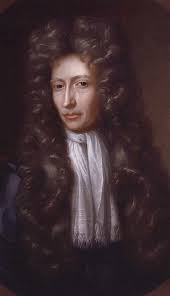
The Sceptical Chymist; or, Chymico-physical doubts & paradoxes: touching the experiments whereby vulgar spagirists are wont to endeavour to evince their salt, sulphur and mercury, to be the true principles of things: to which in this edition are subjoyn'd divers experiments and notes about the producibleness of chymical principles. Oxford: Printed by Henry Hall for Ric. Davis and B. Took, 1680. [20], 440, [27], 268 pp. Also here.
Some Considerations about the reconcileableness of reason and religion, by T.E., a lay-man; to which is annex'd by the publisher, a discourse of Mr. Boyle, about the possibility of the resurrection. London: Printed by T.N. for H. Herringman, 1675. [4], xviii, [2], 126, [6], 39 pp.
The Works of the Honourable Robert Boyle. In six volumes. To which is prefixed The life of the author. A new edition. London, 1772. 1058 pp. Volume 1 of 6.
The Works of the Honourable Robert Boyle. In six volumes. To which is prefixed The life of the author. A new edition. London, 1772. 831 pp. Volume 2 of 6.
The Works of the Honourable Robert Boyle. In six volumes. To which is prefixed The life of the author. A new edition. London, 1772. 831 pp. Volume 2 of 6. Extracts.
"THE Bible is indeed amongst books what the diamond is amongst stones, -the preciousest and the sparklingest; the most apt to scatter light, and yet the solidest and the most proper to make impressions.. And as the Word of God is termed a light, so hath it this property of what it is called, that both the plainest rustics may, if they will not wilfully shut their eyes, by the benefit of its light, direct their steps, and the deepest philosophers may be exercised with its abstruser mysteries. For thus, in the Scripture, the ignorant may learn all requisite knowledge, and the most knowing may learn to discern their ignorance. The books of Scripture illustrate and expound each other: as, in the mariner's compass, the needle's extremity, though it seem to point purposely at the north, doth yet at the same time discover both east and west, as distant as they are from it and from each other; so do some texts of Scripture guide us to the intelligence of others, from which they are widely distant in the Bible, and seem so in the sense. I use the Scripture, not as an arsenal to be resorted to only for arms and weapons to defend this party, or to defeat its enemies, but as a matchless temple, where I delight to be to contemplate the beauty, the symmetry, and the magnificence of the structure, and to increase my awe and to excite my devotion to the Deity there preached and adored."
The Works of the Honourable Robert Boyle. In six volumes. To which is prefixed The life of the author. A new edition. London, 1772. 833 pp. Volume 3 of 6.
The Works of the Honourable Robert Boyle. In six volumes. To which is prefixed The life of the author. A new edition. London, 1772. 726 pp. Volume 4 of 6.
The Works of the Honourable Robert Boyle. In six volumes. To which is prefixed The life of the author. A new edition. London, 1772. 765 pp. Volume 5 of 6.
The Works of the Honourable Robert Boyle. In six volumes. To which is prefixed The life of the author. A new edition. London, 1772. 954 pp. Volume 6 of 6.
The Theological works of the Honourable Robert Boyle, Esq; epitomiz'd. In three volumes. By Richard Boulton, London, 1715. 494 pp. Volume 1 of 3.
The Theological works of the Honourable Robert Boyle, Esq; epitomiz'd. In three volumes. By Richard Boulton, London, 1715. 463 pp. Volume 2 of 3.
The Theological works of the Honourable Robert Boyle, Esq; epitomiz'd. In three volumes. By Richard Boulton, London, 1715. 504 pp. Volume 3 of 3
Brand, Paul Wilson
(1914-2003 )
Physician. Pioneer in Reconstructive Surgery for Lepers. Learn more about Brand at his entry in the scientists of Christian faith project.
WORKS
Pain. Stauros Notebook, Volume 01 Number 4, Jul/Aug, 1982.
With Philip Yancey. Healing: What does God promise? Portland, Ore.: Multnomah Press, 1984. 24 pp.; 18 cm. Note(s): Cover title./ "A different version of this material appeared in Christianity Today, 25 November 1983, pp. 14-21."
With Philip Yancey. Pain: The gift nobody wants. New York: HarperCollins Publishers; [Grand Rapids, Mich.]: Zondervan, 1993.
With Philip Yancey. Fearfully and wonderfully made. Grand Rapids, MI: Zondervan Pub. House, 1980. Limited preview.
With Philip Yancey. In his image. Grand Rapids, Mich.: Zondervan Pub. House, 1984.
With Philip Yancey. In the Likeness of God: The Dr. Paul Brand Tribute Edition of Fearfully and Wonderfully Made and In His Image. Grand Rapids, Mich.: Zondervan Pub. House, 2004. 553 pp. Limited preview. "The human body is a likeness of God, its design revealing insights into the church, the 'body of Christ.' For bestselling author Philip Yancey, the late Dr. Paul Brand--the brilliant hand surgeon who devoted his life to the poorest people of India and Louisiana--was also a likeness of God, living the kind of Christian life that exemplified what God must have had in mind. In the Likeness of God combines the complete texts of Fearfully and Wonderfully Made and In His Image--both Gold Medallion Award-winners which together have sold more than half a million copies--into one volume. Also included for the first time are eight beautiful litanies of praise on the human body by Dr. Brand. In Fearfully and Wonderfully Made, Dr. Paul Brand and bestselling writer Philip Yancey explore the wonder of the human body and uncover the eternal statements that God has made in the very structure of our bodies. Their remarkable journey through inner space--the world of cells, systems, and chemistry--points to a still deeper unseen reality of God's work in our lives. In His Image takes up where the first book leaves off. In five sections--Image, Blood, Head, Spirit, and Pain--the authors unlock the remarkable living lessons contained in our physical makeup."
English naturalist. Trustee of the British Museum. Learn about Brander here.
WORKS
Fossilia hantoniensia collecta, et in Musæo Britannico deposita, a Gustavo Brander .... Londini, 1766 [i.e. 1765]. 58 pp. In Latin. English edition: London, Published by W. Wood, 1829.
"Various opinions have been entertained concerning the
time when and how these bodies (fossils) became
deposited. Some there were who conceive that it might
have been effected in a wonderfully length of time by a
gradual changing and shifting of the seas, etc. But
the most common cause assigned is that of the Deluge."
Brougham, Henry / Brougham and Vaux, Henry Brougham, Baron
(1778-1868)
Lord Chancellor of England. Read about Lord Brougham here.
WORKS
A Discourse of Natural Theology: Showing the nature of the evidence and the advantages of the study / by Henry Lord Brougham. London: Charles Knight, 1835. vii, 296 pp.
Lord Brougham on Natural Theology. Review of Brougham's Natural Theology from Fraser's Magazine for Town and Country, v. 12, n. 70, October 1835.
Paley, William. Natural theology, or, Evidences of the existence and attributes of the Deity: collected from the appearances of nature, with illustrative notes by Henry, Lord Brougham and Sir C. Bell, and an introductory discourse of natural theology by Lord Brougham. To which are added supplementary dissertations and a treatise on animal mechanics by Sir Charles Bell. With numerous woodcuts. London: C. Knight, 1845. 4 volumes illus. Volume 1 of 4. Volume 2 of 4. Volume 3 of 4. Volume 4 of 4.
Hymn-writer. Learn about Browne here, Singers and songs of the church: being biographical sketches of the hymn, by Josiah Miller.
WORKS
The Close of Mr. Browne's Defense of the Religion of Nature: in answer to Christianity as old as the creation. In an address to Christian ministers and the Christian people. By the late Reverend Simon Browne. London: printed for Richard Ford, 1733. [4],56,[4] pp.
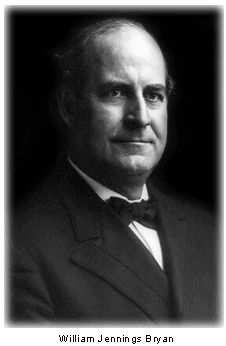
Bryan, William Jennings
(1860-1925)
American political leader. Read about Bryan here and here.
WORKS
Bryan on Belief. Christian Observer, June 19, 1907, p. 8.
"I do not understand all the mysteries of the Bible, but if we live up to all the things in the Bible we can understand we will be kept so busy that we will not have time to worry over the mysterious. My observation is that the people who are all the time worrying about the mysterious things are mighty little concerned about the plainest things in the Bible, that they could apply with profit to themselves. Living in the midst of mystery, I shall not for that reason refuse to accept a religion that will mould our lives for good."
In His Image. New York, Chicago: Fleming H. Revell Company,
1922. 266 pp. Also here.
The Menace of Darwinism. A reissue of chapter four from the
author's volume In His Image, together with comments on the importance of its appeal, reasons for its separate publication and an abstract of the remaining chapters.
Buckland, William
(1784-1856)
British vicar and paleontologist, and first Professor of Geology at Oxford University. Geologist. Named the Megalosaurus, before the term "dinosaur" was coined by Owen, and the first person to recognize fossilized dung. Read about Buckland here, here and here.
Evangelical Anglican pastor. Read about Bugg here.
WORKS
Scriptural Geology; or, Geological phenomena, consistent only with the literal interpretation of the Sacred Scriptures, upon the subjects of the creation and Deluge; in answer to an "Essay on the theory of the earth". London, Hatchard and son [etc.] 1826-1827. 2 vol. 23 cm.
Mr. Bugg on Scriptural And Modern Geology. Christian Observer, Conducted By Members of the Established Church (1802-1842). Boston: May 1828. Vol. 28, Iss. 5; pp. 308-311. With response by Oxoniensis Alter.
The Philosophy Of Modern Geology. Christian Observer, Conducted By Members of the Established Church (1802-1842). Boston: Jun 1828. Vol. 28, Iss. 6; pp. 367-374.
Scriptural Geology. Christian Observer, Conducted By Members of the Established Church (1802-1842). Boston: Jul 1828. Vol. 28, Iss. 7; pp. 428-433.
Bushnell, Horace
(1802-1876)
Clergyman. Read more about Bushnell here and here.
Hungarian botanist. Büttner was appointed professor of medicine and botany in 1756 at the Collegium medico-chirurgicum Berlin. From 1760 to 1768, he was professor of botany and zoology at the University of Göttingen. Read about Büttner here.
Adam, Eve and Noah vs Modern Genetics. Posted May 11, 2010. Excerpt: It comes as a surprise to most people to hear that there is abundant evidence that the entire human race came from two people just a few thousand years ago (Adam and Eve), that there was a serious population crash (bottleneck) in the recent past (at the time of the Flood), and that there was a single dispersal of people across the world after that (the Tower of Babel). It surprises them even more to learn that much of this evidence comes from evolutionary scientists.
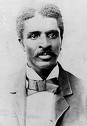
Agricultural science pioneer. Read more about Carver here, and here.
WORKS
Raleigh H. (Raleigh Howard) Merritt,
From Captivity to Fame, or, The Life of George Washington Carver. University of North Carolina at Chapel Hill; Documenting the American South (Project); University of North Carolina at Chapel Hill; Library. [Chapel Hill, N.C.]: Academic Affairs Library, University of North Carolina at Chapel Hill, Electronic edition, 2000. Birth and early childhood -- Early schooling and struggles -- Working his way through college ? First twelve years at Tuskegee -- Discovers possibilities of native products -- The Tuskegee Farmers' Conference -- His creative ability -- The Carver School Farm Club -- Still achieving and helping people -- Views and comments -- Supplement: 105 different ways to prepare the peanut for the table -- The sweet potato and various ways to prepare it -- How to make and save money on the farm -- How to raise pigs with little money -- Poultry raising -- The tomato -- The cow pea -- Three delicious meals every day -- 43 ways to save the wild plum crop -- Alfalfa -- The pickling and curing of meat in hot weather.
"I am not interested in science or any thing else that leaves God out of it." p. 131
"My beloved friend, I do not feel capable of writing a single word of counsel to those dear young people, more than to say that my heart goes out to every one of them, regardless of the fact that I have never seen them and may never do so.
"I want them to find Jesus, and make Him a daily, hourly, and momently part of themselves.
"O how I want them to get the fullest measure of happiness and success out of life. I want them to see the Great Creator in the smallest and apparently the most insignificant things about them.
"How I long for each one to walk and talk with the Great Creator through the things he has created." p. 135.
"I love to think of nature as unlimited broadcasting stations, through which God speaks to us every hour, if we will only tune in and remain so." p. 143.
George Washington Carver: His Life & Faith in His Own Words William J. Frederer. Amerisearch (January 2003)
"The secret of my success? It is simple. It is found in the Bible. 'In all thy ways acknowledge Him and He shall direct thy paths.'" p. 66.
Catcott, Alexander
(1725 - 1779)
English geologist and theologian.
WORKS
A treatise on the deluge. Containing I. Remarks on the Lord Bishop of Clogher's account of that event. II. A full explanation of the scripture ... . The second edition, considerably enlarged. London, 1768. 437 pp.
You will find the moose-deer, native of America, buried
in Ireland; elephants, natives of Asia and Africa,
buried in the midst of England; crocodiles, natives of
the Nile, in the heart of Germany; shell-fish, never
known in the American seas, together with the entire
skeletons of whales, in the most inland regions of
England; trees of vast dimensions, with their roots and
their tops, and some also with leaves and fruit, at the
bottom of mines . . . The pyramids of Egypt are
reckoned to be some of the most ancient structures of
the world, and yet the stones of which these pyramids
consist about with fossil marine shells and coral.
On the Miraculous and Internal Evidences of the Christian Revelation. Books I and II. New York: Leavitt, Lord, & Co.; Boston: Crocker and Brewster, 1836. Books III and IV. New York: Robert Carter, 1840. From The Works of Thomas Chalmers.
The Christian Observer
(1802-1874)
Published in London, England. Conducted by members of the established Church of England. Merged with: Christian advocate and review to form: Christian observer and advocate.
C. E. P.On LaPlace's Algebraical Argument Against Miracles. From The Christian Observer, London edition, October 1838, pp. 617-620. This essay is referenced by Harvard law professor Simon Greenleaf in Testimony of the Evangelists. Editor's note: "There is an able reply to Hume's argument in Dr. Chalmers's Evidences of Christianity, lately reprinted in the third volume of his collected works. It contains some points not included in the reasonings of Campbell, Paley, &c. Mr. Babbage also, in what he calls The Ninth Bridgewater Treatise, has adduced some very striking mathematical arguments to demonstrate that testimony is adequate to the proof of miracles; and that the largest induction which can be made, is not sufficient to shew that a deviation from what are considered the laws of nature may not take place, as in the case of the scriptural miracles of raising the dead to life, however improbable such an event antecedently appeared."
Extract includes Preface by editor and essay by U. U. S., "On the Credulity of Some Religious Persons," pp. 620-621.
"Three Died that Day".
Through his specifically Christian writings, Lewis used logic to explore the meaning of Christianity. In Mere Christianity--which played a decisive role in my conversion to Christ--Lewis cogently explains in simple language original sin, the transcendent Creator God, and the transforming work of Jesus Christ.
... In 1973, in the midst of the Watergate crisis, I visited the home of a friend who read to me from Mere Christianity. In that book, I encountered a formidable intellect and a logical argument that I found utterly persuasive. That night in the driveway of my friend's home I called out to God in a flood of tears and surrendered my life to Christ.
Since November 1963, the years have diminished both John Kennedy and Aldous Huxley. Later disclosures about Kennedy's habitual immorality have diminished his place in history. Toward the end of his life, Huxley retreated into drugs. He urged his followers, "Ignore death up to the last moment; then, when it can't be ignored any longer, have yourself squirted full of morphia and shuffle off in a coma."
By contrast, Lewis offered a muscular faith. "In Christ," he said, "a new kind of man appeared; and the new kind of life which began in Him is to be put into us."
"God," he contended, "cannot give us peace and happiness apart from Himself, because it is not there. There is no such thing."
Today, because of Lewis, there are millions of readers like me who can attest that they too have found God. And Lewis's influence in the marketplace of ideas spreads daily. Of him it can be truly said: "Now he belongs to the ages."
American surgeon and writer. Learn about Comstock here.
WORKS
Outlines of Geology: intended as a popular treatise on the most interesting parts of the science. Together with an examination of the question, whether the days of creation were indefinite periods. Designed for the use of schools of general readers. Third edition. New York, Robinson, Pratt, & Co., 1836. 384 pp. illus. 18 cm.
Elements of Chemistry: In which the Recent Discoveries in the Science are Included and Its Doctrines Familiarly Explained: Illustrated by Numerous Engravings and Designed for the Use of Schools and Academies. Published by D. F. Robinson, 1832. 356 pp.
"The discovery of the laws of definite proportions is one of the most important and wonderful among the great and brilliant achievements of modern chemistry. It is sufficient of itself to convince any reasoning mind, that order and system pervade the universe, and that the minutest atoms of matter, and the vast orbs that move round the heavens are equally under the control of the invariable laws of the creator." --p. 84.
"And it is earnestly recommended to the pupil, that he should not only regard this subject as one of great importance in a scientific relation, but also, when viewed in a different light, as one that tends directly to impress the mind with the mosfserious conviction, that nothing in nature has been left to chance, but that the Almighty Creator has left a witness of himself, even in the proportions, and arrangement of the atoms of matter. Nothing, perhaps, even the sublimest works of nature, are more calculated to elicit the wonder and astonishment of a reflecting mind, than the fact that substances combine with each other in exact, and definite quantities, and that these quantities or proportions, are the same in relation to the same substance throughout the world, and have been so ever since the creation. This discovery may be considered as a new proof, directed expressly to the present age, that the most minute works of what we call nature, do indeed bear the most indubitable marks of divine agency and design." --p. 114.
Christian theologian, analytic philosopher, apologist, and author. He is currently a professor at the Palm Beach Atlantic University and holds the endowed Pledger Family Chair of Philosophy and Ethics. Read about Dr. Copan here and at his website.
WORKS
Co-edited with Tremper Longman III, Christopher L. Reese, Michael Strauss. Dictionary of Christianity and Science, The Definitive Reference for the Intersection of Christian Faith and Contemporary Science. Zondervan, April 25, 2017, 704 pp.
Quick Overview: The relationship between Christianity and science, and between competing philosophies of science, has become one the most important areas of study today. Featuring the work of over 140 scholars, the Dictionary of Christianity and Science provides a thorough introduction to this intersection between science and Christian belief.
Cuvier, Georges / Baron Georges Léopold Chrétien Frédéric Dagobert
[Discours sur les revolutions. English.] Essay on the theory of the earth. With mineralogical notes, and an account of Cuvier's geological discoveries, by Professor Jameson. To which are now added, Observations on the geology of North America; illustrated by the description of various organic remains, found in that part of the world. By Samuel L. Mitchill. New York, Kirk & Mercein, 1818. xxiii, [1], [25]-43l p. VIII pl. (incl. front.) 22 cm. Also here.
American medical practitioner and inventor of the MRI scanner. Read more about Damadian here and in Claudia H. Deutsch, "Patent Fights Aplenty for M.R.I. Pioneer, New York Times, July 12, 1997.
American geologist, minerologist, zoologist. Silliman Professor of Natural History and Geology at Yale College. Awarded the Wollaston Medal by the Geological Society of London in 1874, the Copley Medal by the Royal Society in 1877, and the Clarke Medal by the Royal Society of New South Wales in 1882. Read more about Dana here and here.
WORKS
Manual of Geology. Theodore Bliss and Co., Philadelphia, 1863.
"The record in the Bible is, therefore, profoundly philosophical in the scheme of creation which it presents. It is both true and divine. It is a declaration of authorship, both of Creation and the Bible, on the first page of the sacred volume.
"There can be no real conflict between the two Books [Old and New Testament] of the GREAT AUTHOR. Both are revelations made by Him to man, -- the earlier telling of God-made harmonies coming up from the deep past, and rising to their height when man appeared, the later teaching man's relations to his Maker, and speaking of loftier harmonies in the eternal future."
Canadian geologist, palaeontologist, author, educator, publisher, editor and opponent of Darwinism. Principal of McGill University. Read more about Dawson here, here and in the
The Geological history of plants. D. Appleton & Co., 1892. 294 pp.
What we have learned respecting this wonderful history has served strangely to change some of our preconceived ideas. "We must now be prepared to admit that an Eden can be planted even in Spitzbergen, that there are possibilities in this old earth of ours which its present condition does not reveal to us; that the present state of the world is by no means the best possible in relation to climate and vegetation; that there have been and might be again conditions which could convert the ice-clad arctic regions into blooming paradises, and which at the same time would moderate the fervent heat of the tropics. We are accustomed to say that nothing is impossible with God; but how little have we known of the gigantic possibilities which lie hidden under some of the most common of his natural laws!
The Canadian Ice Age: being notes on the pleistocene geology of Canada, with especial reference to the life of the period and its climatal conditions. W.V. Dawson, 1893. 301 pp.
French physicist, mathematician and philosopher of science. Read about Duhem here, here, and here.
WORKS
Peter E. Hodgson. Pierre Duhem: historian of the Christian origin of science. Contemporary Review, Tuesday, March 1, 1994. Dr. Peter E. Hodgson is a Senior Research Fellow of Corpus Christi College, Oxford. He is University Lecturer in Nuclear Physics and the head of the Nuclear Physics Theoretical Group of the Nuclear Physics Laboratory, Oxford, where he directs a programme of theoretical research in nuclear reactions and nuclear structure.
"The work of Duhem is of great relevance today, for it shows clearly the Christian roots of modern science, thus decisively refuting the alleged incompatibility of science and Christianity still propagated by the secularist establishment. Science is an integral part of Christian culture, a lesson still to be learned even within the Christian Church. From this follows the importance of detailed and accurate scientific studies of many aspects of modern life before any moral judgements are made."
Pierre Maurice Marie Duhem, Pierre Duhem, Roger Ariew. Translated by Roger Ariew. Medieval Cosmology: Theories of Infinity, Place, Time, Void, and the Plurality of Worlds. University of Chicago Press, 1987. 642 pp. "These selections from Le système du monde, the classic ten-volume history of the physical sciences written by the great French physicist Pierre Duhem (1861-1916), focus on cosmology, Duhem's greatest interest. By reconsidering the work of such Arab and Christian scholars as Averroes, Avicenna, Gregory of Rimini, Albert of Saxony, Nicole Oresme, Duns Scotus, and William of Occam, Duhem demonstrated the sophistication of medieval science and cosmology."
Pierre Maurice Marie Duhem, Pierre Duhem, Roger Ariew, Peter Barker. Essays in the History and Philosophy of Science. Hackett Publishing, 1996. 290 pp.
Translated by Roger Ariew, Peter Barker. Limited preview. "Here, for the first time in English, are the philosophical essays - including the first statement of the "Duhem Thesis" - that formed the basis for Aim and Structure of Physical Theory, together with new translations of the historiographical essays presenting the equally celebrated "Continuity Thesis" by Pierre Duhem (1861-1916), a founding figure of the history and philosophy of science. Prefaced by an introduction on Duhem's intellectual development and continuing significance, here as well are important subsequent essays in which Duhem elaborated key concepts and critiqued such contemporaries as Henri Poincare and Ernst Mach. Together, these works offer a lively picture of the state of science at the turn of the century while addressing methodological issues that remain at the center of debate today."
Pierre Maurice Marie Duhem, G. A. Oravas. [L'evolution de la mécanique. English] The Evolution of Mechanics. Springer, 1980. 194 pp. Limited preview.
[Sozein ta phainomena, essai sur la notion de théorie physique de Platon à Galilée. English.] To Save the phenomena, an essay on the idea of physical theory from Plato to Galileo
. Chicago, University of Chicago Press, 1969. xxvi, 120 pp. 23 cm. Translated from the French by Edmund Doland and Chaninah Maschler. With an introductory essay by Stanley L. Jaki.
Octave Manville; Jacques Hadamard; A Darbon. L'oeuvre scientifique de Pierre Duhem, professeur de physique théorique à la Faculté des Sciences de l'Université de Bordeaux, membre de l'Institut. Paris: A. Blanchard, 1928. 554 pp., [1] leaf of plates: port.; 25 cm. I. La physique de Pierre Duhem / par Octave Manville -- II. L'oeuvre de Pierre Duhem dans son aspect mathématique / par J. Hadamard -- III. L'histoire des sciences dans l'oeuvre de P. Duhem / par A. Darbon.
Paul Brouzeng. Duhem, 1861-1916: Science et providence. Paris: Belin, 1987. 187 pp.: ill.; 22 cm. Préface d'Adolphe Pacault.
Stanley L. Jaki. Uneasy Genius: The Life and work of Pierre Duhem. The Hague; Boston: Nijhoff; Hingham, MA: Distributors for the U.S. and Canada, Kluwer Academic Publishers, 1984. xii, 472 pp.: ill.; 25 cm.
Jaime Wisniak. Pierre Maurice Marie Duhem: A Polemical Scientist. The Chemical Educator, Volume 5 Issue 3 (2000) pp 156-161. Published online: 1 June 2000. Abstract. "Pierre Duhem was a multifaceted and prolific scientist active in thermodynamics, physics, history, and philosophy. His rigid and noncompromising attitude, together with deep religious feelings at a time when France was riding a very strong wave of anticlericalism, led to his being unable to teach in Paris and to academic exile in the provinces. He was a prolific writer and he left his name on many equations such as the Gibbs-Duhem and Duhem-Margules equations. We present here a general picture of his life and activities against the political climate in France as well as a discussion of some of his most important contributions to thermodynamics."
With Wesley Gabel and Floyd E. Hosmer. On the Physical Death of Jesus Christ. JAMA. Chicago: American Medical Association, Vol. 255, no. 11, March 21, 1986. pp. 1455-1463: ill.; 28 cm. Also here.
Eells, Myron
(1843-1907)
Pacific Northwest native, missionary, scholar, and collector.
With G. H. Atkinson. The Christian's Future Assured, a discourse preached Aug. 13, 1878, at the funeral of Mrs. M.F. Eels. [Portland, Or., Pub. House of Himes, the printer, 1878, 9 pp.
The Hand of God in the history of the Pacific Coast, annual address delivered before the trustees, faculty, students and friends of Whitman College at the sixth commencement, June 1, 1888. [Walla Walla? : Whitman College?, 1888. 15 pp.; 26 cm.
Elliott, Mark
WORKS
The Fundamentals: Higher Criticism and Archaeology. Bible and Interpretation, July 2005. "Indispensable to the conservative case against higher criticism was the 'testimony' of archaeology. Many of the authors of The Fundamentals referred to the extraordinary evidence discovered by archaeologists. The science of archaeology was authenticating God's word and providing conclusive proof that radical critical theories were specious and dishonorable."
Biblical Interpretation using archeological evidence, 1900-1930. Lewiston: E. Mellen Press, 2002. iii, 300 pp.; 24 cm. Series: Studies in Bible and early Christianity, v. 51; Variation: Studies in the Bible and early Christianity; v. 51.
Fairbairn, Patrick
(1805-1874)
Professor of Divinity, Free Church College, Aberdeen. Read about Fairbairn here.
New and conclusive physical demonstrations both of the fact and period of the Mosaic deluge, and of its having been the only event of the kind that has ever occurred upon the earth. London, T. Ridgeway & sons, 1837. 443 pp., illus., map.; 22 cm.
[Description of the bones at Bigbone Lick]: "That the animals did not perish on the spot, but were carried and deposited by the mighty torrent, which, it is evident, once spread over this country, is probable
from the circumstances of marine shells, plants, and
fossil substances having been found not only mixed with
bones, but adhering to them, and tightly wedged in the
cavities of the skull. "Those holes where eyes did
once inhabit" were often stopped up by shells or pieces
of coral, forcibly crammed into them. . . . Although
elephants are too unwieldy to climb the mountains in a
wild state, and have never been seen, even on the
lowest side of the hills that bound the plain, yet I am
assured that their fossil bones are found in the
highest elevations that man has attained in Tibet.
. . . The bones of many different elephants were
brought into contact; and on some oyster shells were
matted."
Miscellaneous papers on geology and other branches of science, published in various periodical works, and now collected together. Positions géologiques en vérification directe de la chronologie de la Bible. 1832-1846. 535 pp.: ill.; 24 cm. Note(s): Title in manuscript./ Volume of articles and mounted clippings from British publications, collected by Fairholme; added, in ms., are his copious notes, a table of contents and pagination. Includes reviews and criticism of his "A general view of the geology of Scripture" (London, 1833) and "New and conclusive physical demonstrations, both of the fact and period of the Mosaic deluge" (London, 1837). OCLC: 77216092. University of Illinois.
Farrar, Adam Storey
(1826-1905)
Apologist.
WORKS
Science in Theology: Sermons preached in St. Mary's, Oxford, before the university. By Adam S. Farrar. Philadelphia, Smith, English & co.; New York, Sheldon & co.; [etc., etc.] 1860. 250 pp. 20 cm.
[Demonstration de l'existence de Dieu- English] A Demonstration of the Existence of God: Deduced from the knowledge of nature and more particularly from that of man. 2nd edition. London: Printed for John Murray, 1769. xxiii, 279 pp.; 14 cm. By M. de la Mothe Fenelon, Translated from the French, by Samuel Boyse.
Fisher, George Park
(1827-1909)
American theologian. Read more about Fisher here and here
Life of Benjamin Silliman, M.D., LL.D.: late professor of chemistry, mineralogy, and geology in Yale college: chiefly from his manuscript. Volume 1. New York, 1866. 426 pp. 2 vols.
Life of Benjamin Silliman, M.D., LL.D.: late professor of chemistry, mineralogy, and geology in Yale college: chiefly from his manuscript. Volume 2 New York, 1866. 420 pp. 2 vols.
Flynn, John
(1880-1951)
Australian Presbyterian minister and aviator who founded the Royal Flying Doctor Service, the world's first air ambulance. Read about Flynn here, here, here.
Guide to the Study of Moral Evidence; or of that species of reasoning, which relates to matters of fact and practice. Boston: James Loring, 1834. vii, 246 pp.; 16 cm.
Gish, Duane T.
(1921- )
Biochemist.
WORKS
The Amazing Story of Creation from Science and the Bible. New Leaf Publishing Group, October 1996. 112 pp. Buy this book here.
Paul Gosselin is an independent researcher specializing in ideologies, belief systems and religions. He holds a Masters in Social Anthropology and is the author of books both in French and English. He has done extensive research on postmodernism. He has lived in Nova Scotia, California, Vancouver Island and currently resides in Quebec (Canada).
WORKS
Flight from the Absolute: Cynical observations on the postmodern West. Two volumes. Québec : Samizdat, 2012. Volume 1 of 2. 412 pp. Volume 2 of 2. 566 pp.
With Joannes Quirinus. De testaceis fossilibus Musaei Septalliani et Jacobi Grandii de veritate diluvii universalis, et testaceorum, quae procul a Mari reperiuntur generatione epistolae. Venetiis, 1676. 76 pp. In Latin. Translation: About the Truth of the Universal Deluge and the Remains Which Are Found At Great Distance From the Sea.
Grimké, Thomas Smith
(1786-1834)
South Carolina judge and pacifist.
WORKS
Reflections on the character and objects of all science and literature, and on the relative excellence and value of religious and secular education, and of sacred and classical literature
in two addresses and an oration with additions and improvements: with an appendix. New Haven, [Conn.]: H. Howe, 1831. xii, 201 pp.; 18 cm. An address on the character and objects of science: and, especially on the influence of the Reformation on the science and literature, past, present and future, of Protestant nations -- Address on the expediency and duty of adopting the Bible, as the text book of duty and usefulness, in every scheme of education, from the primary school to the university -- Oration on the advantages, to be derived, in a literary point merely, from the introduction of the Bible, as a text book of sacred literature, in every scheme of education, from the primary school to the university -- Appendix. A letter of Thomas S. Grimké, on the study of the Bible -- Address at the dedication of the building in Chalmers Street, designed as a depository for Bibles, tracts and Sunday school books, and for the anniversary celebrations of religious societies. Also here.
It seems to me that our country has yet to learn one great truth on this subject, that the whole European scheme of education ever has been intimately associated with states of society, forms of government and religious establishments totally inconsistent with ours: that the great object there
has been to educate the few, and not the many, to train up
the subjects of monarchies, and not the citizens of a republic; in a word, to perpetuate aristocracy even in education.
Let us learn then, that education with us, like Society, Government, Religion, must be essentially American, and not European; that it must partake deeply and extensively of the vital spirit of American Institutions; that it must, in order to ensure its durability and usefulness, be adapted to our state of Society, forms of Government and modes of Religion: and that this conformity can never be discovered, much less preserved by any imitation of European plans. With the Bible in one hand, and our own history in the other, we shall be able to judge best, what education our country needs. Literary Education in its highest sense, a sense but little known in this country, is much the same every where; but religious and moral, political and civil education, in a word, for the preparation for practical duty and usefulness, private and public, must be to a great extent, national and local, therefore peculiar. Ours ought to be an education, adapted to our peculiar character, circumstances, and destiny, as a free, educated, peaceful, Christian People. It ought to be eminently adapted to our development and progress, to the improvement and preservation of our institutions, in a word, to the great truth THE PEOPLE GOVERN. Our SCHOOLS are for the education of that PEOPLE, our COLLEGES for the education of the PUBLIC SERVANTS AND PROFESSIONAL AGENTS of that People. But all have one end, one object, THE GOOD OF THE PEOPLE.
Hannam, James
(fl. 21st century)
British author. "I am a historian of science specialising in the relationship between science and Christianity in the Medieval and Early Modern eras. I took my Masters (2003) from Birkbeck College, University of London and my PhD (2008) in the History and Philosophy of Science at Pembroke College, University of Cambridge. My reviews and articles have been published in the academic journals British Journal of the History of Science, Transactions of the Cambridge Bibliography Society, Science and Christian Belief and Perspectives on Science and Faith." Learn more about Hannam here.
Tom Gilson. Review: God's Philosophers by James Hannam. Posted September 25, 2009. Extract:
"This is no simplistic apologetic for Christianity as the root of scientific thinking. Hannam summarizes the church's relationship with natural philosophy as one of 'creative tension.' Nevertheless it's impossible not to notice who led the way in medieval natural philosophy:
* A mathematician Pope at the turn of the last millennium.
* A monk in 1092 who used an astrolabe to construct the lunar calendar.
* St. Anselm and Peter Abelard, clerics who elevated the role of reason and logic in philosophy and theology.
* Cathedral school scholars who taught that 'God is loving and consistent rather than capricious and arbitrary' paving the way for the study of a consistently operating world of nature.
* The universities, products of the Church.
* The influential bishop of Paris who condemned certain (not all, especially in view of the work of St. Thomas Aquinas) Aristotelian-based dogmas. It was an act that remains controversial, yet one which clearly opened the door for experimental study, rather than restricting natural philosophy to Aristotle's pure reasoning.
* A Polish clergyman, Copernicus, who challenged Aristotelian and Ptolemaic views of the heavens."
The Myth of the Flat Earth. "Contrary to popular belief, every educated person in the Middle Ages was well aware that the Earth is a sphere and the Church did not suggest otherwise. Here is a look at this myth of alleged Christian dogmatism and how it got started."
The Mythical Conflict between Science and Religion. "The conflict hypothesis began as part of the reaction against religion in the nineteenth century with the work of John William Draper and Andrew Dickson White. Despite the fact that it is utterly rejected by all practising historians of science, it lives on in the popular imagination and is incredibly hard to kill off. This article examines some common misconceptions and exposes White's errors and omissions."
Did Christians Eradicate Pagan Learning? "We often here about the alleged Christian destruction of pagan literature. I have examined the original sources and found the accusation of widespread library burning is baseless. However, heretical Christian works, and magical and astrological texts faired as badly under Christians as they had under pagan Emperors."
A Historical Introduction to the Christ Myth. "This article first compares the idea that Jesus never existed to the theory that Shakespeare did not write his own plays. It then examines the various authors who, over the last century and a half, have tried to sell the idea that Jesus never lived."
The Emperor Justinian's Closure of the School of Athens. "Almost every popular history of philosophy or science mentions that Justinian closed Plato's academy in 529AD. This is portrayed as the end of ancient science and the start of the "Dark Ages". This article examines the legends about this event and asks what really happened."
Frequently Asked Questions about the Inquisition. "There can be little doubt that the Inquisition is one of the most notorious institutions in history. While some of that ill fame is warranted, a great number of myths and legends have sprung up about its workings. This FAQ, with a bibliography and references, gives the historical facts about the Inquisition in its various guises."
The Mysterious Fate of the Great Library of Alexandria. "An awful lot of ink has been splashed around about the destruction of the Great Library. You can blame Christians, Moslems or Julius Caesar depending on your taste. But the only way to find the truth is a careful examination of the original sources. This essay goes over them with a fine-toothed comb and finds that while Christians and Moslems were almost certainly innocent, the Romans just might have a lot to answer for."
Deconstructing Copernicus. "The great work of Copernicus, his De revolutionibus, is one of the most misunderstood books in history, largely because hardly anyone has actually read it. This essay examines the arguments Copernicus uses and his stated motivations so as to discover exactly what he did achieve and just how important his religious beliefs were in inspiring the conceptual breakthrough of heliocentricism."
The Decline of Witch Trials in Europe. "The witch craze is one of the most controversial subjects in Christian history and for good reason. It killed far, far more than the Inquisition and is the best example of how religious beliefs can have catastrophic consequences if taken in the wrong direction. This essay tries to debunk some myths about witches and asks how the trials came to an end."
Science and the Church in the Middle Ages. "Progress in science is often assumed to have ground to a halt during the Middle Ages under a blanket of clerical disapproval. This essay is an overview of the intellectual and social state of science at the time, the Church's generally positive attitude and now science interacted with religion during this period."
Science owes much to both Christianity and the Middle Ages. Posted May 18, 2011. Soapbox Science is a guest blog hosted by Nature Publishing Group, providing a forum for the discussion of science news, the history of science, ethics, details of expeditions or outreach activities and book reviews.
Few topics are as open to misunderstanding as the relationship between faith and reason. The ongoing clash of creationism with evolution obscures the fact that Christianity has actually had a far more positive role to play in the history of science than commonly believed. Indeed, many of the alleged examples of religion holding back scientific progress turn out to be bogus. For instance, the Church has never taught that the Earth is flat and, in the Middle Ages, no one thought so anyway. Popes haven't tried to ban zero, human dissection or lightening rods, let alone excommunicate Halley's Comet. No one, I am pleased to say, was ever burnt at the stake for scientific ideas. Yet, all these stories are still regularly trotted out as examples of clerical intransigence in the face of scientific progress.
Admittedly, Galileo was put on trial for claiming it is a fact that the Earth goes around the sun, rather than just a hypothesis as the Catholic Church demanded. Still, historians have found that even his trial was as much a case of papal egotism as scientific conservatism. It hardly deserves to overshadow all the support that the Church has given to scientific investigation over the centuries.
Remarks on some late papers relating to the universal deluge, and to the natural history of the earth. London: Printed for R. Wilkin, 1697. [16], 270 pp. "All sober and judicious men are now convinced that the exuviae of sea animals, so plentifully found at this day in the strata of the earth, and in the most hard and solid stone and marble, are the lasting proof of the Deluge itself and of its universality."
Plasma physicist, nuclear engineering educator. Head of Department of Nuclear Engineering, Massachusetts Institute of Technology, Cambridge, Massachusetts. Learn more about Hutchinson in the scientists of Christian faith feature.
WORKS
Science: Christian and Natural.
"I take the position that science and faith are complementary views of the world; that science studies the world insofar as it behaves in regular ways readily investigated using the reductionist methods of the physical sciences, and that theology finds its place along with many other disciplines, in understanding the human, personal, purposeful, and spiritual aspects of the world, which are not describable in reductionist terms."
"...the question arises, why did modern science grow up almost entirely in the West, where Christian thinking held sway? There were civilizations of comparable stability, prosperity, and in many cases technology, in China, Japan, and India. Why did they not develop science? It is acknowledged that arabic countries around the end of the first millenium were more advanced in mathematics, and their libraries kept safe eventually for Christendom much of the Greek wisdom of the ancients. Why did not their learning blossom into the science we now know? More particularly, if Andrew White's portrait of history, that the church dogmatically opposed all the 'dangerous innovations' of science, and thereby stunted scientific development for hundreds of years, why didn't science rapidly evolve in these other cultures?
"A case that has been made cogently by Stanley Jaki, amongst others, is that far from being an atmosphere stifling to science, the Christian world view of the West was the fertile cultural and philosophical soil in which science grew and flourished. He argues that it was precisely the theology of Christianity which created that fertile intellectual environment. The teaching that the world is the free but contingent creation of a rational Creator, worthy of study on its own merits because it is 'good', and the belief that because our rationality is in the image of the creator, we are capable of understanding the creation: these are theological encouragements to the work of empirical science. Intermingled with the desire to benefit humankind for Christian charity's sake, and enabled by the printing press to record and communicate results for posterity, the work of science became a force that gathered momentum despite any of the strictures of a threatened religious hierarchy."
The philosophical and theological works of the late truly learned John Hutchinson. 3rd ed. London: Printed for James Hodges, 1749. 14 v. in 12. Volume 1 of 12. Moses's principia. Part I. Edited by Robert Spearman and Julius Bate. Each volume has a different titlepage describing its own contents and (except vol.8) giving its volume number. Only vol.1 has a collective titlepage, dated 1749. The works in vols. 1-4 are of the third edition and vols.1-3 are dated 1748. A prospectus for this work was published in 1747, as 'proposals for printing by subscription, the philosophical and theological works .. ', and another in 1748. Vol.VII is misnumbered VI, and there are indexes to all 12 vols. in vol.12.
Emeritus Professor of Psychology at the University of St. Andrews, and was formerly President of The Royal Society of Edinburgh, Scotland's National Academy of Science and Letters. He was made Commander of the Order of the British Empire in 1992 for his services to science and to psychology in Britain. He established the Department of Psychology at St. Andrews University and his research interests centre around cognitive psychology and neuropsychology.
WORKS
Psychology and Christianity. Downers Grove, Ill.: InterVarsity Press, 1976. 177 pp.; 21 cm. Buy this book here.
The Book of Mormon in Light of Science. 15th edition, extensively revised & enlarged. Marion, OK: Utah Missions, 1997. 92 pp.: ill.; 21 cm. "Extensively revised and enlarged from an article entitled 'A Biologist Examines the Book of Mormon', published in Journal of the American Scientific Affiliation, XXXVII, 2, June 1985."
Kitchen, K. A. (Kenneth Anderson)
(1932- )
Old Testament scholar with specialty in Egypt. Read more about Kitchen here.
WORKS
Ancient Orient and Old Testament. Chicago/London, Tyndale Press, 1966. xiii, 14-191 pp. 23 cm. This is a prior edition of Kitchen's new book, On the Reliability of the Old Testament.
On the Reliability of the Old Testament. Grand Rapids, Mich.: W.B. Eerdmans, 2006. xxii, 662 pp. : ill., maps; 25 cm. Contents: First things first - What's in question? -- 2. "In medias res" - the era of the Hebrew kingdoms -- 3. Home and away - exile and return -- 4. The empire strikes back - Saul, David, and Solomon -- 5. Humble beginnings - around and in Canaan -- 6. Lotus eating and moving on - Exodus and covenant -- 7. Founding fathers or fleeting phantoms - the patriarchs -- 8. A vitamin supplement - Prophets and prophecy -- 9. Back to Methuselah - and well beyond -- 10. Last things last - a few conclusions.
Buy this book here.
[Genesis, sive Mosis prophetæ liber primus. English.] Twelve Dissertations out of Monsieur Le Clerk's Genesis, concerning the Hebrew tongue. Manner of interpreting the Bible. Author of the Pentateuch. Temptation of Eve by the Serpent. Flood. Confusion of languages. Original of circumcision. Divine appearances in the Old Testament. Subversion of Sodom. Pillar of salt. Coming of Shiloh. Several obscure texts in Genesis explain'd and illustrated. Done out of Latin by Mr. Brown. To which is added, a dissertation concerning the Israelites passage through the Red Sea, by another hand. London: printed and are to be sold by R. Baldwin, near the Oxford-Arms in Warwick-Lane, 1696. [8], 344 pp.; 8vo.
Natural Theology; or, The existence, attributes and government of God including the obligations and duties of men, demonstrated by arguments drawn from the phenomena of nature. Syracuse, N.Y.: Wesleyan Methodist Pub. House, 1866. 196 pp.
Lennox, John C. / John Carson
(Born 1945)
British mathematician, philosopher of science and Christian apologist who is Professor of Mathematics at the University of Oxford. Fellow in Mathematics and Philosophy of Science at Green Templeton College, Oxford University. Pastoral Advisor of Green Templeton College and Fellow of Wycliffe Hall. Learn more about Lennox here.
Extract:
Science as we know it exploded onto the world stage in Europe in the 16th and 17th centuries. Why then and why there? Alfred North Whitehead's view, as summarised by C. S. Lewis, was that: "Men became scientific because they expected law in nature, and they expected law in nature because they believed in a lawgiver." It is no accident that Galileo, Kepler, Newton and Clerk-Maxwell were believers in God.
Melvin Calvin, Nobel Prize-winner in biochemistry, finds the origin of the conviction, basic to science, that nature is ordered in the basic notion: "that the universe is governed by a single God, and is not the product of the whims of many gods, each governing his own province according to his own laws. This monotheistic view seems to be the historical foundation for modern science."
Far from belief in God hindering science, it was the motor that drove it. Isaac Newton, when he discovered the law of gravitation, did not make the common mistake of saying: "now I have a law of gravity, I don't need God." Instead, he wrote Principia Mathematica, the most famous book in the history of science, expressing the hope that it would persuade the thinking man to believe in a Creator.
Newton could see, what sadly many people nowadays seem unable to see, that God and science are not alternative explanations. God is the agent who designed and upholds the universe; science tells us about how the universe works and about the laws that govern its behaviour. God no more conflicts with science as an explanation for the universe than Sir Frank Whittle conflicts with the laws and mechanisms of jet propulsion as an explanation for the jet engine. The existence of mechanisms and laws is not an argument for the absence of an agent who set those laws and mechanisms in place. On the contrary, their very sophistication, down to the fine-tuning of the universe, is evidence for the Creator's genius. For Kepler: "The chief aim of all investigations of the external world should be to discover the rational order which has been imposed on it by God and which he revealed to us in the language of mathematics."
As I scientist then, I am not ashamed or embarrassed to be a Christian. After all, Christianity played a large part in giving me my subject.
... there are eminent, scientists, like Professor William Phillips (Physics Nobel Prizewinner, 1998), Professor Sir John Polkinghorne FRS (Quantum Physicist, Cambridge) and, in the United States, the current Director of the National Institute of Health and former Director of the Human Genome Project, Francis Collins (to name just three) who, though well aware of Hume's argument, nevertheless publicly, and without either embarrassment or any sense of irrationality or absurdity, affirm their belief in the resurrection of Jesus Christ, which they regard as the supreme evidence for the truth of the Christian worldview. ...
In any case, hallucination theories are severely limited in their explanatory scope: they only attempt to explain the appearances. They clearly do not account for the empty tomb - no matter how many hallucinations the disciples had, they could never have preached the resurrection in Jerusalem, if the nearby tomb had not been empty.
To anyone who knows anything about the ancient laws regarding legal testimony, it is very striking that the first reports mentioned in the Gospels of appearances of the Risen Christ were made by women. In first-century Jewish culture, women were not normally considered to be competent witnesses. At that time, therefore, anyone who wanted to invent a resurrection story would never have thought of commencing it in this way. The only value of including such a story would be if it were both true and easy to verify. Its very inclusion, therefore, is a clear mark of historical authenticity.
The evidence of the empty tomb, the character of the witnesses, the explosion of Christianity out of Judaism and the testimony of millions today are inexplicable without the resurrection. As Holmes said to Watson: "How often have I said to you that when you have eliminated the impossible, whatever remains, however improbable, must be the truth?"
Video presentation. Bethinking 2/6: John Lennox on Stephen Hawking's "The Grand Design." Posted on Dec 18, 2012. John Lennox critiques physicist Stephen Hawking's book "The Grand Design" and explains why, despite its media hype, neither God nor philosophy is dead.
Video presentation. A Matter of Gravity: God, the Universe & Stephen Hawking -- the 2010 Margaret Harris Lecture on Religion (Dundee University). Posted on February 5, 2011. Professor John Lennox investigates Steven Hawking's metaphysical claims in his latest book "The Grand Design".
Doctor. Graduate of University of Pennsylvania Medical School and the London School of Tropical Medicine, was a medical missionary in Africa for many years before he established a medical practice in New York. Read about McMillen here.
WORKS
With David E. Stern, 3rd edition. None of these diseases: the Bible's health secrets for the 21st century. Grand Rapids, Mich.: F.H. Revell,2000. 285 pp. : illustrations ; 23 cm. Contents: Pt. 1: The source of wholeness -- Eel eyes and goose guts -- Back to the breakthrough -- A labor of love -- To sewer or not to sewer -- A cemetery plot -- Pt. 2: Physical wholeness -- Beelzebub in a bottle -- Cancer by the carton -- Torture or nuture? -- The mystery of the eighth day -- Pt. 3: Sexual wholeness -- Born gay? -- Sexual musical chairs -- AIDS--everyone's problem -- America's sexperiment -- A woman's right -- Our condom nation -- Spiritual sexuality -- The secret of great sex -- Pt. 4: Emotional wholeness -- The spirit-mind-body link -- Public enemy number one -- The stress-free life -- The faith factor -- Danger--anger -- The high cost of getting even -- Mind over matter -- Pt. 5: Spiritual wholeness -- Tears: eternity's contact lenses -- Don't shoot for the moon -- Are you wearing a parachute? -- The soul set free.
Modern-day keeper of Western Asiatic Antiquities at the British Museum.
WORKS
The Bible in the British Museum: interpreting the evidence. New edition. New York: Paulist Press,
2004. 136 pp.: ill., maps; 25 cm.
Montgomery, John Warwick
(1931- )
World-class Christian apologist, philosopher and legal expert. John Warwick Montgomery is Distinguished Research Professor of Philosophy and Christian Thought, Patrick Henry College (Virginia); and Emeritus Professor of Law and Humanities at the University of Luton (England). Professor Montgomery holds ten earned degrees, including the LL.B.; LL.M. from Cardiff University, Wales; the A.B. with distinction in Philosophy (Cornell University; Phi Beta Kappa); B.L.S. and M.A. (University of California at Berkeley); B.D. and S.T.M. (Wittenburg University, Springfield, Ohio); M. Phil. in Law (University of Essex, England); Ph.D. (Univeristy of Chicago), and the Doctorat d'Université from Strasbourg, France. He told Contemporary Authors, "My world-view was hammered out at university; there I became a Christian. . . . Like the late C. S. Lewis (one of my greatest heroes), I was literally dragged kicking and screaming into the Kingdom by the weight of evidence for Christian truth."
Visit The John Warwick Montgomery website and read more about Montgomery here.
Faith Founded on Fact, by John Warwick Montgomery. 240 pages. A provocative and controversial book intended to encourage Christians to make the case for the truthfulness of Christianity based on factual evidence. Included are chapters on "The Place of Reason in Christian Witness", "Science, Theology, and the Miraculous", "How Muslims Do Apologetics", and "Dr. Johnson as Apologist". Contains the most sophisticated refutation available anywhere of the arguments of David Hume and Anthony Flew against miracles in general and the resurrection of Christ in particular. Buy this book here.
Science, Theology and the Miraculous. An invitation presentation of the Lee College Symposium on the Theological Implications of Science (Cleveland, Tennessee) on March 18, 1977. From the Journal of the American Scientific Affiliation, v. 30, December 1978, pp. 145-153.
With George Young. A Portrait of geology. First work published: London: Relfe and Fletcher, 1838. Second work published: 1838. Third work published: 1840. vii, 216 pp. illus., 2 pl. 21 cm.
Scientist. Learn more about Newton from his entry in the list of scientists of Christian faith and here -- NOTE: There is some discussion about Newton having heretical beliefs; we leave it to the reader to decide -- one way or the other. See also here.
Murray. Some Account of Sir Isaac Newton. The Panoplist, and Missionary Magazine (1808-1817) Volume 2, n. 2; July 1809; pg. 49-50.
Sir David Brewster. (1781-1868). Memoirs of the Life, Writings, and Discoveries of Sir Isaac Newton. Volume 1 of 2. Second edition. Edinburgh: Edmonston and Douglas, 1860. 462 pp.
Volume 2 of 2. Edinburgh: Thomas Constable and Co., 1855.
Although a traditionary belief has long prevailed that Newton was an Arian, yet the Trinitarians claimed him as a friend, while the Socinians, by republishing his Historical Account., &c., under the title of "Sir Isaac Newton on the Trinitarian Corruptions of Scripture," wished it to
be believed that he was a supporter of their views. That he was not a Socinian is proved by his avowed belief that our Saviour was the object of " worship among the primitive Christians" and that he was "the Son of God, as
well by his Resurrection from the dead, as by his supernatural birth of the Virgin." He animadverts, indeed," as Dr. Henderson observes,
1 "with great freedom, and sometimes with considerable asperity, on the orthodox; but it does not appear that this arose from any hostility to their views respecting the doctrine of the Trinity, or that it was opposed to any thing beside the unfair mode in which he conceived they had treated one or two passages
of Scripture, with a view to the support of that doctrine." Influenced by similar views, and in the absence of all direct evidence, I had no hesitation when writing the Life of Sir Isaac Newton in 1830, in coming to the conclusion that he was a believer in the Trinity;
2 and in giving this
opinion on the creed of so great a man, and so indefatigable a student of Scripture, I was well aware that there are various forms of Trinitarian truth, and various modes of expressing it, which have been received as orthodox in the purest societies of the Christian Church. It may be an ecclesiastical privilege to burrow for heresy among the obscurities of thought, and the ambiguities of language, but in the charity which thinketh no evil, we are bound to believe that our neighbour is not a heretic till the charge against him has been distinctly proved.
1 The Great Mystery of Godliness, &c., p. 2.
2 M. Biot had previously arrived at the same opinion. "There is absolutely nothing,' he says, "in the writings of Newton which can justify, or even authorize the conjecture that he was an Antitrinitarian."--Biog. Univ., tom. xxxi, p. 190. [Jean-Baptiste Biot, 1774-1862. Life of Sir Isaac Newton, 1833. 38, [2] pp.; 21 cm.translated from Biographie universelle.]
Thomas C. Pfizenmaier. Was Isaac Newton an Arian?. Journal of the History of Ideas, v. 68, n. 1, 1997, pp. 57?80, 1997.
"Newton was neither 'orthodox'(according to the Athanasian creed) nor an Arian. He believed that both of these groups had wandered into metaphysical speculation. He was convinced that his position was the truly biblical one, in which the Son was affirmed to be the express image of the Father, and that this position was best represented by those Bishops at Nicaea who held the Son to be of the same kind of substance as the Father but not numerically the same. Newton may still be considered heterodox, but in light of the evidence of his theological development he may no longer be considered an Arian, that
is to say, a heretic."
North British Review
(1844-1871)
Edinburgh: W.P. Kennedy, Quarterly. Began with v. 1 in May 1844; ceased with v. 14 in Jan. 1871.; 53 v.: ill., maps; 23 cm.
It's plain to see; Flat land surfaces are strong evidence for the Genesis Flood.Excerpt: A planation surface is a large, level, or nearly level, land surface that has been 'planed' flat by running water. Scientists believe that running water cut these surfaces because they are covered by rounded rocks. Water is the only agent we know that can produce rounded rocks, by tumbling them against each other as it transports them along.,,, Planation surfaces sometimes cut across tilted sedimentary rocks. They are especially easy to recognize. The layered sedimentary rocks are often a combination of hard and soft rocks. Only a gigantic, fast-running water flow could have cut both the hard and soft rocks evenly. ... Geomorphologist Lester King has documented that planation surfaces are abundant on all continents and found at different elevations. He noted about 60% of Africa is a series of planation surfaces. Some planation surfaces are located on the top of mountains.
Osterholm, Tim
(Fl. 21st Century)
BA in Business Administration & Human Resources Management.
WORKS
The Table of Nations
(Genealogy Of Mankind)and the Origin of Races (History Of Man)
. Excerpt: The fact is, that wherever its statements can be sufficiently tested, Genesis 10 of the Bible has been found completely accurate; resulting partly from linguistic studies, partly from archaeology, and, more recently still, from the findings of physical anthropologists, who are, to this day, recovering important clues to lines of migration in ancient historic times. As implied in verse 32 of Genesis 10, this Table includes everybody; meaning that so-called fossil man, primitive peoples (ancient and modern) and modern man are all derived from Noah's three sons, Shem, Ham, and Japheth.
Owen, Charles
(d. 1746)
WORKS
An essay towards a natural history of serpents: in two parts. I. The first exhibits a general view of serpents, in their various aspects...The second gives a view of most serpents known in the several parts of the world... III. To which is added a third part; containing six dissertations upon the following articles. 1. Upon the primeval serpent in paradise. 2. The fiery serpents that infested the camp of Israel. 3. The brazen serpent erected by Moses. 4. The divine worship given to serpents by the nations. 5. The origin and reason of that monstrous worship. 6. Upon the adoration of different kinds of beasts by the Egyptians ... The whole intermix'd with variety of entertaining digressions, philosophical and historical (1742). Also here.
Paley, William
(1743-1805)
English divine and philosopher. Learn more about Paley here and here.
WORKS
Natural Theology; or, Evidences of the existence and attributes of the Deity, collected from the appearances of nature. Sixth edition. Albany, Printed for Daniel & Samuel Whiting, 1803. viii, [9]-368 pp. 18 cm.
Natural theology, or, Evidences of the existence and attributes of the Deity: collected from the appearances of nature, with illustrative notes by Henry, Lord Brougham and Sir C. Bell, and an introductory discourse of natural theology by Lord Brougham. To which are added supplementary dissertations and a treatise on animal mechanics by Sir Charles Bell. With numerous woodcuts. London: C. Knight, 1845. 4 volumes illus. Volume 1 of 4. Volume 2 of 4. Volume 3 of 4. Volume 4 of 4.
Henry Lord Brougham. A Discourse of Natural Theology: Showing the nature of the evidence and the advantages of the study / by Henry Lord Brougham. London: Charles Knight, 1835. vii, 296 pp.
Lord Brougham on Natural Theology. Review of Brougham's Natural Theology from Fraser's Magazine for Town and Country, v. 12, n. 70. October 1835.
English physician and paleontologist. Learn more about Parkinson in his entry here, and here. Parkinson's Disease Society biography here.
WORKS
Organic Remains of a former world: An Examination of the mineralized remains of the vegetables and animals of the antediluvian world; generally termed extraneous fossils. 2nd edition, 1811. Volume 1 of 3; Volume 1 of 3; Volume 1 of 3.
Philosopher and scientist. Learn more about Pascal in his entry here, and here
WORKS
Pensees: Thoughts on religion
and other curious subjects. Written originally in French by Monsieur Pascal. Translated into English by Basil Kennet. The fourth edition. London: printed for R. Ware; and J. and H. Pemberton, 1741. 375,[1] p.
Penn, Granville
(1761-1844)
Geologist. Grandson of William Penn of Pennsylvania. Read about Penn here and here and here.
WORKS
A Comparative estimate of the mineral and Mosaical geologies. 2d edition. London, Printed for J. Duncan, 1825. 2 v. 22 cm. Volume 1 of 2. Volume 2 of 2.
Canadian astrophysicist. Astronomer. President and Director of Research, Reasons to Believe. California Institute of Technology, Pasadena, research Fellow in radio astronomy, 1973-78; Sierra Madre Congregational Church, Pasadena, CA, minister of evangelism, 1975-86, minister of apologetics, 1986- present; Reasons To Believe, Inc. (Progressive Creationist ministry), Pasadena, CA, president, 1986 - present. B.Sc. (1967) in Physics, University of British Columbia, M.Sc. (1968) in Astronomy, University of Toronto, Ph.D. (1973) in Astronomy, University of Toronto. Memberships: American Institute of Physics, American Science Affiliation, American Astronomical Society, American Association for the Advancement of Science. Advocate: Old Earth creation, local flood.
Ross: "What is needed in life is a healthy skepticism, the kind that is promoted in the Bible: 'Test everything.' In other words, belief is to be based on established facts." -"Hugh Norman Ross." Marquis Who's Who TM. Marquis Who's Who, 2004.
Reasons to Believe profile.
WORKS
The Fingerprint of God: Recent Scientific Discoveries Reveal the Unmistakable Identity of the Creator, 1989, 2d edition, 1991 (More than 100,000 copies sold.)
The Creator and the Cosmos, 1993, ed edition, 1995.
Creation and Time, 1994; Beyond the Cosmos, 1996.
Lights In the Sky & Little Green Men: A Rational Christian Look at UFOs and Extraterrestrials, 2002.
Origins of Life. (Co-authored with Fazale Rana), 2004.
A Matter of Days, 2004.
American historian and religious studies scholar. Professor of History, the University of California, Santa Barbara. Read about Russell here. See also here.
Jerry Bergman. The Flat-Earth Myth and Creationism. "University of California at Santa Barbara Professor of History, Jeffrey Burton Russell, has effectively shown the arguments of both Draper and White were totally without merit in his now-classic study of the affair. He carefully documents that the entire Church rejected the flat-earth theory, and Cosmas? writings were almost totally ignored. Russell also examined a large selection of textbooks and found those written before 1870 usually included the correct account, but most textbooks written after 1880 uncritically repeated the erroneous claims in Washington Irving, John William Draper and Andrew Dickson White. Russell concludes that Irving, Draper and White were the main writers responsible for introducing the erroneous flat-earth myth that is still with us today."
Flattening the Earth. Sep-Oct 2002, Mercury Magazine, pp. 34-38.
Contrary to popular folklore, medieval Europeans knew Earth was a sphere, and, with the notable exception of Christopher Columbus, most had a pretty good idea of its true size.
One of the few things that everybody "knows" about medieval Europe is that people thought Earth was fiat. The cliché that Columbus discovered that Earth is round is taught so frequently in American grade schools that it has become ingrained in our consciousness.
But for nearly 80 years historians have demonstrated that medieval Europeans knew Earth to be spherical. In fact, virtually no educated person in the Middle Ages (roughly defined as 500-1500 AD.) believed Earth was fiat. The evidence is as overwhelming as historical evidence can be. German historian Reinhard Krueger and other modern scholars have identified about 100 medieval writings dealing with Earth's shape. Five seem to assert flatness, and two are ambiguous. The rest take the globe for granted. The Columbus cliché is a Flat Error popularized by the American writer Washington Irving.
Swiss mathematician and physician. Read about Scheuchzer here.
WORKS
Piscium querelae et vindicae. Gessner
Edition: 1708. 36 S. zahlr. Ill. English: Complaint and Vindication of the Fishes. Descriptions of fossil fish found in the Alps. In Latin. Also here.
Outline of the course of geological lectures given in Yale College. New Haven, 1829. 127 pp.
"Respecting the Deluge, there can be but one opinion:
geology fully confirms the Scriptural history of the
event . . . Whales, sharks, and other fishes,
crocodiles and amphibians, the mammoth and the extinct
elephant, the rhinoceros, the hippopotamus, hyenas,
tigers, deer, horses, the various species of the bovine
family and a multitude more, are found buried in
diluvium at a greater or less depth; and in most
instances under circumstances indicating that they were
buried by the same catastrophe which destroyed them:
namely a sudden and violent deluge . . . a skeleton of
a whale lay on top of the mountain Sanhorn on the coast
of the northern sea. . . . [The mountain] is three
thousand feet high and there is no cause that could
have conveyed the whale to that elevation except a
deluge rising to that height."
Dear Sir:--In compliance with your request, I am ready to give my opinion as to the "influence of the Bible on civil and social life, and as to its harmony with geology."
It is the grand charter of man's political and civil equality, liberty, and order. It is the guardian and the only adequate protector of his social happiness.
Should the human race ever come fully under its influence, both national wars and personal dissensions would cease, and this world would become a terrestrial paradise.
The relation of geology as well as astronomy to the Bible, when both are well understood, is that of perfect harmony. The Bible no where limits the age of our globe, while its chronology assigns a recent origin to the human race; and geology not only confirms the truth of the history of man, but it affords decisive evidence that the Genesis presents a true statement of the progress of the terrestrial arrangements, and of the introduction of living beings in the order in which their fossil remains are found entombed in the strata. The Word and the works of God cannot be in conflict, and the more they are studied, the more perfect will their harmony appear. I remain, dear sir,
Very respectfully and truly yours,
B. Silliman, Senior.
George Park Fisher. Life of Benjamin Silliman, M.D., LL.D.: late professor of chemistry, mineralogy, and geology in Yale college: chiefly from his manuscript. Volume 1. New York, 1866. 426 pp. 2 vols.
George Park Fisher. Life of Benjamin Silliman, M.D., LL.D.: late professor of chemistry, mineralogy, and geology in Yale college: chiefly from his manuscript. Volume 2. New York, 1866. 420 pp. 2 vols.
The Relation between the Holy Scriptures and some parts of geological scienc. 5th edition. London: Jackson and Walford, 1855. xii, 468 pp.; 19 cm. On half-title page: New and uniform edition./ Includes bibliographical references and index. Referenced by Thomas Hartwell Horne in An Introduction to the Critical Study and Knowledge of the Holy Scriptures, 14th edition, 1877.
Snelling, Andrew
(Fl. 21st century)
Geologist, research scientist and technical editor. Read about Snelling here.
C. Michael Patton. R.C. Sproul Turns: He is Now a Six-Day Creationist. Introduction by Patton, plus extract from R.C. Sproul, Truths We Confess: A Layman's guide to the Westminster Confession of Faith, Volume I: The Triune God (Chapters 1-8 of the Confession), P&R Publishing, Phillipsburg, NJ, 2006. "For most of my teaching career, I considered the framework hypothesis to be a possibility. But I have now changed my mind. I now hold to a literal six-day creation, the fourth alternative and the traditional one. Genesis says that God created the universe and everything in it in six twenty-four-hour periods. According to the Reformation hermeneutic, the first option is to follow the plain sense of the text. One must do a great deal of hermeneutical gymnastics to escape the plain meaning of Gen 1-2. The confession makes it a point of faith that God created the world in the space of six days. [emphasis in original, indicating these words are part of the Confession] (pp. 127-128)."
Steno, Nicolaus
(1638-1686)
Scientist who discovered the circulation of the blood in the
human body and who discovered the law of crystallography known as
"the law of constancy of interfacial angles." Read more about Steno here.
Experimental particle physicist currently doing research on the ATLAS detector, one of the two multi-purpose particle detectors located on the Large Hadron Collider at CERN near Geneva, Switzerland. Professor at the University of Oklahoma in Norman. Learn more about Dr. Strauss here, here, and here
WORKS
Co-edited with Paul Copan, Tremper Longman III, Christopher L. Reese. Dictionary of Christianity and Science, The Definitive Reference for the Intersection of Christian Faith and Contemporary Science. Zondervan, April 25, 2017, 704 pp.
Scientific Evidence for God. YouTube presentation. Uploaded by Reasonable Faith, December 10, 2013. Dr. Michael Strauss, OU physics professor, presents evidence for God from physics on Nov. 11, 2013 on the UT Dallas campus. Dr. Strauss is a particle physicist involved in research at the Large Hadron Collider.
On the Origin of the Cosmos. YouTube presentation. Uploaded by Access Research Network, October 22, 2014. Dr. Michael Strauss is respected both in the National Laboratories where he conducts research in experimental elementary particle physics, and the university classroom where he has received many teaching awards. In this exclusive interview at UC Santa Barbara, Strauss tackles a number of provocative questions relating to the origins and design of our universe. He relates how the evidence pointing to an expanding universe and a moment of creation troubled many scientists in the 20th Century. As a result of mounting evidence for the beginning of the universe and the exquisite fine-tuning of natural laws and physical parameters necessary for life, most of these scientists have come to acknowledge a "superintellect" behind it all.
Scientific Evidence for the Existence of God. YouTube presentation. Uploaded by Craig Lampe, October 30, 2014. What if God and Science can coexist? This is related to a Sunday School series with discussion of how the Bible and science don't have to be at odds... They can actually support each other!
The Bible, Big Bang, and Evolution. YouTube presentation. Uploaded by Crossroads Ferney Projection, March 5, 2016, 2016. Mike Strauss discusses faith and science in this talk entitled "The Bible, Big Bang, and Evolution" at Crossroads Church in Ferney-Voltaire, France.
The Process of Historical Proof. London, Printed for B. J. Holdsworth, 1828. viii, 338 pp. 22 cm.
Thomas Chalmers, Evidence and Authority of the Christian Revelation: "Taylor in his Transmission of Ancient Books to Modern Times," p. 7, says, "Satisfactory evidence in support of the first proposition (the genuineness of the books) will prove that the works in question are not forgeries; and of the second (their authenticity) will show that they are not fictions."
"Both the book now quoted, and another by the same author on The Process of Historical Proof, are most important accessions to the literature of the argumentative evidence for Christianity. Few writers have exhibited in such bold relief the strength and solidity of the cause."
Thompson, Joseph Parrish
(1819-1879)
Pastor of The Broadway Tabernacle in New York City.
WORKS
Man in Genesis and in geology: or, The Biblical account of man's creation, tested by scientific theories of his origin and antiquity. New York, S.R. Wells, 1870. viii, [9]-149 pp. 19 cm.
Torrey, R. A. (Reuben Archer)
(1856-1928)
Evangelist and educator.
WORKS
R.A. Torrey and A.C. Dixon, editors. The Fundamentals: A Testimony to the Truth Grand Rapids, MI: Baker Book
House Co., Baker Books, 1917. From 1910 to 1916 they were distributed free of charge, primarily to churches in the United States, due to a grant from Milton and Lyman Stewart of Union Oil Company. In 1917 the Bible Institute of Los Angeles reprinted the set in four volumes under the editorship of evangelist R. A. Torrey. (excerpted from Dictionary of Christianity in America)
G. M. Marsden: The Fundamentals, usually regarded as a signal of the beginning of the organized fundamentalist movement, was one of the sources for the movement's name...The authors of the essays were mostly respected Bible teachers. A few were widely recognized conservative Protestant scholars, such as Benjamin B. Warfield and James Orr of Scotland. Not all the authors were dispensationalist. Rather, they were chosen to present a united conservative 'testimony to the truth' (as the subtitle to the volumes put it).
Of the ninety articles bound in twelve volumes (bearing no systematic organization), about one-third defend the Bible, usually against higher criticism. Another third are either presentations of basic doctrines or general apologetic works. The rest include personal testimonies, practical applications of Christian teaching, appeals for missions and evangelism, as well as attacks on various '-isms.' Some of the articles had been published previously.
The essays were generally moderate in tone and a mix of both scholarly and popular interests and styles...The central themes of the volumes...were that conservative evangelical Protestantism could be defended on two major counts. First, its affirmations of miraculous divine interventions--as expressed in fundamental doctrines such as the inspiration of Scripture, the incarnation, the miracles and the resurrection--were fully compatible with modern science and rationality. Second, the testimony of personal experience was also important in confirming Christian belief.
The Fundamentals represented an early stage in emerging fundamentalism, an alliance of a variety of conservatives alarmed particularly over the spread of false doctrines. After the 1920s fundamentalism generally became more militant. Eventually, when in the 1940s and 1950s the main part of interdenominational fundamentalism broke between "neo-evangelicals" and stricter separatist dispensationalists, that split reflected a tension that had been present in the alliance that The Fundamentals helped forge.
Physician. Chemist. Read about Ure here and here and here.
WORKS
New system of geology: in which the great revolutions of the Earth and animated nature are reconciled at once to modern science and sacred history / by Andrew Ure ... London: Longman, Rees, Orme, Brown, & Green, 1829. 1 p. l., [ix]-lv, 621, [1] p., VII leaves of plates: ill.; 22 cm.
Pure acts of virtue must be inspired by the love of a transcendent Being, operating, through his counsels and example, on our will and affections. Sentimental theism has no moral force: it appears in the circles of fashion even as the companion and apologist of vice. Where then shall mankind find this transforming power?--in the cross of Christ. It is the sacrifice which removes the guilt of sin: it is the motive which removes the love of sin: it mortifies sin by showing its turpitude to be indelible except by such an awful expiation; it atones for disobedience; it excites to obedience; it purchases strength for obedience; it makes obedience practicable; it makes it acceptable; it makes it in a manner unavoidable, for it constrains to it; it is, finally, not only the motive to obedience, but the pattern of it.
To these eternal truths what a triumphant testimony is borne in the history of the Prussian schools, as officially detailed by M. [Victor] Cousin, a French philosopher, against whom neither credulity nor fanaticism can be alleged to weaken the impression of his statements.
"I know Europe pretty well, but I have never seen good schools for the people where Christian zeal was lacking. Elementary instruction flourishes in three countries; Holland, Germany, and Scotland, and in the whole of these it is essentially religious. The same holds true of the United States. In fact, there can be no truly popular education without morals?no morals for the people without religion; no religion without public worship. Christianity must form the basis of popular instruction, a truth which we must not hesitate to proclaim boldly to the French nation, for it is as sound in principle, as it is expedient for the state. Let our schools for the people be Christian in sincerity and zeal.
"Such silent self-devotion, as that of their masters* [* Masters of the obscure village schools in Prussia], can be inspired and sustained by religion alone. When persons devote themselves to the service of their fellow men, without being known or appreciated, they must have their eyes fixed on Divine Providence. In these modest institutions every thing breathes a Christian spirit, the love of one's neighbour, and regard to the poor. Under such a benign influence, minute regulations may be dispensed with; for the constant aim of the directors is to improve the heart and entertain the mind simultaneously. Let true Christian spirit pervade similar establishments in France; and it will excite masters and scholars to consecrate their labours to the children of the poor, out of love to their Saviour."
Venn, John
(1834-1923)
Logician and philosopher. Read more about Venn here.
Anglican Archbishop of Dublin. Expert in logic and rhetoric. Read more about Whately here. Encyclopedia Britannica, 1911 edition: "While he was at St Alban Hall (1826) the work appeared which is perhaps most closely associated with his name - his treatise on Logic, originally contributed to the Encyclopaedia Metropolitana, in which he raised the study of the subject to a new level. It gave a great impetus to the study of logic throughout Great Britain."
English divine and mathematician. Read more about Whiston here and here
WORKS
Works of Flavius Josephus with a life written by himself translated by Whiston. Grand Rapids, Mich.: Christian Classics Ethereal Library,
2000. At CCEL. Antiquities of the Jews -- War of the Jews -- Life of Flavius Josephus, autobiography -- Josephus's Discourse to the Greeks concerning Hades -- Flavius Josephus against Apion.
Archaeological Dictionary; or, Classical Antiquities of the Jews, Greeks, and Romans, Alphabetically Arranged: Containing an Account of their Manners, Customs, Diversions, Religious Rites, Philosophy, Festivals, Oraclse, Laws, Arts, Engines of War, Weights, Measures, Money, Medals, Computation and Division of Time, Chronological Terms, Heresies in the Primitive Church, &c. &c. The second edition, with considerable additions. London: printed for D. Ogilvy, and J. Speare, J. Johnson, J. Wallis, J. Deighton, H. Gardner, B. White and Son, T. Vernor and J. Hood, S. Hayes, and J. Binns, at Leeds, 1793. viii, [486] pp.; 8^(0)
The Natural history of the mineral kingdom in three parts. ... By John Williams, ... In two volumes. Vol. 2 of 2. Edinburgh, 1789. 533 pp.
Coal has a very obvious and striking appearance of
being composed of vegetable substances. I have
frequently seen evidently the grain and other
characters of wood in several coals . . . the
antediluvian [pre-Flood] timber was the original
[origin] of coal.
... I have already made it pretty evident that the greatest
part of the surface of the earth, before the Deluge,
was covered with a luxuriant growth of tall timber,
that this antediluvian timber is the origin of our pit-
coal; and that it was a sufficient and an adequate
source of all coals in the world. I am of the opinion
that the antediluvian timber floated upon the chaos, or
waters of the deluge, until the strata of the highest
mountains were formed, with much of the other strata in
our sight, and that during the height of the Deluge,
and at the time when the greatest part of the strata
were forming, the timber was preparing and being fitted
for being deposited in strata of coal.
... The very part of the globe where a particular part of
the stratum was made, began to be dry land before the
next tide brought with it the matter which produced
that stratum, and so on, stratum super stratum, tide
after tide, until all the strata were completed. And
perhaps higher and lower, stronger and weaker tides,
might have been the cause of thicker and thinner
strata.
Wise, Kurt P.
(Born 1959)
Invertibrate paleontologist. Director of Creation Research Center at Truett-McConnell University. He has a PhD in geology from Harvard University. Read about Wise here.
Video presentation. Why I am a Creationist. Lecture from the 2017 IGH Conference. Uploaded Oct 20, 2017.
See also Wise's contribution in
Video presentation. Is Genesis History? February 23, 2017. Uploaded March 26, 2020. The film was written, directed, and produced by Thomas Purifoy Jr.
1 - Changing Our Perspective 0:00
2 - What do the Rocks Tell us? 3:59
3 - A Question of Paradigms 13:49
4 - What Does the Text Say? 17:55
5 - How do you Measure Time? 23:32
6 - A Brief History of the World 34:13
7 - The Origin of Fossils 42:26
8 - When Dinosaurs Walked the Earth 50:14
9 - Soft Tissue in Dinosaur Bones 55:51
10 - The Genius of Design 1:02:58
11 - The Potential of Created Kinds 1:12:34
12 - The Purpose of the Stars 1:21:22
13 - Where was Babel? 1:28:03
14 - Genesis and Our Culture 1:33:19
15 - A Changed Perspective 1:39:09
16 - Credits 1:41:26
Video presentation. How Does DNA Uncover a Biblical History of Humankind?. Two different stories of human history exist: one defined by the supernatural creation of humanity as recorded in the Book of Genesis, the other by natural processes of evolution that caused humans to arise from apes. Which history does the evidence support? In this presentation, paleontologist Dr. Kurt Wise examines mitochondrial DNA, one specific kind of evidence for history and how it applies to these two very different ideas.
Astronomer and author. Senior astrophysicist at the NASA Goddard Space Flight Center, where she serves as the Senior Project Scientist for the Hubble Space Telescope. Read about Wiseman here, here, and here.
The Natural history of the earth illustrated, enlarged, and defended. London: Printed and sold by Tho. Edlin, 1726. 359 pp. Note(s): Issued in 2 parts. Part 2 has special t.p.: The natural history of the earth illustrated, and inlarged: as also defended, and the objections against it, particularly those lately publish'd by Dr. Camerarius, answered. London, 1726./ Translation of: Naturalis historia telluris. Written originally in Latin; and now first made English by Benj. Holloway; to which are added, physical proofs of the existence of God, his actual incessant concurrence to the support of the universe, and of all organical bodyes, vegetables, and animals, particularly man; with several other papers, on different subjects, never before printed; by John Woodward.
Scientific Aspects of Christian Evidences. New York, Appleton, 1898. 362 pp. Limits of scientific thought.--The paradoxes of science.--God and nature.--Darwinism and design.--Mediate miracles.--Beyond reasonable doubt.--Newly discovered external evidences of Christianity.--The testimony of textual criticism.--Internal evidences of the early date of the four gospels.--Positive results of the cumulative evidence. Note(s): "This volume is an elaboration of the Lowell Institute Lectures, delivered in Boston in 1896."--Pref.
Scriptural Geology, or, An essay on the high antiquity ascribed to the organic remains imbedded in stratified rocks. London: Simpkin, Marshall and Co., 1838. 78, [2] pp.; 22 cm. With Appendix to Scriptural Geology: or an essay on the high antiquity ascribed to the organic remains imbedded in stratified rocks containing strictures on some passages in Dr. J. Pye Smith's lectures, entitled scripture and geology. London: Simpkin, Marshall & Co., 1840. 31 pp. (8 vo)
"It is well known that scarcely any substance decomposes
more speedily than fishes; so that when we find fossil
fishes in a high state of preservation, we may be sure
that the strata containing them were deposited so
rapidly as not to allow them time to become putrid,
till they were safely encased in their present matrix.
Now, the fossil fishes in the carboniferous strata, in
the magnesium limestones, in the lias, in the oolite,
in the chalk, and in some of the tertiary deposits, are
often found in the finest condition, with no part of
their structure injured; while we know that fishes left
dead on the beach, or on the banks of rivers, begin to
decay in a few hours. . . . The proper cause of their
fine preservation was their being so suddenly entombed
in the strata."
... "Thus, the great crocodile in the Whitby Museum has
evidently been crushed by the super-incumbent strata;
the effect of pressure being visible, both on the head
and the body, the bones of the one leg being
practically sunk into those of the other. A fine
specimen of ichthyosaurus in the Museum gives similar
indications of violent pressure, the whole being
crushed into a flat mass, and the ribs of the one side
pressed across the spine, so as to form an angle with
the ribs of the other side. . . . The elegant
curvature of the spine shows that it was not the dead
carcass of the animal that was embedded in the strata;
it was not in the flaccid state of a dead and stranded
fish, but must have been suddenly entombed alive; and,
writhing in the agonies of death, it has twisted its
body into its present handsome shape. . . . Similar
instances have been noticed among the fossil fishes of
Germany."